In a low-budget school board race, the slogan is the campaign. It goes on the yard sign, the mailer, the door hanger, and the last line of every doorstep pitch. Most voters will not sit through a forum. They will see a name at the curb for a few seconds, or hear one sentence between a porch light and a closing door.
That setting is harsher than most first-time candidates expect. A 2024 review citing National School Boards Association research reported that participation in school-board elections is often only 5% to 10% of eligible voters, and Journalist’s Resource, summarizing Ballotpedia, found that about 53% of more than 5,400 school-board elections were uncontested in 2023. A short line is often the only thing that separates a candidate from a blank.
The ten slogans below are organized by the five themes voters use to sort a race: students, budget, safety, transparency, and parents. Each entry names the voter it is for, the measurable promise it needs behind it, where it backfires, and the door line that makes it stick. The roundup then expands to 50 school board campaign slogans across those themes, before a closing method for choosing and testing one line. Draft it the way a small team drafts any offer: one audience, one outcome, words a stranger can repeat, using the same discipline as these message drafting steps for small businesses.
1. Every Student, Every Day
Every Student, Every Day is an attendance and access platform, not a cheer. It targets parents who have watched a child miss class, and staff who know empty seats show up later in reading scores. It fits a small sign because the promise is already a number the district publishes.
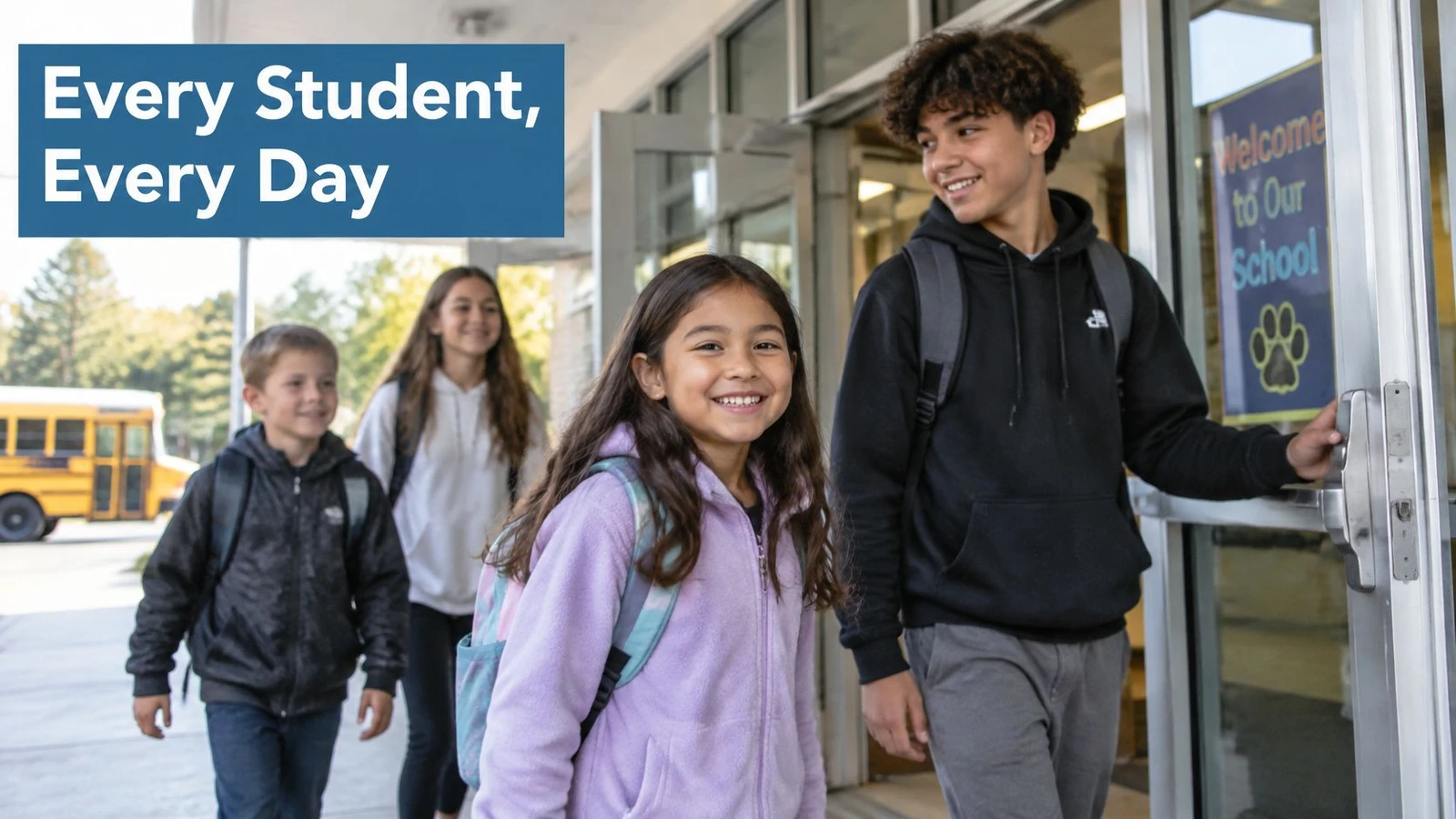
What works is the concrete goal. What backfires is treating attendance as a scolding. Families dealing with buses, illness, or work shifts hear blame, not a plan.
Door use
Close with one action, not a speech. “I’m running so every student is in class every day. I’ll track attendance by school and ask why the buses and support staff aren’t matching the schedule.” Then stop and listen.
More student lines in the same family:
- Five Full Days: Reopening and a full week, only if the calendar can deliver it.
- Focus on the Basics: Reading and math before new programs.
- Readiness, Respect, Results: A triad, useless unless each word has a metric.
- Count Every Seat: Class size and access, not a vibe.
Attach one attendance figure the candidate will watch in public. A slogan with no number behind it is a poster, not a governing priority.
2. Learning Comes First
This line tells voters to judge every board vote by what it does to instruction. It lands with parents who are tired of facilities fights crowding out reading, and with teachers who want the agenda to start in the classroom.
In Ballotpedia’s final look at 1,779 seats across 545 local boards in 2022, candidates supporting equity plans, mask requirements, and gender inclusion won 40% of seats, opponents won 30%, and candidates whose positions could not be identified won 27%. A classroom-first slogan can signal a side without turning the yard sign into a national argument. It fails when the candidate cannot say which subject, which grade band, or which cut they would refuse.
Say this at the door: “Learning comes first means I will ask, on every spend, what it does to reading and math time. If I can’t answer, I won’t vote yes.” Pair it with one metric, such as a grade-level reading check the board already receives.
Companion lines: Classrooms Before Headlines, Literacy Before the Rest, Instruction Sets the Agenda, and Results You Can Read. A longer set of tested lines sits in this guide to political campaign slogans. Clever wording that undecided voters cannot repeat after one pass should be cut.
3. Every Dollar Counts
Every Dollar Counts is for taxpayers who assume the district is sloppy, and for parents who still want classrooms funded. It only works when the candidate can name a spending choice they would question and one they would protect.

The Hunt Institute’s 2022 nationwide survey found 52% of voters said their state spent too little on public schools, while 40% said local funding was too little. A blanket “more money” line ignores the people in the middle. “Every dollar” answers them only if oversight is specific: staffing, facilities, or student services.
What to carry to the porch
Bring one real budget example. “This line is transportation. I’d rather add an aide in second grade than grow that contract.” Do not imply other members waste money unless the document is in hand.
Also in this theme: Every Dollar, Every Student, Fund Classrooms, Track Results, Question the Contract, and Staff Before Spreadsheets.
4. Balanced Budgets, Better Schools
This one speaks to a split household: one voter worried about the tax bill, another worried the building is falling apart. It works because it refuses to pick only one fear. It backfires when “balanced” sounds like cuts, and “better” sounds like a blank check.
Say the trade-off out loud. “I’d delay the new scoreboard and finish the roof, because a dry classroom is the school improvement.” A one-page chart of where money goes beats a speech about fiscal responsibility. Voters who want the legal job description, not a slogan, can start with what school board members do.
- Levy With a Ledger: For bond season, with the repayment in plain numbers.
- Spend Where Students Sit: Classrooms and aides before prestige projects.
- Guard the Reserve: Rainy-day money, explained, not hoarded in silence.
- Buildings and Books Both: Facilities without starving instruction.
5. Safe Halls, Strong Schools
The rhythm links two parent worries, a safe building and a school that still teaches. It is for families who want security upgrades without a campus that feels like a checkpoint.
The Hunt Institute’s 2023 national survey found 71% of voters called addressing bullying and cyberbullying very important, up from 66% in 2022, and 53% called keeping schools free of guns and other physical violence a very big problem, compared with 47% the year before. Those are different problems. A slogan that treats “safety” as one blob will lose the parent who means bullying and the parent who means the front door.
Name the measure. “Safe halls means a reviewed entry plan and a real response to bullying reports, not a new slogan on the website.” Read the district emergency plan before claiming the board has ignored it.
Other safety lines: Protect Every Student, Safe Schools, Strong Futures, Calm Drills, Clear Plans, and Secure Entries, Open Classrooms.
6. Safety First, Learning Always
Use this when safety is the reason people are angry, but the candidate does not want lockdowns to become the whole school day. The second half keeps instruction in the sentence so the race does not collapse into equipment catalogs.
It fails if “safety first” becomes a promise the board cannot keep, such as a guarantee that nothing bad will happen. Boards set policy, staffing, and drills. They do not personally stand at every door.
At the porch, stay calm and specific. “Safety first, learning always. I’ll review entry procedures and drill timing so practice doesn’t eat the class period, and I’ll publish what we changed.” One plan, named, is enough.
- Review the Drill: Timing, not theater.
- Staff the Entrance: Adults, not only cameras.
- Buses Home Safe: Transportation as a safety issue.
- Reports That Get an Answer: Bullying follow-up with a clock on it.
7. Open Doors, Open Books
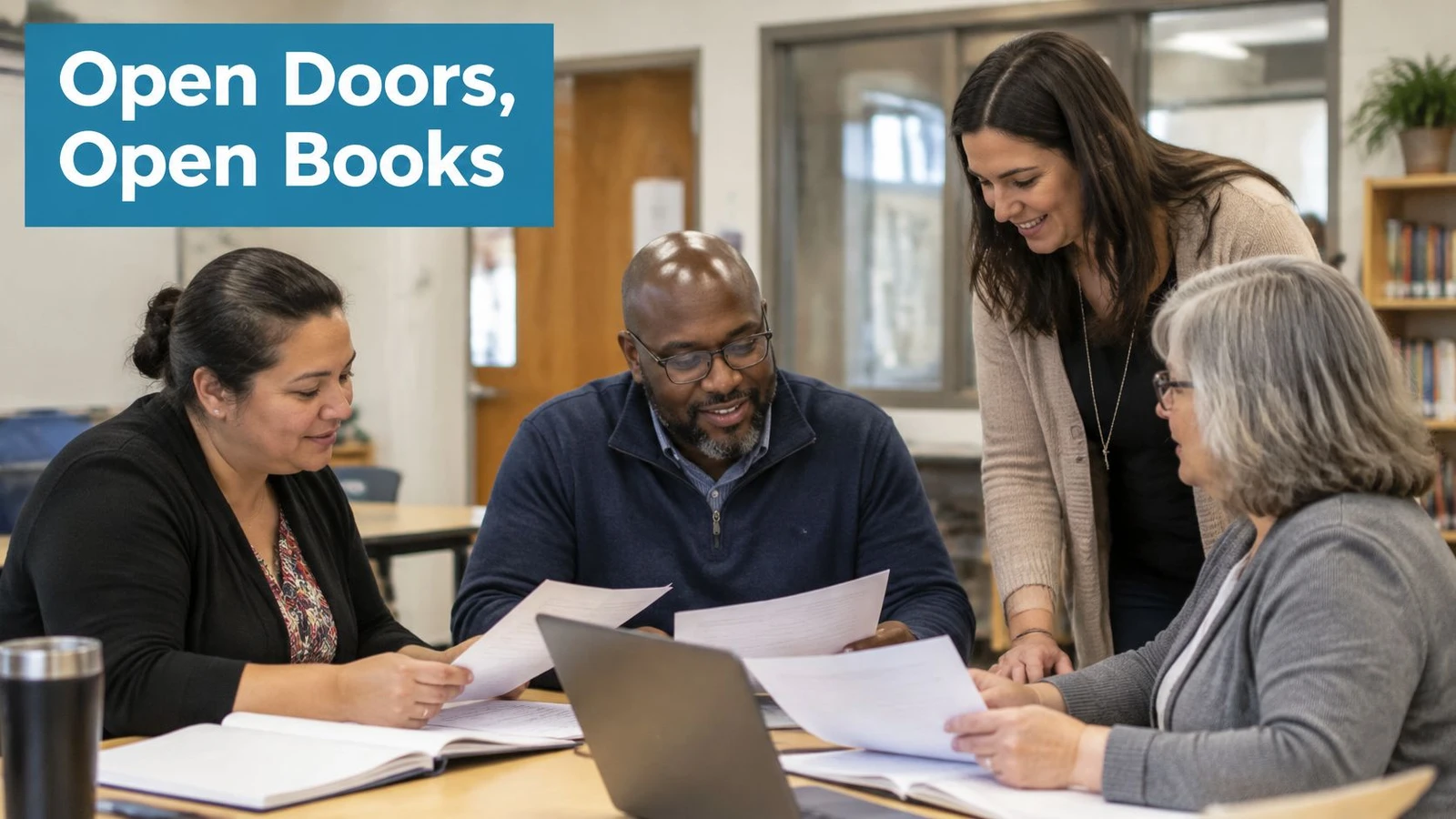
This transparency line promises open meetings, public budgets, and records people can find. It is for voters who think votes happen before the public comment period starts.
A memorable phrase does not replace the legal line on the piece. Michigan’s school-board campaign-finance guidance says candidates in districts with 2,400 or fewer pupils are exempt from state filing only if they neither receive nor spend more than $1,000, and printed matter, including yard signs and brochures, must contain “Paid for by” plus the committee name and address. Rules differ by state. Check the local ones before the printer runs.
Practical rule: Lay the slogan on a real sign size and confirm the disclaimer is still readable. If the tagline crowds out the paid-for line, the tagline is too long.
Door line: “Open doors, open books. I’ll post the budget packet before the vote, not after.” Companions: Post the Packet, Votes in Daylight, Minutes the Same Week, and No Surprise Agendas.
8. Transparency You Can Trust
Trust is a receipt, not a mood. This slogan fits voters who have heard “we’re transparent” from a board that publishes a PDF nobody can search. It should be used only when the candidate can point to something already done in public, such as attending meetings or requesting records.
Commit to a rhythm. A quarterly budget note in plain language beats a promise to “communicate more.” At the door: “Transparency you can trust means a short public update after every major vote, with the dollar figure and the yes or no.” If the candidate has never shown up, the line sounds like marketing.
- Quarterly Numbers, Public: A calendar, not a vibe.
- Name the Vote: Who moved it, who opposed it.
- Records on Request: A response time, stated.
- Agenda Before the Weekend: So working parents can read it.
Reporting on why people run shows candidates juggling report cards, taxes, and ideology at once. A trust line cuts through that pile only if one document is always attached.
9. Parents Belong at the Table
This is for families who feel decisions land on their kids without a real chance to speak. It backfires with non-parents, renters, and grandparents if the rest of the pitch sounds like only households with children own the schools. Say “parents and neighbors” out loud when the voter has no kids in the building.
The Hunt Institute’s 2022 Across the Aisle report found 76% of voters supported involving parents in setting curriculum around what their child is taught, and 78% said they would review and give feedback on curriculum. That is a mandate for a seat, not a blank check to write the syllabus. The same polling showed voters still expected teachers to hold real oversight of what gets taught, so the slogan lands best when it promises a voice in the process rather than control of the outcome.
The promise needs a mechanism the voter can picture. A listening session scheduled before major curriculum votes, followed by a plain statement of what changed because of what was heard, is concrete enough to repeat at the door. A vague pledge to “listen to parents” is not, because every incumbent already says it.
Door line: “Parents belong at the table. I’ll hold a listening session before major curriculum votes, and I’ll say what we changed because of what we heard.”
- Parents Heard, Students First
- A Seat, Not a Speech
- Listen, Then Vote
- Advisory That Meets
10. Your Voice, Your Schools
This line hands ownership to residents, not only to current parents. It works in a district where retirees and renters still pay the levy and still skip the meetings. It fails if “your voice” means a comment box that never changes a vote.
Schedule the forums and print the dates. Explain the path from a comment to a motion. “Your voice, your schools. I’m holding two neighborhood sessions this month. If the same bus complaint shows up at both, it goes on the agenda with my name on the question.”
Candidate statements should match the sign. Samples of that tighter voice are in these school board candidate statement examples.
- Forums With a Follow-Up
- Your Block, Your Schools
- Neighbors in the Minutes
- Comment That Counts
Slogan Themes at a Glance
| Item | Theme | Best For | Main Risk |
|---|---|---|---|
| Every Student, Every Day | Attendance, access, and inclusive learning | Candidates emphasizing measurable goals for all students | May sound generic without a clear plan |
| Learning Comes First | Prioritizing classroom instruction | Candidates focused on academic achievement and curriculum | May seem to dismiss operational needs |
| Every Dollar Counts | Spending oversight and accountability | Candidates appealing to fiscally cautious voters | May sound opposed to spending without specific examples |
| Balanced Budgets, Better Schools | Fiscal discipline and school quality | Candidates addressing tight budgets or levy debates | May invite questions about budget trade-offs |
| Safe Halls, Strong Schools | Student safety and academic success | Candidates focused on facilities, policies, or emergency planning | Safety proposals may be scrutinized or polarized |
| Safety First, Learning Always | Safety balanced with ongoing instruction | Candidates discussing safety while protecting learning time | Can sound vague without specific plans |
| Open Doors, Open Books | Transparency and public access | Candidates promising open meetings and accessible budgets | Requires consistent openness after election |
| Transparency You Can Trust | Clear communication and accountability | Candidates making regular public reporting commitments | Trust can be undermined without documented follow-through |
| Parents Belong at the Table | Parent participation in school decisions | Candidates focused on family engagement | May seem to exclude other stakeholders |
| Your Voice, Your Schools | Community participation and local input | Candidates planning listening sessions or public forums | Requires real channels for input and influence |
Choose, Test, and Take Your Slogan to the Doors
The ten lines above are platforms. The other forty, four under each, are the variants. Together they are 50 school board campaign slogans: ten on students, ten on budget, ten on safety, ten on transparency, and ten on parents and community. Pick one theme that matches the district’s actual fight. A levy year is a budget line. A front-door scare is a safety line. Do not print a student slogan because it tested well in someone else’s town.
Run three filters before a single sign is ordered.
- Say it in five seconds: If a volunteer cannot finish the line and the name without rushing, the yard sign will fail at the curb. A school board election handbook tells campaigns to pair the name with one clear issue and to skip clever wording that confuses undecided voters.
- Attach one measurable promise: Attendance, a budget line, a drill review, a posted packet, or a dated forum. If the website cannot defend the sign, change the sign.
- Try it at ten doors: Ask what issue they heard. A memorable line with the wrong issue attached is branding, not a vote.
Make it memorable without getting cute
Rhythm and light alliteration help a line stick, and slogan research finds rhyme and alliteration common in campaign slogans, while repetition only modestly helps when the line is irrelevant to the voter’s concern. Plain words beat a pun. The promise has to be one a board member can vote on. “Putting kids first” loses to “five full days” because the second one can be checked on a calendar.
For more lines beyond this set, use the guide to great political campaign slogans, and walk the filing, message, and field sequence in how to run for office. Put the winning phrase on the hanger and the window piece from a shop like shop Custom Sticker Shop text decals, then stop redesigning it.
The questions voters ask are in Frequently Asked Questions just below. Once the slogan is chosen, the true test is repetition at doors. Tools like doornoc, which powers campaigns from local school board races to congressional contests, help candidates plan turf, record knocks, and put the slogan in front of voters one doorstep at a time.
Frequently Asked Questions
How long should a school board campaign slogan be?
Short enough for a yard sign and a five-second porch close, usually under eight words plus the candidate’s name. If a stranger cannot repeat the issue after one look, cut words until they can.
Should the slogan pick a side in a culture-war fight?
Only if that fight is the local race and the candidate can govern on it. In many 2025 Pennsylvania contests, campaigns shifted toward taxes, kindergarten, academics, and safety, and local reporting described voters who wanted candidates who listen. Newark’s school-board election drew 3.1% of registered voters in 2023, so clarity often beats a national signal.
What do I say at the door after the slogan?
One sentence of promise, one proof, then a question. “Learning comes first. I’ll track third-grade reading at every meeting. What’s the one thing this school is getting wrong?” Write down the answer. The slogan starts the talk. It does not finish it.
Do campaign signs need a paid-for line?
In many states, yes, and the disclaimer has to stay readable next to the slogan. Michigan’s rule, noted above, is one example. Confirm the home state’s wording, type size, and committee address before the print order, because a clever line that hides the identifier can become a compliance problem.
How do I test school board campaign slogans without wasting money?
Show three versions, including the favorite, to unaffiliated neighbors for a few seconds. Score whether they recall the name, name the issue, and tell the candidate apart from the opponent. Print only the line that wins all three, and only after ten real doors.
Can a slogan promise something the board cannot deliver?
It can, and then it backfires. Boards hire the superintendent, pass budgets, and set policy. They do not personally raise test scores or guarantee safety. Tie the line to a vote the winner will cast, and put the longer plan on the website, not on the sign.
School board campaigns are won at the porch, not in a design file. doornoc is canvassing software for that work: filter a voter file, cut walkable turf, and record each knock, including the slogan the voter heard. Open it in a phone browser, add it to the home screen, and take the line to the next door.
Looking for a tool to run this? doornoc’s canvassing software bundles voter data, automatic turf cutting, the mobile app, and live reporting in one platform.