Memorable political slogans do more than decorate a poster. They compress a campaign’s central promise into language voters can recall, repeat, and connect with a candidate. That mass-message function is older than modern digital campaigning. The widely recognized U.S. campaign-slogan era is commonly traced to 1840, when William Henry Harrison and John Tyler used “Tippecanoe and Tyler Too” alongside banners, merchandise, songs, and other broad political advertising, before Harrison defeated incumbent Martin Van Buren in a landslide (history of presidential campaign slogans).
The strongest frameworks activate a specific voter motivation, such as hope, anger, belonging, economic security, liberty, or trust. National campaigns can use those motivations to express identity and direction at scale. Local campaigns usually need to translate the same emotional frame into visible concerns, such as a school closure, a transit route, housing costs, or public safety.
The examples below assess each framework’s appeal, strategic trade-offs, local and national applications, and field-testing requirements. Campaign teams can use a headline-writing resource such as this headline writing master guide for clarity principles, then use doornoc as an operational example for voter intelligence, surveys, route planning, offline data capture, and real-time reporting.
1. “Hope” and Inspirational Vision Messaging
“Hope” works because it gives a campaign a positive destination rather than only an opponent to resist. Barack Obama’s “Hope” messaging in 2008, Bill Clinton’s “Hope is on the way” in 1992, and Kamala Harris’s “Joy” framing in 2024 illustrate variations on the same structure. The wording asks voters to associate the candidate with an improved future, emotional renewal, or a more constructive political atmosphere.
The strength is coalition-building. A hopeful phrase can motivate supporters without requiring every supporter to share exactly the same policy priority. It can also give volunteers language that feels inviting at the door. The risk is abstraction. “Hope” can sound empty when a voter cannot connect it to a local problem or a specific decision.
Practical rule: An aspirational slogan needs a concrete answer to the question, “Hope for what?”
For a national race, the answer might connect to economic renewal, healthcare, climate policy, or democratic confidence. A city council campaign should narrow the frame to a visible improvement, such as safer crossings or reliable waste collection. A doornoc campaign workflow can attach voter-intelligence briefs to canvassing conversations, then use configurable surveys to record what residents associate with the promise. Offline capture matters when teams work in areas with inconsistent connectivity. The field guide to voter persuasion techniques can support that broader message-to-conversation process.
2. “Change” and Anti-Incumbent Reform
“Change” activates dissatisfaction with the status quo. “Change We Can Believe In,” associated with Barack Obama’s 2008 campaign, is a familiar example of reform language that combines disruption with reassurance. Donald Trump’s 2016 campaign also used anti-establishment change as a central political frame, while Alexandria Ocasio-Cortez’s 2018 primary campaign presented generational and institutional change against a long-serving incumbent.
The framework’s strategic advantage is its simplicity. Voters don’t need to understand every proposed reform to understand that the campaign rejects the current direction. That simplicity creates a serious burden, however. A candidate promising change must define what changes first, who benefits, and how the change will be delivered. Otherwise, the slogan can become a general expression of frustration.
National campaigns can use “change” to describe a governing model, a party direction, or a response to institutional distrust. Local campaigns should identify the officeholder’s specific record, such as delayed infrastructure work or an unpopular zoning decision. Door conversations can distinguish dissatisfaction with an individual from dissatisfaction with the wider system.
A doornoc team can use surveys to categorize those differences, while voter-intelligence briefs can give canvassers sourced context about relevant votes or decisions. Polygon routes can concentrate field activity in areas where the campaign has identified a strong reform conversation. The campaign should treat route-level response as an organizing signal, not proof that the slogan caused a vote.
3. “Together” and Coalition Building
“Together” frames politics as a shared project. Joe Biden’s “Build Back Better Together,” Ronald Reagan’s “Morning in America,” John McCain’s “Country First,” and Hillary Clinton’s “Stronger Together” each used language intended to widen the circle beyond a single faction. The emotional appeal is belonging. A voter is invited to see the campaign as a meeting point for people with different backgrounds but overlapping concerns.
The framework works best when unity has substance. A slogan about togetherness can reduce the distance between demographic groups, neighborhoods, or partisan identities, but it can’t erase disagreements by itself. If the campaign uses inclusive language while avoiding every difficult policy choice, skeptical voters may hear a branding exercise rather than a governing proposition.
National campaigns can use this frame to present a broad governing coalition. A county or school-board campaign should make unity local and practical, perhaps around classroom quality, emergency response, or neighborhood services. Shared concerns provide stronger connective tissue than generic appeals to civility.
Making common ground visible
Campaign managers can ask canvassers to record which issues voters describe as common ground. doornoc’s voter-intelligence briefs and configurable surveys can organize those responses, while MailVotes filters can help identify persuadable groups for carefully targeted outreach. Auto Turf can create routes that include varied neighborhoods, giving teams opportunities to test whether the same phrase travels across different communities.

4. “For the People” and Economic Justice
“For the People” positions a candidate as an advocate for ordinary residents rather than powerful institutions. The phrase belongs to a wider economic-populist family that includes Bernie Sanders’s “Not Me. Us.,” Elizabeth Warren’s working-family messaging, Harry Truman’s “Fair Deal,” and Stacey Abrams’s “Fair Fight.” These examples differ politically, but each connects leadership to fairness, representation, or material security.
The emotional appeal is recognition. Voters who feel overlooked may respond when a campaign names the gap between public promises and household experience. The framework also travels across ideological boundaries when the campaign grounds it in specific concerns, such as wages, healthcare costs, housing, or job security. Its weakness is vagueness. Almost every candidate can claim to represent “the people,” so the slogan needs evidence from the candidate’s record and a clear contrast with the opposing approach.
For a national race, economic justice can become a broad argument about labor, taxation, healthcare, or industrial policy. For a mayoral or legislative race, the message should connect to the expenses residents can identify in daily life. A canvasser needs more than a class-based phrase. The team needs a concise explanation of the local action the candidate would take.
doornoc surveys can capture household concerns, while voter-intelligence briefs can turn those concerns into consistent talking points. The guide to refining a campaign message with canvassing data offers relevant process guidance. Route planning can then place conversations in working-class, manufacturing, service-worker, and union-heavy areas without assuming that every voter in those areas shares one economic view.
5. “Fight” and Combative Positioning
“Fight” asks voters to choose a champion for a conflict. Elizabeth Warren’s “I have a plan to fight…” framing, Bernie Sanders’s anti-corporate language, Tea Party opposition messaging, and Donald Trump’s combative campaign style all demonstrate how struggle can become the organizing metaphor of a campaign.
The attraction is energy. A confrontational slogan gives supporters a clear opponent, a sense of urgency, and language that can travel through speeches, signs, and volunteer conversations. It can also clarify stakes when a campaign believes an institution or policy has caused direct harm. The trade-off is reach. A message that energizes a committed base may alienate undecided voters, opponents, or residents who want problem-solving rather than escalation.
Evidence cautions against assuming that positive or negative framing automatically persuades. Experimental evidence from two political campaigns found little overall persuasive difference between positive and negative treatments, with average effects not statistically different from zero, although responses varied by gender (experimental evidence on campaign treatment). That makes field validation essential.
A national campaign may use “fight” against a clearly defined policy or governing direction. A local campaign should avoid turning routine administration into permanent combat. Surveys can identify which issues generate anger, while real-time dashboards can show where volunteer engagement is strong. Those signals reveal operational energy, not electoral causation.
6. “Progress” and Modernization
“Progress” offers a forward-looking alternative to “change.” Change can mean disruption, while progress implies movement toward a defined standard of improvement. Climate and healthcare reform campaigns, Andrew Yang’s technology-focused “The Math,” and progressive congressional candidates’ modernization agendas illustrate how the frame can connect innovation with public policy.
The framework appeals to voters who see emerging problems as requiring new tools. It can organize a campaign around clean energy, digital infrastructure, healthcare access, education, or scientific research. The danger is that “progress” can sound elitist or technical if it ignores the practical experience of residents who are expected to adapt. Modernization must answer who gains, what changes, and how disruption will be managed.
National campaigns can present progress as a governing direction across multiple policy areas. A local candidate should select one or two tangible examples, such as modernizing permitting, improving bus information, or updating school facilities. The phrase becomes more persuasive when residents can recognize the current problem and the proposed improvement.
Progress needs a human consequence, not just a future tense.
Campaign teams can configure surveys around contemporary priorities, then provide canvassers with voter-intelligence briefs containing specific policy examples. MailVotes filters may help identify audiences for targeted testing, but demographic assumptions shouldn’t replace direct conversation. Auto Turf and real-time reporting can compare responses across urban, suburban, and younger communities while keeping the result framed as message feedback rather than a guaranteed vote shift.
7. “Freedom” and Liberty
“Freedom” activates autonomy, personal choice, and resistance to unwanted control. Ron Paul’s “Campaign for Liberty,” the Tea Party’s “Don’t Tread on Me,” gun-rights messaging, and Republican deregulation arguments have used different versions of the same liberty frame. The phrase can appeal to voters who distrust government authority, but its meaning depends heavily on the policy attached to it.
That flexibility creates both power and risk. One voter may hear freedom from regulation, another may hear freedom to exercise a constitutional right, and another may hear freedom from corporate control or economic dependence. A campaign that leaves the object of freedom undefined can gather attention while failing to build a coherent coalition.
National campaigns can use the framework to discuss sovereignty, regulation, privacy, or civil liberties. Local campaigns should identify the authority that residents believe is restricting choice. A small-business candidate might discuss permits, while another candidate might focus on healthcare decisions, housing rules, or public access.
Testing the object of freedom
Canvassers should ask an open question before delivering a prepared argument. doornoc surveys can record which regulations or institutions voters name, and voter-intelligence briefs can help teams distinguish a general anti-government attitude from a specific local grievance. Polygon routes can focus on defined geographies, but the campaign should avoid treating a neighborhood label as a substitute for individual feedback.
This framework is especially vulnerable to unintended exclusion. “Freedom” can inspire one group and threaten another. Message testing should therefore measure clarity and emotional response separately.
8. “Our Time” and Representation
“Our Time” and “It’s Our Turn” frame an election as a moment of succession. The message tells a generation, demographic group, or historically underrepresented community that leadership should reflect its presence and priorities. Alexandria Ocasio-Cortez’s “It’s Our Time” messaging in 2018 and identity-inclusive appeals associated with Kamala Harris illustrate how representation can become a central campaign motivation.
The strength is personal relevance. Voters may respond when a candidate connects political power to lived experience, cultural recognition, or a sense that established institutions have ignored a community. The risk is that identity language can become symbolic without policy substance. A campaign must show what representation changes in governing decisions, staffing, services, or resource allocation.
For a national campaign, succession messaging can signal a new generation or a wider national coalition. For a local race, the frame should connect to who gets heard in planning meetings, school governance, neighborhood investment, or public appointments. The message should welcome aligned voters rather than imply that only one identity has a legitimate stake in the election.
Demographic data can help campaigns identify outreach gaps, but it shouldn’t dictate what a community believes. doornoc surveys can ask about representation and inclusion directly. Polygon routes and Auto Turf can support concentrated field programs, while the political digital marketing guide for winning campaigns can complement, rather than replace, face-to-face organizing. Canvassers need authentic biographical context and a policy explanation, not merely a demographic label.
9. “Integrity” and Character
“Integrity” and “Character Matters” ask voters to judge the candidate as a steward of public trust. Jimmy Carter’s “Trust Me,” John McCain’s “Straight Talk,” and integrity-centered contrasts used by Democratic campaigns against Donald Trump show how character messaging becomes especially salient when voters worry about honesty, competence, or abuse of office.
Trust language has a demanding proof standard. A candidate can’t compensate for contradictory conduct with a polished slogan. The message also risks becoming negative if it depends entirely on attacking an opponent’s character rather than demonstrating the candidate’s own record.
The framework can work nationally when an election turns on institutional confidence or ethical leadership. In a local campaign, integrity is often easier to make concrete. Residents can evaluate attendance, disclosure, responsiveness, procurement decisions, and whether the candidate explains trade-offs candidly. A campaign should connect the slogan to observable behavior.
A trust slogan is a promise to provide evidence.
Surveys can identify whether voters are concerned about dishonesty, scandal, competence, or transparency. Those concerns aren’t interchangeable, and each requires different proof. Canvassing scripts can prepare concise responses, while doornoc’s real-time dashboard can show which voter segments raise character questions most often. Voter-intelligence briefs should cite the candidate’s public record and avoid exaggeration. Swing voters may be receptive to character concerns, but field teams should measure that openness instead of assuming it.
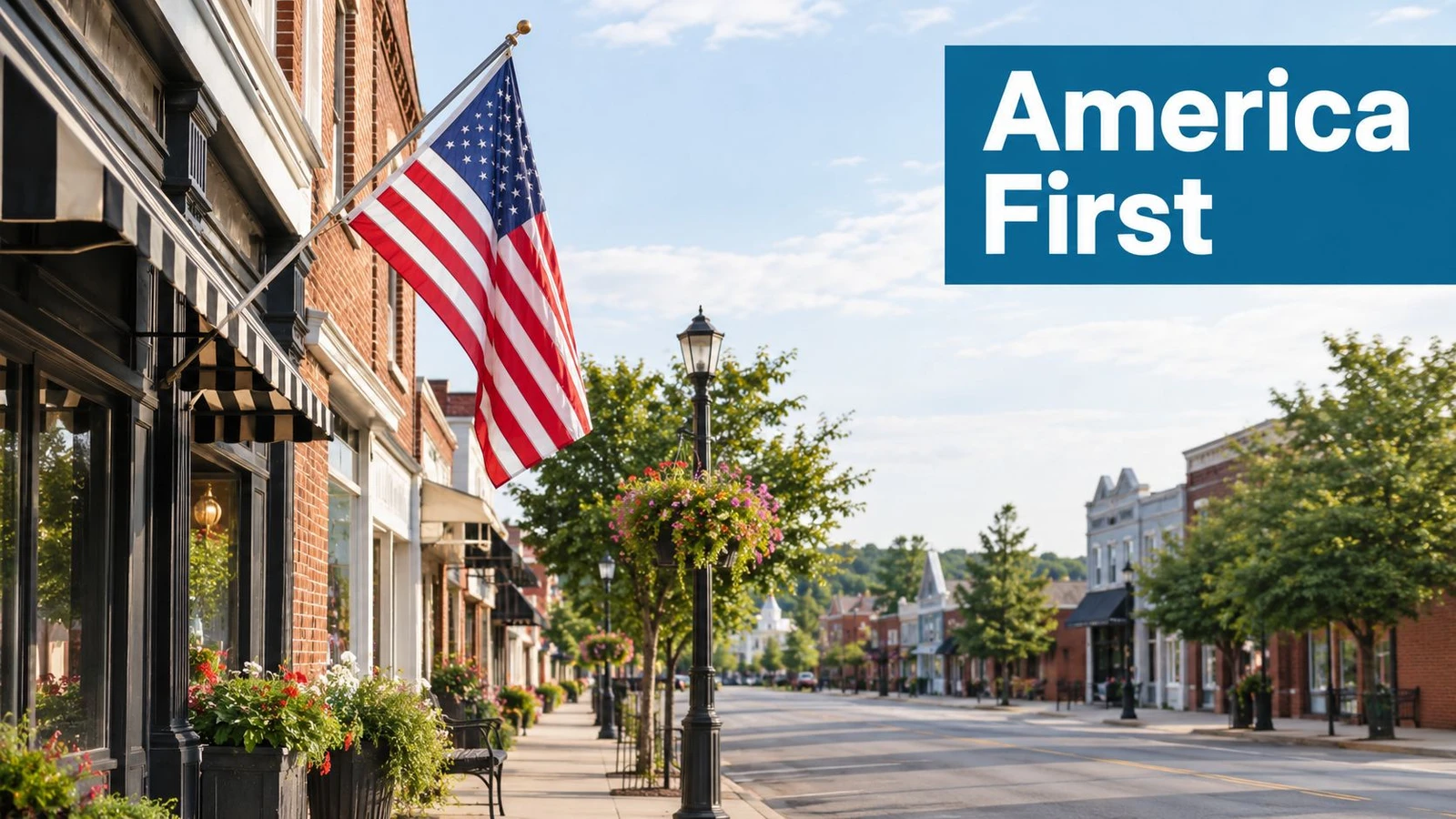
10. “America First” and Patriotic Nationalism
“America First” places national sovereignty, domestic priorities, and national identity at the center of the campaign. Donald Trump used the phrase in 2016, Pat Buchanan used related nationalist appeals in the 1990s, and “Take Back Control” served a comparable sovereignty-oriented role in the United Kingdom’s Brexit campaign. The framework can motivate voters who worry about trade, immigration, national security, or the loss of local economic power.
Its strategic strength is clarity of allegiance. The slogan tells voters which political unit the campaign places first. Its central risk is interpretive conflict. Nationalist language can unify voters around domestic priorities, but it can also make other residents feel excluded, particularly when the campaign doesn’t explain how national goals affect local communities.
National campaigns can use the phrase to organize a broad argument about foreign policy, manufacturing, borders, or economic sovereignty. Local campaigns need a narrower translation. A county candidate might connect it to local employment or domestic procurement, but shouldn’t imply control over federal issues that fall outside the office’s authority.
Field execution should begin with listening. Surveys can identify whether voters mean trade, immigration, jobs, security, or cultural identity when they respond to nationalist language. MailVotes filters and route planning can help organize outreach, while localized intelligence briefs can give canvassers relevant context. doornoc’s dashboard can compare message responses by geography and team, but those operational metrics don’t establish that the slogan changed electoral behavior.
Top 10 Campaign Slogans Comparison
| Strategy | Implementation complexity | Resource requirements | Expected outcomes | Ideal use cases | Key advantages |
|---|---|---|---|---|---|
| ”Hope” – Inspirational Vision Messaging | Medium, craft uplifting narrative and localize meaning | Moderate, volunteer coordination, voter intelligence to add specifics | Increased volunteer enthusiasm and turnout; broad emotional appeal but low policy detail | Positive, forward-looking campaigns; boosting volunteer recruitment and youth turnout | Emotional resonance, cross-demographic appeal, resilient to attacks |
| ”Change” – Anti‑Incumbent/Reform Positioning | Medium–High, must present credible alternatives, evidence | High, research, targeted messaging, opposition research, precinct data | Energizes dissatisfied voters, strong primary/wave performance; persuades swing voters if backed by specifics | Anti‑incumbent environments, scandals, primaries against establishment | Leverages voter frustration, creates clear contrast with incumbents |
| ”Together” – Unity and Coalition Building | Medium, requires authentic cross-group outreach | Moderate, coalition outreach, tailored talking points, demographic targeting | Attracts swing/independent voters; broadens coalitions but less base intensity | General elections, swing districts, post-primary reunification | Builds broad coalitions, reduces polarization, appeals to moderates |
| ”For the People” – Working Class/Economic Justice | Medium, must demonstrate credible pro‑worker record | High, localized economic data, union outreach, targeted canvassing | High base mobilization among working‑class and labor voters; strong emotional engagement | Districts with economic stress, manufacturing decline, labor-heavy areas | Unifies diverse voters around economic grievance; strong turnout potential |
| ”Fight” – Combative/Confrontational Positioning | Low–Medium, blunt messaging but needs control to avoid backlash | Moderate, rapid response, high media/social operations, energized volunteers | High base energy and media attention; risks alienating moderates and swing voters | Mobilizing activists, polarized environments, energizing base turnout | Very motivating for core supporters; clear villain narrative and social amplification |
| ”Progress” – Reform and Modernization | Medium, requires concrete policy proposals and credibility | Moderate–High, policy development, targeted outreach to younger/educated voters | Attracts younger, educated, tech‑forward voters; strong reformist appeal but may alienate others | Urban/suburban districts, issue campaigns (climate, tech, healthcare) | Future‑oriented vision, appeals to innovators and reform communities |
| ”Freedom” – Liberty and Anti‑Regulation Messaging | Low–Medium, straightforward framing but needs tailored variants | Moderate, identify libertarian/gun‑rights segments, craft specific grievances | Mobilizes liberty‑minded voters and activists; limited traction on collective welfare issues | Rural, libertarian-leaning, or pro‑gun communities; anti‑regulation constituencies | Strong philosophical appeal, unites diverse liberty‑focused voters |
| ”Our Time”/“It’s Our Turn” – Generational/Demographic Succession | Medium, must show authentic representation and community ties | Moderate, demographic targeting, community outreach, turnout operations | High enthusiasm and turnout among target demographics; risks alienating others | Young candidates, women, communities of color, areas with demographic change | Mobilizes underrepresented groups, creates clear generational/identity contrast |
| ”Integrity”/“Character Matters” – Trust and Values-Based | Medium, authenticity and evidence essential | Moderate, vetting, narrative building, targeted persuasion to swing voters | Builds trust with persuadables and independents; modest base mobilization | When opponent faces scandal or voters prioritize trustworthiness | Broad cross‑partisan appeal; effective contrast against corrupt opponents |
| ”America First” – Nationalist/Patriotic Framing | Low–Medium, simple slogan but requires nuance to avoid backlash | High, precise geographic/ideological targeting, economic messaging | Strong core base mobilization and regional gains; highly polarizing nationally | Economically anxious regions, manufacturing/rural areas, nationalist sentiment pockets | Memorable, repeatable framing that mobilizes core supporters quickly |
Turn a Memorable Phrase Into a Field Strategy
Great political campaign slogans don’t succeed because one emotional category is universally superior. “Hope” can broaden a coalition but become vague. “Fight” can energize committed supporters but narrow the audience. “Freedom” can create a powerful liberty frame but mean different things to different voters. “Integrity” can reassure persuadable residents but demands credible evidence. The strategic question is not which slogan sounds best in isolation. It is which motivation fits the campaign, the candidate, the race, and the moment.
The first step is audience diagnosis. Campaign managers should identify whether voters are seeking change, security, recognition, unity, accountability, or a credible future. Surveys should use open questions before forced choices, because a voter’s own description can reveal whether “freedom” means lower regulation, privacy, or personal autonomy. A slogan should then be matched to the campaign stage. A challenger may need a reform frame, while a general-election candidate may need language that expands beyond the primary coalition.
The second step is translation. National slogans can carry broad identity and direction, but local slogans need visible community meaning. “For the People” becomes more useful when connected to a named affordability problem. “Progress” becomes more credible when tied to a specific school, road, clinic, or permitting process. Canvassers should receive a short explanation, one concrete policy example, and a response to the strongest predictable objection.
The third step is organized testing. A campaign can use doornoc surveys to compare comprehension, voter priorities, and unintended exclusion. Voter-intelligence briefs can provide source-cited context for conversations. Auto Turf and Polygon Route can structure geographic tests, while offline capture allows teams to record interactions without reliable connectivity. Real-time reporting can reveal where volunteers are encountering confusion, enthusiasm, or resistance.
Election research shows why recall should be treated as a funnel metric rather than a binary verdict. Elections Canada reported that aided recall of “Ready to Vote” rose from 15% to 35%, with intermediate increases of 8 points by registration and 17 points by election day (Elections Canada slogan recall results). A separate Elections Canada report found recall of “It’s Our Vote” rose from 12% to 24% during the 43rd federal election campaign (Canada voter-awareness report). These figures support phase-based recall tracking, not a claim that recall alone produces votes.
Repetition and distribution deserve equal attention to creative wording. A 2026 study of 489 Indian youth voters found that repetition and social endorsement increased perceived credibility and shaped attitudes, while emotional resonance alone did not significantly affect credibility (research on digital political slogans). The implication is practical. A campaign should test whether canvassers, mail, digital creative, speeches, and volunteer scripts reinforce one clear meaning.
A disciplined message process therefore has five parts:
- Identify the motivation: Determine whether the audience is responding to hope, reform, belonging, economic fairness, conflict, liberty, succession, trust, or national priority.
- Match the race and stage: Adapt broad national identity language to the authority and visible responsibilities of a local office.
- Add proof: Connect the phrase to a policy, record, place, or community concern that voters can understand.
- Test interpretation: Measure recall, clarity, emotional response, and exclusion separately, rather than treating enthusiasm as persuasion.
- Equip the field: Give every canvasser consistent talking points, a structured survey, a route, and a way to record conversations offline.
Platform data should remain evidence about message exposure and field response, not proof of electoral impact. Campaigns need broader evaluation, including turnout records, independent polling where available, and careful attention to context. The slogan earns its place when it helps people recognize a campaign’s purpose, repeat its promise, and understand what the candidate would do next.
doornoc combines mobile door-knocking, voter data services, route planning, offline interaction logging, and real-time campaign reporting for local and national field programs. Campaign teams can use its surveys, voter-intelligence briefs, Auto Turf, Polygon Route, and MailVotes workflows to test how slogan frameworks perform in specific communities. Visit doornoc to organize message testing around structured canvassing data.
Looking for a tool to run this? doornoc’s canvassing software bundles voter data, automatic turf cutting, the mobile app, and live reporting in one platform.