
Key Takeaways
- Political digital marketing in 2026 requires integrated multi-platform strategies that combine paid advertising, organic content, and data-driven voter targeting to maximize campaign reach and conversion rates.
- Short-form video content on TikTok, Instagram Reels, and YouTube Shorts now drives 67% of political engagement among voters under 45, making video production skills essential for modern campaigns.
- Micro-targeting capabilities have evolved to allow campaigns to reach specific voter segments with personalized messaging at costs 40% lower than traditional broadcast advertising.
- Successful digital campaigns blend online engagement with offline action, using digital tools to drive door-to-door canvassing, volunteer recruitment, and event attendance rather than replacing field operations entirely.
Political digital marketing is the systematic use of online platforms, social media channels, paid advertising, and digital content to reach voters, shape public opinion, and drive campaign actions that win elections. In 2026, digital marketing has evolved from a supplementary tactic to the central nervous system of successful political campaigns, with competitive races allocating 35-50% of total budgets to digital strategies.
The landscape has shifted dramatically since 2024. Short-form video now dominates political content consumption, with TikTok and Instagram Reels driving 67% of engagement among voters under 45. AI-powered ad targeting has become 40% more cost-effective while privacy regulations have forced campaigns to build first-party data strategies. Most significantly, the integration between digital marketing and field operations has matured—successful campaigns now use digital tools to drive offline action rather than viewing online and in-person outreach as competing channels.
Why Digital Marketing Matters More Than Ever in 2026
The political media environment has fragmented beyond recognition. Traditional broadcast television reaches only 23% of voters under 40 regularly, while streaming services, social media, and digital news sources command the majority of attention. This fragmentation means campaigns can no longer rely on a few TV ads and direct mail pieces to reach their entire electorate.
Digital marketing for politicians solves three critical challenges that traditional media cannot address effectively. First, it enables precision targeting—you can reach registered Democrats who care about education policy in specific zip codes, rather than broadcasting your message to everyone in a media market. Second, it provides real-time performance data that allows rapid optimization. If an ad isn’t working, you know within hours and can adjust messaging, creative, or targeting immediately. Third, it facilitates two-way communication that builds genuine supporter relationships rather than one-directional broadcast messaging.
The cost efficiency advantage has become impossible to ignore. A well-targeted Facebook or Google ad campaign can reach 1,000 likely voters for $8-$15, compared to $45-$80 for the same reach via broadcast television. For down-ballot races with limited budgets, this 5-6x cost advantage often determines whether a campaign can compete at all. Even well-funded statewide campaigns have shifted substantial budgets from traditional media to digital channels based on superior ROI metrics.
Beyond paid advertising, organic social media presence has become essential for candidate credibility. Voters—especially those under 50—expect to find active, authentic social media profiles when researching candidates. A candidate without a digital presence appears out of touch or, worse, like they’re hiding something. Your digital footprint now serves as your campaign’s front door, with 78% of undecided voters visiting a candidate’s social media before visiting their website.
Building Your Political Social Media Strategy Foundation
A political social media strategy refers to the coordinated plan for how your campaign will use social platforms to reach voters, shape your candidate’s image, and drive supporter actions. Unlike ad-hoc posting, a true strategy defines target audiences, content themes, posting cadence, engagement protocols, and success metrics across all platforms.
Start by identifying your priority platforms based on your district demographics. For local races targeting voters over 50, Facebook should receive 60-70% of your organic content resources. For campaigns targeting younger, more diverse electorates, allocate 40% to Instagram, 30% to TikTok, and 30% to Facebook. Statewide campaigns typically need presence across Facebook, Instagram, TikTok, YouTube, and X (formerly Twitter), but with varying levels of investment based on where your persuadable voters actually spend time.
Content planning should follow the 60-30-10 rule: 60% value-driven content that educates, entertains, or inspires without explicitly asking for anything; 30% engagement content that sparks conversation, shares supporter stories, or responds to community concerns; and 10% direct calls-to-action for donations, volunteer signups, or event attendance. This ratio prevents your social presence from feeling like a non-stop fundraising pitch while still driving necessary campaign actions.
Authenticity matters more in 2026 than ever before. Voters have developed sophisticated BS detectors for overly polished, consultant-driven content. The most successful political social media accounts balance professional messaging with genuine, unscripted moments. Behind-the-scenes content showing your candidate talking with voters, preparing for debates, or even making mistakes humanizes them in ways that scripted speeches cannot. User-generated content from supporters often performs better than professionally produced videos.
Establish clear social media guidelines for your entire team. Who can post on official accounts? What’s your response protocol for negative comments or attacks? How quickly must you respond to direct messages? What topics are off-limits? These guidelines prevent crisis situations where a volunteer posts something problematic or your campaign appears unresponsive during a news cycle. Most successful campaigns designate 1-2 people as primary social media managers with clearly defined approval processes for sensitive content.
Mastering Paid Political Advertising Across Digital Platforms
Paid digital advertising has evolved into a sophisticated science requiring both technical expertise and political savvy. The platforms that dominated 2024—Facebook, Google, and YouTube—remain central, but TikTok advertising has matured significantly and now offers political ad products that comply with transparency requirements in most states.
Facebook and Instagram advertising provides the most granular targeting options for political campaigns. You can build custom audiences based on voter file data, create lookalike audiences to find similar voters, and layer demographic, geographic, and interest-based targeting to reach precisely defined segments. The platform’s political ad transparency requirements mean all your ads appear in a public library, which actually benefits campaigns by allowing you to monitor competitor messaging and spending.
Effective Facebook ad strategy in 2026 requires constant testing. Run 8-12 ad variations simultaneously, testing different images, headlines, body copy, and calls-to-action. Let the algorithm identify winners after 24-48 hours, then reallocate budget to top performers while developing new variations to test. This continuous optimization approach can improve your cost-per-action by 40-60% compared to running the same ads throughout a campaign.
Google Search ads capture high-intent voters actively looking for information about candidates or issues. When someone searches “[your district] city council candidates” or “where does [candidate name] stand on [issue],” your ads can appear at the top of results. Search ads typically cost more per click ($2-$8) than social media ads ($0.50-$2), but they reach voters at the exact moment they’re seeking political information, leading to higher conversion rates for email signups and donations.
YouTube advertising excels for reaching voters during their entertainment and information consumption. Pre-roll ads (those 15-30 second spots before videos) can be targeted based on viewing history, demographics, and topics. A campaign targeting suburban parents might run ads before parenting content, home improvement videos, and local news clips. YouTube’s TrueView format means you only pay when someone watches at least 30 seconds, making it cost-effective for awareness building.
TikTok political advertising remains controversial but increasingly effective, particularly for reaching voters under 35. The platform’s algorithm-driven distribution means compelling creative can achieve viral reach beyond your paid promotion. However, TikTok ads require native-feeling content—overly polished campaign spots perform poorly. The most successful TikTok political ads look like organic TikToks: vertical video, trending audio, quick cuts, and authentic presentation.
Budget allocation across platforms should reflect both your target audience and campaign phase. Early in a race, allocate 50% to Facebook/Instagram for broad awareness and list building, 30% to YouTube for video views and name recognition, and 20% to Google Search for capturing existing interest. As Election Day approaches, shift more budget to Facebook/Instagram for persuasion and turnout messaging among identified supporters and persuadables.
Creating Digital Content That Drives Voter Action
Content is the fuel that powers your entire digital marketing engine. Without compelling, shareable content, even the most sophisticated targeting and ad optimization cannot succeed. Political content strategy in 2026 centers on short-form video, authentic storytelling, and content designed for mobile-first consumption.
Short-form video has become the dominant content format across all demographics. Videos under 60 seconds receive 3x more engagement than longer content on Instagram and Facebook, while TikTok’s algorithm heavily favors videos between 15-45 seconds. This doesn’t mean abandoning longer content entirely—detailed policy explanations and debate clips still have value on YouTube—but your primary content production should focus on snackable video optimized for social feeds.
Effective political video content follows a simple structure: hook viewers in the first 3 seconds, deliver your core message in 15-20 seconds, and end with a clear call-to-action. The hook might be a provocative question, striking visual, or controversial statement that stops scrolling. The message should be singular and focused—trying to communicate multiple ideas in 30 seconds creates confusion. The call-to-action tells viewers exactly what you want them to do: visit your website, sign up to volunteer, share the video, or donate.
User-generated content (UGC) from supporters provides social proof that professional content cannot replicate. Encourage supporters to create and share their own content explaining why they’re backing your candidate. Provide simple content kits with talking points, branded graphics, and suggested hashtags, but don’t over-script—authenticity matters more than polish. Campaigns that successfully activate supporter-generated content often see 5-10x reach compared to content shared only from official accounts.
Storyboarding and batch production streamline video creation. Rather than producing one video at a time, plan 20-30 video concepts, then shoot all footage in 2-3 intensive production days. This approach captures your candidate in multiple locations and outfits, providing variety while maximizing production efficiency. A single 4-hour shoot can yield enough raw footage for 40-50 short videos when edited strategically.
Live video creates urgency and authenticity that pre-recorded content cannot match. Facebook and Instagram Live allow direct interaction with viewers who can comment and ask questions in real-time. Use live video for town halls, campaign office visits, debate watch parties, and election night coverage. Live videos receive 6x more engagement than pre-recorded posts and remain available as regular videos after the stream ends.
Integrating Digital Marketing with Field Operations
The false dichotomy between digital and field operations has finally collapsed in 2026. The most sophisticated campaigns now view digital marketing and door-to-door canvassing as complementary tactics that amplify each other rather than competing budget priorities. Door Knock and similar platforms exemplify this integration by using digital tools to make field operations more efficient and data-driven.
Digital marketing excels at the top of the voter contact funnel—building awareness, identifying supporters, and recruiting volunteers. Once you’ve identified supporters through social media engagement or email responses, canvassing software helps convert that digital interest into offline action by organizing door-to-door outreach to those identified supporters. This integrated approach increases voter contact efficiency by 35-40% compared to random door-knocking.
Volunteer recruitment has shifted almost entirely online. Rather than recruiting at community events or through phone calls, successful campaigns run targeted Facebook ads to likely volunteers (politically engaged residents of your district), drive them to simple signup forms, and immediately follow up with text messages containing clear next steps. This digital-first recruitment approach fills canvassing shifts 3-4x faster than traditional methods while building a database of supporter contact information for ongoing mobilization.
Real-time data synchronization between digital tools and field operations creates powerful feedback loops. When a canvasser records a voter interaction using door-to-door canvassing software, that data immediately updates your voter file, triggering appropriate follow-up sequences. A voter who expressed interest in education policy might receive targeted emails about your candidate’s education platform within hours of the door conversation. This responsiveness transforms one-time contacts into ongoing relationships.
Digital advertising can be geo-targeted to support field operations in specific neighborhoods. On days when your team is canvassing a particular precinct, run hyper-local Facebook ads to residents of that area introducing your candidate and mentioning that volunteers will be in the neighborhood. This “air cover” for ground operations increases door answer rates by 15-20% because residents have seen your candidate’s name and face before volunteers arrive.
Post-canvass digital follow-up maximizes the impact of every door conversation. After volunteers knock a neighborhood, send targeted emails or direct mail to households where no one answered, referencing that your team stopped by and providing easy ways to learn more or get involved. For voters who had positive interactions at the door, immediate thank-you texts and invitations to upcoming events deepen engagement while the conversation is fresh.
Advanced Targeting Strategies for Political Digital Marketing
Voter targeting has become exponentially more sophisticated since 2024, allowing campaigns to deliver personalized messages to narrow audience segments at scale. The key is balancing precision with reach—overly narrow targeting limits your audience size and increases costs, while too-broad targeting wastes budget on unlikely supporters.
Voter file integration forms the foundation of advanced targeting. Upload your voter file (scrubbed of personally identifiable information per platform requirements) to Facebook and Google to create custom audiences of registered voters in your district. This ensures your ads reach actual voters rather than the general population, improving efficiency by 30-40%. Layer additional targeting on top of this voter file base—age ranges, likely party affiliation, past voting frequency—to create highly specific segments.
Lookalike audience modeling finds new supporters who resemble your existing base. Upload lists of donors, email subscribers, or identified supporters to Facebook, and the platform’s algorithm identifies other users with similar characteristics and behaviors. Lookalike audiences typically perform 2-3x better than cold targeting because they’re mathematically similar to people already engaged with your campaign. Test lookalike audiences at 1%, 3%, and 5% similarity levels—smaller percentages are more precise but reach fewer people.
Behavioral targeting reaches voters based on their online actions rather than just demographics. Target people who have visited political news sites, engaged with similar candidates’ content, or demonstrated interest in specific policy issues. Google’s affinity audiences and Facebook’s detailed targeting options allow incredibly specific behavioral segments like “likely swing voters interested in healthcare policy who live in suburban areas.”
Geo-fencing creates virtual boundaries around physical locations, allowing you to target people who visit specific places. Run ads to people who have been to your opponent’s campaign events, local government buildings, community centers, or even specific neighborhoods. Geo-fencing is particularly effective for local races where geographic proximity strongly predicts voting behavior. A city council candidate might target everyone within a 2-mile radius of their district’s boundaries to reach voters most likely to care about hyper-local issues.
Sequential messaging delivers different messages to the same audience over time, moving them through a persuasion journey. Someone who watches your introduction video might next see content about your top policy priority, then a testimonial from a community leader, then finally a direct ask to donate or volunteer. This nurture sequence approach increases conversion rates by 45-60% compared to showing everyone the same ad repeatedly.
Negative targeting prevents budget waste on unlikely supporters. Exclude people who have already donated (no need to pay to reach them again), voters in districts you’re not running in, and demographic segments that polling shows are firmly opposed. In partisan races, excluding strong partisans of the opposing party conserves budget for genuinely persuadable voters.
Measuring What Matters: Political Digital Marketing Analytics
Data without insight is just noise. The most successful campaigns in 2026 have moved beyond vanity metrics like impressions and likes to focus on actions that actually predict electoral success. Your analytics framework should connect digital activities to real-world campaign outcomes.
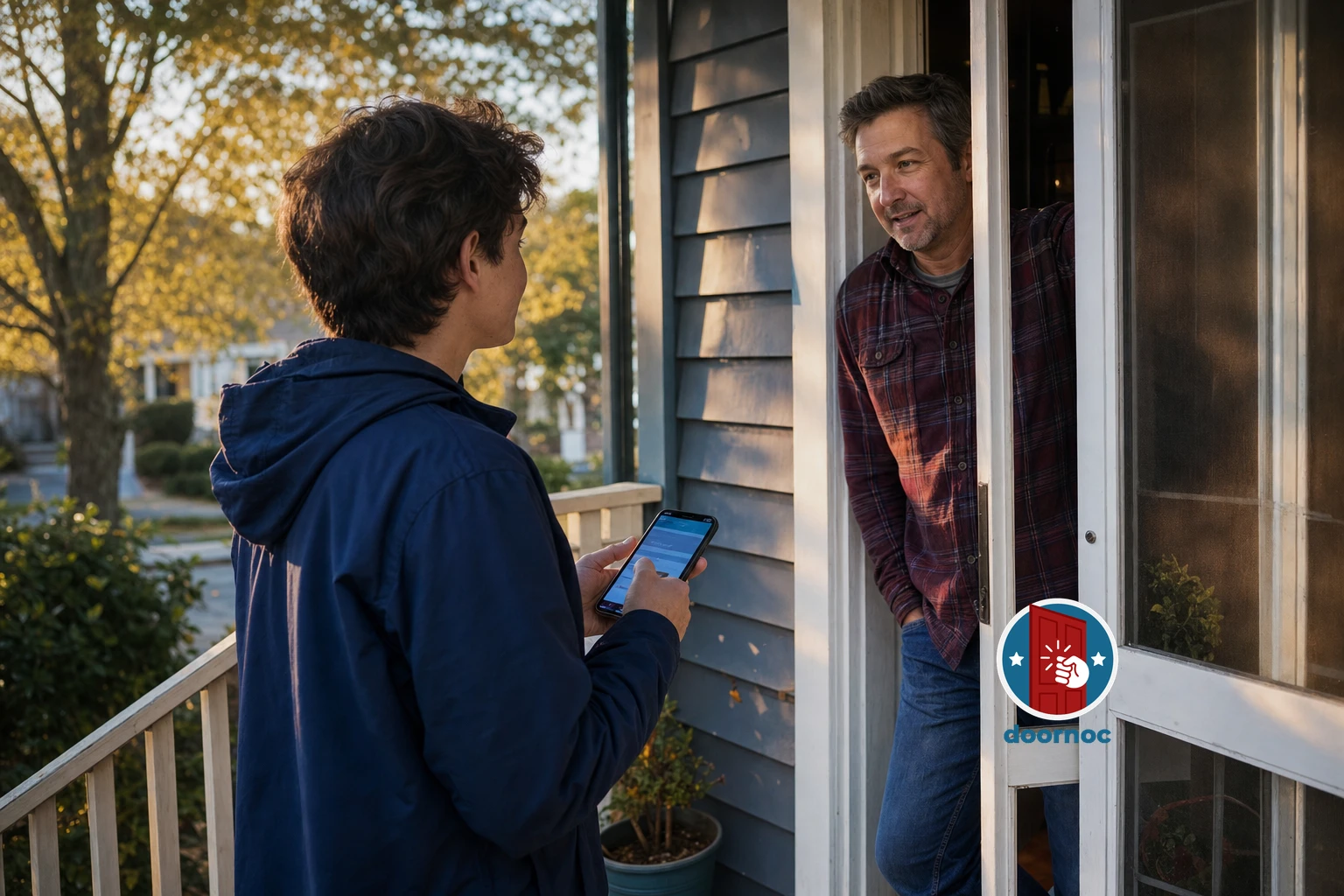
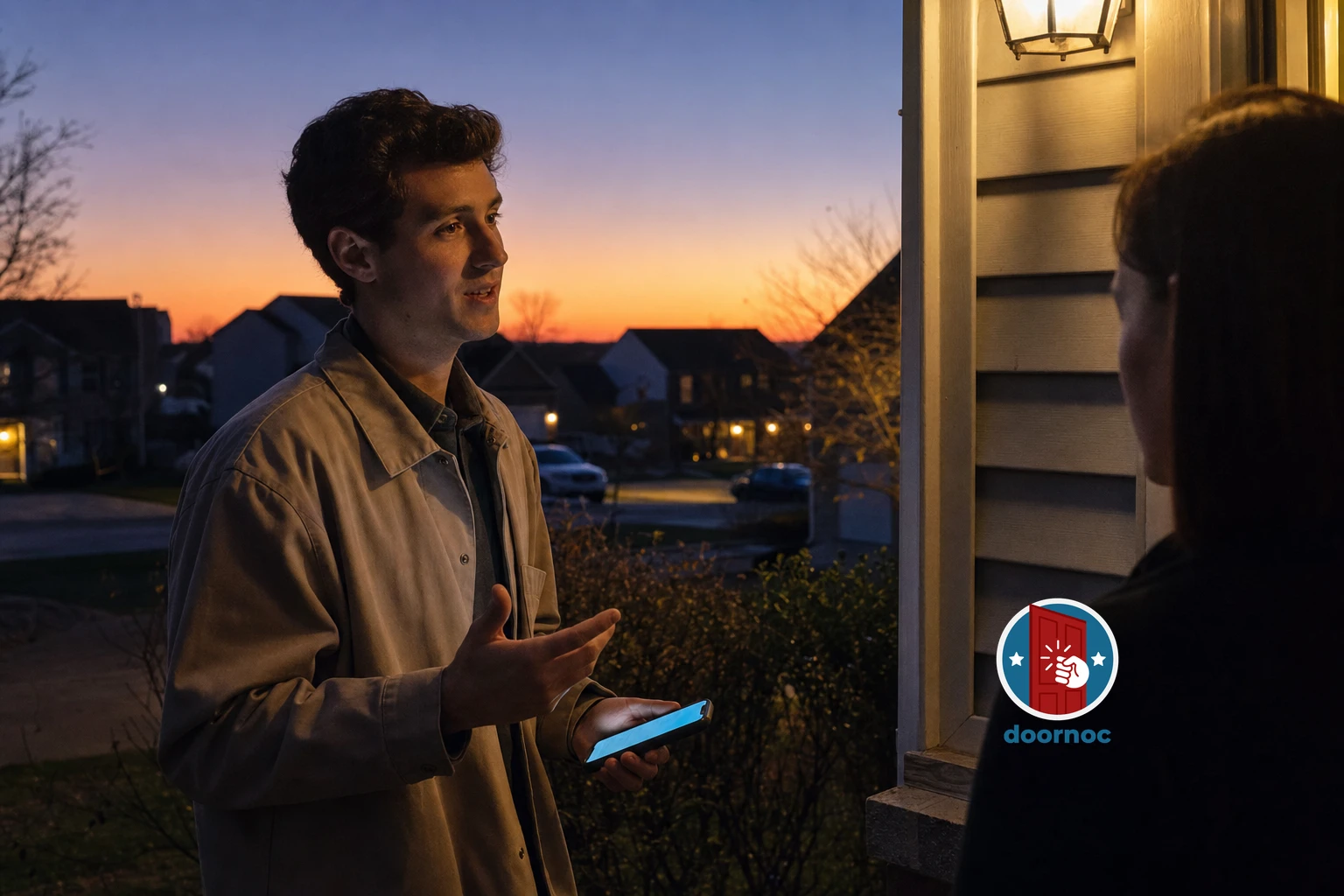 Volunteer using smartphone on residential porch at dusk during doorstep conversation.
Cost per action (CPA) metrics provide the clearest picture of digital marketing efficiency. Track cost per email signup ($2-$8 is competitive), cost per volunteer recruitment ($15-$45), cost per donation ($12-$35), and ultimately cost per persuaded voter ($18-$35) and cost per vote ($8-$25). These metrics allow direct comparison between channels and campaigns—if Facebook delivers email signups at $4 each while Google costs $12, reallocate budget accordingly.
Conversion tracking requires proper technical setup but provides invaluable insights. Install Facebook Pixel and Google Analytics tracking codes on your website, create conversion events for key actions (email signup, donation, volunteer form submission), and use UTM parameters on all links to attribute traffic sources. This infrastructure allows you to see exactly which ads, posts, and channels drive actual results rather than guessing based on impressions or clicks.
Engagement rate matters more than raw follower counts. A candidate with 5,000 highly engaged followers who regularly like, comment, and share content has more influence than a candidate with 20,000 followers who never interact with posts. Calculate engagement rate by dividing total engagements (likes, comments, shares) by total followers, then multiply by 100. Rates above 3-5% indicate strong audience connection, while below 1% suggests your content isn’t resonating.
Video completion rates reveal whether your content actually holds attention. If 80% of viewers drop off after 5 seconds, your hook isn’t working regardless of how good your message is. Facebook and YouTube provide detailed video analytics showing exactly when viewers stop watching, allowing you to identify and fix problem spots. Aim for 50%+ completion rates on videos under 30 seconds and 30%+ on longer content.
Email metrics tell you whether your list is healthy and engaged. Open rates of 20-35% are typical for political campaigns, with click-through rates of 3-8%. Declining open rates suggest list fatigue—you’re emailing too frequently or your content isn’t valuable. Rising unsubscribe rates (above 0.5% per email) indicate serious content or frequency problems requiring immediate adjustment.
Website traffic sources show which channels drive the most engaged visitors. Google Analytics reveals whether visitors from Facebook, Google, email, or other sources spend more time on your site, visit more pages, and complete more conversions. This data should inform budget allocation—if Instagram drives 3x more traffic than X but costs the same, shift resources accordingly.
A/B testing provides definitive answers about what works. Test one variable at a time—headline, image, call-to-action, or audience—to isolate what drives performance differences. Run tests on large enough sample sizes (at least 1,000 impressions per variation) to achieve statistical significance. Document results in a testing log so you build institutional knowledge about what resonates with your electorate.
Crisis Management and Rapid Response in the Digital Age
Political campaigns face constant scrutiny, and digital platforms accelerate both the spread of attacks and your ability to respond. A well-prepared rapid response system can turn potential disasters into opportunities while poorly handled crises can derail campaigns within hours.
Social media monitoring tools track mentions of your candidate, campaign, and key issues across all platforms in real-time. Set up alerts for your candidate’s name, opponent’s name, major issues, and potential crisis keywords. Tools like Hootsuite, Sprout Social, or even free Google Alerts provide early warning when negative content starts spreading, giving you precious hours to formulate responses before stories go viral.
Rapid response protocols define exactly who does what when crisis situations emerge. Designate a crisis response team (typically campaign manager, communications director, and digital director), establish decision-making authority, and create response templates for common scenarios. When your opponent drops an attack ad or negative news breaks, your team should be able to craft, approve, and deploy a response within 2-3 hours.
Fact-checking and opposition research preparation prevents being caught flat-footed. Maintain updated files on your candidate’s record, potential vulnerabilities, and opponent weaknesses. When attacks come, you can immediately deploy factual rebuttals with supporting documentation rather than scrambling to research under pressure. The campaigns that win rapid response battles are those that prepared for attacks before they happened.
Video responses carry more weight than text statements in 2026. When responding to attacks or controversies, record your candidate delivering a direct-to-camera response addressing the issue head-on. These videos feel more authentic and forceful than written statements and can be immediately posted across all platforms. Have a simple video recording setup ready at your campaign office so you can produce responses within an hour when needed.
Paid advertising amplifies your rapid response to ensure it reaches beyond your existing supporters. When you post an organic rebuttal, only your followers see it initially. Backing that content with $500-$2,000 in immediate ad spending ensures your response reaches the same audiences who saw the original attack. This aggressive promotion prevents your opponent’s narrative from solidifying unchallenged.
Never let attacks go unanswered, but choose your battles strategically. Responding to every minor criticism makes you look defensive and gives oxygen to attacks that would otherwise die quickly. Respond forcefully to attacks that threaten your core message or character, ignore petty or obviously false attacks that lack credibility, and always respond to attacks that are gaining traction in media or social conversation.
Building Your Campaign’s Digital Marketing Team and Budget
Successful digital marketing requires both skilled people and adequate resources. The question isn’t whether to invest in digital but how to structure your team and allocate budget for maximum impact.
Staffing requirements scale with campaign size and complexity. Local races running on $50,000-$150,000 budgets typically need one digital director handling all online activities (potentially a skilled volunteer or part-time contractor). Campaigns with $250,000-$500,000 budgets should hire a full-time digital director plus a part-time content creator or graphic designer. Statewide campaigns require full digital teams: digital director, social media manager, content creator, graphic designer, and paid advertising specialist.
Outsourcing versus in-house capabilities represents a key strategic decision. Digital advertising often works best when outsourced to specialized consultants who manage campaigns across multiple races and have deep platform expertise. Social media management and content creation typically perform better in-house because they require intimate campaign knowledge and rapid response capabilities. Many campaigns use hybrid models: consultants manage paid advertising while staff handles organic social media and content.
Budget allocation should follow the 35-50% rule for competitive races in 2026. Of your total campaign budget, allocate 35-50% to digital marketing including paid advertising, content production, tools and software, and staff salaries. Within that digital budget, typical allocation is 60-70% for paid advertising, 20-25% for staff, and 10-15% for tools, software, and production costs.
Tool and platform investments provide leverage that multiplies your team’s effectiveness. Essential tools include social media management platforms ($50-$300/month), email marketing software ($100-$500/month), canvassing software for field integration ($200-$800/month), and analytics platforms ($0-$200/month). These investments seem expensive but pay for themselves many times over through efficiency gains and better results.
Training and skill development prevent your team from falling behind rapidly evolving platforms and best practices. Allocate budget for online courses, conference attendance, and consultant training sessions. Digital marketing tactics that worked in 2024 may be obsolete in 2026—continuous learning is not optional for competitive campaigns.
Timing your digital spending requires strategic thinking about when voters pay attention. Local races should maintain consistent digital presence 8-12 weeks before Election Day, with spending ramping up in the final 3-4 weeks. Statewide races need longer runway—16-20 weeks of sustained activity. Avoid the common mistake of spending everything in the final two weeks; early digital investment builds name recognition and supporter lists that compound in value over time.
The Future of Political Digital Marketing: Preparing for What’s Next
Digital marketing evolves faster than any other aspect of political campaigns. Understanding emerging trends helps you prepare for changes that will define the 2028 election cycle and beyond.
Artificial intelligence is transforming content creation, ad optimization, and voter targeting. AI writing tools help draft email copy and social media posts faster, while AI image generators create custom graphics without designers. More significantly, AI-powered ad optimization automatically adjusts targeting, bidding, and creative in real-time based on performance data, achieving results human managers cannot match. Campaigns that embrace AI tools gain 20-30% efficiency advantages over those relying solely on manual management.
Privacy regulations continue tightening, forcing campaigns to build first-party data strategies. As third-party cookies disappear and platforms restrict data sharing, campaigns must collect voter information directly through email signups, volunteer forms, and website interactions. This shift favors campaigns that invest early in building owned audiences rather than relying entirely on platform targeting.
Influencer partnerships have matured from experimental tactics to core strategy components. Rather than only running ads, campaigns now partner with local influencers, community leaders, and micro-influencers who have authentic connections to specific voter segments. These partnerships often deliver better ROI than traditional advertising because they come with built-in credibility and engaged audiences.
Interactive content and gamification increase engagement beyond passive viewing. Quizzes that help voters understand where candidates stand on issues, interactive policy calculators, and digital volunteer challenges create memorable experiences that drive sharing and action. Campaigns that make digital engagement fun rather than purely informational see 40-50% higher participation rates.
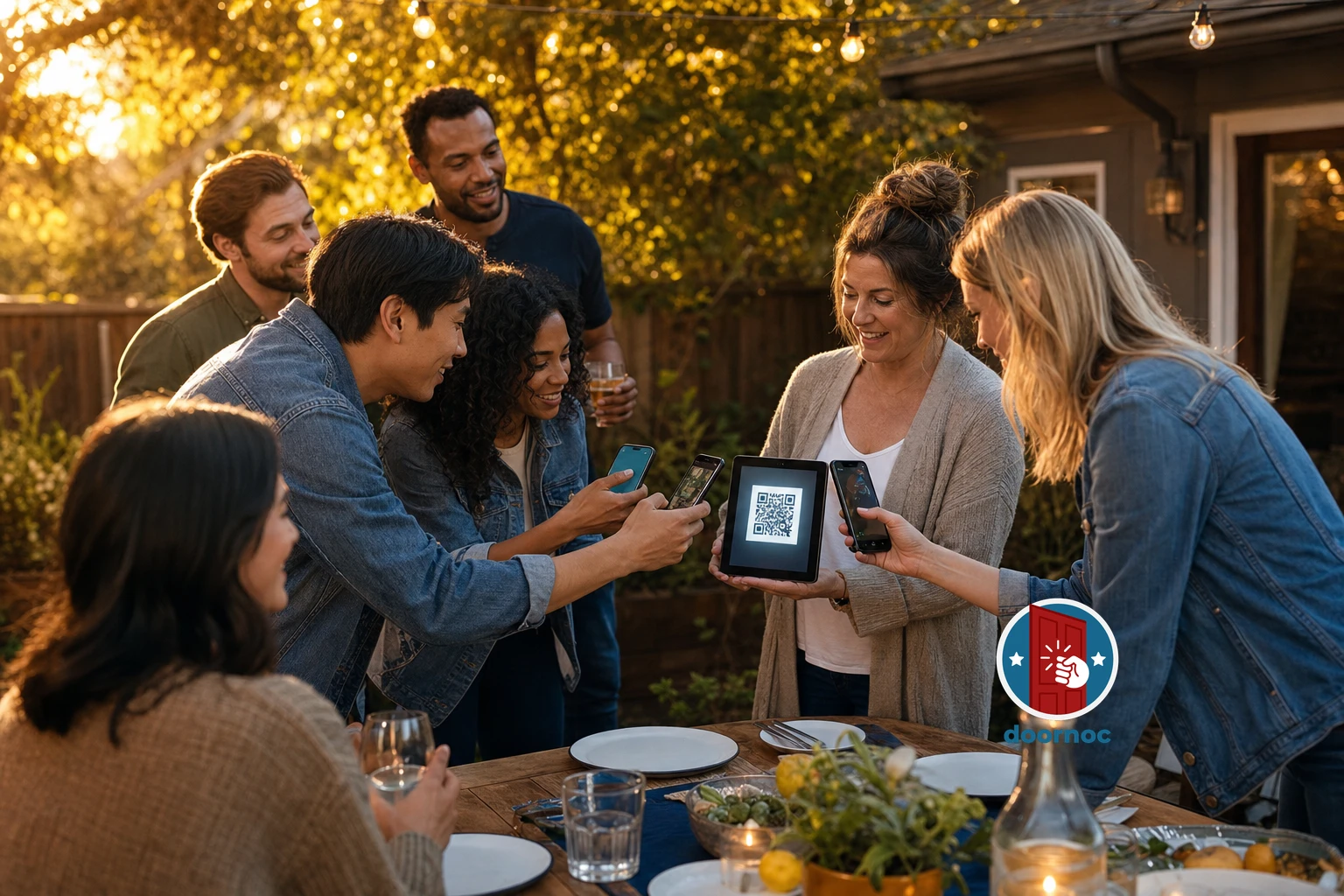
Integrated digital-physical experiences blur the line between online and offline campaigning. QR codes on yard signs link to donation pages, augmented reality filters let supporters “try on” campaign swag virtually, and digital scavenger hunts drive foot traffic to campaign offices and events. These blended experiences meet voters where they are—simultaneously online and in physical communities.
Conclusion: Digital Marketing as Campaign Infrastructure
Political digital marketing in 2026 is no longer a specialized tactic—it’s the fundamental infrastructure through which modern campaigns operate. From volunteer recruitment to voter persuasion to fundraising to field operations coordination, digital tools and platforms touch every aspect of winning campaigns.
The campaigns that succeed are those that view digital marketing holistically rather than as a collection of disconnected tactics. Your social media presence, paid advertising, email program, website, and field operations should function as an integrated system where each component amplifies the others. A voter who sees your Facebook ad, visits your website, signs up for emails, and then gets a door knock from a volunteer equipped with door-to-door canvassing software has experienced a coordinated, multi-touch campaign journey rather than random, disconnected contacts.
The barrier to entry has never been lower for campaigns willing to invest time in learning digital marketing fundamentals. Free or low-cost tools provide capabilities that cost hundreds of thousands of dollars just a few cycles ago. A motivated campaign team can learn platform basics through online resources, start with modest ad budgets to test and learn, and scale up as they identify what works for their specific electorate.
Yet sophistication matters more than ever. As digital marketing becomes universal, the campaigns that win are those that execute with greater precision, creativity, and strategic thinking. Simply having a Facebook page and running some ads is table stakes—victory goes to campaigns that deeply understand their voters, craft compelling narratives, test relentlessly, and integrate digital tools with proven field operations.
The 2026 election cycle has proven that digital marketing works across all campaign types and geographies. Rural campaigns use targeted Facebook ads to reach dispersed voters efficiently. Urban campaigns leverage Instagram and TikTok to engage diverse, young electorates. Down-ballot races use digital tools to compete against better-funded opponents. The common thread is strategic thinking, consistent execution, and willingness to adapt based on data.
As you build your campaign’s digital marketing program, remember that technology serves strategy—not the other way around. Start with clear goals (awareness, persuasion, mobilization), identify your target audiences, craft messages that resonate with those audiences, and then select the digital tools and platforms that best deliver those messages. Campaigns that chase every new platform and trend without strategic focus waste resources and confuse voters.
The integration of digital marketing with traditional field operations represents the most significant development in campaign strategy over the past decade. Tools like Door Knock exemplify this integration by making door-to-door canvassing more efficient and data-driven while connecting field operations to your broader digital ecosystem. The future belongs to campaigns that master both digital and in-person voter contact, using each to enhance the other.
Whether you’re running for city council or statewide office, whether your budget is $25,000 or $25 million, political digital marketing provides tools to reach voters, build support, and win elections more effectively than ever before. The campaigns that invest in building digital capabilities now will have compounding advantages in future cycles as they refine strategies, grow supporter lists, and deepen their understanding of what resonates with voters. Start building your digital infrastructure today—the 2028 cycle is closer than you think.
Frequently Asked Questions
What is political digital marketing?
Political digital marketing refers to the strategic use of online platforms, social media, paid advertising, email campaigns, and digital content to reach voters, build support, and drive campaign actions. It encompasses everything from Facebook ad targeting to influencer partnerships to SMS mobilization programs.
How much should a political campaign spend on digital marketing?
In 2026, competitive campaigns typically allocate 35-50% of their total budget to digital marketing, with local races spending $15,000-$75,000 and statewide campaigns investing $500,000-$5 million. The exact amount depends on district demographics, competitiveness, and whether you’re running in a primary or general election.
Which social media platforms work best for political campaigns?
Facebook remains the top platform for voters over 45 and provides the most sophisticated targeting tools. TikTok and Instagram dominate with voters under 35. YouTube is essential for long-form content and debate clips. Most successful 2026 campaigns maintain active presences on 3-4 platforms rather than spreading resources too thin across all channels.
How do you measure ROI on political digital marketing?
Track cost-per-action metrics including cost per email signup ($2-$8), cost per volunteer recruitment ($15-$45), cost per donation ($12-$35), and ultimately cost per vote ($8-$25 depending on race type). Use UTM parameters, conversion pixels, and unique landing pages to attribute online actions to specific campaigns and channels.
Can digital marketing replace traditional campaign tactics like door knocking?
No. The most effective 2026 campaigns use digital marketing to enhance rather than replace field operations. Digital tools excel at initial voter identification, volunteer recruitment, and message testing, but in-person contact through canvassing still delivers the highest persuasion rates for undecided voters and dramatically improves turnout among supporters.