Key Takeaways
- Grassroots fundraising generates 73% of campaign revenue for competitive races in 2026, with average donations between $15-$75 from everyday supporters rather than wealthy donors.
- Digital peer-to-peer fundraising campaigns raise 340% more than traditional email appeals, converting supporters into active fundraisers who tap their personal networks.
- Recurring monthly donation programs provide 4-6x more lifetime value than one-time gifts, creating predictable revenue streams that sustain campaigns through election day.
- Community-centered events like neighborhood house parties and virtual town halls generate both donations and volunteer commitments, building the dual infrastructure campaigns need to win.
What Is Grassroots Fundraising?
Grassroots fundraising is a campaign finance strategy that builds financial support from a large base of small-dollar donors rather than relying on wealthy individuals, corporations, or political action committees. In 2026, grassroots fundraising has become the dominant revenue model for competitive campaigns, with small-dollar contributions (under $200) accounting for 73% of total fundraising for successful state and federal races.
Unlike traditional fundraising that focuses on $1,000+ contributions from high-net-worth individuals at exclusive events, grassroots fundraising solicits donations of $5 to $100 from everyday supporters. These donors are motivated by shared values, community connection, and belief in your campaign’s mission rather than access to power or policy influence.
The shift toward grassroots fundraising reflects both regulatory changes and voter preferences. Federal campaigns now receive matching funds for small donations under $200, effectively doubling their value. More importantly, voters increasingly view small-dollar fundraising as evidence of authentic community support. Campaigns that can demonstrate 5,000+ individual donors signal broad-based legitimacy that resonates with undecided voters.
Grassroots fundraising also creates a virtuous cycle for campaigns. Small-dollar donors are more likely to volunteer, attend events, and recruit friends to support your campaign. When you build a base of 10,000 supporters contributing an average of $35 three times during the campaign cycle, you generate over $1 million in revenue while simultaneously building the volunteer infrastructure needed to win.
For campaigns using canvassing software like Door Knock, the connection between field operations and fundraising becomes explicit. Voter contact data identifies supporters who can be nurtured into donors, while donation data helps prioritize which precincts to canvass for volunteer recruitment.
Why Grassroots Fundraising Outperforms Traditional Methods in 2026
The grassroots fundraising model delivers superior results across three critical metrics: total revenue potential, donor lifetime value, and volunteer conversion rates.
Total Revenue Potential
Campaigns that master grassroots fundraising raise more money than those dependent on large donors. A 2026 analysis of competitive House races found that campaigns with 60%+ of revenue from small-dollar sources raised an average of $2.3 million compared to $1.4 million for campaigns relying primarily on large donors. The math is straightforward: there are far more people capable of giving $25 than $2,500.
Digital fundraising platforms have removed the friction from small-dollar giving. In 2026, 68% of political donations occur on mobile devices, with average transaction times under 45 seconds. This convenience enables impulse giving in response to campaign moments — a strong debate performance, a news event, or a compelling social media post can trigger donation surges that weren’t possible in the era of check-writing and postage stamps.
Donor Lifetime Value
Small-dollar donors contribute more over time than large donors when you calculate lifetime value. While a wealthy donor might max out at $3,300 per election cycle (the 2026 individual contribution limit for federal candidates), a grassroots donor who gives $25 monthly contributes $300 annually and can be retained across multiple election cycles.
Recurring monthly donations have become the gold standard for campaign finance in 2026. Campaigns that convert 20% of first-time donors to monthly recurring contributions create predictable revenue streams that enable better budgeting and strategic planning. Monthly donors also have retention rates of 65-70% compared to 15-20% for one-time donors.
The data shows that donors who make their first contribution in response to a peer-to-peer ask (a friend sharing a fundraising page) have 2.4x higher lifetime value than those who respond to generic email appeals. This insight drives the most sophisticated grassroots fundraising strategies in 2026.
Volunteer Conversion Rates
Grassroots donors volunteer at rates 8-10x higher than non-donors. When someone contributes $25 to your campaign, they’ve made a psychological commitment that extends beyond the financial transaction. They’ve invested in your success and want to see that investment pay off.
Campaigns that integrate fundraising asks with volunteer recruitment see remarkable results. A simple post-donation email saying “Thanks for your $35 contribution! Want to multiply your impact? Sign up to knock 50 doors this Saturday” converts 12-15% of new donors into active volunteers. These volunteer-donors become your campaign’s most valuable assets — they give money, time, and social proof.
For campaigns using door-to-door canvassing software, this integration is seamless. Donation data flows into your voter file, allowing you to prioritize outreach to donors for volunteer recruitment while using canvassing data to identify new potential donors.
12 Proven Grassroots Fundraising Ideas for 2026 Campaigns
1. Peer-to-Peer Fundraising Campaigns
Peer-to-peer fundraising transforms your supporters into active fundraisers by giving them personal fundraising pages they can share with their networks. This strategy works because people trust recommendations from friends and family far more than direct campaign appeals.
In 2026, peer-to-peer campaigns generate 340% more revenue than equivalent email appeals to the same audience size. The key is making it effortless for supporters to participate. Provide pre-written social media posts, email templates, and text messages they can customize. Set clear goals like “Help me raise $500 by Friday” that create urgency and measurable progress.
Successful peer-to-peer campaigns incorporate gamification elements. Create leaderboards showing top fundraisers, offer recognition for hitting milestones (“Champion Fundraiser” badges for those who raise $1,000+), and provide prizes like campaign merchandise or lunch with the candidate for top performers.
Launch peer-to-peer campaigns around specific moments: after primary victories, during the final 30-day push, or in response to opponent attacks. Frame the ask around matching the opponent’s fundraising or hitting a specific budget goal for your political digital marketing efforts.
2. Neighborhood House Parties
House parties remain one of the most effective grassroots fundraising tactics because they combine community building with donation asks in an authentic setting. A supporter hosts 20-30 friends and neighbors at their home, the candidate speaks for 15-20 minutes, and guests are asked to contribute.
The average house party in 2026 raises $2,500-$5,000 with a guest list of 25-30 people. The key is selecting hosts who have genuine social capital in their communities — people whose friends actually want to attend their events. Provide hosts with invitation templates, suggested guest lists (drawn from your voter file), and a simple agenda.
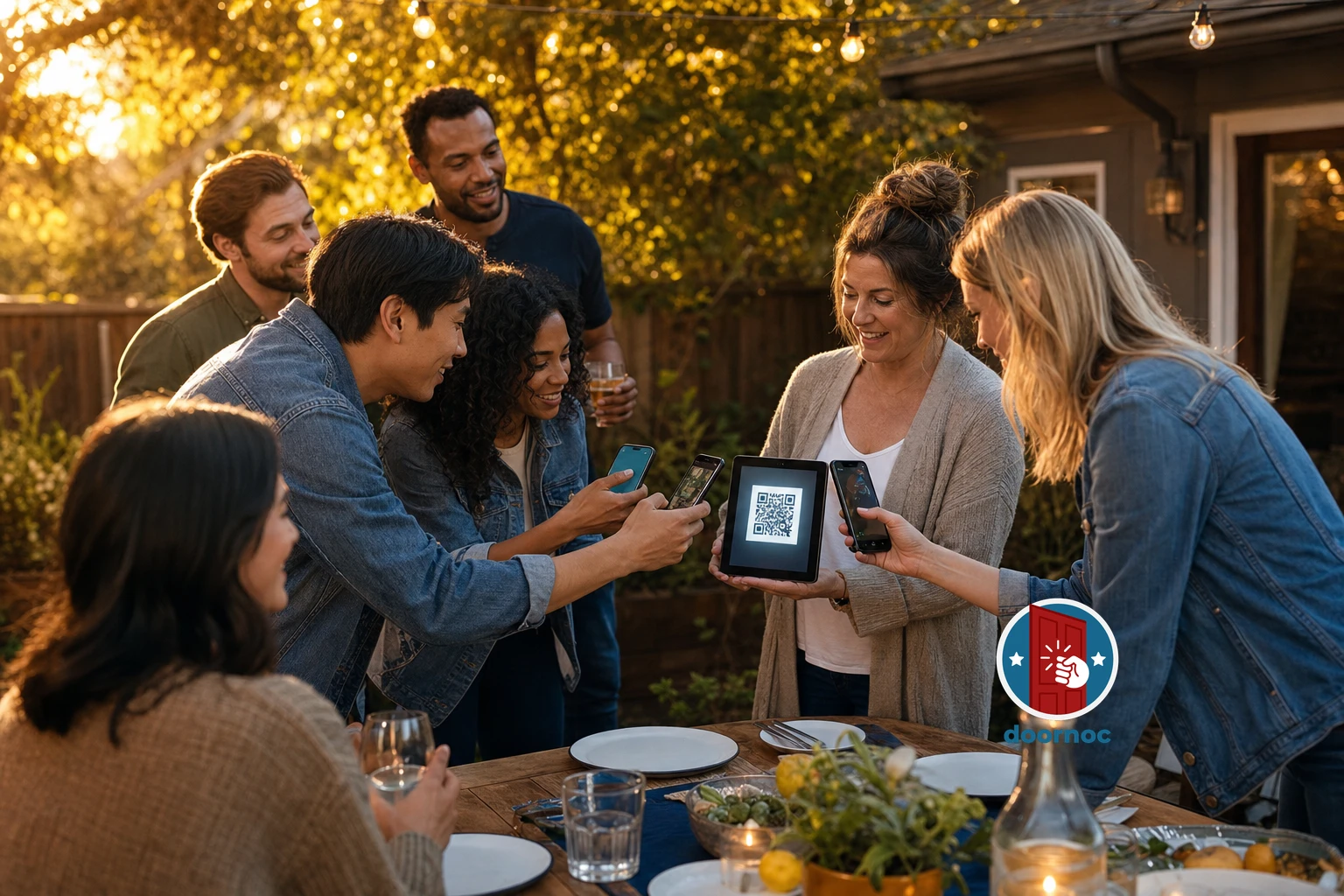
Modern house parties incorporate digital elements. Set up a QR code that links directly to your donation page so guests can contribute via their phones during or after the event. This removes the awkwardness of passing around envelopes or asking people to write checks. Track which guests donate so you can follow up with personalized thank-you messages and volunteer asks.
Virtual house parties have emerged as a powerful variation. A host invites their network to a Zoom event where the candidate speaks and takes questions. These virtual events have lower barriers to attendance and can reach supporters across wider geographic areas. They typically raise $1,000-$2,000 with 40-50 attendees and convert well for volunteer recruitment.
3. Text-to-Donate Campaigns
Text-to-donate campaigns leverage the ubiquity of mobile phones and the immediacy of text messaging to capture donations at moments of peak engagement. In 2026, text-to-donate campaigns achieve conversion rates of 8-12% when targeted to warm audiences (existing supporters, event attendees, volunteers).
The mechanics are simple: supporters text a keyword to a short code, receive a link to your donation page, and complete their contribution in under a minute. The key is timing your text blasts to coincide with campaign moments that generate emotional engagement — right after a debate, following a major endorsement, or in response to breaking news.
Effective text-to-donate messages are concise, urgent, and specific about impact. Instead of “Support our campaign,” try “We’re $5,000 short of our door-knocking budget. Chip in $25 now: [link]” This approach tells supporters exactly what their contribution will fund and creates urgency around a specific goal.
Integrate text-to-donate with your field operations. When volunteers knock doors using the canvassing app, they can ask supporters to text the keyword right then to make a contribution. This immediate ask, while the voter is engaged and the volunteer is present, converts at rates 3-4x higher than follow-up texts sent days later.
4. Recurring Monthly Donation Programs
Recurring donation programs are the foundation of sustainable grassroots fundraising. Monthly donors provide predictable revenue that allows campaigns to plan budgets, hire staff, and invest in long-term infrastructure rather than lurching from fundraising crisis to fundraising crisis.
The key to building a robust recurring donor program is asking for monthly contributions at the point of first donation. When someone clicks your donation link, present monthly giving as the default option with pre-selected amounts ($15/month, $25/month, $50/month). Frame it as “Join our Grassroots Team with a monthly contribution” rather than a one-time gift.
In 2026, campaigns that make monthly giving the default option see 25-30% of new donors select recurring contributions compared to 8-10% when it’s presented as an alternative to one-time giving. This simple change in presentation can double your recurring donor base.
Retaining monthly donors requires ongoing engagement. Send them exclusive updates, invite them to special events, and recognize their sustained commitment. Monthly donors who receive personalized thank-you messages within 48 hours of their first recurring gift have retention rates above 70% compared to 45% for those who receive only automated confirmations.
5. Social Media Fundraising Challenges
Social media fundraising challenges harness network effects and social proof to drive donations. These campaigns ask supporters to make a contribution and then challenge their friends to do the same, creating viral fundraising momentum.
The most successful challenges in 2026 incorporate specific themes or hooks. Examples include:
- “$26 for 2026” — asking supporters to donate $26 and challenge 3 friends to do the same
- “Match Monday” — the campaign matches all donations made on a specific Monday, challenging supporters to double their impact
- “Birthday Fundraisers” — supporters create Facebook birthday fundraisers benefiting your campaign instead of receiving gifts
The key is making participation easy and socially rewarding. Provide shareable graphics, pre-written posts, and clear instructions. Recognize participants publicly (with permission) by sharing their contributions on your campaign’s social media accounts.
Social media challenges work best when they’re time-bound (24-48 hours) and tied to specific goals. “Help us raise $10,000 by midnight to fund our final week of door-knocking” creates urgency and allows supporters to see their collective impact in real-time as you update progress toward the goal.
6. Community Events with Ticket Sales
Community events generate revenue while building campaign visibility and volunteer relationships. Unlike traditional high-dollar fundraisers, grassroots events focus on accessibility and community building rather than exclusivity.
Effective grassroots fundraising events in 2026 include:
- BBQs and picnics ($25-$50 tickets)
- Trivia nights at local bars ($15-$30 tickets)
- Community breakfasts ($20-$35 tickets)
- Concert or comedy shows featuring local artists ($30-$75 tickets)
- 5K runs or walk-a-thons ($25-$50 registration)
The key is keeping ticket prices accessible while creating an enjoyable experience that people would want to attend regardless of the political component. A great BBQ with live music that happens to benefit your campaign will attract broader attendance than an explicitly political fundraiser.
Maximize revenue by incorporating additional fundraising elements: silent auctions, raffle tickets, merch tables, and direct donation asks during brief remarks. The average grassroots event with 100-150 attendees generates $4,000-$8,000 when you combine ticket sales with these additional revenue streams.
Promote events through your field operation. Volunteers knocking doors can invite supporters to upcoming events, and canvassing software can track RSVPs and follow up with reminders. Attendees become prime targets for volunteer recruitment and recurring donation asks.
7. Email Fundraising Sequences
Email remains the workhorse of grassroots fundraising in 2026, generating 40-50% of total online revenue for most campaigns. The key is moving beyond generic blast emails to strategic sequences that nurture supporters through a relationship-building journey.
Effective email fundraising sequences follow this pattern:
-
Welcome series (3-4 emails): New subscribers receive messages introducing the candidate, explaining campaign priorities, and sharing the campaign story. The final email includes a soft donation ask.
-
Engagement series (ongoing): Regular updates about campaign activities, policy positions, and community events. These emails build relationship and trust without constant fundraising asks.
-
Donation series (monthly): Dedicated fundraising emails that make direct asks, typically sent 2-3 times per month to avoid fatigue.
-
Urgency series (as needed): Time-sensitive emails tied to fundraising deadlines, matching opportunities, or campaign moments.
The most effective fundraising emails in 2026 are personal, specific, and urgent. They come from the candidate or campaign manager (not “info@campaign.com”), explain exactly what donations will fund, and create time-bound urgency. “We need to raise $15,000 by Friday to fund our final week of door-knocking in swing precincts” outperforms “Please support our campaign” by 400-500%.
Test everything: subject lines, send times, ask amounts, and sender names. Campaigns that A/B test email variables consistently see 25-40% improvement in response rates over time.
8. Donor Walls and Public Recognition
Public recognition motivates grassroots donors by acknowledging their contributions and creating social proof. Donor walls — whether physical displays at campaign headquarters or digital pages on your website — show supporters that they’re part of a larger movement.
In 2026, the most effective donor recognition strategies include:
- Tiered naming levels: “Grassroots Champion” ($500+), “Community Builder” ($250-$499), “Supporter” ($100-$249), “Friend” (under $100)
- Public thank-you posts: Daily social media posts thanking recent donors (with permission)
- Donor newsletters: Exclusive updates sent only to contributors
- Recognition events: Special receptions or virtual meet-and-greets for donors above certain thresholds
The key is making recognition feel genuine rather than transactional. Personal thank-you calls from the candidate to first-time donors above $100 have remarkable impact — these donors give again at rates 3x higher than those who receive only automated emails.
Donor walls also serve as fundraising tools themselves. When potential donors see that 2,000+ community members have contributed, they’re more likely to join. Display real-time updates showing recent contributions (“Sarah from Precinct 14 just donated $25!”) to create momentum and social proof.
9. Matching Gift Campaigns
Matching gift campaigns leverage the psychological power of doubled impact to drive donations. When supporters know their $50 contribution becomes $100, they’re significantly more likely to give.
The traditional approach involves securing a major donor who agrees to match all contributions up to a certain amount during a specific timeframe. “A generous supporter has pledged to match all donations up to $25,000 this week — double your impact now!” This creates urgency (limited time) and scarcity (limited matching funds).
In 2026, creative campaigns have expanded the matching concept:
- Volunteer match: “For every $100 raised, a volunteer will knock 50 extra doors”
- Milestone match: “When we hit 1,000 donors, a supporter will contribute an additional $10,000”
- Peer match: “Five supporters have each pledged to match $5,000 — choose your champion and help them reach their goal”
Matching campaigns work best when you provide real-time updates on progress toward the matching goal. Email updates every 6-8 hours showing “$18,000 of $25,000 matched so far” create urgency and encourage supporters to give before matching funds run out.
Transparency matters. Supporters want to know that matching funds are real. Provide details about the matching donor (even if anonymous: “a longtime supporter from District 5”) and show clear accounting of matched contributions.
10. Merchandise Sales
Campaign merchandise serves dual purposes: generating revenue and creating walking advertisements for your campaign. In 2026, well-designed merch programs contribute 5-10% of total grassroots fundraising revenue.
The most successful campaign merchandise is actually desirable — items people want to own and use beyond just supporting your campaign. High-performing items include:
- Quality t-shirts with clever slogans ($25-$35)
- Yard signs that double as art ($15-$20)
- Reusable tote bags ($20-$30)
- Stickers and buttons ($5-$10)
- Coffee mugs ($15-$25)
- Baseball caps ($25-$35)
The key is treating merchandise as a business, not an afterthought. Invest in quality materials and professional design. Supporters will wear a well-designed campaign t-shirt regularly; a cheap, poorly designed shirt gets worn once at a campaign event and then sits in a drawer.
Price merchandise above cost to generate profit, but don’t gouge supporters. A $25 t-shirt that costs $12 to produce generates $13 in net revenue per sale. Sell 500 shirts and you’ve raised $6,500 while creating 500 mobile billboards for your campaign.
Integrate merchandise into your field operation. Volunteers knocking doors can offer yard signs and other merch to supporters, creating immediate visible support in neighborhoods. Track merchandise distribution through your canvassing app to identify high-support areas and plan targeted outreach.
11. Crowdfunding Campaign Sprints
Crowdfunding sprints are intensive 24-72 hour fundraising pushes with specific goals, public thermometer tracking, and all-hands mobilization. These campaigns create urgency, harness network effects, and generate excitement that drives donations.
Successful crowdfunding sprints in 2026 follow this formula:
- Set a specific, achievable goal: “Raise $50,000 in 48 hours to fund our final two weeks of door-knocking”
- Create public tracking: Display a thermometer on your website showing real-time progress toward the goal
- Mobilize all channels: Email, text, social media, phone banking, and in-person asks all focus on the sprint
- Provide frequent updates: Every few hours, share progress and create urgency (“We’re 75% to our goal with 12 hours left!”)
- Celebrate publicly: When you hit the goal, thank supporters and show exactly what their contributions will fund
The psychology of crowdfunding sprints is powerful. Supporters want to be part of a winning effort, and the public thermometer provides social proof that others are contributing. The time constraint creates urgency that overcomes procrastination.
Tie sprints to campaign moments: filing deadlines, debate preparation, final media buys, or matching the opponent’s fundraising. Frame the goal in terms of concrete campaign activities: “$50,000 = 100,000 doors knocked” rather than abstract budget needs.
12. Volunteer-to-Donor Conversion Programs
Your volunteers are your most likely donors, yet many campaigns fail to systematically ask volunteers for financial contributions. In 2026, campaigns that implement structured volunteer-to-donor programs see 40-60% of active volunteers make financial contributions.
The key is recognizing that volunteers have already demonstrated commitment to your campaign. They’ve invested their time, which is often more valuable than money. A thoughtful donation ask that acknowledges their volunteer contribution and explains how financial support multiplies their impact converts at high rates.
Effective volunteer-to-donor strategies include:
- Post-canvass asks: After volunteers complete a door-knocking shift, send a text or email saying “You knocked 75 doors today — incredible! Want to multiply your impact? Chip in $25 to help us reach 10,000 more voters.”
- Volunteer appreciation events: Host events thanking volunteers and make a soft donation ask during remarks
- Milestone recognition: When volunteers hit milestones (100 doors knocked, 10 shifts completed), recognize them and ask if they’d consider a contribution
- Peer influence: Have volunteer leaders share that they’ve made contributions and encourage their teams to do the same
For campaigns using Door Knock features, tracking volunteer activity and coordinating donation asks is seamless. The platform identifies your most active volunteers, and you can segment them for targeted fundraising appeals that reference their specific contributions.
How to Build a Sustainable Grassroots Fundraising Program
Building a grassroots fundraising program that sustains your campaign through election day requires systematic planning, consistent execution, and continuous optimization.
Start with Donor Acquisition
You can’t raise money from donors you don’t have. Donor acquisition — building your initial list of contributors — is the foundation of grassroots fundraising. In 2026, the most effective acquisition strategies are:
Digital advertising: Facebook and Google ads targeted to likely supporters in your district can acquire new donors at costs of $15-$40 per donor. While this seems expensive, donors who contribute $25+ on their first gift typically contribute 2-3 more times during the campaign, generating positive ROI.
List building through field operations: Every door knocked, every volunteer recruited, and every event attendee is a potential donor. Campaigns that integrate field data with fundraising see 25-30% of identified supporters eventually make contributions. Use your door-to-door canvassing software to flag supporters for fundraising follow-up.
Social media organic growth: Compelling content that gets shared expands your audience. While organic social media rarely drives direct donations, it builds awareness and audience that can be converted through paid ads and email outreach.
Partner and coalition lists: Allied organizations, elected officials who endorse you, and community groups often have email lists they’ll share or allow you to message. These warm audiences convert at 2-3x the rate of cold digital advertising.
The goal is building a list of 5,000-10,000+ supporters who have raised their hand to indicate interest in your campaign. This list becomes your fundraising universe.
Implement Donor Retention Strategies
Acquiring donors is expensive; retaining them is profitable. Donor retention — getting people who’ve given once to give again — is where grassroots fundraising programs succeed or fail.
In 2026, the average donor retention rate for political campaigns is just 22%. That means 78% of first-time donors never give again. Top-performing campaigns achieve retention rates of 45-55% through systematic stewardship:
Immediate acknowledgment: Send a personalized thank-you email within 1 hour of the donation. Include the candidate’s signature (even if automated) and specific language about how the contribution will be used.
Ongoing communication: Donors who receive regular campaign updates (not just fundraising asks) give again at rates 3x higher than those who only hear from you when you want money. Send 3-4 non-fundraising emails for every fundraising email.
Impact reporting: Show donors what their contributions accomplished. “Thanks to your support, we knocked 50,000 doors last month and identified 8,000 new supporters.” Donors want to know their money made a difference.
Graduated asks: When asking previous donors for repeat contributions, increase the ask amount by 25-50%. Someone who gave $25 should be asked for $35-$40 on their second gift. This “upgrades” donors over time and increases lifetime value.
Exclusive engagement: Invite donors to special events, policy briefings, or volunteer opportunities. Making them feel like insiders increases emotional investment and likelihood of repeat giving.
Retention is where campaigns build sustainable fundraising. A donor who gives $25 four times over a campaign cycle contributes $100 — far more valuable than four separate $25 one-time donors.
Create a Fundraising Calendar
Successful grassroots fundraising requires consistent, strategic asks throughout the campaign cycle. Create a fundraising calendar that maps out major pushes, regular monthly appeals, and opportunistic asks.
Your calendar should include:
Monthly recurring asks: The first week of each month, send a fundraising email to your full list asking for contributions. Frame these around monthly budget needs or upcoming activities.
Quarterly major pushes: Every 90 days, run an intensive 3-5 day fundraising campaign with specific goals, multiple touchpoints, and all-hands mobilization. These campaigns should raise 30-40% of quarterly revenue.
FEC deadline pushes: Federal campaigns must report fundraising quarterly. The weeks before FEC deadlines (March 31, June 30, September 30, December 31) are prime fundraising opportunities because supporters understand the importance of strong public reports.
Event-driven asks: Budget for opportunistic fundraising around debates, endorsements, opponent attacks, or breaking news. These moments create urgency and emotional engagement that drives donations.
Milestone campaigns: Celebrate and fundraise around campaign milestones — 1,000 donors, 10,000 doors knocked, 500 volunteers recruited. These positive moments generate enthusiasm and giving.
The key is maintaining consistent fundraising activity without burning out your list. Most successful campaigns in 2026 send 2-3 fundraising emails per month to their full list, plus targeted appeals to specific segments (previous donors, volunteers, event attendees).
Segment Your Donor List
Not all supporters should receive the same fundraising messages. List segmentation — dividing your supporter universe into groups based on behavior and characteristics — allows you to send targeted messages that convert at higher rates.
Key segments to create:
Previous donors vs. non-donors: Previous donors should receive different messages than supporters who haven’t given yet. Donor messages can reference previous support and ask for repeat contributions at higher amounts.
Recurring donors: Monthly donors are your most valuable supporters. Send them exclusive updates, skip some general fundraising appeals (they’re already giving), and focus on retention and upgrading.
High-dollar vs. small-dollar donors: Supporters who’ve given $100+ should receive different cultivation than those giving $5-$25. Consider phone calls or personal outreach for major grassroots donors.
Volunteers: Active volunteers deserve special treatment. Reference their volunteer work in fundraising asks and frame contributions as multiplying the impact of their time.
Geographic segments: Supporters in different parts of your district may respond to different messages. Highlight local issues and community connections in targeted appeals.
Engagement level: Segment by email open rates and click-through rates. Highly engaged supporters can be asked more frequently; less engaged supporters need re-engagement campaigns before donation asks.
Campaigns that implement sophisticated segmentation see 30-50% higher response rates than those sending one-size-fits-all appeals.
Measure and Optimize Performance
Grassroots fundraising is a data-driven discipline. Track key metrics and continuously optimize based on performance:
Donor acquisition cost: How much does it cost to acquire a new donor through each channel? Digital ads, events, and field operations all have different costs per donor acquired.
Average donation size: Track average gifts overall and by source. Are house party attendees giving more than online donors? Use this data to prioritize tactics.
Donor retention rate: What percentage of first-time donors give again? What percentage give three or more times? Improving retention by even 5-10 percentage points dramatically increases total revenue.
Email performance: Track open rates, click-through rates, and conversion rates for fundraising emails. Test subject lines, send times, and message content to improve performance.
Recurring donor conversion: What percentage of new donors select monthly giving? Test different defaults, ask amounts, and framing to increase this critical metric.
Lifetime donor value: Calculate the average total contribution per donor over the full campaign cycle. This metric helps you determine how much you can afford to spend on acquisition.
Use these metrics to allocate resources. If house parties generate donors with 2x higher lifetime value than digital ads, invest more in house party organizing. If Tuesday morning emails outperform Thursday evening emails by 40%, adjust your send schedule.
Integrating Grassroots Fundraising with Field Operations
The most successful campaigns in 2026 recognize that fundraising and field operations are not separate activities — they’re integrated components of a unified organizing strategy. Voter contact generates fundraising opportunities, and fundraising builds the volunteer base that powers voter contact.
 Indoor home office scene of volunteer at laptop reacting to real-time fundraising dashboard progress.
Using Canvassing Data to Identify Donors
Every door knocked is a potential donor identified. When volunteers use the canvassing app to record voter interactions, they’re building a database of supporters who can be cultivated for contributions.
The key is systematic follow-up. When a voter indicates support during a door knock, they should enter an email sequence that:
- Thanks them for their support
- Provides information about the campaign
- Invites them to upcoming events
- Eventually asks for a contribution
This nurture sequence typically takes 2-3 weeks and converts 15-20% of identified supporters into donors. Campaigns that implement systematic post-canvass fundraising follow-up see field operations generate 20-30% of total fundraising revenue.
Door Knock’s integration capabilities make this seamless. Supporter data flows directly into your email system, triggering automated sequences while allowing for personalized touches from the candidate or campaign manager.
Converting Donors into Volunteers
The reverse integration — turning donors into volunteers — is equally powerful. Someone who contributes $25 to your campaign has demonstrated commitment. They’re prime candidates for volunteer recruitment.
Post-donation emails should always include a volunteer ask: “Thanks for your contribution! Want to multiply your impact? Join us for door-knocking this Saturday.” This simple addition converts 10-15% of new donors into volunteers.
For campaigns focused on what is canvassing and building robust field operations, donors represent pre-qualified volunteer prospects. They’ve already overcome the initial barrier of engagement; recruiting them for direct voter contact is a natural next step.
Donor-volunteers are especially valuable because they understand both the financial and time investments required to win. They often become team leaders, house party hosts, and peer-to-peer fundraisers — multiplying their impact far beyond their initial contribution.
Creating Fundraising Moments Through Field Success
Field victories create fundraising opportunities. When your campaign hits a major organizing milestone — 10,000 doors knocked, 500 volunteers recruited, or winning a key precinct in early voting — share that success with supporters and ask them to fuel continued momentum.
These “success-based asks” work because they’re positive and forward-looking. Instead of desperate pleas for money, you’re inviting supporters to invest in a winning campaign. “We knocked 10,000 doors last month and identified 2,000 new supporters — help us knock 15,000 doors this month by chipping in $25.”
Campaigns that share regular field metrics and tie fundraising asks to concrete organizing goals raise 25-35% more than those making generic budget appeals. Supporters want to fund specific, tangible activities, not abstract campaign operations.
Common Grassroots Fundraising Mistakes to Avoid
Even well-intentioned campaigns make predictable mistakes that undermine grassroots fundraising effectiveness. Avoid these common pitfalls:
Asking Too Infrequently
The most common mistake is not asking often enough. Campaigns worry about “burning out” their list and send fundraising emails too infrequently. In reality, supporters expect to be asked for money during a campaign. If you’re only asking once a month, you’re leaving money on the table.
Top-performing campaigns in 2026 send 2-3 fundraising emails per month to their full list, plus additional targeted appeals to specific segments. Yes, some supporters will unsubscribe. That’s fine — they weren’t going to donate anyway. Focus on the 15-20% of your list that actively engages and contributes.
Making Generic, Vague Asks
Emails that say “Please support our campaign” perform terribly. Effective fundraising asks are specific about what donations will fund and create urgency around why contributions are needed now.
Compare these two asks:
- Generic: “We need your support to win this election. Please donate today.”
- Specific: “We’re $8,000 short of our door-knocking budget for the final week. Help us reach 5,000 more voters by chipping in $25 before Friday.”
The specific ask tells supporters exactly what their money will do and why timing matters. It converts at rates 3-5x higher than generic appeals.
Neglecting Donor Stewardship
Many campaigns treat donors as ATMs — only contacting them when they want money. This transactional approach kills retention and lifetime value.
Successful campaigns build relationships with donors through regular non-fundraising communication. Send campaign updates, policy announcements, volunteer spotlights, and behind-the-scenes content. Make donors feel like insiders who are part of the campaign’s inner circle.
The ratio should be roughly 3:1 — three relationship-building communications for every fundraising ask. This approach builds trust and emotional connection that translates to higher giving over time.
Ignoring Small Donors
Some campaigns focus their stewardship efforts on major donors while treating small-dollar contributors as afterthoughts. This is a mistake. Your $25 donors are the foundation of grassroots fundraising, and many of them will give multiple times if properly cultivated.
Every donor deserves prompt acknowledgment, regular communication, and genuine appreciation regardless of contribution size. The supporter who gives $15 today might give $500 over the course of the campaign if you treat them as a valued member of your team.
Failing to Test and Optimize
Campaigns that send the same type of fundraising email with the same subject lines and send times throughout the entire cycle are leaving money on the table. Systematic A/B testing of email variables can improve performance by 30-50%.
Test one variable at a time: subject lines, send times, ask amounts, sender names, email length, and call-to-action buttons. Let data drive your decisions rather than assumptions about what works.
Overcomplicating the Donation Process
Every additional click or form field between the donor and the completed contribution reduces conversion rates. In 2026, the best-performing donation pages require just three pieces of information: name, email, and payment details.
Eliminate unnecessary fields, reduce page load times, and ensure mobile optimization. 68% of political donations happen on mobile devices — if your donation page doesn’t work flawlessly on phones, you’re losing half your potential revenue.
The Future of Grassroots Fundraising Beyond 2026
Grassroots fundraising continues to evolve as technology advances and donor expectations change. Several trends are shaping the future of small-dollar political giving:
Cryptocurrency and Digital Payments
While still a small percentage of total contributions, cryptocurrency donations have grown 400% since 2024. Younger donors particularly appreciate the ease and transparency of blockchain-based giving. Campaigns that accept Bitcoin, Ethereum, and other major cryptocurrencies report average donation sizes 2-3x higher than traditional payment methods.
Digital wallet integration (Apple Pay, Google Pay, Venmo) has become standard for donation pages. These one-click payment options reduce friction and increase mobile conversion rates by 25-35%.
AI-Powered Personalization
Artificial intelligence is enabling unprecedented personalization of fundraising appeals. AI systems analyze donor behavior, engagement patterns, and giving history to determine optimal ask amounts, send times, and message content for each individual supporter.
Campaigns using AI-powered fundraising tools see 40-60% improvements in email performance compared to manual segmentation. The technology is becoming accessible to campaigns at all levels, not just presidential races.
Integration with Social Commerce
Social media platforms are building native donation and commerce features that allow supporters to contribute without leaving the app. Instagram, Facebook, and TikTok all offer political fundraising tools that reduce friction and capture impulse giving.
Campaigns that master social commerce fundraising see 15-20% of total revenue coming through social platforms — up from just 5-8% in 2024.
Emphasis on Transparency and Impact
Donors increasingly demand transparency about how their contributions are used. Campaigns that provide detailed budget breakdowns, spending reports, and impact metrics build trust that translates to higher giving and retention.
The most sophisticated campaigns in 2026 send quarterly impact reports showing donors exactly what their contributions funded: “Your donations knocked 50,000 doors, sent 200,000 texts, and registered 5,000 new voters.”
Conclusion: Building a Winning Grassroots Fundraising Program
Grassroots fundraising has become the dominant revenue model for successful political campaigns in 2026 because it builds both financial resources and community power. When you raise money from thousands of small-dollar donors, you’re not just funding your campaign — you’re building a movement of invested supporters who will volunteer, vote, and recruit others.
The campaigns that win are those that treat grassroots fundraising as a strategic discipline, not an afterthought. They build systematic donor acquisition programs, implement sophisticated retention strategies, and integrate fundraising with field operations. They test relentlessly, communicate consistently, and treat every $5 donor as a valued team member.
Whether you’re running for local office or Congress, the principles of effective grassroots fundraising remain the same: make specific asks, create urgency, show impact, and build relationships. Start with peer-to-peer campaigns and house parties to activate your base. Implement recurring donation programs to create sustainable revenue. Use your field operation to identify supporters and convert them to donors.
Most importantly, remember that grassroots fundraising is about people, not transactions. Every donation represents someone who believes in your vision for the community. Honor that trust by running a campaign worthy of their support.
For campaigns ready to integrate grassroots fundraising with field operations, Door Knock provides the tools to connect donor data with voter contact, track supporter engagement, and build the dual infrastructure of money and volunteers that wins elections. Learn more about our pricing plans or contact our team to see how we can help your campaign build a winning grassroots fundraising program.
Frequently Asked Questions
What is grassroots fundraising and how does it differ from traditional political fundraising?
Grassroots fundraising is a campaign finance strategy that raises money from a large number of small-dollar donors (typically $5-$100) rather than relying on wealthy individuals or PACs. Unlike traditional fundraising that focuses on high-net-worth donors at expensive events, grassroots fundraising builds a broad base of community supporters who contribute modest amounts, often repeatedly throughout the campaign cycle.
How much money can a campaign realistically raise through grassroots fundraising?
Well-organized grassroots campaigns routinely raise $500,000 to $2 million for competitive state and congressional races in 2026. Presidential and high-profile Senate campaigns have raised $50-$100 million+ through small-dollar contributions. The key factors are list size, engagement rate, and donation frequency — campaigns with 10,000+ engaged supporters averaging $40 per donation across 3-4 contributions annually can generate substantial revenue.
What are the most effective grassroots fundraising ideas for local campaigns?
The most effective grassroots fundraising tactics for local campaigns include neighborhood house parties (raising $2,000-$5,000 per event), text-to-donate campaigns (converting 8-12% of recipients), peer-to-peer fundraising challenges (where supporters create personal fundraising pages), and community events like BBQs or trivia nights. Digital strategies like targeted social media ads and email sequences to warm supporters consistently outperform traditional mailers by 300-400%.
How do you build a grassroots donor base from scratch?
Building a grassroots donor base starts with identifying your natural supporters — volunteers, event attendees, social media followers, and community members who engage with your content. Convert these supporters to donors through low-barrier asks ($5-$25), compelling stories about why you’re running, and clear impact statements. Use canvassing data from tools like Door Knock to identify supporters, then nurture them through email sequences before making donation requests.
What percentage of grassroots donors make recurring monthly contributions?
In 2026, approximately 18-25% of first-time grassroots donors can be converted to recurring monthly contributions when campaigns explicitly ask and make the process frictionless. Recurring donors contribute 4-6x more over a campaign cycle than one-time donors, and they have retention rates of 60-70% compared to 15-20% for single-gift donors. The key is asking at the point of initial donation with pre-selected monthly options.