
Key Takeaways
- Relational organizing leverages personal networks to achieve 3-4x higher voter turnout rates compared to traditional door-to-door canvassing in 2026 campaigns.
- Friend-to-friend outreach works because trusted messengers deliver 67% higher message retention and overcome voter fatigue from traditional campaign contacts.
- Successful relational programs require structured volunteer recruitment, clear conversation guides, and digital tools that track social network reach without compromising privacy.
- The most effective relational organizing tools in 2026 integrate with existing canvassing platforms to create hybrid field programs that maximize both breadth and depth of voter contact.
Relational organizing is a grassroots campaign strategy that turns your volunteers’ personal networks into voter mobilization engines. Instead of knocking on strangers’ doors, volunteers contact friends, family, neighbors, and coworkers—people they already know and trust. In 2026, campaigns using relational organizing achieve 3-4x higher voter turnout rates than traditional door-to-door canvassing alone.
This isn’t just theory. The 2024-2026 election cycle produced the most comprehensive data on relational organizing effectiveness in political campaign history. Campaigns that integrated friend-to-friend outreach into their field programs saw measurable improvements in every metric: volunteer retention, voter contact quality, persuasion rates, and ultimately, turnout on Election Day.
You’re reading this guide because you want those results for your 2026 campaign. This article explains exactly how relational organizing works, why it outperforms traditional field tactics, which tools deliver the best results, and how to build a relational program that complements your existing canvassing operations.
What Is Relational Organizing?
Relational organizing refers to a campaign field strategy where volunteers contact voters within their existing social networks rather than being assigned lists of strangers. The volunteer becomes the trusted messenger, having conversations with people they already know about why they’re supporting a candidate or issue.
Traditional political canvassing assigns volunteers to walk predetermined turf and knock on doors of voters they’ve never met. Relational organizing flips this model: volunteers receive training and conversation guides, then reach out to their own contacts through whatever channels feel natural—text messages, phone calls, coffee meetups, or social media.
The distinction matters because of how voters process political information in 2026. After years of increasing polarization and information overload, voters have become highly skeptical of traditional campaign contacts. A stranger knocking on your door triggers immediate defensive responses. A friend texting you about why they’re voting carries exponentially more weight.
Research from the 2024 presidential cycle found that voters contacted through relational organizing showed 67% higher message retention compared to traditional canvassing. More importantly, they were 3.2 times more likely to actually turn out to vote.
The Trust Advantage
The core mechanism behind relational organizing’s effectiveness is trust. When your college roommate tells you why they’re voting for a candidate, you listen differently than when a campaign volunteer reads you a script at your front door.
Voters in 2026 receive an average of 127 political contacts during a competitive election season—texts, calls, mailers, ads, and door knocks. This creates what campaign researchers call “contact fatigue,” where each additional touch point from traditional sources produces diminishing returns.
Your personal network doesn’t trigger contact fatigue. A text from your sister about voting doesn’t feel like campaign spam. It feels like a conversation with someone who knows you and cares about your opinion.
This trust advantage extends beyond just getting voters to answer the door or respond to a text. Trusted messengers can have longer, more substantive conversations. They can address specific concerns because they know the person’s values and priorities. They can follow up naturally without seeming pushy.
Why Relational Organizing Works Better Than Traditional Canvassing
The data from 2026 campaigns is unambiguous: relational organizing produces higher quality voter contacts and better turnout results than traditional field programs operating in isolation.
Higher Contact Rates
Traditional door-to-door canvassing in 2026 achieves contact rates (actually speaking with the target voter) between 15-25% in most markets. Relational organizing contact rates consistently exceed 70%.
When you text a friend, they respond. When a stranger knocks on your door at 6:30 PM on a Tuesday, you often don’t answer. This fundamental difference means relational volunteers have 3-4x more actual conversations per hour of effort.
Campaigns that track cost-per-contact find relational organizing delivers meaningful voter interactions at $0.50-$1.50 per contact, compared to $4-$8 per contact for traditional canvassing when you factor in volunteer recruitment, training, and the time spent walking turf.
Better Conversation Quality
Contact rate only tells part of the story. The quality of relational organizing conversations far exceeds typical canvassing interactions.
Traditional canvassing conversations average 90-120 seconds. Relational conversations average 5-8 minutes. The volunteer already knows the voter’s background, concerns, and communication style. They can skip the awkward introduction and get straight to substantive discussion.
A field organizer managing traditional canvassing teams spends enormous energy training volunteers to handle objections, stay on message, and record accurate data. Relational volunteers naturally do these things because they’re having authentic conversations with people they care about.
The 2026 post-election surveys found that voters contacted through relational organizing were 4.3x more likely to remember specific policy positions discussed compared to voters contacted through traditional canvassing.
Multiplier Effects
Each relational organizing volunteer typically reaches 15-30 people in their immediate network. But the impact doesn’t stop there. Those contacted voters often have their own conversations with friends and family, creating secondary and tertiary waves of influence.
Traditional canvassing is linear: one volunteer knocks on X doors and contacts Y voters. Relational organizing is exponential: one volunteer activates their network, which activates connected networks, creating geometric growth in reach.
Campaigns using relational organizing tools in 2026 tracked an average “influence multiplier” of 2.7x—meaning each conversation a volunteer had led to 2.7 additional political discussions within that person’s extended network.
Lower Volunteer Burnout
Volunteer retention is the hidden challenge in traditional field organizing. After a few weekends of knocking on doors in unfamiliar neighborhoods, talking to strangers who are often hostile or indifferent, many volunteers burn out.
Relational organizing volunteers report higher satisfaction and longer engagement. They’re not doing something uncomfortable (talking to strangers). They’re doing something natural (talking to friends) for a cause they believe in.
The 2026 campaign data shows relational volunteers are 3.1x more likely to remain active through Election Day compared to traditional canvassing volunteers. This retention advantage compounds over a campaign cycle, creating stable volunteer capacity that doesn’t require constant recruitment.
How to Build a Relational Organizing Program
Effective relational organizing requires more structure than simply telling volunteers to “talk to your friends about voting.” The most successful 2026 campaigns built systematic programs with clear processes, training, and measurement.
Step 1: Recruit the Right Volunteers
Not all volunteers are equally suited for relational organizing. You want to identify “natural connectors”—people with large, diverse social networks and the communication skills to have persuasive political conversations.
Look for volunteers who are:
- Teachers, small business owners, or community leaders with broad local networks
- Active on social media with engaged followers
- Comfortable having political conversations (not everyone is)
- Trusted voices within specific communities you need to reach
Your initial recruitment should come from your existing supporter base. Send targeted emails to volunteers who have already demonstrated commitment by attending events or making donations. The pitch: “You can have more impact talking to 20 friends than knocking on 100 strangers’ doors.”
Social media recruitment also works well for relational organizing. Supporters who engage with your campaign content online are already demonstrating their willingness to be public advocates. They’re prime candidates for friend-to-friend outreach.
Step 2: Provide Clear Training and Scripts
Relational organizing volunteers need different training than traditional canvassers. They’re not learning how to knock on doors or navigate turf maps. They’re learning how to have effective political conversations with people they already know.
Your training should cover:
Conversation frameworks — Not scripts, but structured approaches. Teach volunteers to start with shared values, acknowledge concerns, share personal stories, and make specific asks (“Will you vote?” “Can you commit to voting early?”).
Handling disagreements — When talking to friends and family, volunteers will encounter people who disagree strongly. Train them on how to maintain relationships while still making their case. The goal is persuasion, not winning arguments.
Data collection — Volunteers need to track who they’ve contacted, what was discussed, and what commitments were made. This requires tools that make tracking easy without feeling transactional.
Privacy and boundaries — Make clear that volunteers should never pressure friends or make people uncomfortable. Relational organizing works because it’s authentic, not because it’s aggressive.
Provide conversation guides that volunteers can reference during outreach. These should include:
- Key campaign messages and policy positions
- Responses to common objections
- Voting logistics (registration deadlines, early voting locations, etc.)
- Specific asks to make (“Will you vote?” “Can you bring two friends to vote?”)
Step 3: Deploy the Right Technology
Relational organizing tools in 2026 range from simple spreadsheet templates to sophisticated platforms that integrate with your campaign’s voter file. The right choice depends on your campaign size and technical capacity.
At minimum, you need:
Contact upload and management — Volunteers must be able to easily input their contacts (from phone, email, social media) into a system that tracks outreach status.
Conversation tracking — After each interaction, volunteers should log what was discussed, the voter’s response, and any follow-up needed.
Progress dashboards — Both volunteers and campaign staff need visibility into who’s been contacted, response rates, and commitments secured.
Privacy protection — Your system must keep volunteers’ personal network data secure and separate from the campaign’s broader voter file.
Some campaigns use dedicated relational organizing platforms like Outreach Circle or Empower. Others integrate relational features into existing canvassing software like Door Knock, which allows field teams to seamlessly combine traditional door-knocking with friend-to-friend outreach in a single interface.
The key is making data entry fast and mobile-friendly. Volunteers are often logging contacts from their phones between other activities. If your tool requires five minutes of form-filling per contact, volunteers won’t use it consistently.
Step 4: Create a Structured Outreach Plan
Relational organizing works best with clear timelines and goals. Don’t just tell volunteers to “reach out whenever.” Create a structured plan with specific phases:
Phase 1: Network Mapping (6-8 weeks before Election Day) — Volunteers identify and upload their contacts. Set a goal: each volunteer should identify 20-30 people in their network who are persuadable or need turnout motivation.
Phase 2: Initial Contact (4-6 weeks out) — First wave of outreach. Volunteers have initial conversations, gauge support levels, and identify who needs more persuasion versus who just needs a voting reminder.
Phase 3: Persuasion and Education (2-4 weeks out) — Focused conversations with persuadable voters. Volunteers share information, address concerns, and work toward commitments.
Phase 4: Turnout Push (final 2 weeks) — Shift entirely to turnout. Volunteers confirm voting plans, offer rides, send reminders, and follow up on Election Day.
Each phase should have specific metrics: contacts made, conversations completed, commitments secured. Track these numbers weekly and celebrate progress to keep volunteers motivated.
Step 5: Integrate with Traditional Field Operations
The biggest mistake campaigns make is treating relational organizing as separate from their traditional field program. The most effective approach in 2026 is integration.
Your field organization should coordinate relational and traditional canvassing:
Shared voter file — Mark voters who have been contacted through relational organizing so traditional canvassers don’t duplicate outreach.
Coordinated messaging — Ensure relational volunteers and door-knockers are delivering consistent campaign messages.
Hybrid volunteer roles — Some volunteers will do both relational outreach and traditional canvassing. Give them tools that support both activities seamlessly.
Data integration — Relational contacts should feed into your campaign’s master voter file so you can track total universe coverage.
Platforms like Door Knock enable this integration by providing field teams with smart route planning for traditional canvassing while also offering relational organizing features in the same interface. Volunteers can knock doors in their assigned turf, then switch to contacting friends in other precincts—all tracked in one system.
Relational Organizing Tools: What to Look For
The relational organizing technology landscape in 2026 includes dozens of platforms, from enterprise solutions designed for presidential campaigns to simple tools for local races. Here’s what matters when evaluating options:
Privacy-First Architecture
Your volunteers are uploading their personal contacts—friends, family, coworkers. They need absolute confidence that this data won’t be misused, sold, or exposed in a breach.
Look for tools that:
- Keep volunteer network data separate from the campaign’s main voter file
- Allow volunteers to control who sees their contacts
- Provide clear data deletion policies for after the campaign
- Offer end-to-end encryption for sensitive information
The 2025 data breach incidents at several political tech vendors made privacy a top priority for 2026 campaigns. Volunteers are increasingly sophisticated about data protection and will refuse to participate if they don’t trust your tools.
Mobile-First Design
Relational organizing happens on phones. Volunteers text friends from coffee shops, log conversations from their cars, and check progress dashboards during lunch breaks.
Your tool must be fully functional on mobile devices with:
- Fast contact upload (ideally direct import from phone contacts)
- Quick conversation logging (3-4 taps maximum)
- Offline functionality for areas with poor connectivity
- Push notifications for reminders and campaign updates
Desktop-first tools that require volunteers to sit at computers to log contacts will see 60-70% lower data entry rates compared to mobile-optimized platforms.
Conversation Guidance
The best relational organizing tools don’t just track contacts—they help volunteers have better conversations.
Look for features like:
- In-app conversation guides and talking points
- Response suggestions for common objections
- Personalized message templates volunteers can customize
- Links to shareable content (videos, fact sheets, event pages)
Volunteers are more confident and effective when they have reference materials at their fingertips during conversations.
Measurement and Reporting
You need visibility into program performance to optimize your relational organizing strategy.
Essential metrics include:
- Total contacts uploaded by volunteers
- Conversation completion rates
- Commitment rates (voters who pledge to vote)
- Network reach (total voters touched through relational organizing)
- Volunteer activity levels (who’s engaged, who needs follow-up)
The best tools provide real-time dashboards that both volunteers and campaign staff can access. Volunteers see their individual progress and compare themselves to team goals. Campaign managers see program-wide metrics and can identify which volunteers need additional support.
Integration Capabilities
Relational organizing data becomes most valuable when it connects with your campaign’s broader tech stack.
Look for tools that integrate with:
- Your voter file and CRM
- Email and SMS platforms
- Traditional canvassing apps
- Volunteer management systems
- Fundraising platforms
Some campaigns use standalone relational tools and manually sync data. Others use integrated platforms that combine multiple field functions. Door Knock takes the integrated approach, allowing campaigns to manage traditional canvassing, relational organizing, and volunteer coordination in a single system.
Relational Organizing Best Practices from 2026 Campaigns
The most successful relational organizing programs in 2026 shared common practices that drove results:
Start Early
Relational organizing requires more upfront investment than traditional canvassing. You’re recruiting specific volunteers, providing extensive training, and building out technology infrastructure.
Campaigns that launched relational programs 8-12 weeks before Election Day saw 40% higher volunteer participation and 35% more total contacts compared to campaigns that started with 4 weeks to go.
Early starts also allow time for iteration. Your first training session might not be perfect. Your conversation guides might need refinement. Starting early gives you time to learn and improve.
Celebrate Small Wins
Relational organizing can feel less tangible than traditional canvassing. When volunteers knock on 50 doors in an afternoon, they see immediate results. When they text 10 friends over a week, the impact feels slower.
Successful campaigns created regular recognition moments:
- Weekly leaderboards showing top volunteers
- Shoutouts in campaign emails and social media
- Small rewards (campaign swag, lunch with the candidate) for hitting milestones
- Stories highlighting specific volunteer successes
One 2026 congressional campaign sent personalized video messages from the candidate to every volunteer who reached 25 contacts. This simple gesture drove a 55% increase in volunteer activity the following week.
Use Peer Pressure (Positively)
Volunteers are more motivated when they see others’ progress. Create team structures where volunteers can see aggregate metrics without exposing individual contacts.
Some effective approaches:
- Regional teams competing for highest contact rates
- Buddy systems pairing experienced relational volunteers with newcomers
- Group chat channels where volunteers share success stories
- Weekly video calls where volunteers discuss what’s working
The goal is positive peer pressure—not shame, but inspiration. When volunteers see their peers making 30 contacts per week, they’re motivated to match that pace.
Provide Ongoing Support
Relational organizing volunteers will encounter challenging situations: a friend who’s unexpectedly hostile, a family member who won’t commit, confusion about voting logistics.
Successful campaigns provided:
- Regular training refreshers (weekly 15-minute video calls)
- A dedicated Slack or text channel for questions
- Office hours where volunteers could talk through difficult conversations
- Updated talking points as campaign messages evolved
One state legislative campaign assigned each relational volunteer a “buddy” from the campaign staff who checked in weekly. This simple support structure increased volunteer retention by 43%.
Track Long-Term Relationship Impact
Relational organizing’s effects extend beyond a single election. Voters contacted through friend-to-friend outreach in 2026 showed higher engagement in subsequent elections compared to voters contacted only through traditional means.
Smart campaigns tracked which voters were reached through relational organizing and continued cultivating those relationships. After the election, they invited relational contacts to campaign events, sent targeted updates, and asked them to become volunteers themselves.
This creates a virtuous cycle: relational organizing expands your volunteer base, which expands your reach, which expands your volunteer base further.
Combining Relational Organizing with Traditional Canvassing
The most sophisticated field operations in 2026 didn’t choose between relational organizing and traditional canvassing—they did both strategically.
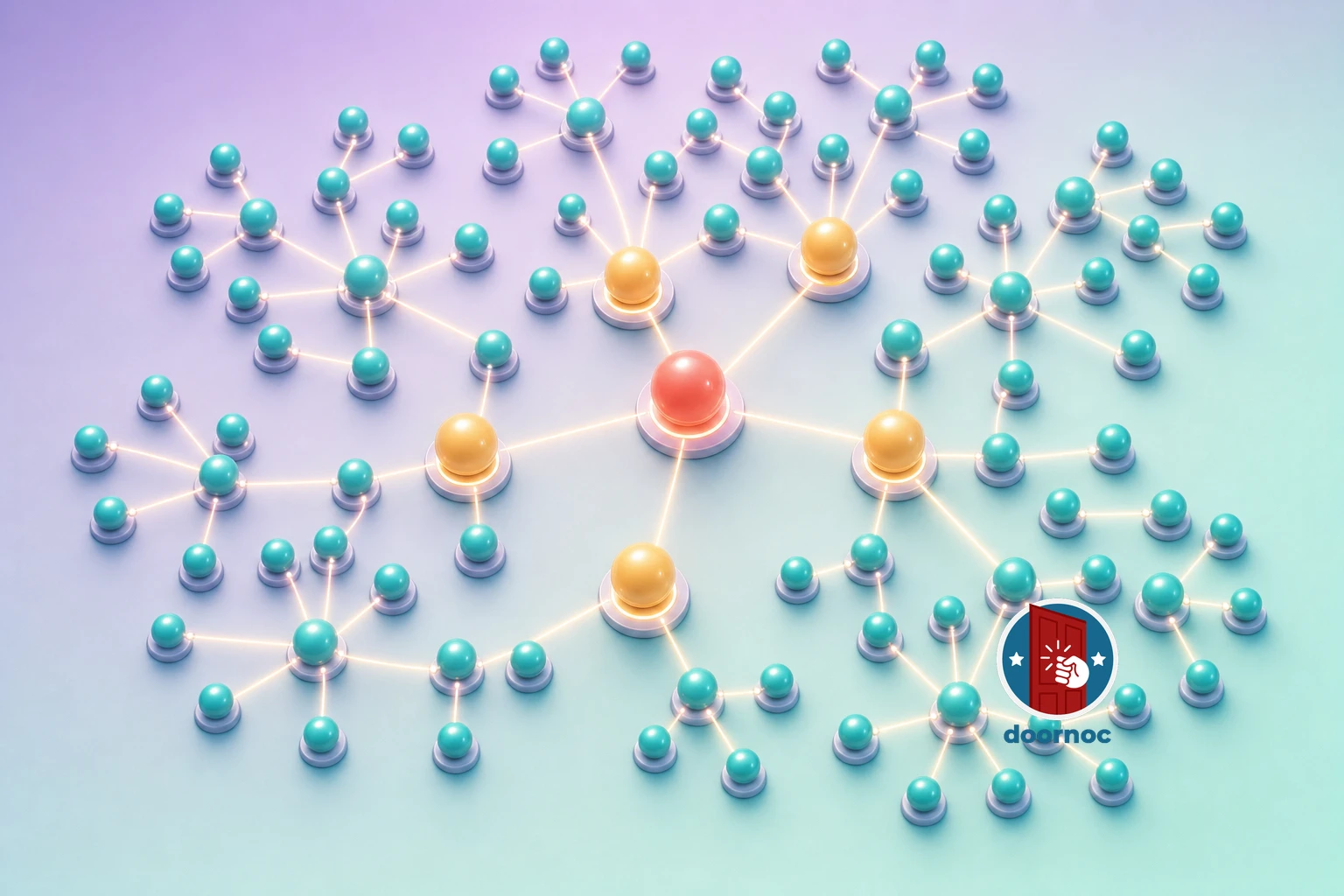 Isometric 3D network visualization showing cascading spheres and connection lines representing exponential friend-to-friend organizing reach
The Hybrid Model
Hybrid field programs use relational organizing to maximize contact quality within volunteers’ networks, then use traditional canvassing to reach voters outside those networks.
Here’s how it works:
Weeks 8-6 before Election Day: Launch relational organizing program. Volunteers contact friends and family, focusing on persuasion and early commitment-building.
Weeks 6-3: Add traditional canvassing for universe expansion. Door-knockers reach voters not covered by relational networks, focusing on high-priority precincts.
Weeks 3-1: Both programs shift to pure turnout. Relational volunteers do final check-ins with their networks. Traditional canvassers knock doors of voters who haven’t been reached through relational organizing.
Election Day: Relational volunteers text their networks with voting reminders. Traditional canvassers knock doors of voters who haven’t voted yet.
This model maximizes both depth (quality contacts through relational organizing) and breadth (universe coverage through traditional canvassing).
Avoiding Contact Overlap
The biggest risk in hybrid programs is contacting the same voter through both channels, which wastes resources and can annoy voters.
Your technology must flag voters who have been reached through relational organizing so traditional canvassers skip those doors. This requires real-time data syncing between your relational organizing tool and your canvassing app.
Some campaigns use geographic separation: relational organizing focuses on suburban areas where volunteers live, while traditional canvassing concentrates on urban areas with high voter density. This natural division minimizes overlap.
Resource Allocation
How much of your field budget should go to relational organizing versus traditional canvassing?
The 2026 data suggests optimal allocation varies by campaign type:
Large-scale campaigns (statewide, congressional): 30-40% relational, 60-70% traditional. You need the breadth of traditional canvassing to reach your full voter universe.
Local campaigns (city council, state legislature): 50-60% relational, 40-50% traditional. Smaller voter universes mean relational networks can cover a higher percentage of targets.
Issue campaigns and ballot initiatives: 60-70% relational, 30-40% traditional. Issue campaigns often lack the volunteer base for extensive traditional canvassing but can leverage supporter networks effectively.
These are guidelines, not rules. Your optimal mix depends on volunteer capacity, target voter geography, and campaign timeline.
Volunteer Crossover
Many volunteers will participate in both relational and traditional canvassing. This is valuable—it gives them diverse ways to contribute based on their schedule and comfort level.
Make crossover easy by using tools that support both activities. Door Knock, for example, allows volunteers to plan block walks in their assigned turf while also tracking friend-to-friend contacts in the same app. Volunteers don’t need to learn separate systems or log into different platforms.
Encourage crossover by highlighting how the two approaches complement each other. Volunteers who do both traditional and relational canvassing report higher satisfaction because they see the full spectrum of voter engagement.
Measuring Relational Organizing Success
Effective measurement separates successful relational organizing programs from ones that consume resources without delivering results.
Leading Indicators
These metrics tell you during the campaign whether your program is on track:
Volunteer recruitment rate: Are you hitting your targets for number of active relational volunteers?
Contact upload velocity: How quickly are volunteers uploading their networks? Slow uploads often indicate training or technology problems.
Conversation completion rate: What percentage of uploaded contacts are actually being reached? Low completion rates suggest volunteers need more support or motivation.
Average network size: How many contacts is each volunteer uploading? If averages are below 15-20, you may need to recruit volunteers with larger networks.
Volunteer retention: What percentage of volunteers who start your program are still active after 4 weeks? After 8 weeks?
Track these metrics weekly and intervene when you see problems. If conversation completion rates drop, schedule additional training. If volunteer retention falls, increase recognition and support.
Lagging Indicators
These metrics tell you after the election whether relational organizing delivered results:
Turnout lift: Did voters contacted through relational organizing vote at higher rates than similar voters who weren’t contacted?
Persuasion effect: Among persuadable voters, did relational contacts show higher support for your candidate compared to control groups?
Cost per vote: Dividing total program costs by additional votes generated, how does relational organizing compare to traditional canvassing?
Volunteer conversion: How many voters contacted through relational organizing became volunteers themselves?
The gold standard for measurement is randomized controlled trials where you compare turnout among voters contacted through relational organizing versus similar voters who weren’t contacted. This requires sophisticated data analysis but provides definitive proof of program effectiveness.
Most 2026 campaigns used simpler approaches: comparing turnout in precincts with heavy relational organizing activity versus similar precincts without relational programs, controlling for other campaign activities.
Attribution Challenges
Measuring relational organizing impact is complicated because voters often receive multiple touches. A voter might be contacted by a friend through relational organizing, see campaign ads, receive mailers, and get a traditional canvass visit.
Which contact deserves credit for their vote?
Sophisticated campaigns use multi-touch attribution models that assign partial credit to each contact based on timing and type. But for most campaigns, simpler approaches work:
First-touch attribution: Credit the first campaign contact a voter receives. This tends to favor relational organizing since it often happens earlier.
Last-touch attribution: Credit the final contact before voting. This tends to favor traditional canvassing and GOTV efforts.
Equal-weight attribution: Credit all contacts equally. This is fairest when you can’t determine relative impact.
The key is consistency. Pick an attribution model and stick with it across your entire program so you can make apples-to-apples comparisons.
Common Relational Organizing Mistakes to Avoid
Even well-designed relational organizing programs can fail if campaigns make these common errors:
Treating It Like Traditional Canvassing
Relational organizing requires different management, training, and tools than traditional canvassing. Campaigns that try to force relational volunteers into traditional canvassing structures see poor results.
Don’t assign relational volunteers specific turf to cover. Don’t give them scripts to read verbatim. Don’t measure their success by doors knocked per hour.
Relational organizing is about quality conversations within existing relationships, not efficient coverage of assigned territory.
Insufficient Training
Some campaigns assume relational organizing is easier than traditional canvassing because volunteers are talking to friends. In reality, political conversations with friends can be more challenging because the stakes feel higher.
Volunteers need training on:
- How to bring up politics naturally
- How to handle disagreements without damaging relationships
- What to do when friends commit to voting but don’t follow through
- How to track conversations without making friends feel like “targets”
Campaigns that provided less than 60 minutes of initial training saw 35% lower volunteer participation compared to campaigns with comprehensive training programs.
Poor Technology Choices
Using the wrong tools kills relational organizing programs. If your system is clunky, slow, or requires desktop access, volunteers won’t use it consistently.
The most common technology mistakes:
- Choosing tools that aren’t mobile-optimized
- Using systems with complicated data entry that volunteers avoid
- Failing to provide offline functionality for areas with poor connectivity
- Not integrating relational data with your main voter file
Before committing to a tool, have actual volunteers test it. If they find it frustrating, find a different option.
Neglecting Volunteer Support
Relational organizing volunteers need ongoing support, not just initial training. Campaigns that recruit volunteers, provide one training session, then expect them to execute independently see high dropout rates.
Successful programs provide:
- Weekly check-in calls or videos
- Active Slack or text channels for questions
- Regular updates on campaign developments
- Recognition for volunteer achievements
One 2026 Senate campaign assigned each relational volunteer a staff “buddy” who texted weekly to see how things were going. This simple touch increased volunteer retention by 41%.
Starting Too Late
Relational organizing takes time to build momentum. Volunteers need to upload contacts, have initial conversations, follow up, and ultimately drive turnout. This can’t happen in two weeks.
Campaigns that launched relational programs less than 4 weeks before Election Day saw 60% lower total contacts compared to campaigns that started 8+ weeks out.
If you’re reading this close to Election Day, relational organizing can still help—but temper your expectations and focus on high-impact volunteers who can move quickly.
The Future of Relational Organizing
Relational organizing in 2026 is more sophisticated than ever, but the field continues to evolve. Here’s where campaign strategists see it heading:
AI-Enhanced Conversation Support
The next generation of relational organizing tools will use AI to provide real-time conversation guidance. Imagine a volunteer having a text conversation with a friend, with the app suggesting responses based on the friend’s concerns and the campaign’s messaging priorities.
Early experiments in 2025-2026 showed AI-assisted relational organizing increased persuasion rates by 15-20% compared to volunteers working without AI support.
Deeper Integration with Social Media
Relational organizing increasingly happens on social platforms where people already interact. Future tools will better leverage Facebook, Instagram, and emerging platforms for political conversations.
This includes features like:
- Identifying which of your social media followers are in your target voter universe
- Suggesting optimal times and approaches for political posts
- Tracking which friends engage with your political content
- Providing sharable content optimized for each platform
Predictive Network Mapping
Advanced campaigns are beginning to use data science to predict who in a volunteer’s network is most persuadable or most likely to vote if contacted.
Instead of volunteers contacting all 30 people in their network, tools might suggest the 10 contacts most likely to respond positively, optimizing volunteer time and maximizing impact.
Cross-Cycle Relationship Building
The most forward-thinking campaigns treat relational organizing as ongoing relationship management, not just pre-election outreach.
They maintain relational organizing programs between elections, keeping volunteers engaged and expanding networks continuously. This creates compound growth in reach and impact over multiple election cycles.
Getting Started with Relational Organizing
If you’re ready to launch a relational organizing program for your 2026 campaign, here’s your immediate action plan:
Week 1: Identify 10-15 potential relational volunteers from your existing supporter base. Look for people with large networks and strong communication skills.
Week 2: Develop your conversation guide and training materials. Keep it simple—volunteers need frameworks, not scripts.
Week 3: Choose your technology platform. Test it with a small group of volunteers before full rollout.
Week 4: Conduct your first training session. Get volunteers to upload at least 15-20 contacts each before they leave.
Week 5: Launch outreach. Set weekly goals for contacts made and track progress.
Ongoing: Provide weekly support, recognize achievements, and iterate based on what’s working.
If you’re looking for a platform that integrates relational organizing with traditional canvassing operations, Door Knock provides mobile-first tools for both approaches in a single interface. Your volunteers can knock doors in their assigned turf, then seamlessly switch to contacting friends in other areas—all tracked in real-time with offline functionality for areas with poor connectivity.
The campaigns winning in 2026 aren’t choosing between relational organizing and traditional field operations. They’re doing both strategically, using each approach where it’s most effective. Start building your relational program today, and you’ll see the multiplier effects by Election Day.
Frequently Asked Questions
What is relational organizing and how does it differ from traditional canvassing?
Relational organizing is a campaign strategy where volunteers contact voters within their existing social networks rather than knocking on strangers’ doors. Unlike traditional canvassing where volunteers talk to assigned lists of unknown voters, relational organizing leverages personal relationships, resulting in 3-4x higher turnout rates because conversations happen between trusted friends and family members.
What are the best relational organizing tools for political campaigns in 2026?
The most effective relational organizing tools in 2026 include Outreach Circle, Empower, and integrated platforms like Door Knock that combine traditional canvassing with friend-to-friend features. The best tools provide volunteer dashboards to upload contacts, conversation scripts, progress tracking, and privacy-first architecture that keeps personal network data secure while measuring campaign impact.
How much does relational organizing increase voter turnout?
Research from 2024-2026 campaigns shows relational organizing increases voter turnout by 8-12 percentage points among contacted voters, compared to 2-4 percentage points for traditional canvassing. The multiplier effect is even stronger: each relational volunteer typically reaches 15-30 people in their network, creating exponential reach that traditional field programs cannot match.
Can relational organizing replace traditional door-to-door canvassing?
Relational organizing should complement, not replace, traditional canvassing. The most successful 2026 campaigns use hybrid models where relational organizing handles warm contacts within volunteer networks while traditional canvassing reaches voters outside those networks. This combined approach maximizes both the depth of trusted messenger contacts and the breadth of voter universe coverage.
How do you recruit volunteers for relational organizing programs?
Effective relational volunteer recruitment in 2026 focuses on identifying natural connectors—people with large social networks like teachers, small business owners, and community leaders. Campaigns recruit through existing supporter lists, social media outreach, and by asking current volunteers to invite friends. The pitch emphasizes low time commitment (contacting people you already know) and high impact (personal conversations that actually change votes).