Key Takeaways
- Digital-first fundraising strategies now account for 73% of all political donations in 2026, with peer-to-peer texting generating 4x higher conversion rates than email alone.
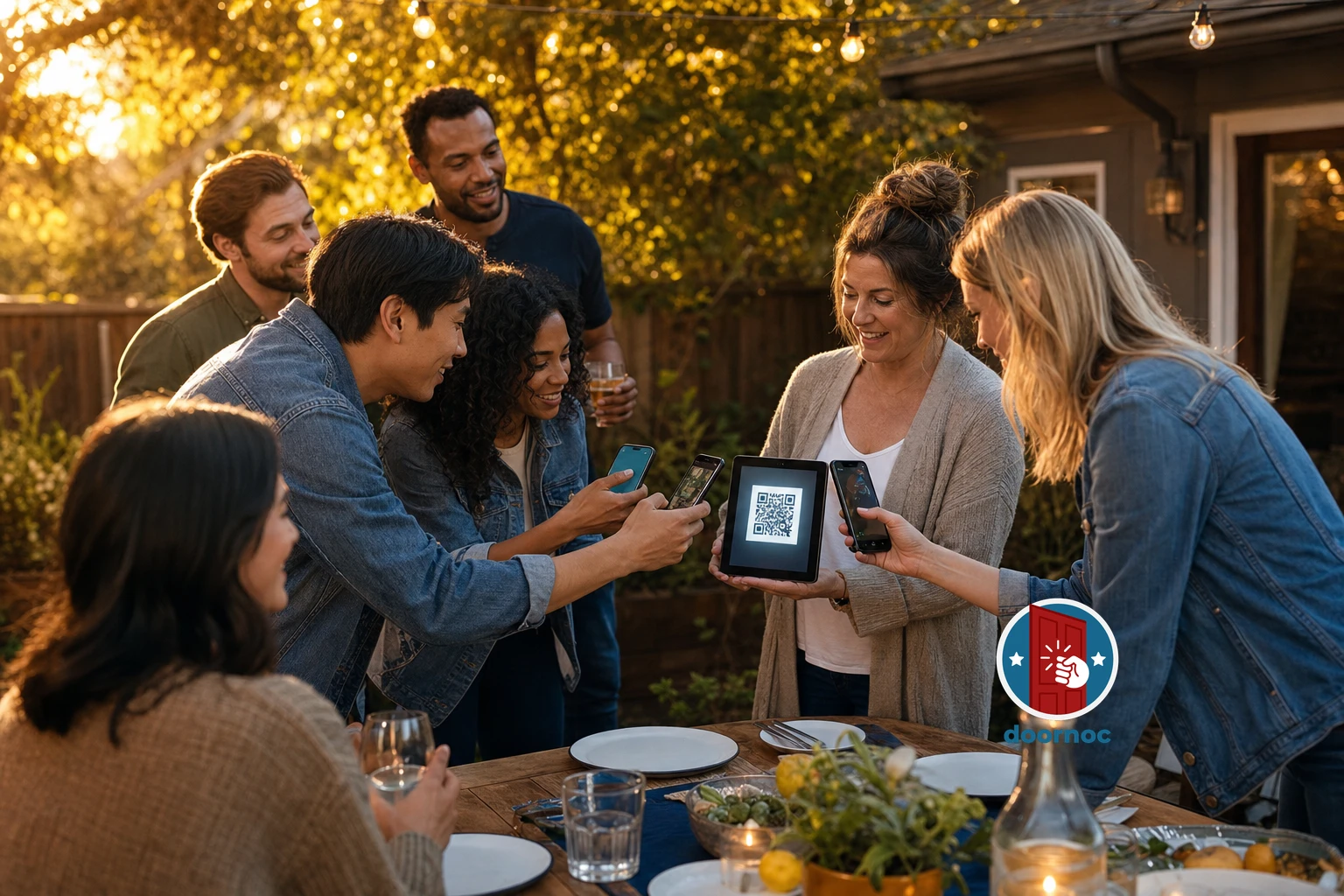
- Grassroots fundraising events that combine in-person experiences with immediate digital donation options raise 58% more than traditional events.
- Recurring donation programs convert one-time donors into sustained supporters, with monthly donors contributing 3.2x more over a campaign cycle than single-gift donors.
- Micro-targeting fundraising appeals based on voter file data and canvassing interactions increases average donation size by 42% compared to generic mass appeals.
Political fundraising ideas have evolved dramatically in 2026. Campaigns that raised the most money this cycle didn’t rely on traditional rubber-chicken dinners or impersonal mass emails. Instead, they integrated fundraising into every voter contact, built recurring donor programs from day one, and used data from field operations to personalize every ask. The most successful campaigns now raise $8-15 per voter contacted by combining grassroots canvassing with immediate digital fundraising opportunities.
This guide provides 15+ proven political fundraising strategies that are working right now in 2026. You’ll learn how to build a sustainable small-donor base, leverage canvassing data for targeted asks, and create fundraising systems that generate revenue while building genuine supporter relationships.
Why Traditional Political Fundraising Fails in 2026
The traditional political fundraising playbook—host an event, send mass emails, make phone calls—no longer generates the returns it did even two years ago. Email open rates for political fundraising appeals dropped to 14% in 2026, down from 22% in 2024. Phone banking for donations has even worse conversion rates, with less than 2% of calls resulting in contributions.
The problem isn’t that voters won’t donate. It’s that campaigns are asking at the wrong time, through the wrong channels, with the wrong messages. Modern voters respond to personalized asks that connect to real campaign activities they’ve witnessed or participated in. They want to know exactly how their $25 will be used, and they prefer giving through channels they already use daily—text messages, social media, and mobile-optimized donation pages.
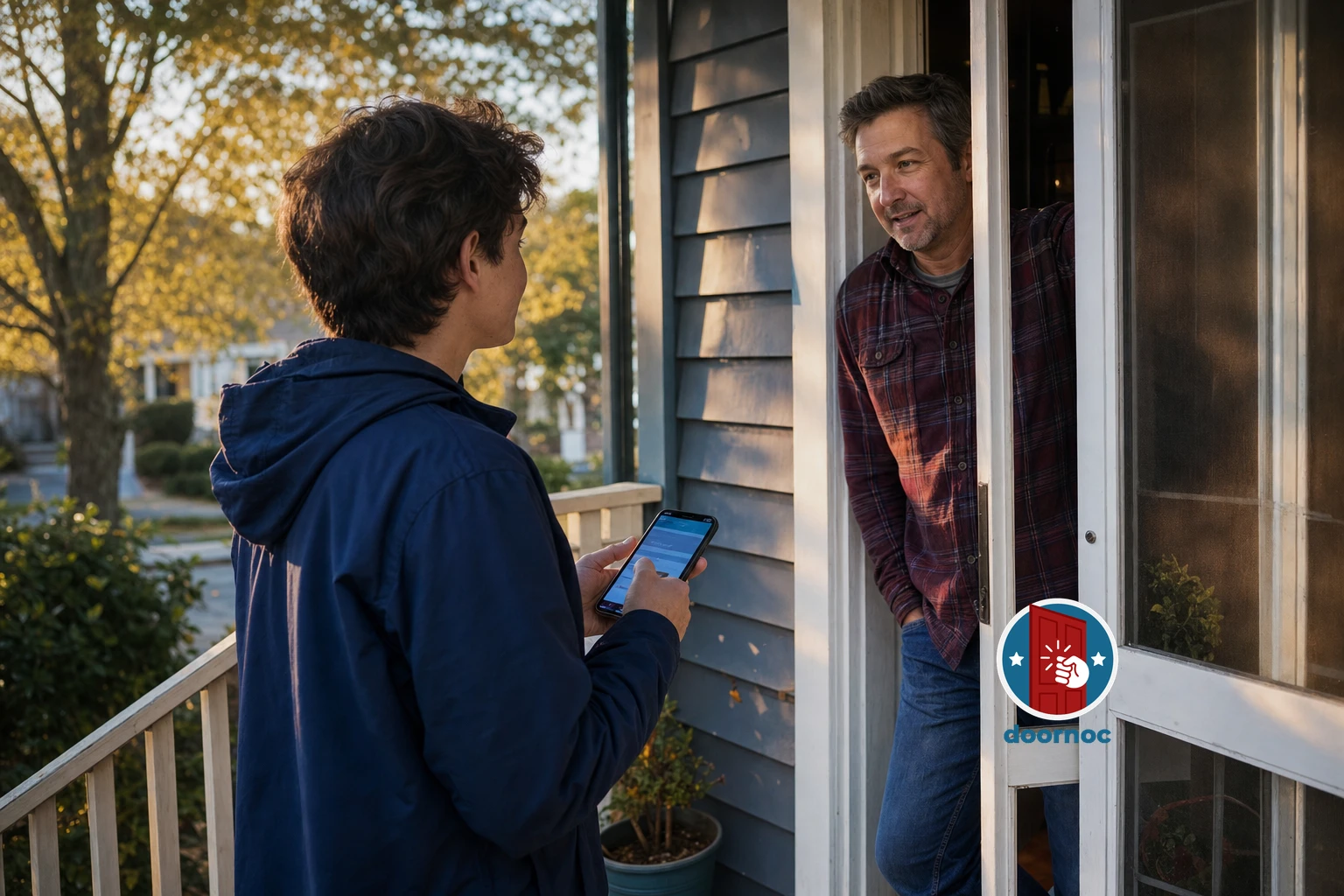
Successful campaigns in 2026 treat fundraising as an integrated part of voter contact, not a separate operation. When a volunteer knocks on a supporter’s door using canvassing software, that interaction generates data that triggers a personalized fundraising text within 24 hours. When a campaign hosts a town hall, attendees receive a donation link before they leave the parking lot. This integration is why some campaigns are raising 3-4x more than their competitors with similar budgets.
Digital-First Political Fundraising Strategies
Peer-to-Peer Fundraising Texts
Peer-to-peer texting is the highest-converting fundraising channel in 2026, with response rates of 8-12% and donation conversion rates of 1.5-2.5%. Unlike mass emails that feel impersonal, text messages from real campaign volunteers create authentic conversations that lead to donations.
Here’s how to implement this strategy:
- Segment your contact list based on canvassing data, volunteer history, and previous donation behavior
- Recruit 10-15 volunteer texters who can dedicate 2-3 hours for a texting session
- Provide scripted conversation starters that reference specific campaign activities or recent news
- Include a mobile-optimized donation link in every conversation that shows promise
- Track which messages convert best and iterate your scripts weekly
The key is personalization. A text that says “Hi Sarah, it’s Mike from the campaign. I knocked your door last week and you mentioned supporting our education plan. We’re $3,000 short of our goal to print materials for this weekend’s canvass. Can you chip in $25?” converts at 5x the rate of a generic “We need your help” message.
Campaigns using the canvassing app to collect voter interaction data can automatically trigger these personalized texts based on door-knock conversations, creating a seamless fundraising pipeline.
Recurring Donation Programs
Monthly recurring donors are the foundation of sustainable campaign fundraising. In 2026, recurring donors contribute an average of 3.2x more over a full campaign cycle than one-time donors. More importantly, they provide predictable cash flow that allows campaigns to plan strategically rather than lurching from crisis to crisis.
To build a strong recurring donor program:
Make recurring the default option. When supporters click your donation link, the monthly recurring option should be pre-selected. You’ll convert 35-40% of donors to recurring simply by making it the path of least resistance. Always offer the option to give once, but don’t make recurring feel like an unusual choice.
Start with small amounts. A $10/month commitment feels manageable to most supporters, and you can always ask them to increase later. Campaigns that lead with $50/month asks convert 60% fewer recurring donors than those starting at $10-15.
Show cumulative impact. Send monthly updates to recurring donors showing how their contributions have added up. “Your $10/month has now funded 47 doors knocked in your neighborhood” is far more powerful than generic thank-you emails.
Create a recurring donor identity. Give your monthly donors a name—“Founding Supporters,” “Democracy Defenders,” whatever fits your brand—and make them feel like an exclusive community. Host quarterly Zoom calls just for recurring donors where the candidate answers questions.
The math is compelling. A campaign that converts 500 supporters to $15/month recurring donations generates $7,500 in predictable monthly revenue—$60,000 over an 8-month election cycle from a single acquisition effort.
Social Media Fundraising Integration
Social media platforms have become direct fundraising channels, not just awareness tools. Facebook and Instagram fundraising tools now process over $400 million in political donations annually, with average donation sizes of $35-50.
The most effective social media fundraising posts in 2026 share these characteristics:
- Video content outperforms static images by 3-4x for donation conversion
- Specific asks tied to concrete needs (“We need $2,000 to fund this weekend’s canvass”) convert better than vague appeals
- User-generated content from volunteers and supporters feels more authentic than polished campaign videos
- Deadline urgency (“Midnight tonight,” “48 hours left”) increases immediate action
One winning strategy: Have your field team post short videos from the doors they’re knocking, explaining what they’re hearing from voters and asking for donations to expand the canvassing operation. These authentic, ground-level posts convert at 2-3x the rate of polished campaign ads.
For campaigns focused on political digital marketing, integrating fundraising into your social media strategy rather than treating it as separate creates multiple touchpoints that move supporters toward donation.
Grassroots Fundraising Events That Actually Work
Community Canvass-a-Thons
The canvass-a-thon combines grassroots organizing with immediate fundraising. Here’s how it works: Host a Saturday morning event where volunteers gather to canvass a targeted neighborhood. Before they head out, ask each volunteer to recruit 3-5 friends or family members to sponsor their canvassing at $5-10 per door knocked.
Volunteers use door-to-door canvassing software to track exactly how many doors they knock. After the canvass, sponsors receive a text with photos from the day and a link to fulfill their pledge. The campaign gets both voter contact and fundraising from a single event.
This strategy works because:
- It’s specific and tangible—sponsors know exactly what their money funds
- It leverages social networks—people donate to support their friends, not just the campaign
- It creates urgency—the canvass is happening now, not someday
- It builds volunteer investment—volunteers who fundraise become more committed
A well-executed canvass-a-thon with 20 volunteers can raise $1,500-3,000 while also contacting 400-600 voters. Compare that to a traditional fundraising event that requires venue rental, catering, and hours of staff time.
Virtual Town Halls with Integrated Asks
Virtual town halls exploded during the pandemic and remained effective in 2026 because they’re convenient, scalable, and easy to integrate with fundraising. The key is treating them as fundraising events from the start, not just as communication tools.
Successful virtual fundraising town halls follow this structure:
Pre-event promotion includes a “suggested contribution” to attend, though you never require payment. This frames the event as valuable and worth supporting. Promoted as “$25 suggested contribution to attend our virtual town hall on healthcare policy.”
During the event, the candidate or campaign manager makes 2-3 specific asks tied to campaign needs. “We’re launching a canvassing operation in the Westside neighborhood next week. It will cost $1,800 to print materials and equip our volunteers. Can 60 of you chip in $30 tonight to make it happen?”
Immediate donation prompts appear in the chat, on-screen graphics, and via text message to all attendees. Make giving frictionless—one click from the Zoom chat to a pre-filled donation form.
Post-event follow-up segments attendees into donors (thank you message), non-donors who attended (softer ask with event highlights), and registrants who didn’t attend (event recording with donation link).
Campaigns hosting weekly virtual town halls with 100-200 attendees consistently raise $2,000-5,000 per event with minimal overhead costs.
House Parties 2.0
House parties remain effective fundraising events in 2026, but they’ve evolved. The most successful house parties now combine in-person intimacy with digital donation capture and social media amplification.
Modern house party format:
- Host identifies 20-30 likely supporters from their personal network
- Campaign provides talking points and digital tools including a custom donation page for that specific event
- Event includes 15-minute candidate remarks followed by Q&A
- Digital donation station set up in the corner where volunteers help attendees give on their phones
- Social media moment where attendees post selfies with the candidate and donation links
- Immediate follow-up texts to all attendees who didn’t donate, thanking them for attending and providing the link
The digital integration is crucial. Traditional house parties relied on checkbooks and pledge cards. In 2026, you need to capture donations before people leave the event, and you need to extend the fundraising window through social media and follow-up texts.
A single house party can raise $3,000-8,000 depending on the host’s network and the district’s wealth. More importantly, it identifies 20-30 engaged supporters who can host their own events, creating a multiplier effect.
Data-Driven Fundraising Strategies
Canvassing Data for Targeted Asks
The most sophisticated campaigns in 2026 use voter contact data to personalize every fundraising ask. When volunteers knock doors and record conversations in canvassing software, that data becomes the foundation for targeted fundraising.
Here’s how this works in practice:
Supporter identification during canvassing tags voters as Strong Support, Lean Support, Undecided, or Opposition. Strong supporters who expressed enthusiasm receive a fundraising text within 24 hours: “Hi [Name], our volunteer noted you’re fired up about our campaign. We’re expanding our canvassing operation in your neighborhood. Can you chip in $25 to help us reach more voters?”
Issue-specific appeals target voters who mentioned particular concerns. Someone who told your canvasser they care most about education receives fundraising appeals tied to your education plan, not generic “help us win” messages.
Geographic targeting allows you to ask supporters in one neighborhood to fund canvassing in another. “We knocked 200 doors in your neighborhood last week. Now we need $500 to print materials for the Riverside area. Can you help us expand?”
Volunteer conversion turns your best door-knockers into donors. Volunteers who’ve knocked 50+ doors are highly invested in the campaign’s success. A personalized ask from the campaign manager acknowledging their volunteer work converts at 25-30%.
Campaigns using this integrated approach raise 40-60% more per voter contacted than campaigns that separate canvassing and fundraising operations. The data you collect at the doors becomes your most valuable fundraising asset.
For more on leveraging voter data effectively, see our guide on voter data filtering strategies.
Donor Acquisition Cost Optimization
Smart campaigns track donor acquisition cost (DAC) religiously in 2026. Your DAC is the total amount spent on fundraising activities divided by the number of new donors acquired. If you spend $5,000 on digital ads and events that bring in 100 new donors, your DAC is $50.
Why this matters: If your average donation is $40 and your DAC is $50, you’re losing money on first-time donors. But if those donors convert to recurring contributors or give again later, the lifetime value makes the initial loss worthwhile.
Benchmarks for 2026:
- Digital advertising DAC: $35-60 per new donor
- Event-based DAC: $20-40 per new donor
- Peer-to-peer outreach DAC: $8-15 per new donor
- Canvassing-integrated DAC: $5-12 per new donor
The lowest acquisition costs come from integrated strategies that leverage existing campaign activities. When you’re already knocking doors for voter contact, the marginal cost of adding fundraising asks is minimal. This is why campaigns using tools like Door Knock to integrate field operations with fundraising consistently achieve better ROI than campaigns treating these as separate functions.
A/B Testing Fundraising Appeals
Every fundraising message you send should be an experiment. In 2026, campaigns that systematically test different appeals, subject lines, and calls-to-action raise 25-35% more than campaigns using gut instinct.
Elements to test:
Subject lines for emails: “We’re falling short” vs. “Can you help us close the gap?” vs. “[Candidate name] has a question for you” can produce wildly different open rates.
Ask amounts: Test whether leading with $25, $50, or $100 produces higher average donations. Sometimes a higher anchor point increases gifts; sometimes it scares people away.
Urgency vs. impact: Does “We need $5,000 by midnight” outperform “Your $25 funds door hangers for 100 homes”? The answer varies by audience.
Messenger: Do texts from the candidate convert better than texts from the campaign manager or from peer volunteers? Test it.
Timing: Do fundraising texts sent at 6pm on weekdays outperform 10am weekend texts? Track the data.
Run these tests with sample sizes of at least 500 people per variation to get statistically meaningful results. After 3-4 tests, you’ll have clear data on what resonates with your specific supporter base.
Fundraising Ideas for Different Campaign Sizes
Local Campaign Fundraising (City Council, School Board)
Local campaigns typically need to raise $15,000-75,000 total. Your fundraising strategy should focus on personal networks, community events, and grassroots engagement rather than expensive digital advertising.
Priority strategies for local campaigns:
-
Personal ask calls to your closest 100 supporters should be your first fundraising activity. These one-on-one conversations convert at 40-60% and establish your core donor base.
-
Neighborhood house parties hosted by supporters in different parts of your district create geographic coverage and identify local champions.
-
Community presence fundraising where you set up at farmers markets, community festivals, and local events with a “donate here” station and QR code.
-
Local business outreach to owners who have a stake in local governance issues. A breakfast meeting with 10 business owners can raise $2,000-5,000.
-
Canvass-based fundraising where every door-knock interaction with a supporter triggers a follow-up donation request. This is where Door Knock features become invaluable for local campaigns—you’re tracking voter support and creating fundraising opportunities simultaneously.
Local campaigns should aim to raise 60-70% of their budget from donors giving under $100. This broad base demonstrates community support and makes you less dependent on any single donor.
State Legislative Campaign Fundraising
State legislative races typically require $75,000-300,000 depending on district competitiveness. You need a mix of grassroots fundraising and larger donor cultivation.
Balanced approach for state legislative campaigns:
Grassroots base (target: 40% of total budget): Use recurring donation programs, peer-to-peer texting, and canvassing-integrated fundraising to build a base of 300-800 small donors.
Mid-level donors (target: 35% of total budget): Cultivate supporters who can give $250-1,000 through targeted asks, small group meetings, and personalized outreach. These donors often come from professional networks, advocacy groups, and party activists.
Major donors (target: 25% of total budget): Identify and cultivate 20-40 donors capable of giving at or near your state’s contribution limit. These require personal attention from the candidate.
PAC and organizational support: Labor unions, business groups, and issue advocacy organizations often contribute to state legislative races. Build relationships with organizations aligned with your platform.
State legislative campaigns should invest in political marketing strategies that support both voter contact and fundraising, creating integrated campaigns where every activity serves multiple purposes.
Congressional and Statewide Campaign Fundraising
Congressional and statewide campaigns need to raise millions of dollars, requiring sophisticated fundraising operations that combine grassroots enthusiasm with major donor networks and digital fundraising at scale.
Multi-channel approach for large campaigns:
Digital fundraising infrastructure: Email lists of 50,000+, sophisticated social media advertising, and text message programs that can reach hundreds of thousands of supporters.
Grassroots army: Build a base of 5,000-20,000 small donors through compelling storytelling, urgent appeals, and recurring donation programs. These donors provide sustainable funding and demonstrate broad support.
Major donor program: Dedicated finance staff cultivating relationships with donors who can give maximum contributions ($3,300 per election in 2026 for federal races).
Bundlers: Identify supporters who can’t give large amounts themselves but can recruit 10-20 donors from their networks.
National fundraising: For competitive races, tap into national donor networks through appearances on political podcasts, partnerships with national organizations, and targeted appeals to out-of-state donors who care about your race’s implications.
Even at this scale, field operations remain crucial. Campaigns that integrate canvassing data with fundraising outperform those that treat these as separate silos. When your field team knocks 50,000 doors and identifies 15,000 supporters, those contacts become the foundation for targeted fundraising that converts at 3-4x the rate of cold outreach.
Creating a Fundraising Timeline
Successful campaigns build fundraising into their master timeline from day one. Here’s a model fundraising calendar for a competitive state legislative race with an 18-month campaign cycle:
Months 1-3 (Exploratory phase):
- Personal asks to closest 50 supporters
- 3-4 house parties in different neighborhoods
- Goal: Raise $15,000-25,000 to fund initial campaign infrastructure
Months 4-8 (Building phase):
- Launch recurring donation program
- Monthly virtual town halls with fundraising integration
- Begin peer-to-peer texting campaigns
- Integrate fundraising asks into early canvassing operations
- Goal: Raise $40,000-60,000 and build donor base to 400+ contributors
Months 9-14 (Growth phase):
- Expand digital fundraising with social media advertising
- Host larger fundraising events (50-100 people)
- Intensify canvassing and use field data for targeted asks
- Cultivate major donors with personal candidate time
- Goal: Raise $80,000-120,000 and expand donor base to 800+ contributors
Months 15-18 (GOTV and closing phase):
- Daily fundraising appeals tied to campaign activities
- “Final push” messaging creates urgency
- Leverage canvassing data for hyper-targeted asks
- Reactivate lapsed donors with personalized outreach
- Goal: Raise final $60,000-100,000 to fund GOTV operation
The key is maintaining consistent fundraising activity throughout the campaign. Too many campaigns wait until they’re desperate to ask for money, which creates panic and inefficiency. Build fundraising into your weekly routine from the start.
Measuring Fundraising Success
Track these metrics to evaluate and improve your fundraising performance:
 Campaign manager’s laptop displaying colorful data dashboard with graphs and heat maps in evening office setting
Total raised is obvious but insufficient on its own. You need to understand the composition and sustainability of your fundraising.
Number of donors matters more than total dollars for most campaigns. 500 donors giving an average of $40 is stronger than 10 donors giving $2,000 each. It demonstrates broader support and creates more volunteers and advocates.
Average donation size helps you understand your donor base and set realistic goals. If your average is $35, you need 1,000 donors to raise $35,000.
Recurring donor percentage indicates fundraising sustainability. Campaigns with 30%+ recurring donors have predictable cash flow and higher lifetime donor value.
Donor retention rate measures how many donors give more than once. If only 15% of donors give again, you’re constantly churning through new acquisition. Strong campaigns retain 40-50% of donors for a second gift.
Fundraising per voter contacted reveals whether you’re integrating field and fundraising operations effectively. Campaigns should target $8-15 raised per supporter identified through canvassing.
Digital conversion rates for emails (0.5-1.5%), texts (1.5-2.5%), and social media (0.3-0.8%) help you optimize channel mix.
Cost per dollar raised shows fundraising efficiency. Spending $0.20-0.30 per dollar raised is typical for well-run campaigns. Lower is better, but don’t sacrifice donor acquisition and list-building to minimize short-term costs.
Review these metrics weekly with your campaign team. Adjust your strategy based on what the data tells you about what’s working and what isn’t.
Integrating Fundraising with Field Operations
The most successful campaigns in 2026 don’t separate fundraising from field operations—they integrate them completely. Every voter contact becomes a potential fundraising opportunity, and every fundraising communication reinforces field activities.
Here’s how integration works in practice:
Pre-canvass fundraising: Before launching a canvassing operation in a new neighborhood, send a targeted fundraising appeal to supporters in that area. “We’re knocking doors in your neighborhood this Saturday. Can you chip in $25 to fund materials?” This primes supporters for the door-knock and raises money simultaneously.
During-canvass data collection: Volunteers using the canvassing app record not just voter support levels but also specific issues mentioned and level of enthusiasm. This data drives personalized fundraising follow-up.
Post-canvass fundraising: Within 24-48 hours of a door-knock, strong supporters receive a text: “Hi [Name], thanks for the great conversation with our volunteer [Volunteer Name] on Saturday. We’re expanding our canvassing operation and need 50 people to chip in $20. Can you help?” This converts at 3-5x the rate of generic asks.
Volunteer-to-donor pipeline: Your most active volunteers are also your most likely donors. After someone volunteers for 3-4 canvassing shifts, they receive a personal call from the campaign manager thanking them and asking if they can also contribute financially. This converts at 25-35%.
Donor-to-volunteer pipeline: Donors who’ve given 2-3 times receive invitations to volunteer. “You’ve invested in this campaign financially—would you like to see your dollars in action by joining us for a canvass?” This creates a virtuous cycle where donors become volunteers and volunteers become donors.
Real-time fundraising based on field results: After a successful canvassing day, send immediate updates to your donor list with specific results. “Our volunteers knocked 847 doors today and identified 312 supporters. Help us reach 1,000 supporters this week by chipping in $25 to fund tomorrow’s canvass.” Real-time updates create urgency and show donors exactly how their money is being used.
This integration is why campaigns using comprehensive canvassing software consistently outraise campaigns using separate systems for field operations and fundraising. When your tools talk to each other, every activity multiplies its impact.
Common Fundraising Mistakes to Avoid
Waiting too long to ask. Many first-time candidates feel uncomfortable asking for money and delay fundraising until they’re desperate. Start asking from day one. People who support your candidacy expect to be asked and often wonder why you haven’t asked them yet.
Making generic appeals. “We need your help” and “chip in today” are weak calls to action. Specific asks tied to concrete campaign activities (“$50 funds door hangers for 200 homes”) convert at 2-3x the rate of vague appeals.
Neglecting to thank donors. Every donor should receive a personal thank you within 24 hours—a text, call, or handwritten note depending on donation size. Campaigns that thank donors consistently see 40-50% higher retention rates.
Ignoring small donors. Some campaigns focus exclusively on major donors and neglect $10-25 contributors. This is a mistake. Small donors give repeatedly, volunteer at higher rates, and demonstrate broad community support that attracts larger donors and media attention.
Separating fundraising from other campaign activities. Fundraising isn’t a separate department—it should be integrated into voter contact, volunteer management, and communications. Campaigns that silo fundraising raise 30-40% less than integrated campaigns.
Failing to track metrics. You can’t improve what you don’t measure. Track donor acquisition costs, conversion rates, and retention metrics weekly so you can identify what’s working and double down on it.
Over-relying on email. Email remains useful but shouldn’t be your only digital channel. Peer-to-peer texting, social media, and canvassing-integrated fundraising all outperform email for conversion in 2026.
Not building recurring donations. One-time donors require constant re-acquisition. Monthly recurring donors provide predictable revenue and give 3-4x more over a campaign cycle. Make recurring donations a central part of your strategy from day one.
Building Your Fundraising Team
Even small campaigns need dedicated fundraising capacity. Here’s how to structure your fundraising operation:
Campaign manager (every campaign has one): Owns overall fundraising strategy, sets goals, and ensures integration with field operations. Spends 30-40% of time on fundraising activities.
Finance director (campaigns raising $100,000+): Dedicated staff person managing donor database, processing donations, tracking compliance, and executing fundraising campaigns. This role pays for itself once you’re raising serious money.
Fundraising volunteers (3-5 people): Supporters who make personal ask calls, host house parties, and help with fundraising events. These volunteers should be comfortable talking about money and have networks you want to tap.
The candidate: Should spend 30-50% of campaign time on fundraising in the early months, decreasing to 20-30% as field operations intensify. This includes personal ask calls, fundraising events, and donor cultivation.
Digital fundraising specialist (campaigns raising $250,000+): Manages email program, social media fundraising, and digital advertising. Can be a contractor rather than full-time staff for smaller campaigns.
The key is treating fundraising as a core campaign function, not an afterthought. Campaigns that integrate fundraising into their organizational structure from day one consistently outraise campaigns that bolt on fundraising later.
Conclusion: Building a Sustainable Fundraising Operation
Political fundraising in 2026 requires integration, personalization, and relentless focus on data. The campaigns raising the most money aren’t running the most expensive events or sending the most emails—they’re integrating fundraising into every campaign activity, using voter contact data to personalize asks, and building recurring donor programs that provide sustainable funding.
The most powerful fundraising insight from 2026 is this: your field operation is your fundraising operation. When you knock doors, collect data, and identify supporters using tools like Door Knock, you’re not just doing voter contact—you’re building a fundraising pipeline. Every supporter identified at the doors becomes a potential donor. Every volunteer becomes a potential recurring contributor. Every canvassing success becomes a fundraising story that motivates donations.
Start implementing these political fundraising ideas today. Build your recurring donation program, integrate fundraising into your canvassing operation, and start tracking the metrics that matter. The campaigns that raise the most money in 2026 aren’t the ones with the wealthiest supporters—they’re the ones that systematically convert grassroots enthusiasm into sustainable funding.
Your next step: Review your current fundraising operation against the strategies in this guide. Identify the 2-3 tactics you’re not using that could generate the most revenue for your campaign. Then build a 90-day plan to implement them. For more on building a comprehensive campaign strategy that integrates fundraising with field operations, see our guide on how to run a political campaign.
Frequently Asked Questions
What are the most effective political fundraising ideas for small campaigns in 2026?
The most effective political fundraising ideas for small campaigns include peer-to-peer texting campaigns (converting at 8-12%), virtual town halls with integrated donation prompts, and community canvassing events that combine voter contact with immediate ask opportunities. Small campaigns should focus on recurring donation programs and leverage canvassing data to personalize follow-up asks, which increases conversion rates by 40-50%.
How much money should a political campaign raise per voter contacted?
Successful campaigns in 2026 average $8-15 raised per voter contacted through integrated canvassing and fundraising operations. This metric varies by district competitiveness and demographic factors, but campaigns using tools like Door Knock to track voter interactions and trigger personalized fundraising follow-ups consistently exceed $12 per contact.
What is grassroots fundraising and why does it work?
Grassroots fundraising is a campaign strategy that focuses on collecting small donations from a large number of individual supporters rather than relying on major donors or PACs. It works because it builds genuine community investment in the campaign, creates sustainable funding through recurring donations, and demonstrates broad-based support that attracts additional donors and media attention.
How do I ask for political donations without alienating supporters?
Ask for donations by leading with impact and specificity rather than desperation. Frame asks around concrete campaign needs (“$50 funds door hangers for 200 homes”), provide multiple giving levels to accommodate different budgets, and always thank donors immediately with personalized messages. Use canvassing interactions to identify natural supporters before making fundraising asks, which reduces alienation and increases conversion.
What percentage of campaign budget should go toward fundraising?
Well-run campaigns in 2026 allocate 15-25% of their total budget to fundraising operations, including digital tools, event costs, and staff time. This investment typically returns 4-7x in donations when executed strategically. Campaigns using integrated canvassing and fundraising platforms see lower acquisition costs and higher ROI because they leverage existing voter contact for donation asks.