
Key Takeaways
- Integrated political marketing strategies that combine digital advertising, door-to-door canvassing, and data-driven targeting deliver 3-4x higher voter conversion rates than single-channel approaches in 2026
- Micro-targeted digital ads based on voter file data and behavioral signals now cost 40% less per impression than broad demographic targeting while achieving 2.5x higher engagement rates
- Door-to-door canvassing remains the highest-ROI voter contact method for persuasion, with face-to-face conversations converting 8-12% of undecided voters compared to 2-3% for digital-only outreach
- Successful 2026 campaigns allocate 60% of marketing budgets to field operations and direct voter contact, 30% to digital advertising, and 10% to traditional media in competitive districts
Political marketing strategies have evolved dramatically by 2026, with successful campaigns now operating as sophisticated data-driven operations that integrate digital advertising, field operations, and traditional media into cohesive voter contact programs. The campaigns that win elections understand that effective political campaign marketing strategies require more than just advertising — they demand integrated approaches that combine technology, grassroots organizing, and strategic messaging to reach voters where they are most receptive.
The landscape of marketing for political campaigns has shifted from broadcast-focused strategies to precision-targeted, multi-touch voter contact programs. Modern campaigns leverage voter file data, behavioral analytics, and real-time field feedback to optimize every dollar spent on voter outreach. This article provides a comprehensive guide to the political advertising strategies and tactical approaches that deliver measurable results in competitive races.
What Makes Political Marketing Different from Commercial Marketing?
Political marketing operates under unique constraints that distinguish it from commercial marketing. You have a fixed deadline — Election Day — with no opportunity for post-launch adjustments or seasonal campaigns. Your “product” is a candidate or ballot measure that voters can only “purchase” once, and the decision-making process involves complex emotional, ideological, and practical considerations that go far beyond typical consumer behavior.
The voter universe is finite and identifiable. Unlike commercial marketers who must build audiences from scratch, political campaigns start with comprehensive voter files containing registration data, vote history, demographic information, and increasingly sophisticated predictive scores. This allows for precision targeting that commercial marketers can only approximate.
Successful political campaign marketing strategies exploit this data advantage. In 2026, campaigns use voter files to identify not just who might support them, but exactly which messages will move specific voter segments, which contact methods work best for different demographics, and how to optimize volunteer deployment for maximum persuasion impact.
The metric that matters is votes, not brand awareness or consideration. While commercial marketers track a funnel from awareness through consideration to purchase, political campaigns focus ruthlessly on turnout and persuasion. A voter who knows your candidate’s name but doesn’t vote delivers zero value. This fundamental difference shapes every aspect of campaign marketing strategy.
How to Build an Integrated Multi-Channel Marketing Strategy
The most effective political marketing strategies in 2026 integrate multiple contact channels into a cohesive program where each touchpoint reinforces the others. Research from competitive 2024 and 2025 races shows that voters contacted through three or more channels show 3.4x higher turnout rates than those reached through a single method.
Start by segmenting your voter universe based on support level and turnout propensity. Your voter file should categorize every registered voter into groups: strong supporters who need turnout reminders, persuadable voters who require multiple contacts with tailored messaging, and opposition voters who should receive minimal contact. This segmentation drives your entire marketing strategy.
For strong supporters with high turnout propensity, your marketing focuses on reinforcement and mobilization. These voters receive periodic digital ads reminding them of Election Day, text message turnout reminders, and door knocks from volunteers in the final 72 hours. You’re not persuading them — you’re ensuring they vote.
Persuadable voters require a different approach. These undecided or weakly-aligned voters need multiple contacts with messaging tailored to their specific concerns. A persuadable voter concerned about education funding receives different creative in digital ads, different talking points during door knocks, and different direct mail pieces than a voter focused on tax policy. Modern campaigns create 8-12 distinct message tracks for different voter segments.
Integrating channels means ensuring consistent messaging while optimizing each channel’s strengths. Door-to-door canvassing excels at persuasion through personal conversation. Digital advertising delivers high-frequency awareness and message reinforcement at scale. Direct mail provides detailed policy information voters can review at their convenience. Email allows rapid response to breaking news and opponent attacks.
The key is timing these contacts strategically. A typical integrated sequence for a persuadable voter might include: initial digital ad exposure building name recognition → door knock conversation focused on their top issue → follow-up direct mail piece with detailed policy information → retargeted digital ads reinforcing the door conversation → final door knock or phone call confirming support and ensuring turnout.
Data Integration Across Marketing Channels
True integration requires centralizing data from all marketing channels. When a volunteer records a door knock conversation using canvassing software, that interaction data should immediately update the voter’s profile, triggering appropriate follow-up in other channels. If a voter expresses concern about healthcare during a door conversation, they should start seeing healthcare-focused digital ads within 24 hours.
In 2026, campaigns use integrated voter relationship management (VRM) platforms that connect field apps, digital advertising platforms, email systems, and phone banks. This allows real-time optimization based on voter responses. If door knock data shows a particular message resonating strongly in a precinct, digital ad spending can shift to amplify that message in similar areas.
The most sophisticated campaigns track cross-channel attribution, measuring how different contact combinations affect persuasion and turnout. This data reveals that certain sequences work better than others — for example, voters who receive a door knock followed by targeted digital ads show 2.1x higher persuasion rates than those who receive digital ads followed by a door knock.
Digital Advertising Strategies for Political Campaigns
Digital advertising has become the fastest-growing component of political marketing budgets, with campaigns spending an estimated $4.2 billion on digital ads in the 2026 election cycle. But effective digital strategies require more sophistication than simply boosting posts or running generic awareness campaigns.
Micro-targeting based on voter file data delivers dramatically better results than demographic targeting. By uploading voter file segments to advertising platforms, you can serve ads specifically to persuadable voters in your district, excluding supporters who don’t need persuasion and opponents who won’t be swayed. This precision reduces wasted impressions by 60-70% compared to broad demographic targeting.
In 2026, successful campaigns use custom audience matching to reach specific voter segments across Facebook, Instagram, Google, YouTube, and streaming platforms. A campaign might create separate audiences for: suburban women voters concerned about education, young voters with sporadic turnout history, ticket-splitters who voted for different parties in recent elections, and newly registered voters in key precincts.
Each audience receives creative and messaging tailored to their concerns. Generic “vote for me” ads have given way to issue-specific video content, carousel ads highlighting different policy positions, and dynamic creative that personalizes messaging based on the viewer’s voter profile. Testing shows that issue-specific ads targeted to concerned voters achieve 2.5x higher engagement rates than generic biographical ads.
Video content dominates digital political advertising in 2026, with short-form video (15-30 seconds) performing best on social platforms and longer-form content (60-90 seconds) working well on YouTube and streaming services. The most effective video ads tell authentic stories — testimonials from constituents, behind-the-scenes footage showing the candidate listening to voters, or explanatory content breaking down complex policy positions.
Programmatic Advertising and Real-Time Optimization
Programmatic advertising platforms allow campaigns to buy digital ad inventory in real-time based on sophisticated targeting parameters. This enables hyper-local targeting — serving ads only to voters in specific precincts or even on specific streets where persuadable voters live.
The advantage of programmatic buying is real-time optimization. If certain creative performs poorly, it can be paused and replaced within hours. If a particular demographic segment shows strong engagement, budgets can shift to increase impression share with that audience. This agility is impossible with traditional media buying.
Successful campaigns in 2026 test multiple creative variations continuously. A typical congressional campaign might run 15-20 different video ads simultaneously, each targeted to specific voter segments, with budgets automatically optimizing toward the highest-performing creative. This testing reveals insights that inform messaging across all channels — if a particular policy message resonates in digital ads, it gets incorporated into door knock scripts and direct mail.
Retargeting based on voter behavior provides another powerful tactic. Voters who engage with campaign content — watching a video ad, visiting the campaign website, or clicking an email link — can be served follow-up ads with more detailed information or calls to action. This creates a digital persuasion funnel that moves voters from awareness to consideration to support.
Door-to-Door Canvassing as a Core Marketing Strategy
While digital marketing garners attention, door-to-door canvassing remains the highest-ROI voter contact method for persuasion. Academic research consistently shows that face-to-face conversations increase turnout by 7-10 percentage points among contacted voters, with persuasion rates of 8-12% among genuinely undecided voters — far exceeding any other contact method.
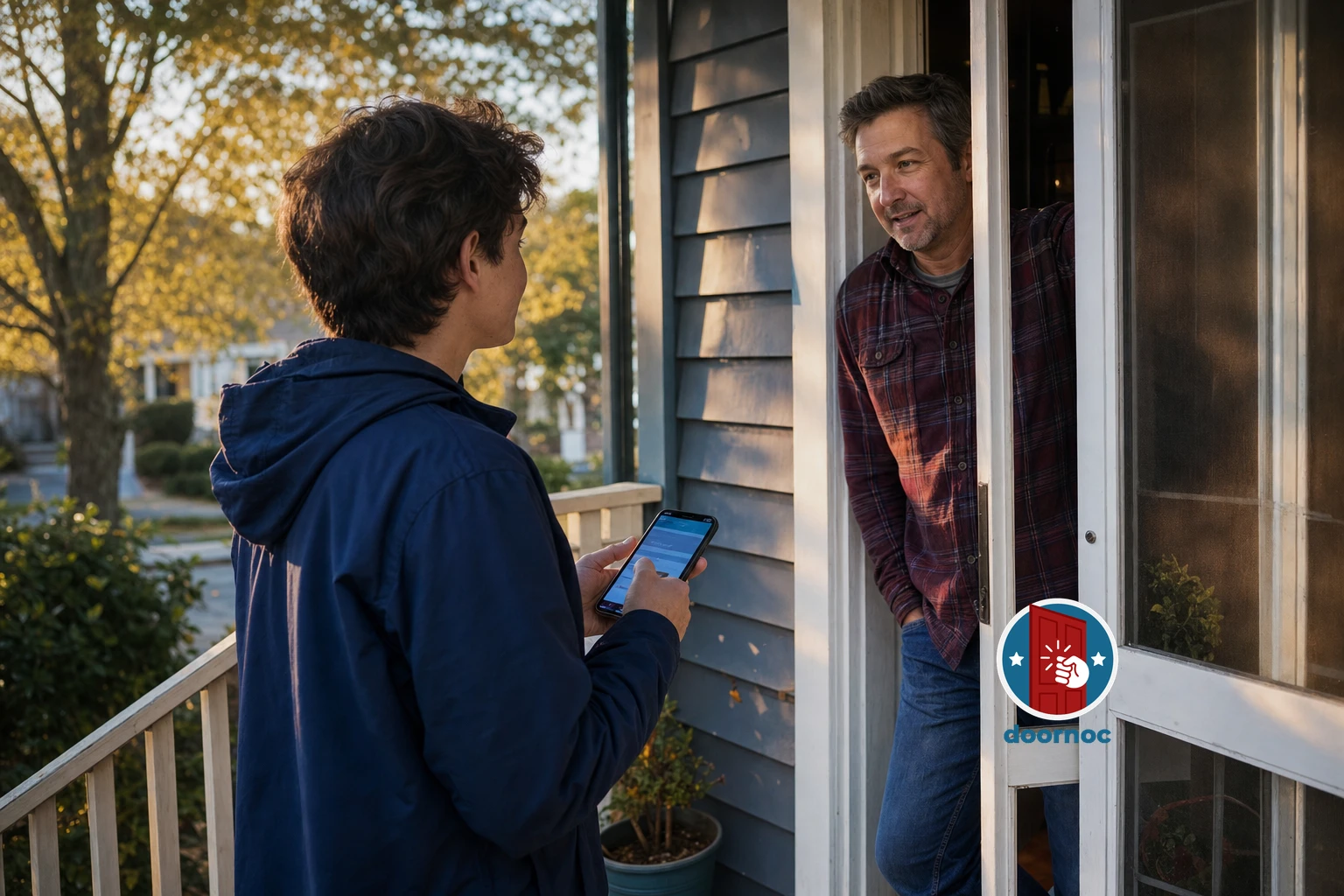
Modern canvassing has evolved from clipboard-based operations to sophisticated mobile-first programs that integrate seamlessly with overall campaign strategy. Volunteers use apps like Door Knock that provide optimized walking routes, display voter information and targeting scores at each door, record conversation details in real-time, and sync data instantly to the campaign’s central database.
This technology transformation has made canvassing dramatically more efficient. In 2026, well-trained volunteers using mobile canvassing apps contact 40-60 voters per four-hour shift, compared to 20-30 doors per shift with traditional methods. The quality of data collected has also improved — volunteers record not just whether they spoke to a voter, but detailed information about voter concerns, support level, and likelihood to turn out.
The strategic value of canvassing extends beyond the immediate conversation. Door knock data provides the ground truth that validates or corrects voter file predictions. If your data model predicts a voter is persuadable but door knock conversations reveal strong opposition, that information improves targeting for the entire voter universe. This feedback loop makes every subsequent marketing contact more effective.
Integrating Canvassing with Digital Marketing
The most effective campaigns treat canvassing as the anchor of an integrated marketing strategy rather than a standalone tactic. Door knock conversations identify voter concerns and support levels, which then drive personalized follow-up through digital ads, direct mail, and email.
For example, when a volunteer has a productive conversation with a persuadable voter about education funding, that voter’s profile is updated in the VRM system. Within 24 hours, they begin seeing digital ads highlighting the candidate’s education platform. Three days later, they receive a direct mail piece with detailed education policy information. One week before Election Day, they get a personalized email reminder referencing the door conversation.
This integration works in reverse as well. Voters who engage with digital content but haven’t been contacted in person move up the priority list for door knocking. If someone watches a full 90-second policy video or spends significant time on the campaign website, that behavioral signal indicates interest worth following up with a personal conversation.
Advanced campaigns use canvassing data to optimize digital ad spending geographically. If door knock data shows a particular precinct or neighborhood contains many persuadable voters, digital advertising can be geo-targeted to increase impression share in that area. Conversely, areas showing strong opposition in door knock conversations can have digital ad spending reduced or eliminated.
Direct Mail in Modern Political Marketing
Direct mail remains a powerful component of political marketing strategies in 2026, particularly for reaching older voters who have lower digital engagement and higher turnout rates. While mail costs more per contact than digital advertising, it provides unique advantages: physical presence in the home, ability to convey detailed information, and effectiveness with demographics that are harder to reach digitally.
Modern direct mail campaigns use sophisticated targeting and personalization that goes far beyond basic demographic segmentation. Variable data printing allows each mail piece to be customized based on the recipient’s voter profile — a retired teacher receives mail highlighting education policy, while a small business owner gets messaging focused on economic issues.
The most effective mail programs integrate with other marketing channels. A typical sequence might include: initial awareness mail piece introducing the candidate → digital ad exposure reinforcing name recognition → door knock conversation → follow-up mail piece addressing concerns raised during the door conversation → final turnout reminder mail in the last week before Election Day.
Testing shows that mail pieces referencing a previous door knock conversation achieve 40% higher engagement than generic mail. This is why data integration matters — when your mail vendor has access to door knock conversation notes, they can create truly personalized content that feels like a continuation of the in-person conversation rather than mass marketing.
Direct Mail Creative Best Practices
Successful political mail in 2026 follows several key principles. First, lead with a clear, compelling message rather than generic biographical information. Voters care about what you’ll do for them, not where you went to college. The most effective mail pieces address a specific voter concern in the headline and first paragraph.
Visual design matters more than campaigns often recognize. Professional photography, clean layouts, and easy-to-scan formatting increase engagement. Cluttered, text-heavy mail pieces get discarded unread. The best performers use large, compelling images with minimal text that drives readers to a single call-to-action.
Authenticity and specificity beat generic political rhetoric. Instead of claiming to “fight for working families,” effective mail pieces provide specific examples: “I’ll vote to cap prescription drug costs at $35/month” or “I secured $12 million in funding to repair Main Street.” Concrete details build credibility and make messages memorable.
Timing is critical. Mail takes 3-5 days to deliver, so campaigns must plan backwards from when voters should receive each piece. Early mail builds name recognition. Mid-campaign mail delivers persuasion messaging. Final mail focuses on turnout and provides practical voting information — poll locations, early voting dates, and voter ID requirements.
Email and SMS Marketing for Political Campaigns
Email and SMS provide the most cost-effective channels for high-frequency voter contact, particularly for mobilizing supporters and raising funds. While these channels rarely persuade undecided voters, they excel at maintaining engagement with supporters and driving specific actions — signing up to volunteer, making donations, or sharing content on social media.
Successful email programs in 2026 segment audiences based on engagement level and support intensity. Your most engaged supporters receive frequent emails (3-5 per week) with urgent calls to action. Casual supporters get less frequent contact (1-2 per week) focused on campaign updates and volunteer opportunities. Persuadable voters who aren’t yet supporters receive occasional emails with policy information and local endorsements.
Personalization dramatically improves email performance. Emails that reference a voter’s previous interactions with the campaign — “Thanks for signing up at the town hall last week” or “As someone who cares about climate policy…” — achieve 60% higher open rates than generic blasts. Modern email platforms integrate with VRM systems to enable this level of personalization at scale.
SMS messaging has emerged as a powerful tool for time-sensitive communications, particularly turnout reminders. Text messages achieve 95%+ open rates within minutes of delivery, making them ideal for Election Day get-out-the-vote operations. However, SMS fatigue is real — campaigns that text too frequently see opt-out rates spike. Best practice is limiting SMS to 1-2 messages per week, with higher frequency only in the final week before Election Day.
Building and Maintaining Email Lists
Email list quality matters more than size. A list of 5,000 engaged supporters who open emails and take action delivers more value than 50,000 unengaged contacts who never open messages. Successful campaigns build lists through multiple channels: website signups, door knock conversations where volunteers ask for email addresses, event attendees, and social media advertising.
List hygiene is critical. Regularly remove hard bounces, suppress chronic non-openers, and segment based on engagement patterns. Email service providers increasingly use engagement metrics to determine inbox placement — if large portions of your list never open emails, it signals to providers that your content is unwanted, leading to more messages landing in spam folders even for engaged subscribers.
Testing and optimization separate effective email programs from mediocre ones. Successful campaigns A/B test subject lines, send times, email length, calls-to-action, and creative approaches. This testing reveals that shorter subject lines (under 50 characters) perform better, emails sent Tuesday-Thursday mornings get higher open rates, and plain-text emails often outperform heavily designed HTML emails for certain audiences.
Traditional Media in 2026 Political Marketing
While digital marketing dominates campaign budgets, traditional media — television, radio, and print advertising — still plays a role in comprehensive political marketing strategies, particularly for higher-level races and in markets with older demographics.
Television advertising has shifted dramatically from broadcast to streaming and cable. In 2026, campaigns allocate 60-70% of TV budgets to streaming platforms and addressable cable that allows household-level targeting. This provides the reach and credibility of television with targeting precision approaching digital advertising.
The creative approach to TV advertising has also evolved. While 30-second spots remain standard, successful campaigns increasingly use 15-second ads for high-frequency awareness and 60-second spots for detailed policy explanations. The most effective ads tell authentic stories rather than relying on generic political formulas — testimonials from real constituents, documentary-style footage of the candidate listening to voters, or explanatory content that treats voters as intelligent adults capable of understanding policy nuance.
Radio advertising provides efficient reach in specific markets, particularly for reaching commuters and older demographics. Local radio also offers credibility through host endorsements and interview opportunities that feel less like traditional advertising. In 2026, successful campaigns combine traditional radio spots with podcast advertising to reach younger demographics who have abandoned broadcast radio.
Measuring Traditional Media ROI
The challenge with traditional media has always been measurement. Unlike digital advertising with its precise tracking, television and radio provide limited data on who actually saw ads and how they responded. However, 2026 campaigns use several approaches to improve traditional media accountability.
Geo-experimentation allows testing media impact by running ads in some media markets while holding others as control groups, then comparing voter behavior. If turnout or persuasion increases significantly in markets with ad exposure compared to control markets, it suggests media effectiveness.
Polling data correlated with media spending provides another measurement approach. If tracking polls show awareness or favorability increasing in markets with heavy TV advertising, it suggests the ads are working. The key is polling frequently enough to detect changes and controlling for other variables like field operations or news coverage.
Some campaigns use unique URLs or phone numbers in traditional media ads to track direct response. While this captures only a small fraction of total impact, it provides data on which messages and creative approaches drive action.
Budget Allocation Across Marketing Channels
One of the most critical strategic decisions in political marketing is how to allocate limited budgets across channels. The optimal mix varies based on race type, district demographics, competitiveness, and campaign resources, but research from recent elections provides useful benchmarks.
For competitive local races (city council, state legislature), successful campaigns typically allocate: 60% to field operations including door-to-door canvassing, 25% to digital advertising, 10% to direct mail, and 5% to traditional media or other channels. The heavy field emphasis reflects the high ROI of personal voter contact and the geographic concentration of local races.
Congressional campaigns in competitive districts shift toward: 40% field operations, 30% digital advertising, 20% direct mail, and 10% traditional media (mostly streaming TV and radio). The increased digital and mail spending reflects larger geographic areas and voter universes that make pure field programs insufficient.
Statewide campaigns allocate more to broadcast reach: 30% field operations, 25% digital advertising, 20% direct mail, 20% television, and 5% radio and other channels. The larger voter universe requires mass communication channels alongside targeted field operations.
These are starting points, not rigid rules. The key is continuously optimizing based on performance data. If digital advertising is driving strong engagement and persuasion at low cost-per-contact, shift budget from underperforming channels. If door knock data shows exceptional persuasion rates in certain areas, deploy more volunteers and reduce digital spending in those precincts.
Cost Per Vote Analysis
Ultimately, campaigns should evaluate marketing channels based on cost per vote delivered. This metric accounts for both the cost of contact and the effectiveness of persuasion or turnout. A channel that costs $5 per contact but persuades 10% of contacts delivers votes at $50 each. A channel costing $1 per contact but persuading only 1% delivers votes at $100 each — despite lower contact costs.
Door-to-door canvassing typically delivers the lowest cost per vote for persuasion, with votes costing $30-$60 depending on volunteer efficiency and persuasion rates. Learn more about cost per vote analysis for different voter contact methods to understand how different tactics compare.
Digital advertising costs per vote vary widely based on targeting precision and creative effectiveness. Well-targeted digital campaigns deliver persuasion votes at $40-$80, while poorly targeted campaigns can exceed $200 per vote. The key is ruthless optimization — cutting underperforming audiences and creative while scaling what works.
Direct mail typically costs $80-$150 per persuasion vote, making it less efficient than digital or field operations but still valuable for reaching specific demographics and providing detailed information. The higher cost reflects both production and postage expenses plus lower persuasion rates than personal contact.
Voter Targeting and Segmentation Strategies
Effective political marketing requires identifying which voters to contact with which messages through which channels. Modern campaigns use sophisticated data modeling to segment voters into groups with different strategic approaches.
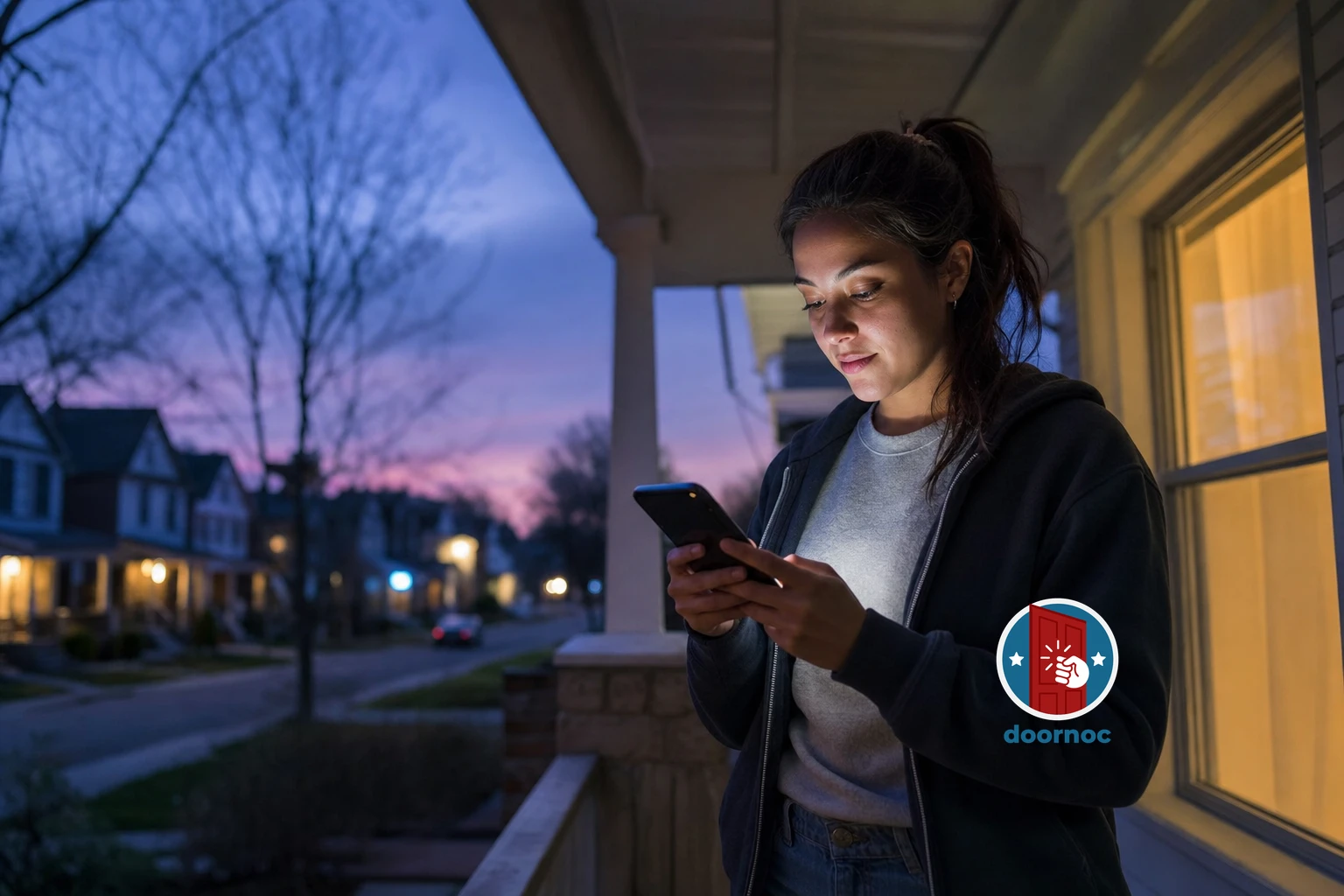 Volunteer using glowing smartphone on residential porch at dusk in documentary style.
The foundation is vote propensity modeling — predicting how likely each voter is to turn out based on their vote history, demographics, and other factors. High-propensity voters (those who vote in every election) require different contact than low-propensity voters who need mobilization. Discover advanced strategies for engaging low-propensity voters to improve turnout in your campaign.
Support scoring predicts each voter’s likelihood of supporting your candidate based on past voting behavior, demographics, survey responses, and predictive modeling. This allows campaigns to focus persuasion efforts on truly persuadable voters rather than wasting resources on strong supporters or firm opponents.
The most sophisticated campaigns layer multiple scores to create detailed voter segments. A voter might be classified as: high propensity to vote + persuadable on support + concerned about education + responsive to female messengers. This level of detail enables hyper-targeted marketing where every contact is optimized for maximum impact.
Issue-based segmentation identifies which policy positions resonate with different voter groups. Suburban women might prioritize education and healthcare, while rural voters focus on economic development and agriculture. By matching messages to voter priorities, campaigns increase persuasion effectiveness. Explore modern swing voter identification methods to improve your targeting strategy.
Dynamic Segmentation Based on Real-Time Data
Static voter segments created at campaign launch become outdated as volunteers collect field data and voters respond to marketing contacts. Advanced campaigns use dynamic segmentation that updates continuously based on new information.
When a door knock conversation reveals a voter is more persuadable than predicted, their support score adjusts and they receive more intensive follow-up. When a voter who seemed supportive expresses concerns, they move into a different message track addressing those specific issues. This responsiveness makes marketing increasingly effective as the campaign progresses.
Behavioral data from digital channels also informs segmentation. Voters who engage heavily with campaign content — watching videos, visiting the website, clicking emails — demonstrate interest worth following up with personal contact. Conversely, voters who never engage with digital outreach might be deprioritized for digital spending and contacted through other channels.
Messaging Strategy and Message Testing
Even the most sophisticated targeting and channel optimization fails without effective messaging. Successful political marketing requires developing messages that resonate with target voters and testing those messages rigorously before scaling.
Message development starts with research — understanding what issues voters care about, what concerns they have about your candidate and opponents, and what language resonates with different demographic groups. This research comes from polling, focus groups, door knock conversations, and social media listening.
The best campaigns develop a core message framework with multiple message tracks for different voter segments. The core message defines your candidate’s essential value proposition — why voters should support you in one clear sentence. Message tracks adapt this core message to address specific voter concerns: the education track for parents, the economic track for business owners, the healthcare track for seniors.
Message testing validates which approaches work before committing full budgets. Digital advertising provides the most cost-effective testing platform — campaigns can run multiple message variations to small audiences, measure engagement and persuasion, then scale the winners. A typical test might run 8-10 different video ads with varying messages, visuals, and calls-to-action, each served to 1,000-2,000 voters, with budgets shifting to top performers after 3-5 days.
Responding to Opposition and Negative Attacks
Every competitive campaign faces negative attacks from opponents. Your marketing strategy must include rapid response capabilities to counter false or misleading attacks before they define your candidate.
The most effective response approach is immediate and multi-channel. When an attack ad launches, successful campaigns respond within 24-48 hours with fact-checking content distributed through digital ads, email, social media, and door knock talking points. Delay allows false narratives to solidify in voters’ minds.
Response messaging should be factual and specific rather than generically defensive. Instead of saying “that attack is false,” effective responses explain exactly what’s misleading and provide contrary evidence. Fact-check organizations’ ratings, newspaper editorial endorsements, and constituent testimonials all provide credible third-party validation.
Some attacks are best ignored. If an attack is so outlandish that responding would give it credibility, or if it’s targeting voters who already oppose you, response may be counterproductive. Strategic discipline means choosing which attacks warrant response based on whether they’re reaching persuadable voters and whether they’re credible enough to change opinions.
Volunteer Recruitment and Management as Marketing
Volunteers are both a marketing channel and a marketing challenge. Your campaign needs to recruit volunteers, train them effectively, and keep them engaged — essentially marketing your campaign to supporters to convert them into active participants.
Volunteer recruitment uses many of the same tactics as voter persuasion. Digital advertising targeted to likely supporters with volunteer recruitment creative, email campaigns asking supporters to sign up for shifts, and peer-to-peer recruitment where existing volunteers invite friends all contribute to building a volunteer base.
The key is making volunteer participation feel meaningful and achievable. Many potential volunteers want to help but feel intimidated by political campaigns or unsure how to contribute. Marketing that emphasizes “no experience necessary,” provides clear information about time commitments (“just 2 hours on Saturday”), and highlights the impact of volunteer work (“volunteers like you helped us contact 5,000 voters last week”) reduces barriers to participation.
Volunteer management technology like Door Knock makes participation easier and more rewarding. When volunteers can use intuitive mobile apps instead of paper lists, see their individual impact through real-time statistics, and receive recognition for their contributions, they’re more likely to volunteer repeatedly. Explore how modern canvassing technology improves volunteer productivity and retention.
Volunteer Retention and Recognition
Recruiting volunteers is only half the challenge — retaining them through Election Day requires ongoing engagement. Successful campaigns treat volunteers like valued team members rather than disposable resources.
Regular communication keeps volunteers engaged between shifts. Email updates on campaign progress, invitations to volunteer appreciation events, and personalized thank-you messages from the candidate all reinforce that volunteer contributions matter. Campaigns that communicate with volunteers only when they need them for shifts see much higher attrition than those maintaining ongoing relationships.
Recognition programs motivate continued participation. Some campaigns create volunteer tiers (bronze/silver/gold) based on hours contributed, with increasing levels of recognition and access. Top volunteers might receive invitations to small-group meetings with the candidate, public recognition at events, or leadership roles managing other volunteers.
The most effective retention strategy is making volunteer work feel impactful. When volunteers see that their door knock conversations are changing voter opinions, that their phone calls are increasing turnout, and that their efforts are making a real difference in the race, they’re motivated to continue contributing. This is why data transparency matters — showing volunteers the results of their work keeps them engaged.
Measuring Marketing Effectiveness and ROI
Political marketing requires rigorous measurement to optimize spending and prove ROI to donors and stakeholders. The most successful campaigns in 2026 track detailed metrics across all marketing channels and use this data to make real-time optimization decisions.
Core metrics vary by channel but should always connect to the ultimate goal of votes. For digital advertising, track impressions, click-through rates, video completion rates, and cost per engagement — but also track how digital ad exposure correlates with changes in support and turnout propensity based on polling and modeling data.
Field operations metrics include doors knocked per volunteer hour, conversation rate (percentage of doors where substantive conversations occur), persuasion rate (percentage of undecided voters who commit to support), and cost per voter contact. Advanced campaigns also track volunteer retention rates and the quality of data collected during door knock conversations.
Email metrics include open rates, click-through rates, unsubscribe rates, and conversion rates for specific calls-to-action (volunteer signups, donations, event RSVPs). But also track how email engagement correlates with other behaviors — do voters who engage with email also respond better to door knocks or digital ads?
Direct mail measurement is more challenging but not impossible. Unique URLs and phone numbers in mail pieces track direct response. Polling can measure whether awareness and favorability increase in areas receiving mail. Some campaigns use control groups — similar precincts where some receive mail and others don’t — to measure differential impact.
Attribution and Multi-Touch Analysis
The most sophisticated measurement challenge is attribution — determining which marketing contacts deserve credit when a voter decides to support your candidate. Most voters receive multiple contacts through different channels, making single-touch attribution misleading.
Multi-touch attribution models assign fractional credit to each contact in a voter’s journey. If a voter sees three digital ads, receives two mail pieces, and has one door knock conversation before committing support, each contact receives partial credit. The exact allocation can be equal (each contact gets 1/6 credit), time-decay (more recent contacts get more credit), or position-based (first and last contacts get more credit).
Advanced campaigns use data science to build custom attribution models based on their actual voter contact patterns. By analyzing thousands of voters and their contact histories, machine learning can identify which contact sequences are most effective and allocate credit accordingly. This reveals insights like “voters who receive a door knock followed by digital ads are 2.3x more likely to support us than those receiving the same contacts in reverse order.”
Building a Campaign Marketing Calendar
Effective political marketing requires careful timing and sequencing of activities. The best campaigns develop detailed marketing calendars that coordinate all channels and ensure voters receive the right messages at the right times.
Calendar planning starts by working backward from Election Day. The final week focuses entirely on turnout — reminding supporters to vote, providing practical voting information, and mobilizing volunteers for final door knocks and phone calls. The week before that might focus on late-deciding voters with final persuasion messaging. Earlier weeks build awareness, deliver persuasion content, and establish the candidate’s credentials and policy positions.
Seasonal factors influence timing. Summer months when voters are on vacation require different approaches than fall campaign season. Early voting periods demand adjusted messaging and timing. Local events, holidays, and school schedules all affect when voters are reachable and receptive to political messaging.
Opponent activity also drives calendar decisions. When your opponent launches a major ad campaign or hosts a high-profile event, your calendar must include response capacity. Building buffer time and budget for rapid response ensures you can react to unexpected developments without derailing your planned marketing sequence.
Integrating Marketing with Campaign Milestones
Marketing calendars should align with campaign milestones — filing deadlines, debates, endorsement announcements, and fundraising deadlines. Each milestone provides content opportunities and messaging hooks for marketing across all channels.
Debates deserve special marketing attention. Pre-debate marketing builds awareness and sets expectations. During debates, social media teams provide real-time commentary and fact-checking. Post-debate marketing highlights your candidate’s strong moments and counters opponent attacks. This debate-centered marketing sequence can span 7-10 days and involve all channels.
Endorsement announcements provide similar opportunities. When a prominent local leader or organization endorses your candidate, marketing should amplify that endorsement through digital ads, direct mail, email, and door knock talking points. The endorsement becomes a message track targeting voters who respect the endorser.
Technology Stack for Political Marketing
Successful political marketing in 2026 requires integrating multiple technology platforms into a cohesive stack that enables data-driven decision-making and efficient execution.
At the center is your voter relationship management (VRM) system — the database that stores all voter information, contact history, support scores, and demographic data. Your VRM should integrate with all other platforms to ensure data flows seamlessly across the campaign.
Field operations require mobile canvassing apps that work offline, provide optimized routes, display voter information at each door, and sync data in real-time. Door Knock provides exactly this functionality, allowing volunteers to be more productive while collecting higher-quality data that improves targeting across all channels.
Digital advertising platforms (Facebook Ads Manager, Google Ads, programmatic platforms) should integrate with your VRM to enable custom audience targeting based on voter file data. The best campaigns use voter file matching to serve ads only to specific voter segments, dramatically improving efficiency.
Email and SMS platforms need robust segmentation capabilities and integration with your VRM. When a voter’s support level changes based on a door knock conversation, their email segment should update automatically to receive appropriate messaging.
Analytics and reporting tools consolidate data from all platforms to provide unified dashboards showing campaign-wide metrics. The best tools allow drilling down from high-level KPIs (total voters contacted, current support levels) to granular details (which volunteer knocked which doors, what messages are performing best in specific precincts).
Conclusion: Building a Winning Marketing Strategy
Successful political marketing strategies in 2026 integrate multiple channels into data-driven programs that reach voters with the right messages through the right channels at the right times. The campaigns that win elections understand that effective marketing requires more than just advertising — it demands sophisticated targeting, rigorous testing, continuous optimization, and seamless integration across digital and field operations.
The most important principle is putting voter contact first. While digital advertising and direct mail play important roles, nothing replaces the persuasive power of face-to-face conversations. Campaigns should build their marketing strategies around door-to-door canvassing as the core tactic, using digital and mail to reinforce and amplify those personal connections.
Data integration separates winning campaigns from also-rans. When every voter contact — whether a door knock, digital ad click, or email open — updates a centralized voter profile that triggers appropriate follow-up across all channels, marketing becomes dramatically more effective. This level of integration requires both technology and organizational discipline, but the ROI justifies the investment.
Continuous testing and optimization ensure marketing effectiveness improves throughout the campaign. The messages, targeting, and tactics that work in June may not work in October. Successful campaigns test constantly, measure rigorously, and shift resources toward what’s working while cutting what isn’t.
Finally, remember that political marketing serves a higher purpose than commercial marketing. You’re not just selling a product — you’re helping voters make informed decisions about their community’s future. The most effective marketing treats voters with respect, provides substantive information about policy positions, and facilitates genuine democratic participation. When your marketing strategy aligns tactical sophistication with authentic communication, you build not just winning campaigns but stronger democracy.
Frequently Asked Questions
What are the most effective political marketing strategies in 2026?
The most effective political marketing strategies in 2026 combine data-driven voter targeting with integrated multi-channel outreach. This includes micro-targeted digital advertising, door-to-door canvassing with mobile apps, personalized direct mail, and strategic social media engagement. Campaigns that integrate these channels with centralized voter data see 3-4x higher conversion rates than single-channel approaches.
How much should a political campaign spend on digital advertising?
In 2026, competitive campaigns typically allocate 25-35% of their total marketing budget to digital advertising, with the exact percentage depending on district demographics and competitiveness. For local races, this translates to $15,000-$50,000, while congressional campaigns often invest $200,000-$500,000 in digital ads. The key is balancing digital spend with high-ROI field operations.
Is door-to-door canvassing still effective in 2026?
Yes, door-to-door canvassing remains the most effective voter persuasion method in 2026, converting 8-12% of undecided voters compared to 2-3% for digital-only contact. Modern canvassing apps like Door Knock have made field operations more efficient, allowing campaigns to contact 40-60 voters per volunteer per day while capturing real-time interaction data that improves targeting accuracy.
How do you target swing voters in political marketing?
Effective swing voter targeting in 2026 uses predictive modeling based on voter file data, past election participation, demographic profiles, and behavioral signals. Campaigns layer this data with issue-based messaging tests to identify persuadable voters, then deploy integrated outreach combining door knocking, personalized direct mail, and micro-targeted digital ads focused on specific policy positions that resonate with undecided voters.
What metrics should political campaigns track for marketing effectiveness?
Critical marketing metrics for 2026 campaigns include cost per voter contact, persuasion rate by channel, volunteer productivity (doors knocked per shift), digital ad engagement rates, email open and click-through rates, and ultimately cost per vote. Advanced campaigns also track voter contact frequency, message recall rates, and cross-channel attribution to optimize budget allocation across marketing channels.