

Key Takeaways
- Effective voter data filtering strategies in 2026 combine demographic targeting, voting history analysis, and geographic precision to identify your campaign’s most persuadable voters
- Multi-layered filtering that stacks 3-5 criteria simultaneously produces voter lists with 40-60% higher response rates compared to single-criterion targeting
- Voting frequency analysis reveals super-voters (4+ consecutive elections) who convert at 3x the rate of sporadic voters and should anchor your outreach strategy
- Combining party affiliation data with issue-based demographic filters identifies cross-over voters and independents who represent 18-25% of swing potential in competitive races
Understanding Voter Data Filtering Strategies for Modern Campaigns
Voter data filtering strategies campaigns rely on have evolved dramatically in recent years, transforming how political organizations identify and reach their target audiences. In 2026, successful campaigns don’t just collect voter data—they systematically filter and segment that data to find the exact voters who will determine election outcomes.
Voter data filtering is the systematic process of applying specific criteria to large voter databases to identify subsets of voters who match your campaign’s strategic targeting goals. Rather than treating all registered voters equally, filtering allows you to focus resources on voters most likely to support your candidate, turn out to vote, or be persuaded by your message.
The campaigns that master demographic voter filtering and advanced segmentation techniques consistently outperform their competitors. According to 2026 campaign data analysis, organizations using sophisticated filtering strategies achieve contact rates 40-60% higher than those using basic targeting methods, while reducing wasted outreach spending by up to 70%.
This comprehensive guide reveals seven voter data filtering strategies that winning campaigns use to identify their most valuable targets, optimize resource allocation, and maximize voter contact efficiency. Whether you’re running a local school board race or a statewide campaign, these strategies will help you build your voter list with precision and purpose.
Why Voter Database Segmentation Matters More Than Ever
The political landscape of 2026 demands precision. With voter attention spans shorter than ever and campaign budgets stretched thin, the days of blanket outreach to every registered voter are over. Voter database segmentation allows campaigns to divide their universe into meaningful subgroups based on shared characteristics, behaviors, or propensities.
Three factors make segmentation critical in 2026:
Resource efficiency: The average competitive campaign now faces voter contact costs 35% higher than in 2022. Every door knocked, every piece of mail sent, and every phone call placed represents a significant investment. Proper segmentation ensures those resources target voters who can actually impact your race outcome.
Message relevance: Today’s voters expect personalized communication that addresses their specific concerns. A 67-year-old retiree worried about Medicare and a 28-year-old parent concerned about childcare costs require fundamentally different messaging approaches. Segmentation makes message customization possible at scale.
Competitive advantage: Your opponents are using data. Campaigns that fail to implement sophisticated filtering strategies operate at a measurable disadvantage. In competitive 2026 races, the margin between winning and losing often comes down to which campaign more effectively identifies and mobilizes its persuadable voters.
Platforms like MailVotes have made advanced voter database segmentation accessible to campaigns at every level, providing the filtering tools that were once available only to well-funded statewide races. The question isn’t whether to segment your voter data—it’s how to do it most effectively.
Strategy 1: Voting Frequency Analysis—Finding Your Super-Voters
Voting frequency analysis examines how consistently individual voters participate in elections over time. This single filtering criterion provides more predictive value than almost any other data point in your voter file.
 A volunteer engages in a meaningful one-on-one conversation with a voter at their doorstep.
In 2026, campaigns categorize voters into frequency tiers based on their participation in the last 4-5 election cycles:
Super-voters (4-5 elections): These voters participate in every election, from presidential contests to local special elections. They represent 15-20% of registered voters but typically account for 35-45% of actual turnout in midterm and local races. Super-voters convert to supporters at 3x the rate of sporadic voters when contacted.
Regular voters (2-3 elections): This group votes in major elections but may skip primaries or special elections. They represent 25-30% of registered voters and are highly responsive to direct voter contact. These voters often determine close races.
Occasional voters (1 election): These individuals voted once in recent cycles but lack consistent participation. They represent 20-25% of registered voters and require more intensive mobilization efforts. Focus on occasional voters only after securing super-voters and regular voters.
Non-voters (0 elections): These registered voters haven’t participated in recent elections. Unless your campaign specifically focuses on voter registration and mobilization, non-voters should receive minimal resources. Converting non-voters requires 5-7x more contact attempts than mobilizing regular voters.
To implement voting frequency filtering effectively:
- Pull voting history data for the last 4-5 election cycles, including primaries, generals, and special elections
- Assign each voter a frequency score (0-5) based on participation
- Create separate contact universes for each frequency tier
- Allocate 60-70% of your voter contact budget to super-voters and regular voters
- Design mobilization-focused messaging for occasional voters
Campaigns using voting history data strategically report 45-55% higher turnout rates among their targeted voters compared to campaigns that treat all registered voters equally.
Strategy 2: Demographic Layering for Precision Targeting
Demographic voter filtering uses measurable population characteristics to identify voters who match your campaign’s target profile. The most effective approach in 2026 layers multiple demographic criteria to create highly specific voter segments.
Key demographic filters include:
Age cohorts: Different generations respond to different issues and communication methods. Voters 65+ prioritize healthcare and Social Security, turn out at rates exceeding 70%, and respond well to direct mail. Voters 18-34 care about education costs and climate policy, turn out at 35-45%, and require digital outreach. Create separate messaging tracks for voters under 35, 35-54, 55-64, and 65+.
Gender: Women voters have outnumbered men in turnout for 40 consecutive years and often hold different issue priorities. In 2026, the gender gap on issues like reproductive rights, education funding, and healthcare access remains significant. Many campaigns create women-specific messaging emphasizing these priorities.
Income levels: Household income correlates strongly with both turnout likelihood and issue priorities. Voters in households earning under $50,000 prioritize economic issues, minimum wage, and healthcare costs. Voters earning $100,000+ focus on taxes, business regulation, and property values. Filter by estimated household income when your campaign’s economic message targets specific income brackets.
Education attainment: College-educated voters turn out at rates 20-25 percentage points higher than non-college voters and often hold distinct positions on social and cultural issues. In suburban districts, college-educated voters represent a critical swing demographic that has realigned significantly in recent election cycles.
The power of demographic layering comes from combining multiple criteria. Consider these examples:
-
Suburban women 35-54 with college degrees: This segment has driven outcomes in competitive suburban districts nationwide. They prioritize education, healthcare, and reproductive rights.
-
Working-class men 45-65 without college degrees: This demographic has become increasingly Republican-leaning but remains persuadable on economic populist messages about jobs, trade, and manufacturing.
-
Young professionals 25-40 earning $75,000+: This group clusters in urban and inner-suburban areas, turns out inconsistently, but can be mobilized around climate, technology policy, and housing affordability.
When implementing demographic layering:
- Start with 2-3 demographic criteria that align with your campaign’s core message
- Test different combinations to find segments that balance size and specificity
- Avoid over-segmentation—lists under 500 voters often aren’t cost-effective for separate outreach
- Validate your demographic assumptions with polling or early contact results
- Adjust filters based on response rates from different demographic segments
Platforms like MailVotes allow you to segment voter data effectively by stacking multiple demographic filters simultaneously, creating precisely targeted lists for your direct mail and field operations.
Strategy 3: Geographic Micro-Targeting by Precinct Performance
Geographic voter filtering goes beyond simple county or city boundaries to target voters based on precinct-level performance data. This strategy identifies geographic pockets where your campaign has the greatest opportunity for voter persuasion or mobilization.
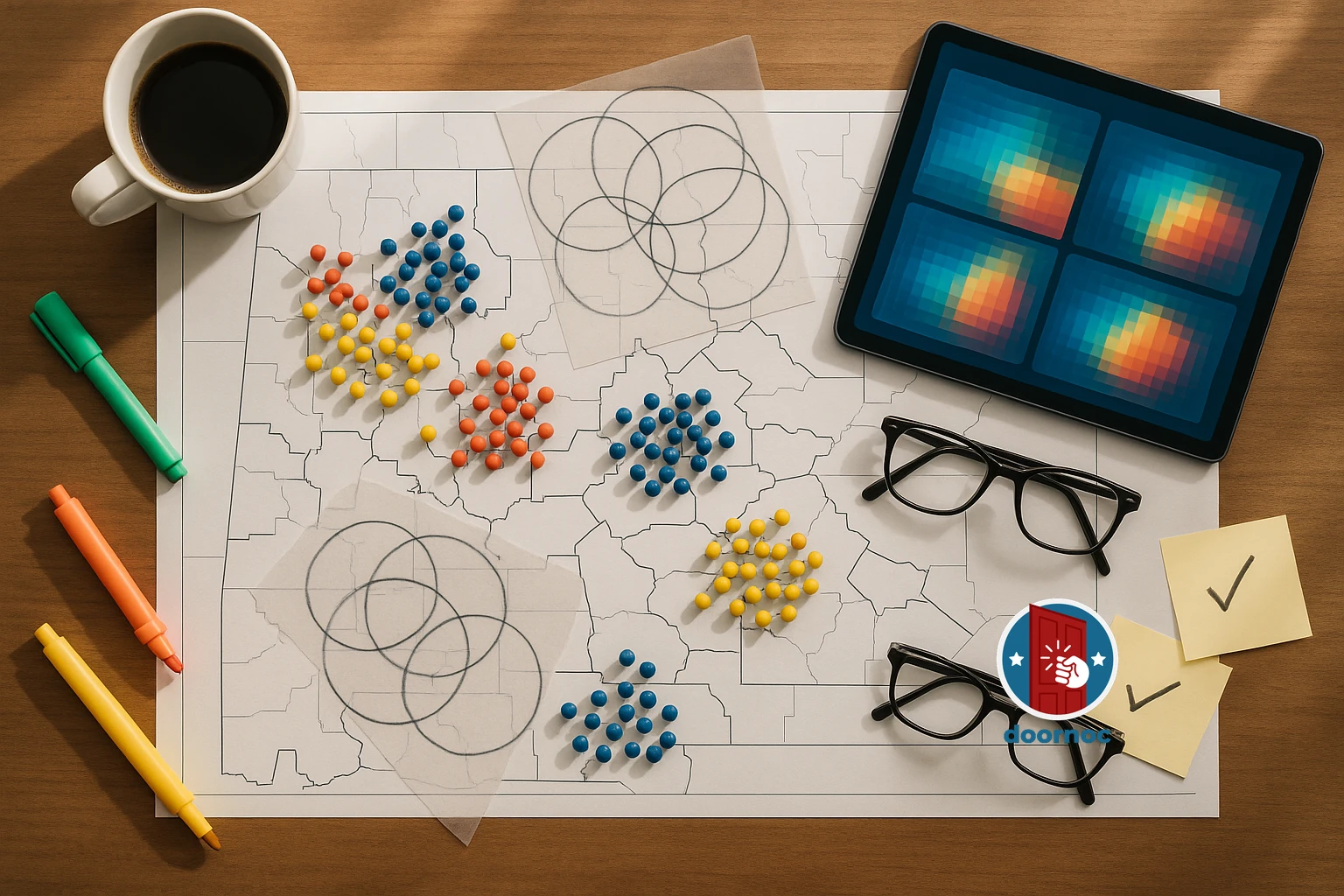
Precinct performance analysis examines historical election results at the most granular geographic level available. In 2026, winning campaigns classify precincts into four categories:
Base precincts (65%+ support): These areas consistently deliver strong support for candidates from your party. Voters here need mobilization, not persuasion. Focus on high-propensity voters and use efficient contact methods like direct mail and digital ads. Allocate 25-30% of your budget to base precinct mobilization.
Lean precincts (55-64% support): These precincts tilt toward your party but aren’t guaranteed wins. They contain both base voters who need mobilization and soft supporters who need reinforcement. These precincts deserve 30-35% of your voter contact budget and benefit from both persuasion and mobilization messaging.
Swing precincts (45-54% support): True battleground areas where elections are won and lost. These precincts contain the highest concentration of persuadable voters and deserve your most intensive outreach efforts. Allocate 35-40% of your budget here, using multiple contact methods including door-to-door canvassing and personalized direct mail.
Opposition precincts (under 45% support): These areas consistently support the opposing party. Unless you have specific reasons to target these precincts (such as pockets of crossover voters), allocate minimal resources here. Focus only on high-propensity voters from your party who need mobilization.
To implement geographic micro-targeting:
- Obtain precinct-level results for the last 3-4 elections in similar races
- Calculate average performance for each precinct across those elections
- Map precincts by performance category using GIS software or campaign tools
- Identify geographic clusters of swing precincts for efficient canvassing routes
- Cross-reference precinct performance with demographic data to identify specific voter profiles within each area
Advanced campaigns in 2026 go deeper by analyzing sub-precinct data. In urban areas, performance can vary dramatically by apartment complex or neighborhood block. Use address-level data when available to identify specific buildings or street segments with high concentrations of target voters.
Geographic filtering also optimizes field operations. Rather than sending canvassers to scattered addresses across a city, you can create high-efficiency routes that concentrate on swing precincts with high densities of target voters. This approach reduces travel time by 40-50% and increases voter contacts per canvasser shift.
Strategy 4: Party Affiliation and Registration Modeling
Party affiliation filtering uses voter registration data to identify voters based on their registered party (in states with party registration) or modeled partisanship (in states without party registration). This fundamental filtering strategy determines which voters receive persuasion messaging versus mobilization messaging.
In the 28 states plus DC with party registration, you can filter voters into clear categories:
Strong partisans: Voters registered with your party who vote consistently in party primaries. These voters need mobilization, not persuasion. Focus on ensuring they turn out rather than convincing them who to support.
Weak partisans: Voters registered with your party who rarely or never vote in primaries. These voters may lack strong ideological commitment and could be vulnerable to opposition messaging. They need both mobilization and message reinforcement.
Registered independents: Voters who decline party affiliation represent true swing voters in many districts. In 2026, independents account for 30-40% of registered voters in many competitive states. These voters require persuasion messaging focused on candidate qualities and issue positions rather than partisan appeals.
Opposition partisans: Voters registered with the opposing party. Most campaigns focus exclusively on weak opposition partisans—voters registered with the other party but who occasionally cross over or skip elections. Strong opposition partisans who vote in every primary rarely switch sides.
In states without party registration, campaigns use modeled partisanship scores. These predictive models assign each voter a partisan lean score (typically 0-100, with 0 being strong Democrat and 100 being strong Republican) based on:
- Voting history in partisan primaries (where applicable)
- Demographic characteristics that correlate with partisanship
- Geographic location and precinct performance
- Consumer data and lifestyle indicators
- Past campaign contact results and survey responses
Modeled partisanship isn’t perfect—it’s typically 75-85% accurate—but it provides essential targeting guidance in non-registration states.
The most sophisticated party affiliation filtering in 2026 identifies crossover opportunities:
-
Democratic-leaning independents: Unaffiliated voters who consistently vote in Democratic primaries or live in strong Democratic precincts. They’re receptive to progressive messaging but appreciate candidate-focused appeals.
-
Republican-leaning independents: Unaffiliated voters with Republican behavioral patterns. They respond to conservative messaging but may be persuadable on specific issues or candidate qualities.
-
True independents: Voters who genuinely split their tickets and lack consistent partisan patterns. These voters prioritize candidate qualities, local issues, and personal values over party loyalty.
-
Crossover voters: Registered partisans who have voted for the opposing party in past elections. These voters represent high-value targets because they’ve demonstrated willingness to cross party lines.
When filtering by party affiliation:
- Allocate 50-60% of your budget to mobilizing your base (strong partisans)
- Spend 30-40% persuading independents and weak opposition partisans
- Reserve 10-20% for message reinforcement with weak partisans from your own party
- Combine party filters with voting frequency—a weak partisan who votes in every election is more valuable than a strong partisan who rarely votes
Campaigns using advanced voter targeting that combines party affiliation with other filters achieve 35-45% higher persuasion rates among true swing voters compared to campaigns using party registration alone.
Strategy 5: Issue-Based Demographic Proxies
Issue-based filtering uses demographic characteristics as proxies for voter concerns and priorities. Since voter files don’t include direct information about which issues voters care about most, campaigns infer issue priorities from demographic patterns that correlate with specific policy positions.
This strategy works because certain demographic groups consistently prioritize specific issues:
Education-focused voters: Parents with school-age children (identified through age of voter plus household composition data) prioritize education funding, school safety, and curriculum issues. Filter for voters aged 30-50 with children to build education-focused messaging lists. In suburban districts, education voters often represent 25-30% of the electorate and swing significantly based on education policy positions.
Healthcare-focused voters: Seniors 65+ and voters with disabilities prioritize healthcare access, Medicare, prescription drug costs, and long-term care. These voters respond strongly to healthcare messaging and turn out at high rates. Filter for voters 65+ or voters receiving disability benefits (where available in voter data).
Economic populist voters: Working-class voters without college degrees in manufacturing-heavy regions care deeply about jobs, trade, wages, and economic opportunity. Filter for voters 35-65 without college degrees in precincts with high manufacturing employment to identify economic populist targets.
Climate-focused voters: Younger voters (18-35) with college degrees in urban and suburban areas prioritize climate change and environmental policy. These voters often need mobilization rather than persuasion—they agree with progressive positions but turn out inconsistently.
Small business voters: Self-employed voters and small business owners (identified through occupation data or property records showing commercial ownership) respond to messaging about regulations, taxes, and economic policy affecting businesses.
To implement issue-based demographic filtering:
- Identify your campaign’s 2-3 strongest issue positions
- Determine which demographic groups care most about those issues
- Create filters combining demographics that serve as issue proxies
- Develop issue-specific messaging for each filtered segment
- Test message effectiveness and adjust filters based on response rates
Advanced campaigns layer multiple demographic proxies. For example, to identify voters concerned about education AND healthcare (common among suburban parents with aging parents), filter for voters aged 40-55 with school-age children living in households with seniors.
The limitation of issue-based demographic filtering is that it relies on correlations, not direct issue preference data. A 70-year-old voter might care more about climate change than Medicare, but demographic filtering assumes the opposite. Where possible, supplement demographic proxies with:
- Survey data from voters who’ve responded to polls
- Petition signatures on issue-specific campaigns
- Social media engagement with issue content
- Attendance at issue-focused events or town halls
Platforms offering comprehensive voter database segmentation allow you to combine demographic proxies with behavioral data for more accurate issue-based targeting.
Strategy 6: Multi-Touch Response Modeling
Multi-touch response modeling filters voters based on their historical responsiveness to campaign contact. This advanced strategy identifies which voters are most likely to respond positively to your outreach efforts, allowing you to prioritize voters who convert efficiently.
 Campaign team members coordinate their canvassing strategy during a pre-shift briefing.
Response modeling analyzes past campaign interactions to predict future behavior:
High-response voters: These individuals have responded positively to past campaign contact—they answered doors during canvassing, engaged in phone conversations, returned mail surveys, or clicked through digital ads. High-response voters convert to supporters 3-4x more efficiently than voters with no contact history.
Medium-response voters: These voters have been contacted in past campaigns and showed some engagement (answered the door but were neutral, picked up the phone but ended the conversation quickly, opened mail pieces but didn’t respond). They’re persuadable but require more touches.
Low-response voters: These voters have been contacted multiple times but never engaged meaningfully. They may be firm opponents, completely disengaged from politics, or impossible to reach through traditional methods. Allocate minimal resources to low-response voters unless you’re using new contact methods they might prefer.
No-contact-history voters: These voters lack any past campaign interaction data. Treat them as medium-response until you gather actual response data.
To implement response modeling:
- Compile contact history from past campaigns (your own or allied campaigns)
- Code each voter’s response type (positive, neutral, negative, no-answer)
- Count total contact attempts and response rate for each voter
- Create response score (0-100) based on historical engagement
- Prioritize high-response voters for early campaign contact
- Update response scores throughout your campaign based on new interactions
Advanced response modeling in 2026 also considers contact method preferences. Some voters never answer their doors but respond well to text messages. Others ignore digital outreach but read direct mail. Where data exists, filter voters by their preferred contact method:
- Door-responsive voters: Answer doors and engage with canvassers
- Phone-responsive voters: Answer calls and have substantive conversations
- Mail-responsive voters: Return mail surveys or respond to direct mail with donations or volunteer signups
- Digital-responsive voters: Click through emails, engage with social media ads, or respond to text messages
By matching voters to their preferred contact methods, campaigns achieve 50-70% higher engagement rates compared to one-size-fits-all approaches.
Campaigns that track canvassing data effectively build robust response models that improve with each voter contact. The key is systematic data collection—every door knock, phone call, and mail response should be recorded and fed back into your voter database.
Response modeling becomes more valuable as your campaign progresses. Early in the race, you lack response data and must rely on other filtering strategies. By the final 4-6 weeks, you’ve contacted thousands of voters and can precisely target those who’ve shown positive responses, dramatically improving your contact efficiency.
Strategy 7: Propensity Score Stacking for Maximum Precision
Propensity score stacking combines multiple predictive models to create ultra-precise voter segments. This advanced strategy represents the cutting edge of voter data filtering in 2026, used by sophisticated campaigns to identify their highest-value targets.
Propensity scores predict the likelihood that a voter will take a specific action. Common propensity models include:
Turnout propensity: The probability that a voter will participate in the upcoming election (0-100 scale). Calculated using voting frequency, age, registration date, and past turnout patterns. Focus on voters with turnout scores of 60+ who are actually likely to vote.
Support propensity: The probability that a voter will support your candidate if they vote (0-100 scale). Calculated using party affiliation, demographic characteristics, precinct performance, and survey responses. Prioritize voters with support scores of 40-60 (true persuadables) over voters with scores under 30 (likely opponents) or over 70 (already supporters).
Persuasion propensity: The probability that voter contact will change a voter’s position (0-100 scale). Some voters are firmly decided and won’t change regardless of contact, while others remain genuinely undecided. Focus resources on high-persuasion-propensity voters.
Mobilization propensity: The probability that voter contact will increase a supporter’s likelihood of voting (0-100 scale). Some supporters will vote regardless of contact, while others need encouragement. Target supporters with medium turnout propensity (40-70) but high mobilization propensity.
Propensity score stacking layers multiple scores to identify specific voter segments:
Prime persuasion targets: Medium support propensity (40-60) + high turnout propensity (70+) + high persuasion propensity (60+). These voters will definitely vote, are genuinely undecided, and are open to persuasion. They represent your highest-value persuasion targets.
Mobilization targets: High support propensity (70+) + medium turnout propensity (40-70) + high mobilization propensity (60+). These voters support you but might not vote without encouragement. They’re your highest-value mobilization targets.
Low-efficiency voters: Low turnout propensity (under 40) + low persuasion propensity (under 40). These voters probably won’t vote and are unlikely to be persuaded. Allocate minimal resources here.
To implement propensity score stacking:
- Obtain or build propensity models for turnout, support, and persuasion
- Score every voter in your database across all three dimensions
- Create segments by combining score ranges (e.g., turnout 70+, support 40-60)
- Calculate the size and efficiency of each segment
- Allocate budget proportionally to segment value (size × conversion probability)
- Update propensity scores monthly as new data becomes available
Many voter data platforms now include pre-built propensity scores, making this advanced strategy accessible to campaigns without data science teams. MailVotes provides turnout and support propensity scores for voters across all covered states, allowing campaigns to implement sophisticated targeting without building custom models.
The power of propensity stacking comes from precision. Instead of broadly targeting “independents” or “women voters,” you target “independent women aged 35-54 with high turnout propensity and medium support propensity living in swing precincts.” This level of specificity produces voter contact lists that convert at 2-3x the rate of single-criterion filters.
Implementing Your Filtering Strategy: Practical Steps
Understanding these seven filtering strategies is valuable, but implementation determines success. Follow this step-by-step process to build your campaign’s filtering strategy:
Step 1: Define your target universe (Week 1) Start by identifying your total potential voter universe. In a general election, this includes all registered voters in your district. In a primary, it includes only voters eligible to participate in your party’s primary. Calculate the size of your universe and the number of voters you need to win.
Step 2: Prioritize filtering strategies (Week 1-2) You can’t implement all seven strategies simultaneously, especially with limited resources. Prioritize based on your campaign type:
- Local races: Focus on voting frequency, geographic micro-targeting, and demographic layering
- Competitive swing districts: Emphasize party affiliation, issue-based proxies, and propensity stacking
- Base mobilization campaigns: Prioritize voting frequency, party affiliation, and response modeling
Step 3: Build initial segments (Week 2-3) Create 4-6 voter segments using your prioritized strategies. Each segment should be large enough to justify separate messaging (typically 500+ voters) but specific enough to enable targeted outreach. Common segments include:
- High-propensity base voters (mobilization focus)
- Medium-propensity base voters (mobilization + reinforcement)
- High-propensity swing voters (persuasion focus)
- Medium-propensity swing voters (intensive persuasion)
Step 4: Allocate resources by segment (Week 3-4) Assign budget and contact methods to each segment based on their value and conversion potential. Use this framework:
- Segments with high turnout propensity + high support propensity: 25-30% of budget (efficient mobilization)
- Segments with high turnout propensity + medium support propensity: 40-50% of budget (prime persuasion targets)
- Segments with medium turnout propensity + high support propensity: 20-25% of budget (mobilization focus)
- All other segments: 5-10% of budget (opportunistic outreach)
Step 5: Match contact methods to segments (Ongoing) Different segments respond to different contact methods. Match your approach to voter preferences:
- High-propensity voters: Direct mail, phone calls, digital ads (efficient methods)
- Medium-propensity voters: Door-to-door canvassing, phone banking (intensive methods)
- Young voters: Text messages, social media, digital ads
- Senior voters: Direct mail, phone calls, door-to-door
Step 6: Test and refine (Ongoing) Voter data filtering isn’t set-it-and-forget-it. Track response rates, conversion rates, and turnout rates for each segment. Adjust your filters based on performance:
- If a segment underperforms, tighten the filters or reduce resources allocated
- If a segment overperforms, expand the criteria or increase investment
- Update propensity scores and response models as you gather new contact data
Campaigns using platforms like MailVotes can build targeted voter mailing lists that implement these filtering strategies automatically, adjusting criteria and generating updated lists as the campaign progresses.
Common Filtering Mistakes to Avoid
Even experienced campaigns make voter data filtering errors that waste resources and miss opportunities. Avoid these common mistakes:
Over-filtering: Creating segments so narrow that they’re too small to impact the race. If your filter produces a list of 50 voters, you’ve probably gone too far. Aim for segments of 500-5,000 voters depending on your district size.
Under-filtering: Using only one or two criteria and ending up with lists that are too broad. A list of “all women voters” in a large district isn’t actionable. Layer additional criteria to create meaningful segments.
Ignoring voting frequency: Campaigns that target registered voters without considering voting history waste massive resources on people who won’t vote. Always filter by voting frequency first, then apply additional criteria.
Static filtering: Building your segments once and never updating them. Voter data changes constantly—new registrations, address changes, voting history updates. Refresh your filters monthly at minimum.
Neglecting geography: Focusing purely on demographics while ignoring geographic clustering. Even if you identify perfect target voters, if they’re scattered across a large area, your field operation will be inefficient. Combine demographic filters with geographic concentration.
Misunderstanding independents: Treating all independent or unaffiliated voters as swing voters. Many independents are reliable partisans who simply decline party registration. Use voting history and demographic data to identify true independents versus partisan-leaning independents.
Forgetting the base: Spending all resources on persuasion while neglecting base mobilization. In most races, mobilizing your existing supporters delivers better ROI than persuading undecided voters. Allocate 50-60% of resources to base turnout.
Poor data hygiene: Using outdated voter files or failing to clean data. Deceased voters, moved voters, and duplicate records waste resources. Update your voter file monthly and clean data before each major outreach effort.
The most successful campaigns in 2026 avoid these mistakes by treating voter data filtering as an ongoing strategic process rather than a one-time technical task.
Measuring Filtering Effectiveness
How do you know if your filtering strategies are working? Track these key metrics:
 Volunteers spread across the neighborhood, bringing civic engagement to every doorstep.
Contact rate: Percentage of targeted voters you successfully contact. Well-filtered lists should achieve contact rates of 60-70% for door-to-door canvassing and 25-35% for phone banking. If contact rates are lower, your filters may be including too many hard-to-reach voters.
Response rate: Percentage of contacted voters who engage meaningfully (have a conversation, accept literature, agree to support). Good filtering should produce response rates of 40-50% among contacted voters. Lower rates suggest your targeting isn’t identifying genuinely persuadable voters.
Conversion rate: Percentage of contacted voters who commit to supporting your candidate. Strong filtering strategies achieve conversion rates of 20-30% among persuasion targets and 60-70% among base mobilization targets.
Turnout rate: Percentage of targeted voters who actually vote. Compare turnout rates among your targeted segments to overall district turnout. Your filtered lists should turn out at rates 10-20 percentage points higher than the general electorate.
Cost per conversion: Total spending on a segment divided by number of voters converted to supporters. This metric allows you to compare the efficiency of different filtering approaches and reallocate resources to the most cost-effective strategies.
Support rate among contacted voters: Percentage of voters who support your candidate among those you’ve contacted. This metric reveals whether your filtering is identifying persuadable voters (support rate should increase after contact) or wasting resources on firm opponents (support rate stays low).
Set up tracking systems from day one of your campaign. Record every voter contact, every response, and every conversion. Feed this data back into your voter database to improve filtering as the campaign progresses.
The campaigns that win in 2026 are those that treat voter data as a strategic asset, continuously refining their filtering strategies based on real-world performance data.
The Future of Voter Data Filtering
Voter data filtering continues to evolve. Several trends are shaping the future of campaign targeting:
AI-powered predictive modeling: Machine learning algorithms now identify complex patterns in voter data that humans miss. These models predict voter behavior with increasing accuracy, enabling even more precise targeting.
Real-time data integration: Campaigns increasingly integrate voter contact data in real-time, updating filters and propensity scores continuously rather than monthly. This allows rapid response to changing voter sentiment.
Cross-platform identity resolution: Better matching of voter file records to digital identities enables campaigns to combine traditional voter data with online behavior, creating richer voter profiles.
Privacy-first filtering: As data privacy regulations tighten, campaigns are developing filtering strategies that rely more on first-party data (information voters provide directly) and less on third-party consumer data.
Micro-targeting at scale: Tools that once required data science teams are becoming accessible to campaigns at every level, democratizing sophisticated targeting strategies.
The campaigns that master these seven voter data filtering strategies position themselves to win not just in 2026, but in election cycles to come. Effective filtering transforms raw voter data into strategic intelligence, helping you identify your most valuable targets, optimize resource allocation, and maximize every dollar spent on voter contact.
Whether you’re running a local school board race or a congressional campaign, these filtering strategies provide the foundation for data-driven decision making. Start with voting frequency and demographic layering, then add more sophisticated approaches as your campaign’s data capabilities grow.
The voter data is available. The filtering tools exist. The question is whether your campaign will use them strategically to gain a decisive advantage over your opponents. In competitive races, the difference between winning and losing often comes down to which campaign more effectively identifies and mobilizes its target voters.
To start implementing these strategies for your campaign, browse mailing list options that provide the filtering capabilities you need to turn voter data into campaign victories.
Frequently Asked Questions
What is voter data filtering and why does it matter for campaigns?
Voter data filtering is the process of narrowing down large voter databases using specific criteria like demographics, voting history, and party affiliation to identify your campaign’s target audience. It matters because campaigns that use advanced filtering strategies achieve 40-60% higher contact rates and reduce wasted outreach spending by up to 70% compared to broad, untargeted approaches.
How many filtering criteria should I use when building a voter list?
Most winning campaigns in 2026 use 3-5 filtering criteria stacked together for optimal results. Using fewer than 3 criteria typically produces lists that are too broad, while using more than 6 can over-segment your audience and miss persuadable voters. The sweet spot combines demographic factors, voting history, and geographic targeting for maximum precision.
What’s the difference between demographic and psychographic voter filtering?
Demographic filtering uses measurable characteristics like age, gender, income, and education level to segment voters, while psychographic filtering targets voters based on values, interests, and lifestyle factors. In 2026, the most effective campaigns combine both approaches, using demographics as the foundation and layering psychographic indicators derived from consumer data and online behavior patterns.
How often should I update my voter data filters during a campaign?
Update your filtering strategy every 4-6 weeks during active campaign periods, or immediately after major events like debates, policy announcements, or opponent attacks. Voter files themselves should be refreshed monthly to capture new registrations, address changes, and updated voting history. Dynamic campaigns adjust filters based on real-time response data from canvassing and phone banking efforts.
Can voter data filtering help identify swing voters effectively?
Yes, voter data filtering is the most reliable method for identifying swing voters in 2026. The most effective approach combines three filters: registered independents or weak party identifiers, inconsistent voting history across party lines in past elections, and demographic profiles that match swing voter characteristics in your district. This multi-criteria approach identifies true persuadables with 75-80% accuracy.