Key Takeaways
- Swing voters represent 5-15% of the electorate but determine election outcomes in competitive races — targeting them requires data-driven identification based on voting history, party registration, and demographic modeling.
- The most persuadable voters are infrequent participants (voted in 1-2 of the last 4 elections), registered independents or weak party affiliates, and split-ticket voters who’ve crossed party lines in previous elections.
- Effective swing voter direct mail uses personalized messaging based on issue priorities, requires 4-6 touchpoints over 8-12 weeks, and focuses on 2-3 key issues rather than comprehensive platforms.
- Data segmentation is critical — break your persuasion universe into micro-segments by age, issue priority, and persuasion score, then test different message frames with each segment before scaling successful approaches.
How to target swing voters with direct mail starts with understanding a fundamental truth: swing voters represent just 5-15% of the electorate, yet they determine the outcome of nearly every competitive election. These persuadable voters don’t follow party lines reflexively — they evaluate candidates, weigh issues, and make decisions based on who they believe will best serve their interests. For your campaign, mastering swing voter targeting through direct mail means the difference between winning by 2 points and losing by the same margin.
Swing voters are the highest-value targets in modern campaigns because they’re genuinely movable. Unlike your base voters who need turnout motivation or opposition voters who’ll never support you, swing voters will cast their ballot for your candidate if you give them compelling reasons. Direct mail remains the most cost-effective channel to reach these voters with persuasive messaging because it allows precise targeting, message customization, and repeated exposure without the waste of broadcast media.
What Makes Someone a Swing Voter?
Swing voters are not a monolithic group — they’re individuals with distinct characteristics that signal persuadability. Understanding who qualifies as a swing voter in your race determines whether your direct mail investment produces results or wastes resources on the wrong targets.
The Classic Swing Voter Profile
True swing voters share several identifiable traits. They’re typically registered as independents or have weak party affiliations (registered with a party but have crossed lines in past elections). These voters participated in some recent elections but not all — usually voting in 1-2 of the last 4 general elections. This sporadic participation indicates political interest without rigid partisan commitment.
Swing voters often live in politically competitive areas where both parties have shown strength. A voter in a precinct that went 48-52 for either party in the last presidential election is far more likely to be persuadable than someone in a precinct that went 70-30. Geographic context matters enormously for swing voter identification.
Demographically, swing voters cluster in specific groups. Suburban women aged 35-55, college-educated professionals, younger voters (18-34) without strong partisan socialization, and older independents who’ve soured on both parties represent high-concentration swing demographics. In many states, these voters now outnumber reliable partisans in competitive districts.
Behavioral Signals of Persuadability
Voting history reveals persuadability more accurately than demographic data alone. Split-ticket voters — those who’ve voted for different parties in the same election — are prime swing targets. Someone who voted for a Republican governor but a Democratic senator is demonstrably willing to cross party lines based on candidate quality or issue positioning.
Late deciders represent another persuadable segment. Voters who consistently make up their minds in the final weeks of campaigns remain open to persuasion longer than early deciders. While identifying late deciders requires polling or modeling, campaigns can infer this behavior from voters who skip primaries but participate in generals, suggesting they wait to see final matchups before engaging.
Low-information voters — those who know little about down-ballot candidates — become increasingly persuadable as you move down the ballot. A swing voter in a presidential race may be more decided than in a state legislative race where they lack pre-existing knowledge. This principle should guide how you allocate direct mail resources across different contests.
How to Identify Your Swing Voter Universe
Identifying swing voters requires systematic analysis of voter file data. Your goal is creating a persuasion universe — a targeted list of voters worth the investment of persuasion mail. This process combines hard data with strategic assumptions about who’s movable in your specific race.
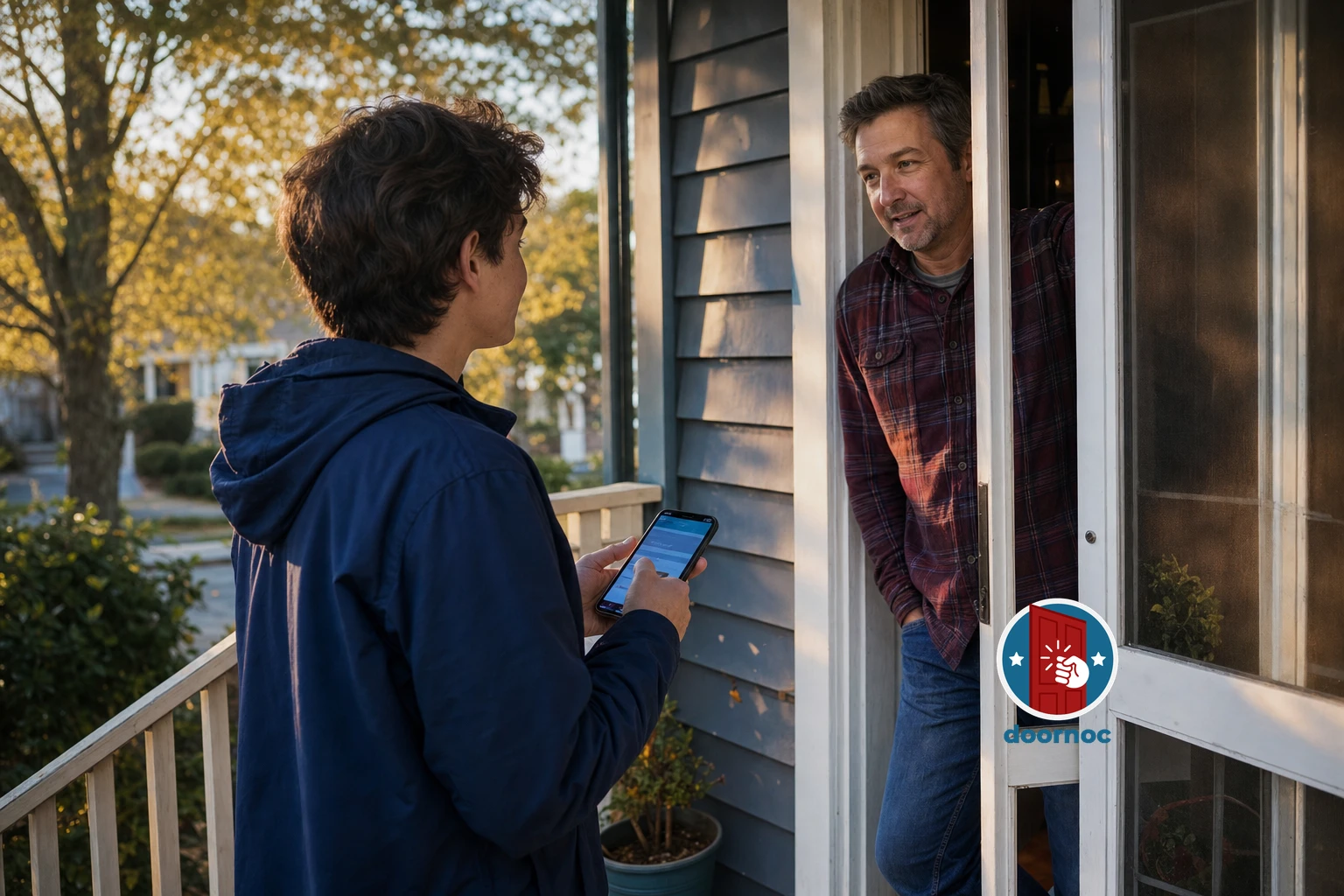
 A volunteer engages in a meaningful one-on-one conversation with a voter at their doorstep.
Start with Party Registration and Voting History
Begin your swing voter identification by filtering your voter file for registration status and participation patterns. Pull all voters registered as independent, unaffiliated, or third-party. Then add weak partisans — voters registered with a party but living in split-ticket precincts or areas with high independent performance.
Next, layer in voting history filters. Target voters who participated in 1-3 of the last 4 general elections. Exclude consistent non-voters (0 of 4) because they’re unlikely to turn out even if persuaded. Also exclude super-voters (4 of 4) if they’re registered with the opposition party — they’re likely committed partisans, not swing voters.
For platforms like MailVotes, you can combine these filters in a single query: independents AND (voted in 1 OR 2 OR 3 of last 4 generals) AND (lives in competitive precinct). This creates your initial persuasion universe for further refinement.
Use Geographic Targeting to Find Swing Districts
Geography correlates strongly with swing voter concentration. Identify competitive precincts by examining past election results. Calculate the two-party vote share in recent elections — precincts between 45-55% for either party contain the highest swing voter density.
Suburban areas, small cities, and mixed-income neighborhoods typically house more swing voters than urban cores (heavily Democratic) or rural areas (heavily Republican). Look for precincts that have flipped between parties in recent cycles — these “pivot precincts” are gold mines for persuadable voters.
Don’t ignore seemingly safe areas entirely. Even in partisan strongholds, specific neighborhoods or demographic pockets contain swing voters worth targeting. A heavily Democratic county may have suburban precincts with college-educated professionals who split tickets. A Republican county may have younger, diverse neighborhoods where persuadable voters cluster.
Demographic Modeling for Persuadability
Demographic data enhances behavioral targeting by identifying voters who fit persuadable profiles. Age proves particularly predictive — voters aged 25-44 show higher persuadability than older cohorts with entrenched partisan identities. Target these younger voters if your message and candidate appeal to their priorities.
Education level correlates with ticket-splitting and issue-based voting. College-educated voters are more likely to evaluate candidates individually rather than straight-party voting. Filter for zip codes or census tracts with higher educational attainment if your campaign emphasizes policy substance over partisan appeals.
For local races, homeownership status signals rootedness in the community and concern for local issues. Homeowners in your district who aren’t strong partisans represent high-value swing targets because they’re invested in local outcomes and likely to vote in down-ballot races.
Propensity Scoring and Microtargeting
Advanced campaigns use propensity scores — statistical models predicting the likelihood a voter will support your candidate. These models analyze dozens of variables to assign each voter a persuasion score from 0-100. Focus your direct mail budget on voters scoring 35-65 — genuinely movable voters where your message can make a difference.
If you lack resources for sophisticated modeling, create simple persuasion tiers manually. Tier 1: Independents in competitive precincts who voted 2 of 4 times. Tier 2: Weak partisans in competitive precincts who voted 2-3 of 4 times. Tier 3: Strong partisans in highly competitive precincts with split-ticket history. Allocate direct mail frequency by tier — more touches for Tier 1, fewer for Tier 3.
Microtargeting takes this further by identifying issue-based segments within your persuasion universe. Not all swing voters care about the same issues. Suburban moms may prioritize education funding, while small business owners focus on taxes and regulations. Segmenting your swing voter universe by likely issue priorities enables message customization that resonates more powerfully than generic appeals.
Crafting Direct Mail Messages That Persuade Swing Voters
Swing voters respond to different messaging than base voters. Your base wants partisan red meat and ideological purity. Swing voters want pragmatic problem-solving, bipartisan appeal, and evidence that you’ll put their interests above party loyalty. Your direct mail creative must reflect these distinct preferences.
Focus on 2-3 Key Issues Maximum
Swing voters tune out comprehensive policy platforms. They want to know where you stand on the 2-3 issues that matter most to them personally. Research consistently shows that persuasion mail works best when it focuses narrowly rather than broadly.
Identify which issues have persuasive power with swing voters in your race. Poll if possible, but you can also infer from news coverage, town halls, and previous election results. Economic issues (jobs, cost of living, taxes) typically persuade swing voters because they’re personal and non-ideological. Education, healthcare, and public safety also rank high for swing demographics.
Avoid culture war issues unless they strongly favor your position in your specific district. Swing voters often hold moderate views on social issues and may be alienated by strongly ideological positioning. Save partisan red meat for base mail — swing voter mail should emphasize problem-solving over ideology.
Use Credibility Indicators and Third-Party Validation
Swing voters are skeptical by nature — they don’t automatically trust political messaging. Build credibility by citing endorsements from respected non-partisan sources. A newspaper editorial, business association support, or non-profit leader endorsement carries more weight with swing voters than party committee backing.
Include specific, verifiable facts rather than vague claims. “Cut property taxes by 8% in two years” persuades more than “strong on fiscal responsibility.” Numbers, dates, and concrete details signal substance over empty promises. Swing voters reward candidates who demonstrate competence and specificity.
Testimonials from real people — especially non-political community members — enhance persuasiveness. A small business owner explaining how your candidate helped them, or a teacher describing your education record, provides social proof that resonates with swing voters who trust peers over politicians.
Contrast Without Going Negative
Swing voters need to understand differences between candidates, but they’re turned off by nasty attacks. Effective contrast mail presents clear policy differences and questions opponent judgment without personal attacks or inflammatory language.
Frame contrasts around issues swing voters care about: “On healthcare costs, Candidate A supports expanding coverage to lower premiums. Candidate B voted against the coverage expansion three times.” This presents a clear choice without name-calling or character assassination.
Source your contrasts carefully. Public voting records, documented statements, and official actions provide credible contrast points. Avoid opposition research based on personal life, guilt by association, or tangential issues. Swing voters want to know how candidates will govern differently, not who they associate with or what they did 20 years ago.
Design for Scannability and Credibility
Swing voters give your mail piece 5-10 seconds of attention. Design must communicate your key message instantly through visual hierarchy. Use large, clear headlines that state your main point. Include a compelling photo of your candidate looking competent and approachable, not overly political.
Avoid cluttered designs with multiple messages competing for attention. One mail piece = one message. If you’re highlighting your education platform, every element should reinforce that theme. Trying to cover five different issues in one mailer dilutes impact and confuses recipients.
Production quality signals credibility. Cheap-looking mail suggests a cheap campaign. Invest in professional photography, quality paper stock, and clean graphic design. Swing voters unconsciously judge candidate competence based on campaign material quality. Your direct mail represents your campaign’s brand — make it look professional and substantive.
Strategic Frequency and Timing for Swing Voter Mail
How often you contact swing voters matters as much as what you say. Too little mail and your message doesn’t penetrate. Too much and you waste money on diminishing returns. The right frequency depends on race competitiveness, budget size, and how many voters you’re targeting.
The 4-6 Touch Rule for Persuasion Mail
Research on persuasion mail effectiveness shows that 4-6 mail pieces over 8-12 weeks produces optimal results for swing voters. The first piece introduces your candidate and establishes name recognition. Pieces 2-3 build your case by highlighting key issue positions and contrasting with opponents. Pieces 4-5 reinforce your core messages with varied creative approaches. A final piece near Election Day provides voting information and a final call to action.
Campaigns with larger budgets can increase frequency to 8-10 pieces, but marginal returns diminish after six touches. Smaller campaigns should prioritize 4 high-quality pieces over 8 mediocre ones. Quality beats quantity when targeting persuadable voters.
Space your mail pieces strategically. Don’t send all six pieces in the final three weeks when voters are overwhelmed with campaign materials. Begin your persuasion mail 10-12 weeks before Election Day, then maintain consistent presence with a new piece every 10-14 days. This pacing keeps your candidate top-of-mind without oversaturating mailboxes.
Early Mail Builds Name Recognition
Start your swing voter mail program earlier than you might think. Many campaigns wait until the final 6-8 weeks, missing critical persuasion windows. Swing voters need time to absorb information and form opinions — rushing them with last-minute mail proves less effective than sustained presence.
Your first swing voter mail piece should drop 10-12 weeks before Election Day in competitive races. This early piece establishes name recognition and introduces your candidate’s biography. Don’t lead with policy — start with who you are, your local roots, and why you’re running. Swing voters need to know you before they’ll trust your policy positions.
For down-ballot races with less voter awareness, early mail matters even more. Candidates in state legislative or county commission races often face near-universal name recognition deficits. Starting mail early gives you time to build awareness before voters start paying attention to the race.
Peak Mail Window: 4-6 Weeks Before Election Day
The most critical period for swing voter persuasion falls 4-6 weeks before Election Day. During this window, voters are paying attention but haven’t yet firmly decided. Your persuasion mail during this peak period should focus on issue contrasts and candidate qualifications.
Plan your strongest pieces for this window. If you have compelling endorsements or powerful issue messages, deploy them when voters are most receptive. This is also the optimal time for message testing — you have enough time to adjust based on response but voters are engaged enough to react to your mail.
Don’t abandon swing voters in the final two weeks. Late-deciding swing voters may not make up their minds until the final week. Keep mailing through Election Day with increasingly urgent calls to action. Your final piece should include practical voting information — poll location, hours, and a clear ask to vote for your candidate.
Testing and Optimizing Your Swing Voter Mail
Data-driven campaigns test messaging before investing in full mail programs. Testing identifies which messages persuade swing voters most effectively, preventing costly mistakes and maximizing persuasion ROI.
Message Testing with Small Sample Mail
Before mailing 10,000 swing voters with your message, test it on 500-1,000. Create 2-3 message variations and mail them to randomly selected samples from your swing voter universe. Follow up with phone polling to measure which message moved voters most effectively.
Test contrasting approaches, not minor variations. For example, test Issue A (education) versus Issue B (economy) versus Issue C (healthcare), not three different ways to talk about education. This identifies which issue drives swing voter persuasion in your race, informing all subsequent mail.
If polling is beyond your budget, track response rates through website traffic, volunteer inquiries, or donation surges following each test mailing. While less precise than polling, behavioral responses indicate which messages generate engagement.
Segment Testing for Microtargeting
Different swing voter segments respond to different messages. Test messaging variation by segment: send economic messages to blue-collar swing voters, education messages to suburban parents, and healthcare messages to older independents. Measure which segments respond best to which messages.
This segmented approach, detailed in resources like our guide on how to build effective voter mailing lists, allows you to customize subsequent mail for maximum impact. Your second wave deploys proven messages to the segments that responded positively while testing new approaches with segments that didn’t respond.
Document everything. Create a testing matrix showing message variants, segments tested, response rates, and persuasion effectiveness. This data guides not just current mail but future campaigns. Successful message-segment combinations can be replicated in subsequent elections.
Rapid Response and Adjustments
Stay flexible enough to adjust messaging based on external events. If a major news story breaks that affects swing voter opinion, pivot your planned mail to address it. Swing voters are uniquely responsive to current events because they’re actively evaluating rather than reflexively following party lines.
Monitor opponent mail to swing voters. If they’re attacking you on an issue, your next swing voter piece may need to rebut or reframe. If they’re ignoring an issue that polls well for you, press that advantage. Persuasion mail works best when it responds to the actual persuasion environment, not just executing a pre-set plan.
Track mail delivery timing carefully. Production delays, postal slowdowns, or holiday disruptions can cause mail to arrive later than planned. Build buffer time into your schedule so missing deadlines doesn’t force you to cut a mail piece or compress your timeline ineffectively.
Integrating Direct Mail with Digital Persuasion
Direct mail works more effectively when coordinated with digital persuasion tactics. Swing voters encounter your campaign across multiple channels — integration reinforces messages and increases persuasion effectiveness.
Matched Audience Digital Ads
Upload your swing voter mail list to Facebook and Google as custom audiences. Serve digital ads with coordinated messaging to the same voters receiving your mail. When swing voters see consistent messages in their mailbox and online, message retention increases significantly.
Time your digital ads to coincide with mail arrival. When your piece drops, increase digital ad frequency for 5-7 days. This creates a surround-sound effect where swing voters encounter your message multiple times across channels within a short window.
Use digital ads to reinforce your strongest mail messages, not to introduce entirely new issues. If your mail focuses on education, your digital ads should also emphasize education. Multi-channel consistency builds message penetration and recall.
Email Follow-Up Where Available
Some voters in your swing universe have email addresses on file. Follow up mail pieces with coordinated email messages to these voters. Email allows you to provide more detail, link to additional information, and drive specific actions like event attendance or volunteer sign-up.
Email won’t replace mail for swing voter persuasion — open rates for political email average 15-25%, far below the physical opening rate for direct mail. But email provides a low-cost supplement that reinforces mail messages for minimal additional investment.
Test email timing. Sending an email 2-3 days after your mail piece drops may work better than same-day delivery. The delay allows voters to receive and open physical mail first, then email reinforces the message when memory is fresh.
Retargeting Website Visitors
If your mail includes a website URL, use retargeting pixels to serve ads to swing voters who visit. These voters demonstrated interest by visiting — retargeting keeps your message in front of them as they browse online.
Customize retargeting messages based on which pages voters viewed. If they visited your education platform page, retarget with education-focused ads. If they visited your bio page, retarget with personal story content. This level of personalization increases relevance and persuasion effectiveness.
Set frequency caps to avoid overwhelming voters with retargeting ads. Seeing your ad once per day for a week works better than seeing it ten times per day for two days. Swing voters are movable but not desperate for information — respect their attention and avoid ad fatigue.
Measuring Direct Mail Effectiveness
Persuasion mail produces results that matter — vote margin improvement — but measuring those results requires systematic tracking. Without measurement, you can’t optimize your program or justify the investment to stakeholders.
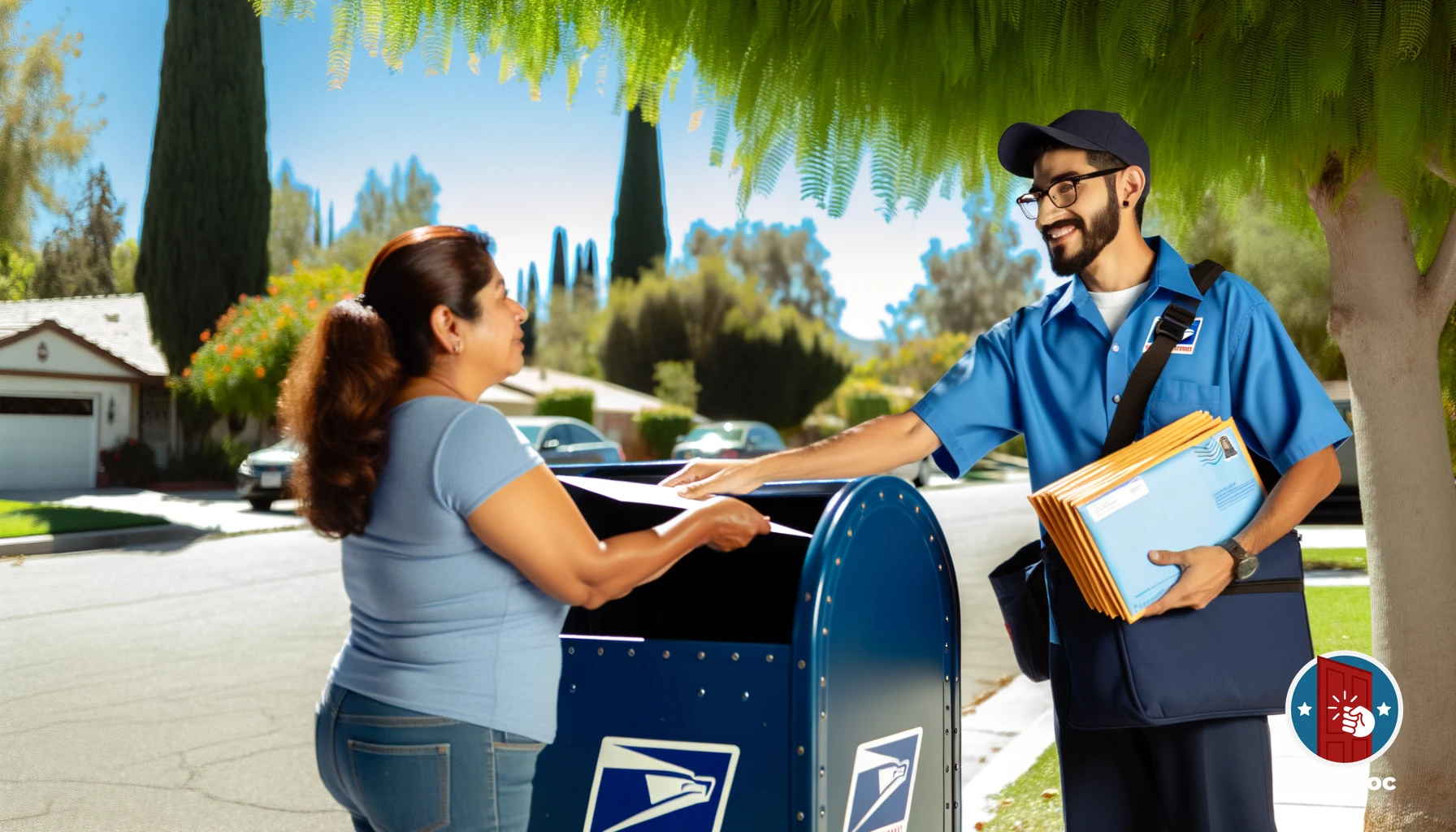 Campaign team members coordinate their canvassing strategy during a pre-shift briefing.
Pre and Post-Mail Polling
The gold standard for measuring persuasion mail effectiveness is benchmark polling before your mail program begins and tracking polls after each major mail drop. Compare vote choice among your swing voter targets before and after mail exposure to calculate persuasion impact.
Professional polling is expensive ($5,000-$15,000 per wave), but even small campaigns can conduct basic tracking. Use live caller phone polls targeting 400-500 swing voters from your mail universe. Ask vote choice, favorability, and issue priority questions. Track changes over time as your mail program progresses.
If polling is completely beyond budget, use proxy metrics. Track website traffic from your swing voter geographic areas. Monitor social media engagement from users in swing precincts. Measure volunteer inquiries and donation patterns following mail drops. These indirect signals indicate whether your mail is generating awareness and engagement.
Geographic Analysis of Results
After Election Day, analyze results by precinct to evaluate swing voter targeting effectiveness. Compare your performance in precincts where you mailed heavily versus similar precincts where you didn’t mail. Outperformance in mailed precincts suggests your persuasion program worked.
Control for confounding variables like door knocking or digital ads by isolating precincts that received only direct mail. Pure mail testing provides cleaner data on mail-specific impact. If you outperformed expectations in mail-only precincts, you can confidently attribute gains to your direct mail program.
Document these results for future campaigns. Knowing that persuasion mail to independent voters in suburban precincts improved your performance by 3-4 points guides resource allocation in subsequent elections. Build institutional knowledge about what works with swing voters in your area.
Cost-Per-Persuasion Calculations
Calculate your persuasion mail cost per voter persuaded to evaluate ROI. If you spent $30,000 on swing voter mail, polled 5 points better among that universe, and the universe contained 10,000 voters, you persuaded approximately 500 voters (5% of 10,000). Your cost per persuaded voter was $60 ($30,000 ÷ 500).
Compare this to other persuasion tactics. If your digital ads cost $20,000 and persuaded 250 voters ($80 per persuaded voter), direct mail was more cost-effective. If door knocking persuaded 1,000 voters at $40 each, it beat mail. These calculations guide future resource allocation between tactics.
Don’t expect every mail piece to show measurable impact individually. Persuasion mail works cumulatively — six pieces together move voters more than any single piece alone. Measure your entire program’s impact, not individual mail pieces.
Common Mistakes in Swing Voter Direct Mail
Even experienced campaigns make predictable mistakes when targeting swing voters with direct mail. Avoiding these errors increases your program’s effectiveness and prevents wasted resources.
Mistake 1: Targeting Too Broadly
Campaigns often define their swing voter universe too expansively, including voters who aren’t genuinely persuadable. Mailing to all independents, including those who never vote or who reliably lean toward one party, wastes resources on low-probability targets.
Narrow your universe ruthlessly. It’s better to mail 10 pieces to 3,000 highly persuadable voters than 4 pieces to 8,000 voters including many who aren’t movable. Concentration beats diffusion in persuasion mail programs.
If budget forces you to choose between frequency and universe size, choose frequency. Six pieces to your best 2,000 swing voters will produce better results than two pieces to 6,000 mixed-quality targets.
Mistake 2: Using Base Voter Messaging
Many campaigns simply mail their base voter creative to swing voters with disastrous results. Partisan rhetoric, ideological positioning, and party-focused messaging alienate swing voters rather than persuading them.
Create distinct creative specifically for swing voters. Message testing shows that swing voter mail should emphasize problem-solving over partisanship, use moderate tone over fiery rhetoric, and highlight candidate character over party affiliation. This requires separate creative development, not just address list swaps.
If resources force you to consolidate creative, err toward swing voter messaging for broad audiences. Base voters will still respond to moderate messaging, but swing voters actively reject partisan approaches. Designing for swing voters produces more flexible creative.
Mistake 3: Starting Too Late
Waiting until October to begin swing voter mail means missing critical persuasion windows. By the time your first piece arrives, swing voters have already received 20+ pieces from better-planned campaigns. Your late mail gets lost in the clutter.
Start planning swing voter mail 6 months before Election Day. Lock in vendors, develop creative, and prepare for early deployment. Your first piece should drop no later than 12 weeks before the election for competitive races, 8 weeks for less competitive contests.
Late mail does have some role — undecided swing voters still need persuasion in the final weeks. But late mail works best when it reinforces earlier messages rather than introduces your candidate for the first time. Build awareness early, persuade throughout, and close hard at the end.
Mistake 4: Ignoring Response Mechanisms
Persuasion mail works better when it invites response rather than just delivering messages. Including a website URL, volunteer sign-up mechanism, or event invitation gives engaged swing voters a way to act on their interest.
Make response mechanisms prominent and easy to use. A QR code linking to your website, a text number for more information, or a pre-addressed response card (for high-value targets) transforms passive mail into interactive persuasion.
Track responses to identify your most engaged swing voters. Voters who visit your website or sign up for updates after receiving mail are excellent targets for personal contact — phone calls from volunteers or the candidate. These engaged persuadables often become volunteers or donors themselves.
Advanced Tactics for Sophisticated Swing Voter Programs
Beyond fundamental swing voter targeting, advanced campaigns employ sophisticated tactics that increase persuasion effectiveness and efficiency.
Dynamic Creative Optimization
Rather than mailing the same six pieces to all swing voters, vary creative based on real-time performance data. Test multiple message approaches in early waves, then scale the highest-performing messages to larger audiences in later waves.
This requires flexibility in production schedules and close monitoring of response metrics. If your economic message tests 15% better than your education message with swing voters aged 35-50, shift budget toward economic messaging for that segment while continuing to test education messages with other segments.
Dynamic optimization prevents you from spending 60% of your budget on suboptimal messaging. Course-correct based on data rather than executing a predetermined plan regardless of performance.
Behavioral Trigger Mail
Some campaigns deploy mail based on voter behaviors rather than calendar dates. When a voter in your swing universe moves, mail a welcome piece highlighting your local record. When property tax bills arrive, mail your tax reduction message. When school starts, mail your education platform.
Behavioral triggers increase relevance by matching messages to moments when voters actively think about those issues. Tax mail arriving the same week as tax bills gets opened and read at higher rates than randomly timed tax mail.
Implementing behavioral triggers requires sophisticated data tracking and nimble production capabilities. Only campaigns with robust data infrastructure can execute this effectively, but the payoff in relevance and persuasion effectiveness justifies the complexity.
Hyper-Personalized Mail at Scale
Digital printing technology enables mail personalization beyond name and address. Include street-level photos showing neighborhood-specific issues, data specific to the recipient’s census tract, or messages referencing local landmarks familiar to the recipient.
This level of personalization dramatically increases engagement. Voters notice when mail references their specific street, shows a photo of their neighborhood, or discusses issues affecting their immediate area. The perceived relevance makes them more receptive to your persuasion message.
Personalization works best for smaller swing voter universes (under 5,000 voters) where per-piece costs justify the investment. For larger universes, personalize your highest-value segments and use standard creative for lower-priority targets.
Building Your Swing Voter Mail Program
With strategy and tactics defined, it’s time to build your actual swing voter mail program. This process requires coordination across data, creative, production, and finance functions.
 Volunteers spread across the neighborhood, bringing civic engagement to every doorstep.
Step 1: Define Your Universe and Budget
Start by determining how many swing voters you can afford to mail given your budget. If you have $20,000 for swing voter mail and plan 6 pieces at $1 per piece, you can target approximately 3,300 voters. Use this number to guide your universe definition — identify your top 3,300 persuadable voters.
Balance universe size against frequency. Mailing 5,000 voters 4 times may produce better results than mailing 3,300 voters 6 times, depending on universe quality. Run scenarios with different combinations of universe size and frequency to find your optimal approach.
Tools like MailVotes let you build and price various universe scenarios to find the right balance for your campaign. Experiment with different filtering combinations to see how universe size and composition change.
Step 2: Develop Creative Strategy and Calendar
Map out your message progression across your mail pieces. Piece 1: Bio/introduction. Piece 2: Issue focus (economy/jobs). Piece 3: Issue focus (education/healthcare). Piece 4: Contrast with opponent. Piece 5: Endorsements/credibility. Piece 6: GOTV/voting information.
This sequence builds awareness, establishes issue credentials, draws contrasts, builds credibility, and drives action. Adjust based on your race dynamics, but maintain logical progression from introduction to action.
Create a production calendar working backward from mail drop dates. If your first piece should hit mailboxes 12 weeks before Election Day, your production deadline is 14-15 weeks out (2 weeks for design, 1 week for printing, 1 week for delivery). Map all six pieces on this timeline to ensure adequate production time.
Step 3: Produce and Deliver Mail
Work with experienced political mail vendors who understand campaign timelines and budgets. Request samples of their work and references from similar campaigns. Quality varies dramatically between vendors — choose based on quality and reliability, not just price.
Provide clear specifications: mail size (typically 6x9 or 8.5x11), paper weight (80# text minimum for quality feel), quantity, and addressing requirements. Include your voter file with full names, addresses, and any personalization data.
Review proofs carefully before printing. Check for typos, layout issues, and color accuracy. A mistake in your proof becomes 5,000 expensive mistakes once printed. Allow 2-3 days for proof review and corrections before final approval.
Step 4: Monitor and Adjust
Track mail delivery by monitoring your own mailbox if you’re in-district, asking volunteers to report when they receive pieces, and checking with your mail house for delivery confirmation. Postal delays sometimes require calendar adjustments.
Monitor voter response through website traffic, social media engagement, volunteer inquiries, and polling if available. Use these signals to evaluate message effectiveness and adjust upcoming pieces as needed.
Document everything for future campaigns. What worked? What didn’t? Which messages resonated with which segments? This institutional knowledge makes your next swing voter program more effective and efficient.
Making Swing Voter Mail Work for Your Campaign
Targeting swing voters with direct mail requires precision, persistence, and personalization. Unlike base voter mail that simply reinforces existing preferences, or opposition voter mail that’s largely futile, swing voter mail actually changes minds and moves votes. This makes it one of the highest-value investments in competitive campaigns.
Your swing voter direct mail program succeeds when you identify the right voters, deliver the right messages, and maintain consistent contact over the right timeframe. Start with rigorous targeting that defines a genuinely persuadable universe based on party registration, voting history, geography, and demographics. Learn more about building effective voter mailing lists through our comprehensive targeting resources.
Craft messages that speak to swing voter priorities — problem-solving over partisanship, specifics over vague promises, and credibility over attacks. Test messages with small samples before investing in full programs, and adjust based on performance data rather than assumptions.
Mail consistently over 8-12 weeks with 4-6 touchpoints that build awareness, establish credentials, draw contrasts, and drive action. Start earlier than you think necessary — swing voters need time to absorb information and form opinions.
Integrate mail with digital persuasion for multi-channel reinforcement. Measure results through polling, geographic analysis, and cost-per-persuasion calculations. Avoid common mistakes like targeting too broadly, using base voter messaging, or starting too late.
Swing voters determine election outcomes in competitive races. The campaigns that reach them effectively through data-driven, message-tested, properly-timed direct mail programs win close elections. Make swing voter mail a centerpiece of your persuasion strategy, not an afterthought, and give your campaign the persuasion edge that turns close races into victories.
Frequently Asked Questions
What percentage of voters are actually persuadable swing voters?
Research shows that 5-15% of the electorate consists of truly persuadable swing voters in most elections. This percentage increases to 15-20% in down-ballot races where voters have less pre-existing knowledge. The persuasion universe varies significantly by race competitiveness and voter awareness levels.
How much does it cost to run a swing voter direct mail campaign?
A targeted swing voter direct mail campaign costs $0.75-$1.50 per contact per piece, with most effective campaigns sending 4-6 pieces over 8-12 weeks. For a swing voter universe of 5,000 voters, expect to invest $15,000-$45,000 for a complete direct mail persuasion program including design, printing, and postage.
What’s the difference between swing voters and undecided voters?
Swing voters are persuadable across multiple election cycles and willing to vote for either party based on candidates and issues. Undecided voters are making up their minds about a specific race but may have consistent partisan preferences. All undecided voters are swing voters, but not all swing voters are currently undecided — some lean toward a candidate but remain movable.
When should I start mailing to swing voters?
Begin mailing to swing voters 8-12 weeks before Election Day for maximum impact. Early contact (12+ weeks out) wastes resources because voters aren’t paying attention yet. Waiting until the final 4 weeks means you’ll compete with dozens of other mail pieces and voters may have already made decisions.
How do I identify swing voters without expensive consultants?
Identify swing voters by filtering voter files for: (1) independents or weak party registrants, (2) voters who participated in 1-3 of the last 4 elections, (3) voters in precincts with ticket-splitting history, and (4) demographics that correlate with swing behavior in your area. Platforms like MailVotes provide these filtering capabilities at affordable rates for campaigns of all sizes.