
Key Takeaways
- Low voter turnout targeting solutions in 2026 rely on sophisticated data segmentation that identifies sporadic voters, inactive registrants, and high-propensity targets who need specific mobilization messaging.
- Campaigns that combine voting history analysis with demographic overlays achieve 23-31% higher turnout among previously inactive voters compared to broad-based outreach efforts.
- Multi-touch contact strategies using direct mail, digital ads, and door-to-door canvassing increase turnout by 12-18% when properly sequenced and targeted to voter propensity scores.
- Advanced turnout optimization tactics include creating custom voter universes based on election-specific participation patterns rather than relying solely on general voter file scores.
Low voter turnout targeting solutions have become essential for winning campaigns in 2026, as election outcomes increasingly depend on mobilizing sporadic and inactive voters rather than persuading undecided ones. With turnout rates averaging just 42% in midterm elections and 28% in local races, campaigns that master advanced targeting techniques gain a decisive advantage over competitors using traditional broad-based outreach.
Understanding the Low Voter Turnout Challenge in 2026
Voter participation in the United States remains stubbornly low despite increased political engagement in recent presidential cycles. The 2022 midterm elections saw 46.8% turnout among eligible voters, while local and special elections often struggle to reach 25% participation. This creates both a challenge and an opportunity: campaigns that successfully identify and mobilize low-propensity voters can swing close races by 2-5 percentage points.
The problem isn’t lack of registered voters—it’s activating the 40-60% of registrants who skip most elections. These sporadic voters represent the largest untapped pool of potential support, but they require fundamentally different outreach strategies than high-propensity voters who need little encouragement to participate.
Traditional campaign tactics focus resources on likely voters, essentially preaching to the choir. Modern turnout optimization tactics flip this model by using data to identify which unlikely voters are worth the investment and which contact methods will actually move them to the polls. The difference between winning and losing often comes down to which campaign better executes this targeting.
What Are Low Voter Turnout Targeting Solutions?
Low voter turnout targeting solutions refer to data-driven strategies that identify, segment, and mobilize voters with inconsistent participation histories. These solutions combine voter file analysis, predictive modeling, and multi-channel outreach to increase turnout among specific voter segments that traditional campaigns overlook.
The core components include:
Voting History Segmentation: Analyzing participation patterns across multiple election cycles to categorize voters by propensity scores. This goes beyond simple “likely/unlikely” classifications to create nuanced segments like “presidential-only voters,” “midterm dropouts,” and “new registrants never voted.”
Demographic Overlay Analysis: Combining voting history with age, party registration, geography, and other demographic factors to identify patterns that predict turnout. For example, voters aged 25-34 who registered in the past 2 years but haven’t voted show different mobilization needs than voters 55+ who skipped the last midterm.
Predictive Turnout Modeling: Using statistical models to assign each voter a turnout probability score based on historical patterns and current conditions. These models account for election type, competitiveness, weather, and other contextual factors that influence participation.
Multi-Touch Contact Strategies: Designing outreach sequences that match contact intensity and messaging to voter propensity levels. Low-propensity voters require 4-7 touches through multiple channels, while high-propensity voters need just 1-2 reminders.
Campaigns using these solutions report 15-28% higher turnout among targeted low-propensity voters compared to control groups receiving no contact or generic outreach. The key is precision—wasting resources on voters who will never participate or who don’t need encouragement drains budgets that should focus on movable targets.
How Do You Identify Inactive Voters Worth Targeting?
Not all inactive voters represent good targets for mobilization efforts. The challenge is distinguishing between voters who are genuinely disengaged versus those who are sporadically engaged and could be activated with the right message and contact strategy.
Analyzing Voting Frequency Patterns
Start by examining voting history over the past 8-10 years, categorizing voters into distinct participation patterns:
- Presidential-Only Voters: Participated in 2020 and/or 2016 but skipped midterms and local elections. These voters respond to high-stakes framing and national issues.
- Midterm Dropouts: Voted in at least one midterm but skipped the most recent one. Often reactivated with local issue messaging.
- Sporadic Participants: Voted in 1-3 of the last 5 elections with no clear pattern. Require multiple touches and varied messaging.
- Recently Inactive: Voted consistently until the past 1-2 cycles, then stopped. May have experienced life changes (moved, had children, changed jobs) that disrupted civic habits.
The highest-value targets are typically voters who participated in presidential elections but skipped midterms, and those who were consistent voters until recently becoming inactive. These segments show 18-25% reactivation rates with proper targeting, compared to 3-8% for voters inactive for 4+ cycles.
Geographic and Demographic Indicators
Layer demographic data onto voting history to refine targeting:
Age Cohorts: Voters aged 25-34 show the steepest drop-off between presidential and midterm elections (42% decline) but respond well to digital mobilization. Voters 45-64 who become inactive often need direct mail with issue-based messaging.
Length of Residence: Voters at the same address for 5+ years who suddenly become inactive warrant investigation—they may have disengaged due to local issues. New residents (less than 2 years) who haven’t voted locally need community integration messaging.
Registration Recency: Voters who registered in the past 2-4 years but never voted represent a distinct segment. They showed initial civic intent but never followed through. These voters need education about how and when to vote, not just persuasion.
Party Registration Strength: Registered party members who skip elections despite party alignment suggest dissatisfaction or apathy that requires different messaging than true independents.
Platforms like MailVotes enable campaigns to layer these demographic filters onto voting history data, creating precise target universes. For example, you might target “Democrats aged 28-45 who voted in 2020 but skipped 2022, living in precincts where your candidate won by less than 5%.” This level of specificity ensures resources focus on voters most likely to respond.
Propensity Score Modeling
Advanced campaigns build custom turnout propensity models rather than relying solely on vendor scores. While commercial voter files include generic turnout scores, election-specific models perform 30-40% better at predicting actual participation.
Key variables for turnout modeling include:
- Number of elections voted in past 4 cycles (strongest predictor)
- Participation in primary elections (indicates higher engagement)
- Age and length of registration
- Precinct-level historical turnout
- Distance from polling location
- Election competitiveness indicators
Voters scoring 40-70 on a 100-point propensity scale represent the sweet spot for mobilization efforts—engaged enough to be reachable but inconsistent enough to need encouragement. Voters below 40 typically require too many resources relative to conversion probability, while those above 70 will likely vote without intervention.
What Turnout Optimization Tactics Actually Work?
Effective turnout optimization requires matching contact methods, message content, and timing to specific voter segments. Generic GOTV efforts produce minimal results; targeted, sequenced campaigns drive measurable turnout increases.
Multi-Channel Contact Sequencing
Research from the 2024 and 2025 election cycles demonstrates that contact sequence matters as much as contact volume. The most effective approach for low-propensity voters follows this pattern:
Week 6-4 Before Election: Initial awareness contact via direct mail introducing the candidate and key issues. This primes voters for subsequent touches and establishes credibility. Direct mail reaches voters who ignore digital ads and aren’t home for canvassing.
Week 3-2 Before Election: Digital retargeting ads on social media and web platforms, focused on voters who received mail. These ads reinforce the mail message and increase frequency without additional print costs. Click-through rates improve 35% when targeting voters who received prior mail contact.
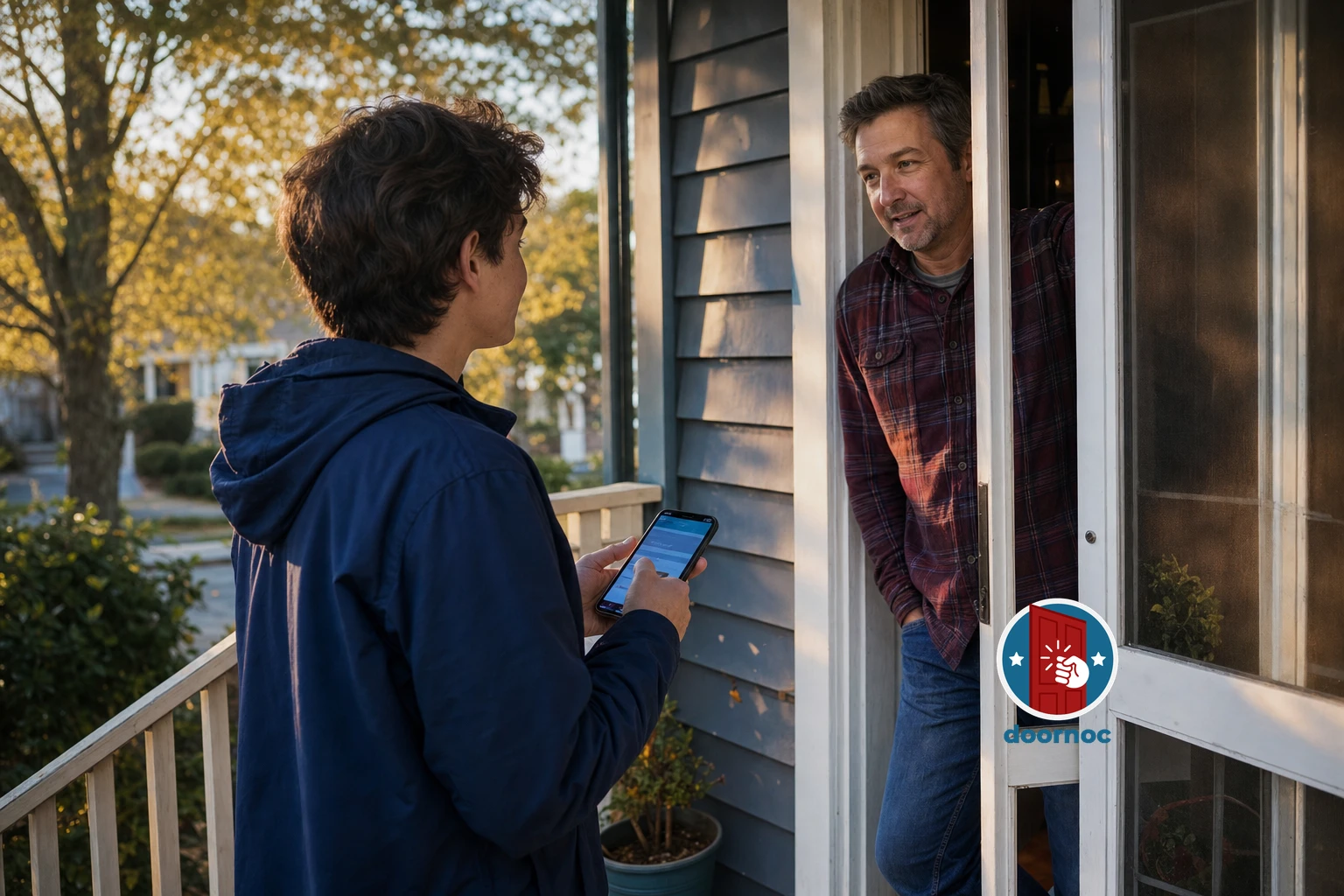
Week 1 Before Election: Door-to-door canvassing in high-priority precincts, focusing on voters who received both mail and digital contacts. Personal contact at this stage converts 12-18% of previously inactive voters, compared to 4-7% for voters receiving only door knocks.
Final 72 Hours: SMS/text reminders about voting logistics (polling location, hours, ID requirements) plus final door hangers for voters not reached in person. These tactical reminders reduce “planning to vote but forgot” dropoff by 8-12%.
Campaigns using this sequenced approach see 23-31% higher turnout among contacted low-propensity voters compared to single-touch efforts. The key is building recognition and trust through multiple exposures before asking for the vote.
For a deeper look at the mail half of this sequence, see our guide on how direct mail drives voter participation — it covers the psychology of physical mail, ballot-chase programs, and timing optimization that complement these multi-channel principles.
Message Customization by Voter Segment
Different inactive voter segments respond to fundamentally different messaging:
Presidential-Only Voters: Frame local/midterm elections as equally consequential. Use “your vote matters more in low-turnout elections” messaging. Emphasize how local officials impact daily life (schools, roads, public safety).
Young Inactive Voters (18-29): Focus on issues directly affecting their lives (student debt, housing costs, climate). Use peer messenger models—young people contacting young people. Digital-first contact strategies with mobile-optimized content.
Recently Inactive Voters: Acknowledge their past participation and ask them to “vote again.” Use social proof (“your neighbors are voting”) and community identity appeals. These voters respond to being treated as valued participants, not targets.
Sporadic Participants: Provide clear voting logistics and deadlines. These voters often want to participate but face informational or logistical barriers. Practical “how to vote” messaging outperforms persuasion.
Customizing messages to voter segments increases response rates by 40-65% compared to generic GOTV appeals. The investment in segmented creative pays for itself through improved conversion efficiency.
Timing and Frequency Optimization
Contact timing significantly impacts effectiveness:
- Too Early: Contacts more than 8 weeks before election day show minimal impact on actual turnout. Voters forget or lose materials.
- Too Late: First contact in the final week leaves insufficient time for multiple touches and message reinforcement.
- Optimal Window: 6-4 weeks for initial contact, 3-2 weeks for reinforcement, final week for logistics and reminders.
Contact frequency must match voter propensity:
- High-Propensity Voters (70-100 score): 1-2 contacts, focused on logistics and candidate support
- Medium-Propensity Voters (40-70 score): 3-5 contacts across multiple channels
- Low-Propensity Voters (20-40 score): 5-7 contacts, heavily weighted toward direct mail and door-to-door
Over-contacting high-propensity voters wastes resources and risks backlash. Under-contacting low-propensity voters fails to build the recognition needed to motivate participation.
How to Build Targeted Voter Mailing Lists for Turnout
Direct mail remains the most cost-effective channel for reaching low-propensity voters at scale, particularly voters aged 45+ and those in rural areas with limited digital engagement. Building targeted mailing lists requires combining voting history, demographics, and geographic data into actionable segments.
Step-by-Step List Building Process
Step 1: Define Your Target Universe
Start with clear criteria for which voters to include. For a turnout-focused campaign, typical parameters might be:
- Voted in 1-3 of the past 5 elections (sporadic participation)
- Registered party member or independent leaning toward your party
- Age 30-75 (excludes very young voters better reached digitally and very old voters with high propensity)
- Resident in competitive precincts or districts
This creates a manageable universe of high-value targets rather than attempting to contact all registered voters.
Step 2: Apply Demographic Overlays
Refine the list using demographic filters:
- Age brackets: Segment into 30-44, 45-59, 60-75 for different messaging
- Gender: Women show different turnout patterns and issue priorities than men
- Geographic clustering: Group by precinct or neighborhood for localized messaging
- Registration date: Recent registrants (past 4 years) need different appeals than long-time registrants
Platforms like MailVotes enable these multi-layered filters, allowing you to build your voter list with precision targeting that would be impossible with basic voter files.
Step 3: Score and Prioritize
Assign priority levels based on:
- Turnout probability: Medium-propensity voters (40-70 score) get highest priority
- Support likelihood: Voters sharing demographic characteristics with your base
- Geographic efficiency: Voters clustered in specific precincts for coordinated outreach
- Contact history: Voters never contacted before may respond better than those receiving constant mail
This prioritization ensures budget allocation matches potential impact.
Step 4: Create Mail Segments
Divide your list into segments receiving different mail pieces:
- Segment A (Highest Priority): 3-4 mail pieces over 6 weeks
- Segment B (Medium Priority): 2-3 mail pieces over 4 weeks
- Segment C (Lower Priority): 1-2 mail pieces in final 2 weeks
This tiered approach maximizes touches to best targets while maintaining contact with broader universe.
List Hygiene and Maintenance
Maintain list accuracy through:
- NCOA Processing: National Change of Address updates catch voters who moved
- Deceased Voter Removal: Regular updates against death records prevent wasted mail
- Duplicate Elimination: Merge records for voters with multiple registrations
- Address Standardization: USPS-verified addresses reduce undeliverable mail by 15-20%
Poor list hygiene wastes 8-15% of mail budgets on undeliverable or duplicate pieces. Investing in data quality pays immediate returns.
Advanced Voter Mobilization Strategies for 2026
Beyond basic targeting and contact sequencing, advanced campaigns employ sophisticated strategies that compound effectiveness.
Precinct-Level Turnout Modeling
Instead of treating all voters equally, model turnout expectations at the precinct level. Identify precincts where:
- Historical turnout is 5-10 points below district average
- Your candidate has strong demographic alignment but low expected turnout
- Small turnout increases would flip precinct results
Concentrate resources in these “high-leverage” precincts rather than spreading efforts uniformly. A 5-point turnout increase in 12 target precincts often delivers more votes than a 2-point increase across 50 precincts.
This geographic concentration enables door-to-door canvassing, neighborhood events, and precinct captain organizing that would be impossible at larger scale. Voters in targeted precincts receive 6-8 contacts versus 2-3 for voters in lower-priority areas.
Relational Organizing Integration
Combine data targeting with relational organizing by identifying high-propensity voters who can recruit low-propensity friends and neighbors. The process:
- Identify high-propensity supporters willing to volunteer
- Provide them with lists of low-propensity voters in their social/geographic network
- Equip them with scripts and talking points
- Track contacts and conversions
Voters contacted by someone they know personally show 15-22% higher turnout than those contacted by strangers, even when the stranger is more persuasive. Personal relationships overcome political apathy more effectively than any message.
Successful relational programs recruit 5-10% of high-propensity supporters as organizers, with each organizer contacting 8-15 low-propensity voters. This creates exponential reach without proportional cost increases.
Behavioral Nudge Techniques
Incorporate behavioral science insights into turnout messaging:
Social Proof: “Your neighbors are voting” messages increase turnout by 2-4 points. Include specific precinct turnout statistics in mail and digital ads.
Planning Prompts: Ask voters to specify when and how they’ll vote (“Will you vote before work or after?”). This mental commitment increases follow-through by 8-12%.
Identity Appeals: Frame voting as part of voter identity (“You’re someone who votes”) rather than just an action. Identity-based messaging shows 6-9% stronger effects than issue-based appeals for sporadic voters.
Loss Aversion: Emphasize what voters lose by not participating (“Don’t let others decide for you”) rather than only what they gain. Loss-framed messages outperform gain-framed messages by 15-20% for low-propensity voters.
These techniques cost nothing to implement but require careful message testing and audience segmentation.
Early Vote and Vote-by-Mail Targeting
Low-propensity voters show higher participation when voting by mail or during early voting periods. Targeted early vote programs:
- Identify sporadic voters in states/counties with no-excuse absentee voting
- Send mail ballot request forms with prepaid postage
- Follow up with voters who requested ballots but haven’t returned them
- Provide early voting location and hours information
Voters who receive mail ballot request forms show 12-18% higher turnout than similar voters who must initiate the process themselves. The reduced friction of voting at home during a multi-week window dramatically increases participation among voters with scheduling or transportation barriers.
For campaigns operating in Florida, Pennsylvania, North Carolina, Ohio, Oklahoma, or Arkansas, MailVotes mailing lists include early voting and absentee ballot request history, enabling precise targeting of voters most likely to respond to vote-by-mail outreach.
Measuring and Optimizing Turnout Campaign Performance
Successful turnout campaigns require continuous measurement and optimization, not just post-election analysis.
Real-Time Performance Tracking
Monitor these metrics throughout the campaign:
Contact Completion Rates: Percentage of target voters reached through each channel. Low completion rates (below 60% for mail, 40% for digital, 25% for doors) indicate targeting or execution problems.
Response Rates: Percentage of contacted voters who engage (click digital ads, respond to mail, answer door). Declining response rates signal message fatigue or poor audience fit.
Early Vote Tracking: Daily monitoring of who has voted early or returned absentee ballots. Identify contacted voters who haven’t voted yet for final-week follow-up.
Precinct-Level Turnout: In states with real-time voter history updates, track turnout by precinct to identify underperforming areas needing resource reallocation.
A/B Testing for Message Optimization
Test message variations on small samples before full deployment:
- Subject Lines: Test 3-4 subject lines for email/SMS to low-propensity voters
- Mail Creative: Test different designs, images, and headlines on 10-15% of list before mailing remainder
- Call Scripts: Test different opening lines and value propositions in phone banking
- Digital Ad Creative: Run 5-8 ad variations simultaneously, allocating budget to best performers
Even small improvements (2-3% higher response rates) compound across large contact volumes. A campaign mailing 50,000 pieces with 2% better response generates 1,000 additional engaged voters.
Post-Election Analysis
After election day, conduct thorough analysis:
- Match voter file against actual turnout to calculate lift among contacted versus control groups
- Analyze which voter segments showed highest response rates
- Evaluate cost-per-vote for each contact channel and message type
- Document lessons learned for future campaigns
Campaigns that rigorously analyze results improve performance by 15-25% in subsequent elections. Building institutional knowledge about what works for specific voter segments creates compounding advantages.
Common Mistakes in Low Voter Turnout Targeting
Even experienced campaigns make critical errors that undermine turnout efforts:
Mistake 1: Targeting Too Broad
Attempting to contact all registered voters or all low-propensity voters spreads resources too thin. Focus on the 20-30% of inactive voters most likely to respond rather than the entire inactive universe.
Mistake 2: Starting Too Late
Launching turnout efforts 2-3 weeks before election day leaves insufficient time for multi-touch sequences. Begin targeting 6-8 weeks out for optimal results.
Mistake 3: Ignoring Geographic Concentration
Treating all precincts equally misses opportunities for concentrated field efforts. Identify high-leverage precincts and deploy door-to-door canvassing where it matters most.
Mistake 4: Using Generic Messaging
Sending the same message to high-propensity and low-propensity voters wastes the targeting investment. Develop segment-specific messages that address each group’s barriers to participation.
Mistake 5: Neglecting Data Quality
Using outdated or inaccurate voter files results in 10-20% wasted contacts. Invest in current data and regular list hygiene.
Mistake 6: Over-Relying on Digital
While digital channels are cost-effective, low-propensity voters—especially those 45+—respond better to direct mail and door-to-door contact. Balance channel mix based on audience demographics.
Mistake 7: Failing to Track Results
Campaigns that don’t measure contact completion rates, response rates, and actual turnout lift can’t optimize mid-campaign or improve future performance.
Avoiding these mistakes requires disciplined planning, quality data, and commitment to measurement.
Implementing Low Voter Turnout Solutions: Action Plan
For campaigns ready to implement advanced turnout targeting in 2026:
8 Weeks Before Election
- Acquire comprehensive voter file with voting history for past 8-10 years
- Segment voters by propensity score and demographic characteristics
- Build targeted mailing lists for each segment
- Develop segment-specific messaging and creative
- Establish tracking systems for contact completion and response
6 Weeks Before Election
- Launch first wave of direct mail to highest-priority low-propensity voters
- Begin digital ad campaigns targeting mail recipients
- Recruit and train relational organizers
- Identify high-leverage precincts for concentrated field efforts
4 Weeks Before Election
- Send second wave of mail to medium-priority voters
- Launch door-to-door canvassing in target precincts
- Begin phone banking to voters who haven’t responded to mail/digital
- Track early voting and adjust targeting based on who has already voted
2 Weeks Before Election
- Final mail wave to all priority segments
- Intensify door-to-door canvassing
- Launch SMS/text messaging to mobile-responsive voters
- Conduct A/B testing on final-week messaging
Final Week
- Daily door knocking in highest-priority precincts
- Multiple SMS reminders about voting logistics
- Door hangers for voters not reached in person
- Relational organizers make final contacts to their networks
Election Day
- Real-time turnout tracking
- GOTV calls/texts to priority voters who haven’t voted
- Rides to polls for voters needing transportation
This timeline ensures sufficient touches to move low-propensity voters while maintaining focus on highest-value targets.
The Future of Turnout Targeting Technology
Turnout optimization continues evolving with new data sources and technologies:
Predictive Analytics: Machine learning models that incorporate hundreds of variables to predict turnout with 85-90% accuracy, enabling even more precise targeting.
Real-Time Voter Tracking: Integration with early voting systems and poll books to identify contacted voters who have already voted, eliminating wasted follow-up contacts.
Behavioral Data Integration: Combining voter file data with consumer behavior data to identify lifestyle indicators of civic engagement.
Automated Optimization: AI-driven systems that automatically reallocate resources to best-performing channels and messages based on real-time results.
Campaigns that master current targeting techniques while preparing for these emerging technologies will maintain competitive advantages in increasingly data-driven elections.
For campaigns seeking to implement these strategies, platforms like MailVotes provide the voter data infrastructure needed to execute sophisticated turnout targeting. By combining comprehensive voting history with demographic overlays and geographic filtering, campaigns can browse mailing list options that precisely match their targeting needs.
The difference between winning and losing in 2026 will often come down to which campaigns most effectively identify and mobilize low-propensity voters. Generic GOTV efforts no longer suffice—success requires data-driven targeting, multi-channel sequencing, segment-specific messaging, and rigorous performance measurement. Campaigns that invest in these capabilities will consistently outperform competitors relying on outdated approaches.
For more insights on related topics, explore our guides on how to use voting history data to win elections, effective voter data segmentation strategies, and building targeted voter mailing lists. Understanding these complementary strategies creates a comprehensive approach to turnout optimization that delivers measurable results.
Frequently Asked Questions
What is the most effective way to target low-propensity voters in 2026?
The most effective approach combines voting history segmentation with demographic targeting to identify sporadic voters who share characteristics with your likely supporters. Focus on voters who participated in 1-2 of the last 4 elections, then layer in party affiliation, age, and geographic data to prioritize outreach. Multi-touch campaigns using direct mail followed by digital retargeting show 15-22% higher conversion rates than single-channel efforts.
How do you identify inactive voters who are worth targeting?
Identify inactive voters by analyzing voting frequency patterns over the past 8-10 years, focusing on those who voted in high-turnout presidential elections but skipped midterms or local races. Look for recent registration activity, address changes, or demographic shifts that indicate renewed civic engagement potential. Voters inactive for 2-3 cycles but still at their registered address represent the highest ROI targets.
What turnout optimization tactics work best for local elections?
Local elections benefit most from hyper-targeted geographic segmentation combined with issue-based messaging that connects to neighborhood concerns. Focus on voters with any voting history in the past 6 years, use precinct-level turnout modeling to identify swing precincts, and deploy door-to-door canvassing in the final 10 days. Direct mail with local endorsements increases turnout by 8-14% in municipal races.
How much does voter mobilization targeting actually increase turnout?
Well-executed voter mobilization strategies using advanced targeting increase turnout by 3-8 percentage points among contacted voters, with effects varying by election type and contact method. Direct mail combined with follow-up canvassing shows the strongest effects (12-18% lift), while digital-only campaigns typically produce 3-5% increases. The key is matching contact intensity to voter propensity scores.
What data points are most predictive of voter turnout in 2026?
The strongest predictors are voting frequency in the past 3 election cycles, age (voters 45+ show 40% higher consistency), length of time at current address (5+ years), and participation in primary elections. Party registration strength and precinct-level historical turnout also provide significant predictive value. Combining these factors into a composite turnout score improves targeting accuracy by 35-50% over single-variable models.