75.7 million U.S. adults volunteered in one year, showing that political involvement already reaches far beyond party membership or campaign work. The practical answer is to choose one accessible action, such as voting, attending a local meeting, joining a volunteer shift, signing a petition, or contacting an official, then build from there.
Politics isn’t reserved for candidates, consultants, or people with national networks. It operates through a chain of ordinary actions, from helping a neighbor understand a ballot measure to knocking on doors for a local candidate. The strongest starting point is the one a participant can repeat consistently.
The mistake is waiting for a perfect role. Campaigns and civic organizations need people who can show up for a shift, make informed calls, organize information, attend public meetings, or bring a specific professional skill. A person doesn’t need a title to create political pressure. They need a defined task, a responsible organization, and the discipline to complete it.
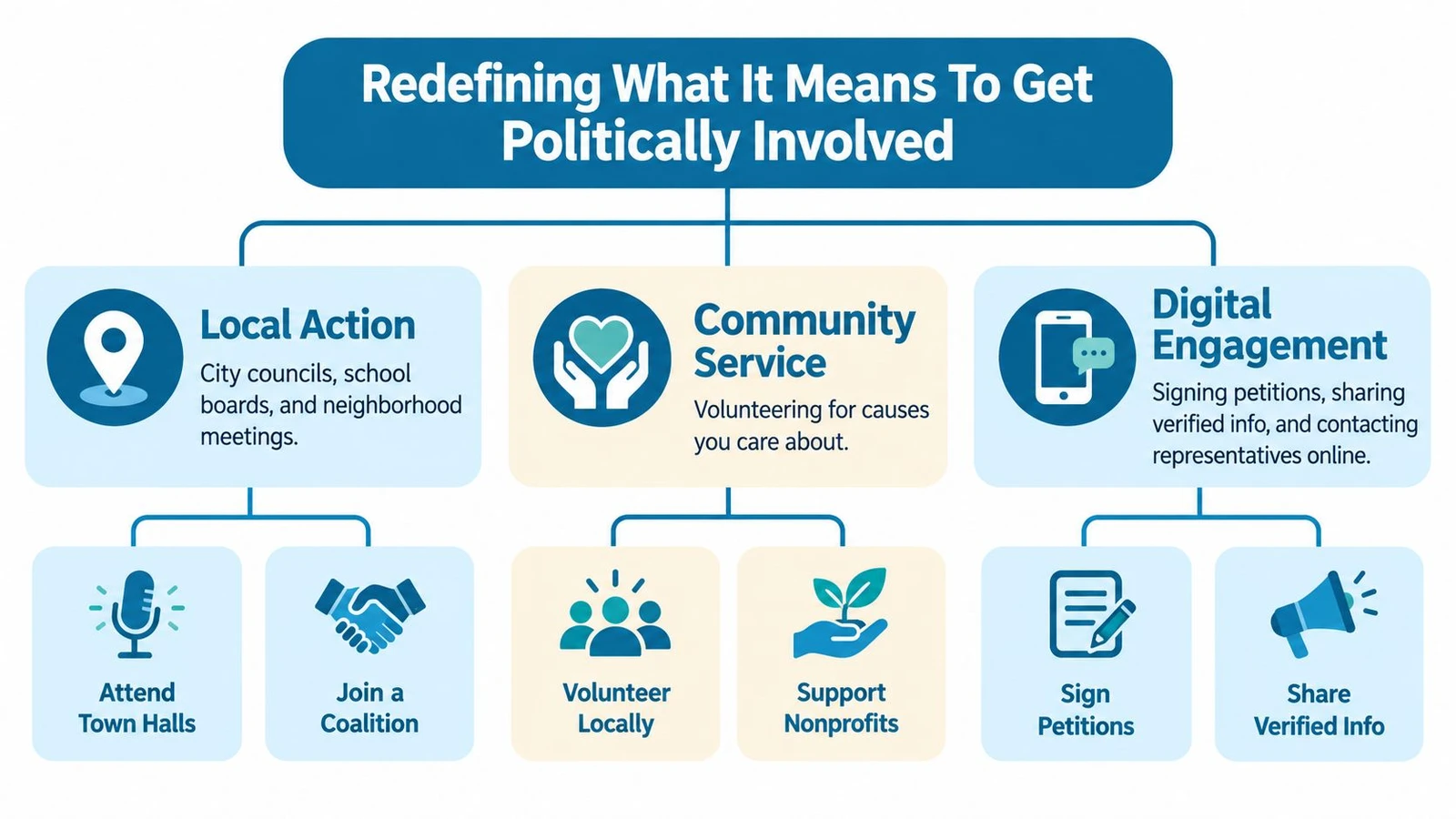
Redefining What It Means To Get Politically Involved
74.3% of adults in Norway reported voting in the last parliamentary election, while 19.6% had signed a petition or public appeal during the previous year. The same population survey recorded participation in organizations, conversations with public authorities, demonstrations, and campaign or political work as volunteer activities (Statistics Norway data on political participation). Political involvement clearly extends beyond party membership, candidacy, and rally attendance.
The useful definition covers voting, volunteering, signing petitions, attending public meetings, contacting officials, joining an organization, supporting a campaign, and participating in community service. A nationally representative U.S. civic-engagement survey recorded 75.7 million adults volunteering between September 2022 and September 2023, or just over 28% of the population during that period. It also found that 70% of respondents had completed at least one political act, 54% had completed at least one volunteer or community act, and 43% had done both (AmeriCorps civic engagement headline report).
Those figures point to a practical conclusion: civic work and political work already overlap. A volunteer at a food program, tenant group, neighborhood association, or school organization develops habits campaigns need, including reliability, local knowledge, communication, and attention to public outcomes.
Political participation has many entry points
Each action creates a different kind of pressure. Voting records a preference. A petition shows organized support for an issue. A public meeting puts decision-makers on notice. Contacting an official turns a concern into a specific request. A volunteer shift supplies the labor that allows an organization or campaign to reach more residents.
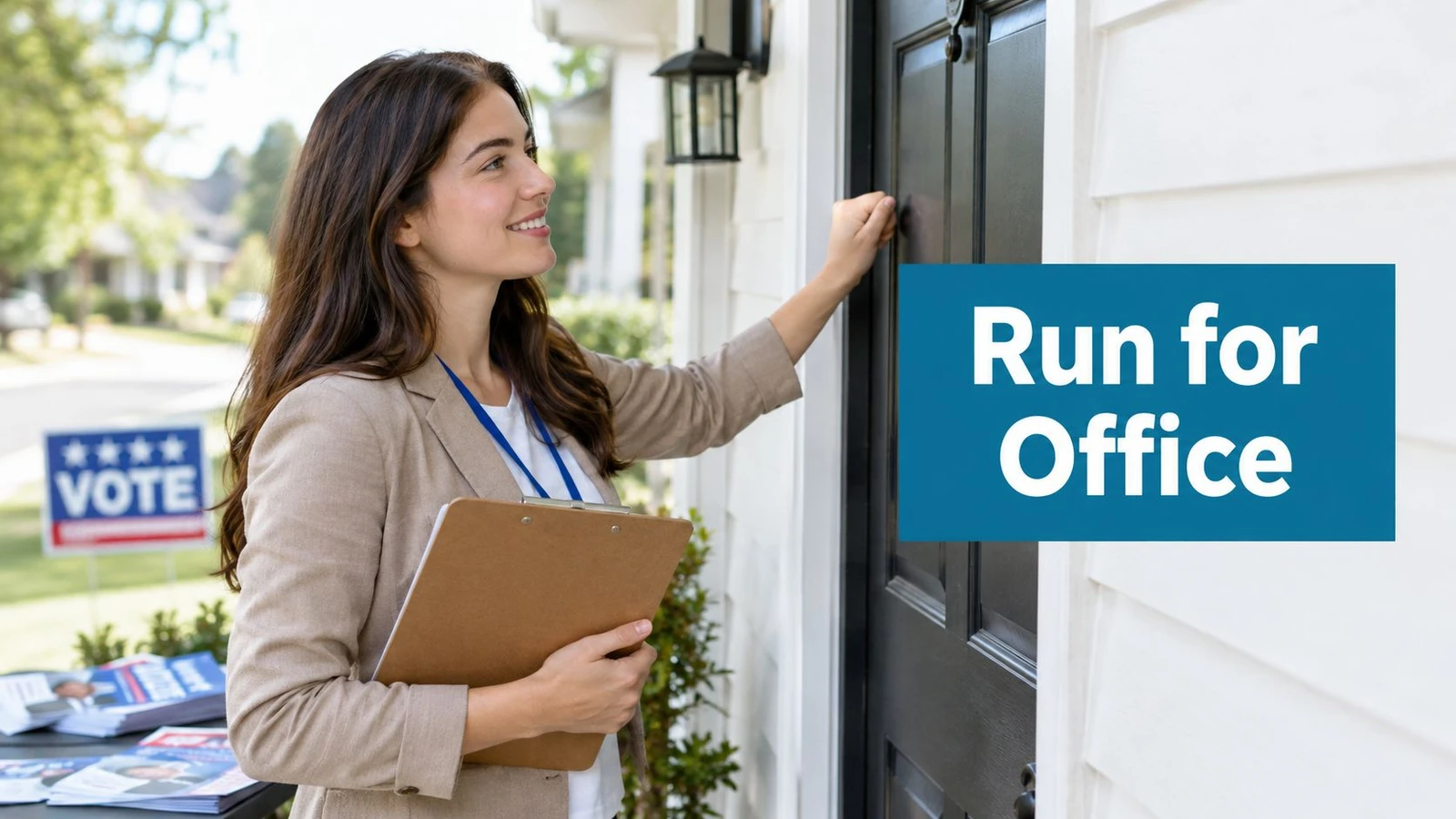
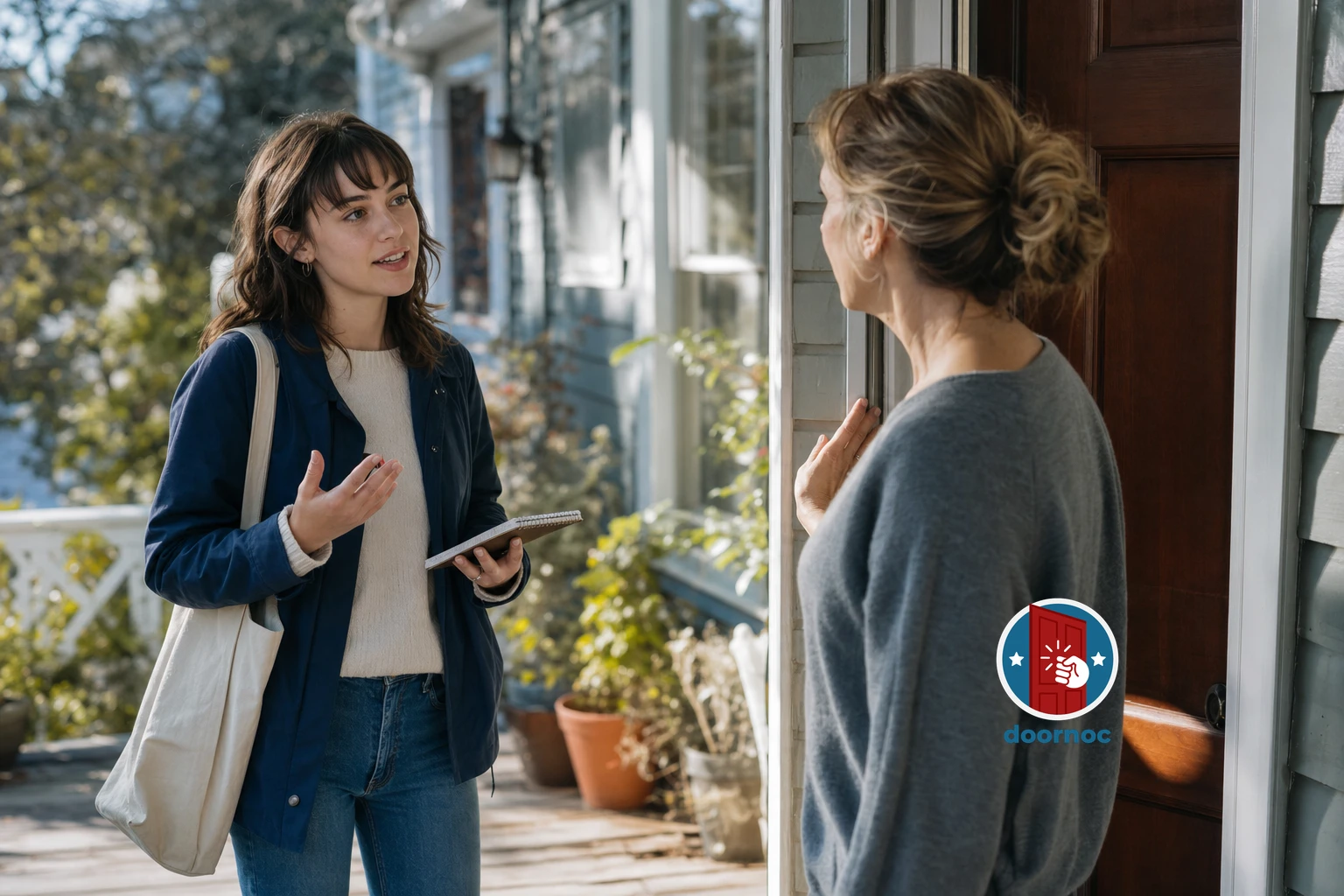
Door-to-door canvassing deserves particular attention because one person can create direct voter contact at neighborhood scale. A canvasser brings a campaign’s message to residents, listens for concerns, identifies supporters, and records useful information for follow-up. That work connects individual effort to turnout and election results more directly than passive political consumption.
Choose the action that connects you to a real decision, organization, or community. Someone concerned about school funding can attend a school board meeting. Someone focused on housing can join a neighborhood group or submit informed testimony. Someone motivated by an election can take a canvassing shift, phone voters, or help with voter follow-up.
Reading news may inform you, but it assigns no task and creates no accountability. A meeting, shift, petition, research assignment, or call to an official does.
Practical rule: Choose a role that produces a visible next action, then repeat it reliably.
Political involvement becomes durable when participation changes from observation to contribution. Start with one defined responsibility, complete it well, and take the next role only after you have built a dependable connection to the work.
Finding Your Entry Point Based On Time And Skills
A useful starting point is an honest inventory, not a political personality test. Campaigns don’t need every participant to perform the same job. They need people whose availability and abilities match the work in front of them.
Work and family obligations were identified as the top barrier to community participation by 47% of adults. Nearly as many said they hadn’t been invited or encouraged, at 43%, while 42% said they were unsure how to get involved and 42% said they didn’t know enough about the issues (Civic Pulse survey report). The problem is often poor onboarding, not indifference.
Start with a realistic availability audit
A participant should write down three things:
- Available time. A fixed Saturday morning may be more useful than a vague promise to help later. A person with children may handle one recurring shift, while someone with flexible evenings may take on calls or research.
- Transferable skills. Spreadsheet management, translation, photography, event logistics, writing, database cleanup, design, legal knowledge, and public speaking can all support political work.
- Issue motivation. A specific concern produces better follow-through than a general desire to help. Housing, transit, school policy, public safety, environmental regulation, and voting access each point toward different organizations.
The match should be specific. A data analyst can offer list cleanup or reporting. A designer can prepare accessible event materials. A bilingual resident can support outreach. A person with no specialized skill can still register attendees, distribute materials, make reminder calls, or walk a route.
Organizations also need to make the first step clear. Anyone coordinating volunteers should provide a named contact, a defined task, an expected time commitment, basic training, and a clear explanation of what happens after the work is completed. Guidance on creating useful reasons to return can help organizers design follow-up that gives participants a reason to stay connected.
Choose local work before national abstraction
Local action usually gives participants a shorter feedback loop. A city council agenda, school board decision, ballot initiative, or neighborhood campaign has identifiable people, dates, and decisions. That clarity makes it easier to see whether an effort produced testimony, recruited supporters, changed attendance, or moved an official toward a response.
The right entry point isn’t necessarily partisan. A resident can join an issue-based coalition, attend a public hearing, work as a nonpartisan poll worker, support a civic organization, or help an advocacy group communicate with constituents. The essential test is whether the role has a real owner and a defined outcome.
The High-Impact Power Of Door To Door Canvassing
Door-to-door canvassing is the strongest starting point for participants who want a direct role in an election. It combines practical training, face-to-face conversation, local information, and measurable voter contact. A canvassing shift gives each volunteer a list, route, conversation guide, and defined record of completed work. That makes individual effort visible and useful to the field team.
A meta-study across six European countries found a precision-weighted average turnout effect of 2.536 percentage points for door-to-door canvassing. A separate field experiment reported a 1.8 percentage-point effect for volunteer canvassers, compared with -0.2 percentage points for candidates, with contact rates of 35.9% for volunteers and 45.5% for candidates under the reported conditions (European canvassing meta-study). The field recommendation is clear: train volunteers properly and put them on doors instead of assuming a candidate will make the more persuasive contact.
What a productive shift looks like
A first-time canvasser should follow a clear sequence:
- Attend the briefing. Learn the campaign’s purpose, safety rules, contact protocol, and response categories.
- Review the turf. Study the route, housing patterns, accessibility concerns, and local context supplied by field staff.
- Use the conversation guide as a structure. Follow its goals while allowing residents to speak naturally.
- Record every interaction accurately. A missed door, supporter, undecided resident, and follow-up request each require a different entry.
- Debrief before leaving. Report resident concerns, addresses needing another visit, and any confusing part of the guide.
Deep canvassing evaluations show why preparation and repeated conversations matter. One evaluation reported 80% turnout among the canvassed group versus 70% among neighbors, a 14.2% higher likelihood of voting, a 17% higher likelihood of voting than non-canvassed neighbors, and an 8% lift for conventional GOTV interactions. The same program recruited and trained 834 volunteers and reached 14,787 potential voters over 15 months (deep canvassing impact evaluation).

Strong programs measure contact quality, not just door counts. Messenger selection, targeting, preparation, listening, and accurate follow-up determine whether a shift produces useful results. Review door-to-door canvassing methods and field practices, then ask the local team how it trains volunteers, assigns routes, and records responses.
Modernizing Your Volunteer Efforts With Technology
Good intentions lose value when field operations bury volunteers in avoidable friction. Paper walk lists, unclear boundaries, duplicated addresses, and delayed data entry force participants to spend energy solving administrative problems instead of speaking with residents.
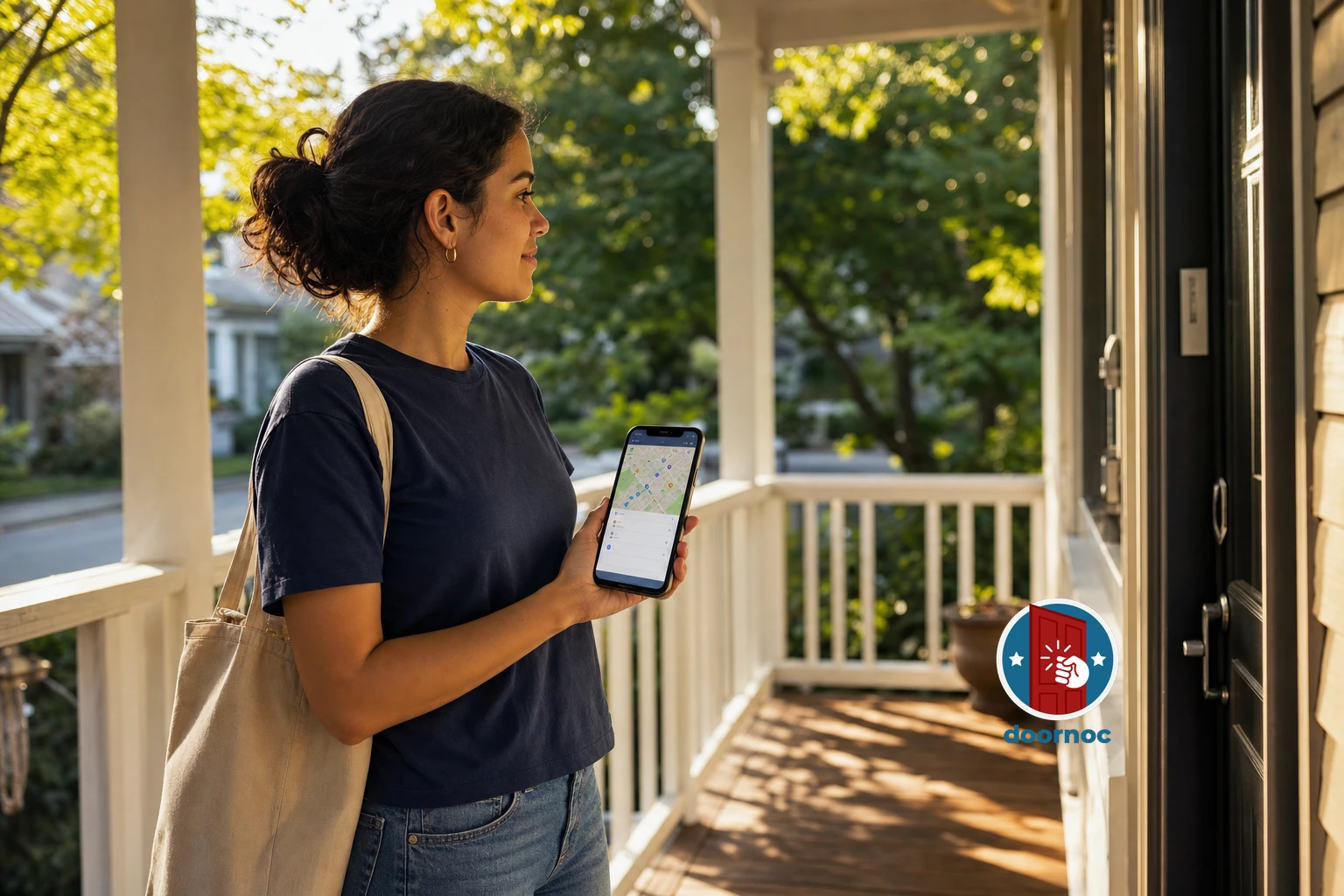
Modern canvassing systems connect a mobile application with voter or constituent lists, route planning, interaction logging, and team oversight. A campaign can assign a defined territory, provide a walkable route, display relevant conversation prompts, and record the result of each contact from a phone. Offline functionality matters in areas with weak service because a volunteer can continue recording interactions and synchronize the information after reconnecting.
The volunteer experience depends on the back end
A participant may see only a route and a short survey, but field staff need much more behind the scenes. Useful systems can support:
- Balanced turf assignment: Teams receive manageable areas instead of overlapping or uneven lists.
- Road-aware routing: Volunteers follow logical paths and spend less time doubling back.
- Offline capture: Contact records remain available when connectivity drops.
- Immediate synchronization: Staff can review progress without waiting for paper forms.
- Clear survey fields: Everyone records supporter status, concerns, and follow-up needs consistently.
Campaigns can also import voter lists, match records, and prepare source-cited briefs before a shift. That preparation helps a volunteer understand why a household appears on a list without turning the interaction into a data lecture. Technology should reduce cognitive load, not replace judgment at the door.
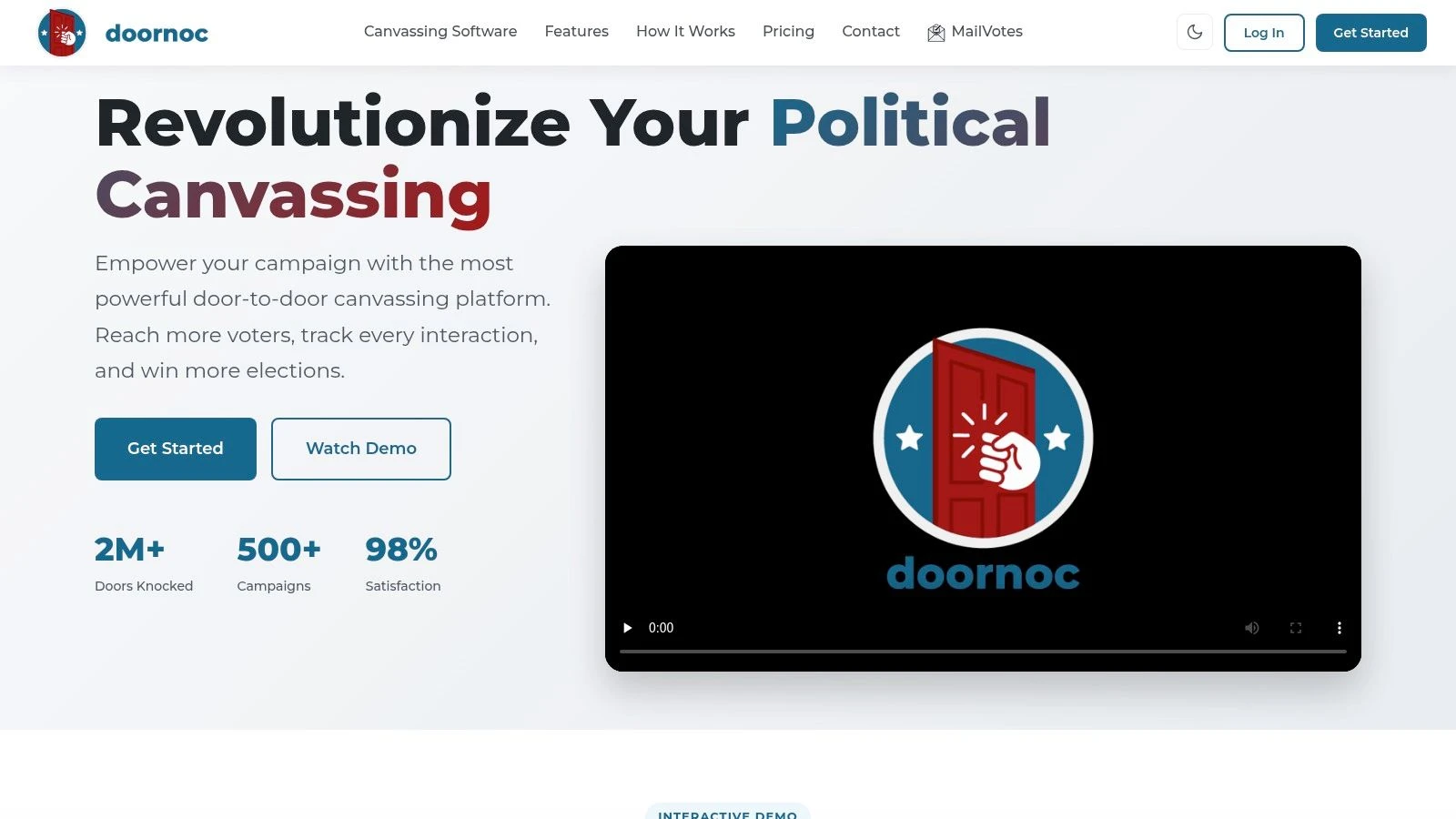
The right question isn’t whether a campaign uses advanced software. The question is whether the system helps a first-time volunteer start quickly, follow a sensible route, record a conversation accurately, and receive clear next instructions. Teams assessing their options can use a practical overview of political apps for organizing field work as a checklist for those requirements.
A campaign should never make volunteers compensate for poor preparation. If a route is confusing, a list is outdated, or survey options don’t reflect real conversations, participants disengage. Reliable tools create a cleaner handoff between organizers and volunteers, which makes limited time more productive without asking volunteers to become data specialists.
Beyond The Campaign Trail And Contacting Officials
Political involvement doesn’t end when an election calendar clears. In fact, much of the most consequential local work happens between elections, when residents respond to zoning proposals, school budgets, transportation plans, environmental rules, and public-service decisions.
The most effective advocacy is specific. A general complaint sent to a government inbox is easy to ignore. A focused message identifies the decision, explains the local impact, asks a precise question, and requests a defined action. A resident who wants a zoning change reviewed should know which body controls the decision, when the public meeting occurs, and what evidence belongs in testimony.
Turn concern into constituent pressure
A disciplined issue campaign usually follows this pattern:
- Name one decision. Avoid combining every political concern into a single message.
- Identify the responsible official or body. The relevant decision-maker may be a council member, board, commission, agency, or committee.
- Read the agenda and public record. Participants need enough context to ask an informed question.
- Choose a channel. A meeting, phone call, targeted email, public comment, organized letter, or constituent visit may fit the issue.
- Track the response. Record what was promised, when follow-up is due, and whether the matter moved.
Constituent case management helps advocacy groups keep those contacts organized, assign follow-up, and preserve the history of an issue. A practical explanation of constituent case management for public-facing teams can help organizers move beyond scattered inboxes and informal notes.
Visible participation can also support a broader campaign identity. A neighborhood group may use signs, handouts, or bumper stickers to make an issue recognizable at public events. For teams considering that route, a pricing guide for bumper stickers can help organizers compare production choices before committing to materials.
The core recommendation remains simple: replace passive political consumption with targeted constituent communication. A person doesn’t need to join a partisan campaign to create pressure. A well-prepared meeting comment, a documented call, or a coordinated message from affected residents can place an issue where officials must address it publicly.
Your Immediate Next Steps To Start Engaging Today
Interest becomes political involvement when it reaches a calendar. Choose one local activity with a clear time, place, and purpose, then commit before the day ends. A city council meeting, school board session, planning commission hearing, neighborhood association meeting, or town hall gives you a practical entry point.
Attend with a job to do. Identify the decision under consideration, the person or body responsible, and the next action residents can take. Read the agenda beforehand and write down one factual question. At the meeting, record names, decisions, deadlines, and requests for volunteers.
Use a short activation sequence
Follow this sequence:
- Today: Find one local meeting, campaign shift, or organized civic event. Register, confirm the location, or add it to your calendar.
- Before attending: Read the agenda, choose one issue, and prepare one specific question or request.
- At the event: Take notes on decisions, deadlines, contact details, and available roles.
- Within 48 hours: Complete one follow-up action. Sign up for a canvassing shift, contact the responsible official, join an issue group, or offer a defined professional skill.
- After that action: Schedule the next commitment while the relationships and information remain fresh.
Match the role to your working style. People who communicate well in person should choose door-to-door canvassing, where each volunteer can complete direct voter conversations and contribute to a measurable field operation. People who prefer analysis can handle research, public-record review, list management, or communications. People with limited time can attend one meeting, submit a focused comment, or make a small set of follow-up calls.
Door-to-door work deserves special attention because it connects individual effort to election outcomes. A canvasser receives a route, speaks with residents, records responses, and helps a campaign target its next contact. That work offers a more effective path than just reading political news or posting an opinion.
Local voting remains a foundational action. Civic-engagement research, including the AmeriCorps civic engagement headline report, places voting within a wider pattern of participation. Voting, canvassing, meeting attendance, constituent contact, and behind-the-scenes support reinforce one another when residents treat involvement as a continuing practice.
Political involvement becomes easier after the first scheduled commitment. The next role usually appears through the people met during that commitment.
Time limits, uncertainty about organizations, missing invitations, and unfamiliar tools often delay action. Use a local event to create a starting point, complete one defined follow-up, and schedule another commitment. That sequence turns concern into organized participation.
doornoc combines a mobile canvassing application with route planning, voter contact lists, offline data collection, and campaign operations tools for local and larger field programs. Campaign managers and volunteer coordinators can visit doornoc to see how the platform supports a more organized first canvassing shift.
Looking for a tool to run this? doornoc’s canvassing software bundles voter data, automatic turf cutting, the mobile app, and live reporting in one platform.