Key Takeaways
- Political canvassing is legally distinct from commercial soliciting — it’s protected political speech under the First Amendment, not commercial activity
- ‘No Soliciting’ signs typically do NOT apply to political canvassers in most jurisdictions, though respecting homeowner preferences is a best practice
- The key legal difference: canvassing seeks to inform and persuade voters (protected speech), while soliciting aims to sell products or services (regulated commerce)
- Understanding local ordinances is critical — some municipalities have specific rules about canvassing hours, permit requirements, and private property access in 2026
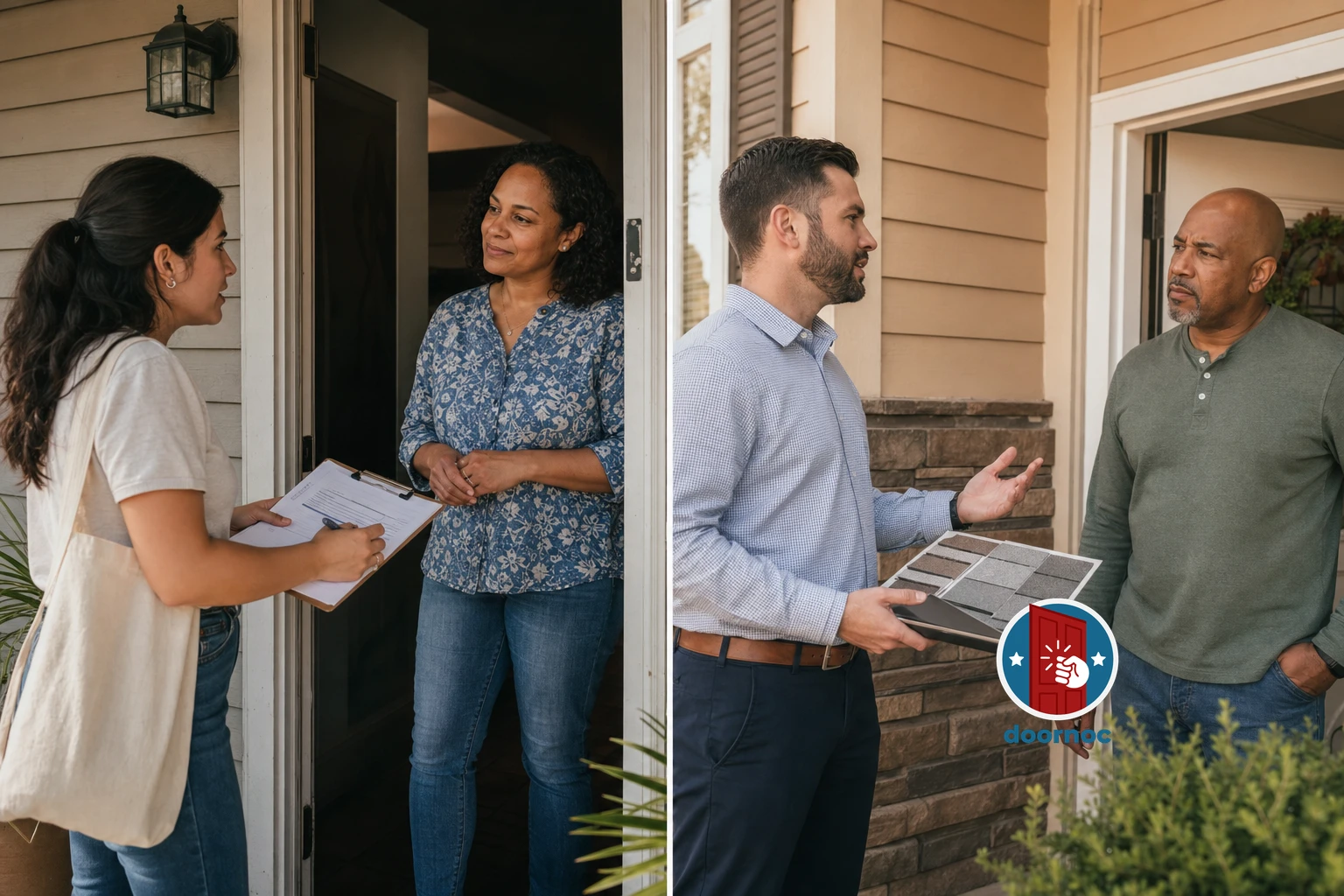
Canvassing vs soliciting — understanding the difference isn’t just semantic hairsplitting for campaign managers in 2026. It’s the legal foundation that protects your field operation and determines whether you can knock on doors with ‘No Soliciting’ signs. Political canvassing is protected speech under the First Amendment, while commercial soliciting is regulated commerce. This distinction gives your campaign legal rights that door-to-door salespeople simply don’t have.
If you’ve ever hesitated before knocking on a door displaying a ‘No Soliciting’ sign, you’re not alone. Field directors across the country grapple with this question daily. The answer matters because it affects your voter contact rate, your volunteers’ confidence, and your campaign’s legal exposure. Let’s break down exactly what separates canvassing from soliciting, what the law actually says, and how to navigate this terrain professionally in 2026.
What Is Canvassing? (And Why It’s Not Soliciting)
Political canvassing is the practice of going door-to-door to engage voters in conversation about candidates, issues, or ballot measures. Your canvassers aren’t selling anything — they’re exercising their First Amendment right to political speech. This is a critical legal distinction.
When your volunteer knocks on a door with a clipboard and campaign literature, they’re there to:
- Share information about your candidate or cause
- Listen to voter concerns and priorities
- Persuade undecided voters through respectful dialogue
- Collect voter data to inform campaign strategy
- Mobilize supporters to vote or volunteer
This activity is fundamentally different from commercial solicitation. Courts have recognized this difference in dozens of cases over the past several decades, consistently ruling that political speech deserves stronger protection than commercial speech.
The Supreme Court established this principle clearly in Martin v. City of Struthers (1943), ruling that municipalities cannot ban door-to-door distribution of political literature. More recently, lower courts have reinforced that ‘No Soliciting’ ordinances cannot be applied to political canvassers without violating the First Amendment.
The Legal Definition of Soliciting
Soliciting, in the legal sense, refers to the act of seeking to sell goods or services for commercial gain. When someone is soliciting, they’re engaged in commerce — not protected speech. This includes:
- Door-to-door sales representatives selling products
- Service providers offering lawn care, home repairs, or pest control
- Charitable fundraisers asking for donations (though this occupies a middle ground)
- Magazine subscription sellers
- Religious proselytizers (another legally complex category)
Most municipal ‘No Soliciting’ ordinances specifically target these commercial activities. The regulations exist to protect homeowners from aggressive sales tactics, fraudulent schemes, and repeated unwanted commercial intrusions.
Political canvassing doesn’t fit this definition because you’re not selling anything. You’re engaging in protected political speech. This is why door-to-door canvassing software like Door Knock can legally help campaigns organize field operations even in neighborhoods with ‘No Soliciting’ signs posted.
Is Canvassing Soliciting? The Legal Answer
The short answer: No, political canvassing is not soliciting in the legal sense.
The longer answer requires understanding three key legal principles that courts apply when evaluating restrictions on door-to-door political activity:
1. Content-Based vs. Content-Neutral Restrictions
Laws that restrict speech based on its content (like banning political canvassing but allowing commercial soliciting, or vice versa) face “strict scrutiny” — the highest level of judicial review. Governments must prove a compelling interest and show the law is narrowly tailored to achieve that interest.
Laws that restrict speech regardless of content (like banning all door-to-door activity during certain hours) face “intermediate scrutiny” — a somewhat lower bar, but still requiring the government to show the restriction serves an important interest.
In practice, this means municipalities can regulate the time, place, and manner of canvassing (no knocking after 9 PM, for example), but they cannot ban political canvassing entirely or treat it the same as commercial solicitation.
2. The Hierarchy of Protected Speech
Not all speech receives equal protection under the First Amendment. Courts recognize a hierarchy:
Highest Protection: Political Speech This includes canvassing, campaign literature distribution, and voter persuasion efforts. Courts give governments very little leeway to restrict this activity.
Moderate Protection: Charitable and Religious Speech Soliciting donations for nonprofits and religious proselytizing receive substantial protection, but not quite as much as political speech.
Lower Protection: Commercial Speech Advertising and commercial solicitation receive the least First Amendment protection. Governments have broader authority to regulate these activities.
This hierarchy explains why your campaign can legally knock on doors that commercial solicitors cannot.
3. The Right to Receive Information
Courts have recognized that the First Amendment protects not just the speaker’s right to communicate, but also the listener’s right to receive information — particularly political information necessary for self-governance.
This principle was articulated in Virginia State Board of Pharmacy v. Virginia Citizens Consumer Council (1976) and has been applied to door-to-door canvassing cases. The idea is that voters have a constitutional interest in hearing from campaigns, even if individual homeowners might prefer not to be bothered.
This doesn’t mean homeowners can’t ask you to leave — they absolutely can, and you must comply. But it does mean municipalities generally cannot create blanket bans on political canvassing to protect homeowners from being bothered.
The Difference Between Canvassing and Soliciting: Key Distinctions
Understanding the practical and legal differences helps you train volunteers, respond to homeowner questions, and design compliant field operations. Here are the key distinctions:
Intent and Purpose
Canvassing: Your goal is political persuasion, voter identification, and democratic engagement. You want to have a conversation, not close a sale. Success is measured in quality voter contacts, not transactions.
Soliciting: The goal is to complete a commercial transaction. The solicitor wants to sell you something right now, collect payment, and move to the next prospect. Success is measured in sales closed and revenue generated.
This difference in intent is legally significant. Courts look at the primary purpose of the activity when determining whether it’s protected political speech or regulable commercial activity.
Compensation Structure
Canvassing: Volunteers are typically unpaid or receive nominal stipends. Paid canvassers work for hourly wages or salaries, not commissions based on “sales” of voter support.
Soliciting: Commercial solicitors typically work on commission, earning a percentage of each sale. Their compensation is directly tied to commercial transactions.
This distinction reinforces that canvassing is speech activity, not commercial activity.
Regulatory Framework
Canvassing: Protected by the First Amendment with minimal permissible regulation. Most jurisdictions cannot require permits, licenses, or registration for political canvassers. Time, place, and manner restrictions must be narrowly tailored.
Soliciting: Subject to extensive regulation including licensing requirements, permit systems, bonding requirements, and restrictions on hours and locations. States have broad authority to regulate commercial solicitation.
For example, many cities require commercial solicitors to obtain permits and carry identification cards. These same requirements typically cannot be applied to political canvassers without violating the First Amendment.
Relationship to Property Rights
Canvassing: Your right to knock on doors is balanced against homeowners’ property rights. You can approach any door unless specifically told not to return. Individual homeowners can refuse to engage, but municipalities generally cannot create blanket bans.
Soliciting: Property rights carry more weight. ‘No Soliciting’ signs are legally effective against commercial solicitors in most jurisdictions. Homeowner associations can ban commercial solicitation entirely.
This is why understanding canvassing laws is essential for field directors planning operations in 2026.
No Soliciting Signs and Political Canvassing: What You Need to Know
This is where theory meets practice. Your volunteers will encounter ‘No Soliciting’ signs constantly. Here’s what you need to know:
The Legal Reality
In most jurisdictions, ‘No Soliciting’ signs do not legally prohibit political canvassing. These signs typically apply only to commercial solicitors. Courts have generally ruled that homeowners cannot use private signage to restrict protected political speech on the path to their front door.
The reasoning: The pathway to your front door is a traditional public forum for communication. While you can refuse to engage once someone knocks, you generally cannot preemptively ban protected speech from reaching your door.
However — and this is critical — just because you can legally knock doesn’t mean you should.
The Strategic Reality
Many successful campaigns in 2026 instruct volunteers to respect ‘No Soliciting’ signs as a matter of policy, even when not legally required to do so. Here’s why:
Voter Relations: Knocking on a door with a ‘No Soliciting’ sign often produces negative interactions. The homeowner is already predisposed to be annoyed. Even if you politely explain the legal distinction, you’ve likely created a negative impression of your campaign.
Volunteer Confidence: Volunteers feel uncomfortable knocking on doors with these signs. They worry about confrontation and legal trouble. Giving them permission to skip these houses improves morale and retention.
Resource Allocation: Your time is limited. Why spend it on doors where the homeowner has signaled they don’t want to be contacted when you could be talking to receptive voters?
Data Quality: Modern canvassing software like Door Knock allows you to mark these households and focus your efforts where they’ll be most productive.
That said, some campaigns do knock on ‘No Soliciting’ doors, particularly in close races where every contact matters. If you choose this approach, train your volunteers carefully.
How to Handle ‘No Soliciting’ Signs Professionally
If your campaign policy is to knock despite the sign:
-
Lead with the distinction: “Hi, I’m not soliciting — I’m a volunteer with [Campaign Name] and I’m here to talk about the upcoming election.”
-
Be prepared to explain: Have a brief, friendly explanation ready: “I understand the sign. We’re not selling anything — we’re just having conversations with voters about [Issue/Candidate].”
-
Leave immediately if asked: If the homeowner asks you to leave or says they’re not interested, thank them politely and go. Mark the household as ‘do not contact’ in your system.
-
Never argue: Even if you’re legally right, arguing with a voter about your right to be on their property is terrible campaign strategy.
If your campaign policy is to respect the signs:
-
Train volunteers clearly: Make sure everyone knows the policy and feels comfortable skipping these doors.
-
Use your canvassing app: Mark these households in your canvassing app so they don’t appear on future walk lists.
-
Consider alternative contact methods: These voters might be more receptive to phone banking, digital ads, or mail.
State and Local Variations: 2026 Canvassing Regulations
While the First Amendment provides broad protection for political canvassing, state and local regulations vary significantly. Here’s what you need to know about the current landscape in 2026:
Common Time Restrictions
Many municipalities restrict canvassing hours to protect residents from late-night disturbances. Typical restrictions:
- No canvassing before 9:00 AM or after 9:00 PM (most common)
- No canvassing before 10:00 AM or after 8:00 PM (more restrictive)
- No canvassing on Sundays (less common, but exists in some jurisdictions)
These time restrictions are generally upheld as constitutional “time, place, and manner” regulations, provided they apply equally to all door-to-door activity.
Registration and Identification Requirements
Some cities require canvassers to register with local authorities or carry identification. The constitutionality of these requirements is more contested:
Generally Permissible:
- Requiring canvassers to carry campaign-issued identification
- Voluntary registration systems that don’t condition canvassing on approval
- Requirements to provide identification to police when asked (as part of general police powers)
Generally Impermissible:
- Requiring advance permits or licenses for political canvassing
- Mandatory registration systems where officials have discretion to deny applications
- Requirements to pay fees for the right to canvass
If your jurisdiction has these requirements, consult with a campaign attorney before launching your field operation.
Private Property and Gated Communities
This is where things get complicated. The law distinguishes between:
Public Streets and Sidewalks: You have a clear right to access these areas for canvassing.
Pathways to Front Doors: Generally considered “semi-public” space where you can approach to knock, even on private property.
Gated Communities: Private property where the homeowner association can restrict access. You generally cannot enter without permission, though residents can invite you in.
Apartment Buildings: Varies by state. Some states (like California) have laws requiring landlords to allow reasonable political canvassing. Others treat apartment buildings as private property where access can be restricted.
Posted Private Property: ‘No Trespassing’ signs carry more legal weight than ‘No Soliciting’ signs. If property is clearly posted as private with no trespassing allowed, you should respect those signs.
For complex situations, modern campaigns use voter persuasion techniques that combine multiple contact methods rather than relying solely on door knocking.
Best Practices for Navigating the Canvassing vs Soliciting Distinction
Here’s how to run a professional, legally compliant field operation in 2026:
 Canvasser on sidewalk at dusk using smartphone to log a skipped household, maintaining respectful distance from home.
Train Volunteers on the Distinction
Your volunteers need to understand why they’re not soliciting and how to explain this to homeowners. Include this in your training:
- The basic legal distinction: “We’re not selling anything — we’re here to have conversations about the election.”
- How to respond to ‘No Soliciting’ signs: Follow your campaign’s policy consistently.
- What to do if challenged: Stay calm, be polite, explain briefly, and leave if asked.
- When to call for help: If someone threatens to call the police or becomes aggressive, volunteers should disengage and contact their field director.
Effective canvassing techniques include preparing volunteers for these conversations before they knock their first door.
Use Technology to Navigate Efficiently
Modern canvassing platforms help you respect homeowner preferences while maximizing voter contact:
- Mark ‘No Soliciting’ households in your database so volunteers know your policy before they approach
- Track ‘Do Not Contact’ requests and ensure they’re honored across all contact methods
- Optimize routes to focus on the most receptive voters
- Record interaction types to identify patterns in voter receptiveness
Door Knock’s smart route planning helps you navigate these complexities while keeping volunteers focused on productive conversations.
Develop Clear Escalation Procedures
Despite your best efforts, conflicts will arise. Have clear procedures:
-
Level 1 - Volunteer Response: Train volunteers to apologize, explain briefly, and leave immediately if asked.
-
Level 2 - Field Director Response: If a homeowner calls the campaign to complain, the field director should call back, apologize, and mark the household as ‘do not contact.’
-
Level 3 - Legal Response: If police are called or legal threats are made, involve your campaign attorney. Document the incident thoroughly.
-
Level 4 - Public Response: If the incident becomes public (social media, news coverage), have your communications director handle it with a prepared statement.
Most conflicts never escalate beyond Level 1 if volunteers are properly trained.
Document Your Policies
Create written policies for your field operation that address:
- How your campaign treats ‘No Soliciting’ signs
- Time restrictions you’ll follow (even if more restrictive than local law)
- How volunteers should identify themselves
- Procedures for handling confrontations
- Data privacy and security practices
These policies protect your campaign legally and give volunteers clear guidance.
Build Positive Community Relationships
The best way to avoid conflicts is to build positive relationships:
- Notify local police before major canvassing operations so they’re aware and can distinguish your volunteers from suspicious activity
- Engage with homeowner associations in advance, particularly in gated communities
- Respond quickly to complaints and take them seriously
- Leave literature even when no one answers so voters know you stopped by
- Follow up with thank-you notes to voters who had good conversations with your volunteers
Campaigns that build these relationships find that conflicts over the canvassing vs soliciting distinction rarely arise.
When Canvassing Might Cross the Line
While political canvassing is protected speech, certain activities can cross the line into problematic territory:
Accepting Donations at the Door
If your canvassers are asking for and accepting donations during door-knocking, you’re moving closer to solicitation territory. While this is still legally protected political activity, it changes the nature of the interaction.
Best practice: Focus on voter persuasion and identification during door-knocking. Direct interested donors to your website or provide a donation envelope they can mail later.
Combining Canvassing with Commercial Activity
If you’re selling campaign merchandise during door-knocking, you’re engaging in commercial activity alongside political speech. This could subject you to solicitation regulations.
Best practice: Give away campaign swag for free. If you want to sell merchandise, do it through your website or at campaign events.
Aggressive or Harassing Behavior
Even protected speech can become harassment if it’s persistent, aggressive, or threatening. If your volunteers:
- Return repeatedly to homes where they’ve been asked not to come back
- Block doorways or prevent residents from closing doors
- Use threatening or intimidating language
- Refuse to leave when asked
They’ve crossed from protected speech into potentially illegal harassment.
Best practice: Train volunteers to be respectful, take ‘no’ for an answer, and leave immediately when asked. Use your canvassing script to keep interactions professional.
Trespassing on Clearly Posted Property
While you can generally approach front doors to knock, you must respect clear ‘No Trespassing’ signs and locked gates. If property is clearly marked as private with no access allowed, entering could constitute criminal trespass — even for political canvassing.
Best practice: Respect clear property boundaries. If you can’t access a door without crossing a locked gate or ignoring a ‘No Trespassing’ sign, skip that household and try alternative contact methods.
How Door Knock Helps You Navigate These Complexities
Managing the distinction between canvassing and soliciting becomes easier with the right tools. Door Knock helps field directors run compliant, effective operations:
Smart List Management: Mark households with ‘No Soliciting’ signs, ‘Do Not Contact’ requests, or access restrictions. Your volunteers see these notes before they knock, preventing awkward or confrontational situations.
Optimized Routing: Our algorithm prioritizes the most receptive voters and helps you avoid properties where access is restricted or homeowner preferences indicate low receptiveness.
Real-Time Incident Reporting: If a volunteer encounters a problem, they can flag it immediately in the app. Field directors get instant notifications and can respond quickly.
Compliance Documentation: Every interaction is timestamped and logged, creating a record of your field operation that demonstrates your campaign’s professionalism and respect for homeowner preferences.
Offline Capability: Your volunteers can access all this information even in areas with poor cell service, ensuring they have the guidance they need at every door.
These features help you focus on what matters: having quality conversations with voters who want to hear from you.
The Future of Canvassing Regulations in 2026 and Beyond
As we move through 2026, several trends are shaping the regulatory landscape for political canvassing:
Increased Local Regulation Attempts
Some municipalities are attempting to apply stricter regulations to political canvassing, often in response to complaints about aggressive commercial solicitation. These efforts typically fail constitutional challenges, but they create uncertainty for campaigns.
What you can do: Stay informed about local ordinances, consult with campaign attorneys when needed, and document your compliance efforts.
Technology-Enabled Compliance
Canvassing platforms are making it easier for campaigns to respect homeowner preferences while maintaining effective field operations. This technology may reduce conflicts and legal challenges.
What you can do: Invest in modern door-to-door canvassing software that helps you navigate these complexities.
Growing Recognition of Voter Privacy Preferences
Voters increasingly expect control over how campaigns contact them. While this doesn’t change the legal framework, it affects best practices.
What you can do: Treat voter contact preferences as seriously as legal requirements. Build systems to honor ‘do not contact’ requests across all channels.
Integration with Digital Contact Methods
Campaigns are increasingly combining door-knocking with digital outreach, using data from canvassing to inform targeted advertising and email campaigns.
What you can do: Use canvassing as part of a multi-channel strategy, not as your only voter contact method. Learn from comparing canvassing to other methods.
The fundamental legal distinction between canvassing and soliciting is unlikely to change — it’s rooted in core First Amendment principles. But the practical application of these principles will continue evolving as technology, voter expectations, and local regulations develop.
Moving Forward: Canvassing with Confidence and Respect
Understanding the difference between canvassing and soliciting empowers you to run a field operation that’s both legally sound and strategically effective. You have the right to knock on doors and engage voters in political conversation — that right is fundamental to democratic self-governance.
But rights come with responsibilities. Use your access to voters’ homes respectfully. Train your volunteers to be ambassadors for your campaign, not just door-knockers. Respect homeowner preferences even when you’re not legally required to do so. Build systems that honor ‘do not contact’ requests and avoid unnecessary conflicts.
The campaigns that succeed in 2026 understand that effective field operations aren’t just about maximizing door knocks — they’re about having quality conversations with receptive voters. Sometimes that means skipping the house with the ‘No Soliciting’ sign, even though you legally could knock. Sometimes it means spending extra time training volunteers on how to handle these situations professionally. Sometimes it means investing in technology that helps you navigate these complexities efficiently.
When you approach canvassing with this mindset — confident in your rights but respectful of homeowners, legally informed but strategically flexible — you build a field operation that wins elections while maintaining the integrity that makes democratic politics possible.
Your volunteers deserve clear guidance on these issues. Your campaign deserves the legal protection that comes from understanding the distinction. And voters deserve respectful engagement that honors both your right to speak and their right to choose whether to listen.
That’s the difference between canvassing and soliciting. That’s what makes your field operation possible. And that’s why getting it right matters for democracy itself.
Frequently Asked Questions
Is political canvassing considered soliciting?
No, political canvassing is not legally considered soliciting in most jurisdictions. Canvassing is protected political speech under the First Amendment, while soliciting refers to commercial activity like selling products or services. Courts have consistently ruled that political door-knocking enjoys stronger constitutional protections than commercial solicitation.
Can I canvass at a house with a ‘No Soliciting’ sign?
Legally, yes — in most states, ‘No Soliciting’ signs apply only to commercial solicitors, not political canvassers. However, many campaigns choose to respect these signs as a best practice to avoid negative voter interactions. If you do knock, be prepared to politely explain the legal distinction and leave immediately if asked.
What’s the main difference between canvassing and soliciting?
The main difference is intent and legal protection. Canvassing aims to engage voters in political dialogue and is protected as free speech. Soliciting seeks to sell goods or services for profit and is subject to commercial regulations. Courts recognize this distinction, giving canvassers broader access rights than commercial solicitors.
Do I need a permit to canvass in 2026?
Most jurisdictions do not require permits for political canvassing due to First Amendment protections. However, some municipalities have registration requirements or time-of-day restrictions. Always check your local ordinances before launching a canvassing operation — requirements vary significantly by city and county.
Can homeowners legally refuse political canvassers?
Yes, homeowners have the right to refuse to engage with canvassers and can ask you to leave their property. While you have the right to knock, they have the right to decline conversation. Professional canvassers should always leave immediately when asked and mark the household as ‘do not contact’ in their canvassing software.