Key Takeaways
- Canvassing delivers 3-5x higher persuasion rates than phone banking in 2026, with face-to-face conversations converting 9-12% of voters compared to 2-4% for phone calls
- Phone banking reaches 4-6x more voters per volunteer hour, making it the superior choice for voter identification and large-scale awareness campaigns
- The most effective 2026 campaigns use integrated strategies: phone banking for initial contact and voter ID, followed by targeted canvassing for high-value persuasion conversations
- Modern canvassing platforms like DoorNoc reduce cost-per-contact by 40% through smart routing and real-time data sync, narrowing the efficiency gap with phone banking
What Makes Canvassing vs Phone Banking Different in 2026?
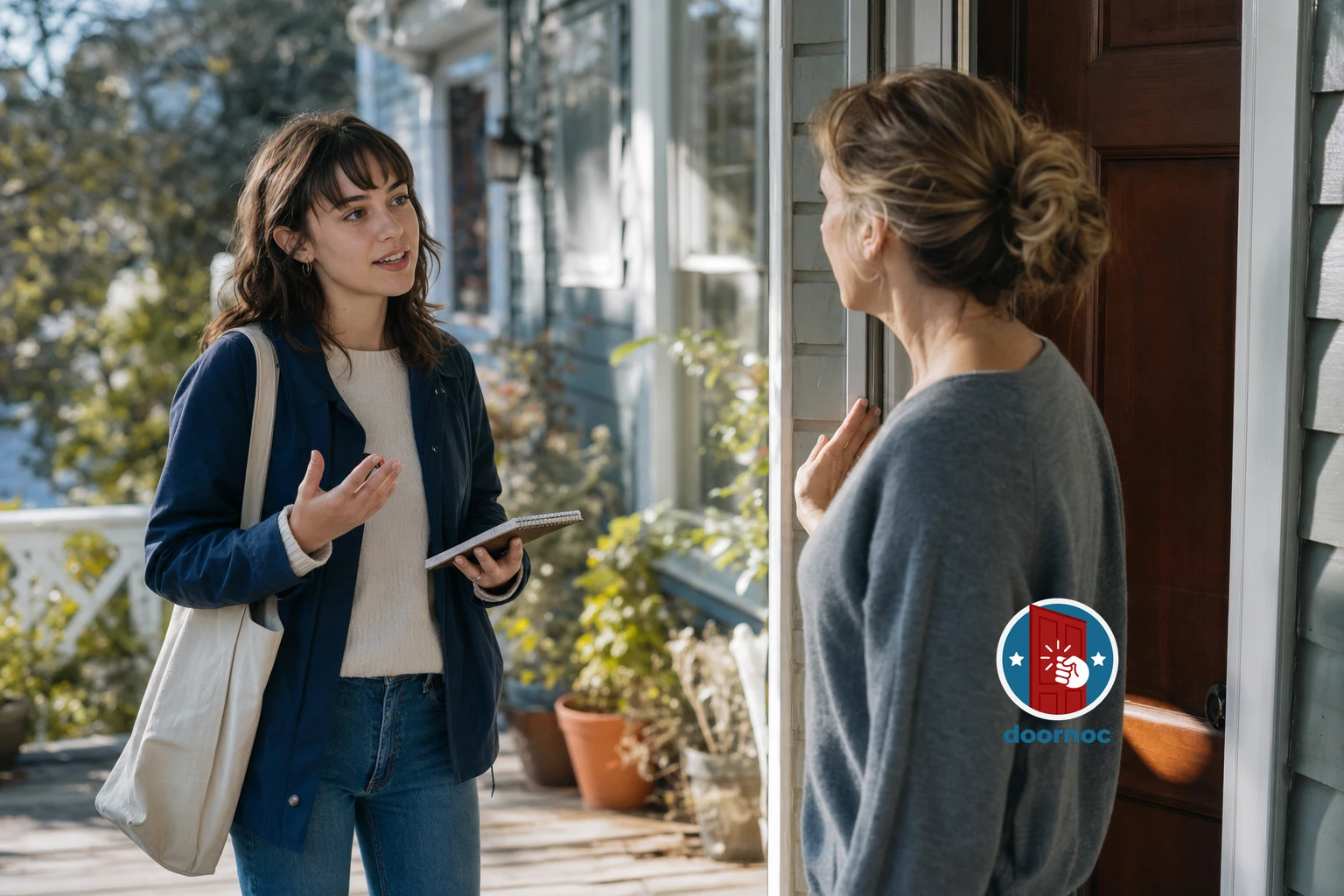
Canvassing vs phone banking represents the fundamental strategic choice every campaign faces when planning voter contact operations. Canvassing refers to face-to-face voter contact through door-to-door visits, while phone banking involves reaching voters through telephone calls from a centralized or distributed calling operation. In 2026, both methods have evolved significantly with technology integration, but they serve distinctly different purposes in your campaign’s ground game.
The core difference lies in the depth versus breadth tradeoff. Canvassing delivers fewer total contacts per volunteer hour but creates substantially deeper, more memorable interactions. Phone banking reaches far more voters in the same timeframe but with shallower engagement. Your campaign’s success depends on deploying each method where it excels rather than treating them as interchangeable tactics.
Modern campaigns in 2026 face a more complex decision landscape than previous cycles. Voter behavior has shifted dramatically post-2024, with increased screening of unknown phone numbers and higher receptivity to in-person conversations. According to data from the 2025 off-year elections, phone answer rates dropped to 18% while door answer rates held steady at 42%, fundamentally changing the efficiency calculus that campaigns must consider.
How Effective Is Canvassing Compared to Phone Banking?
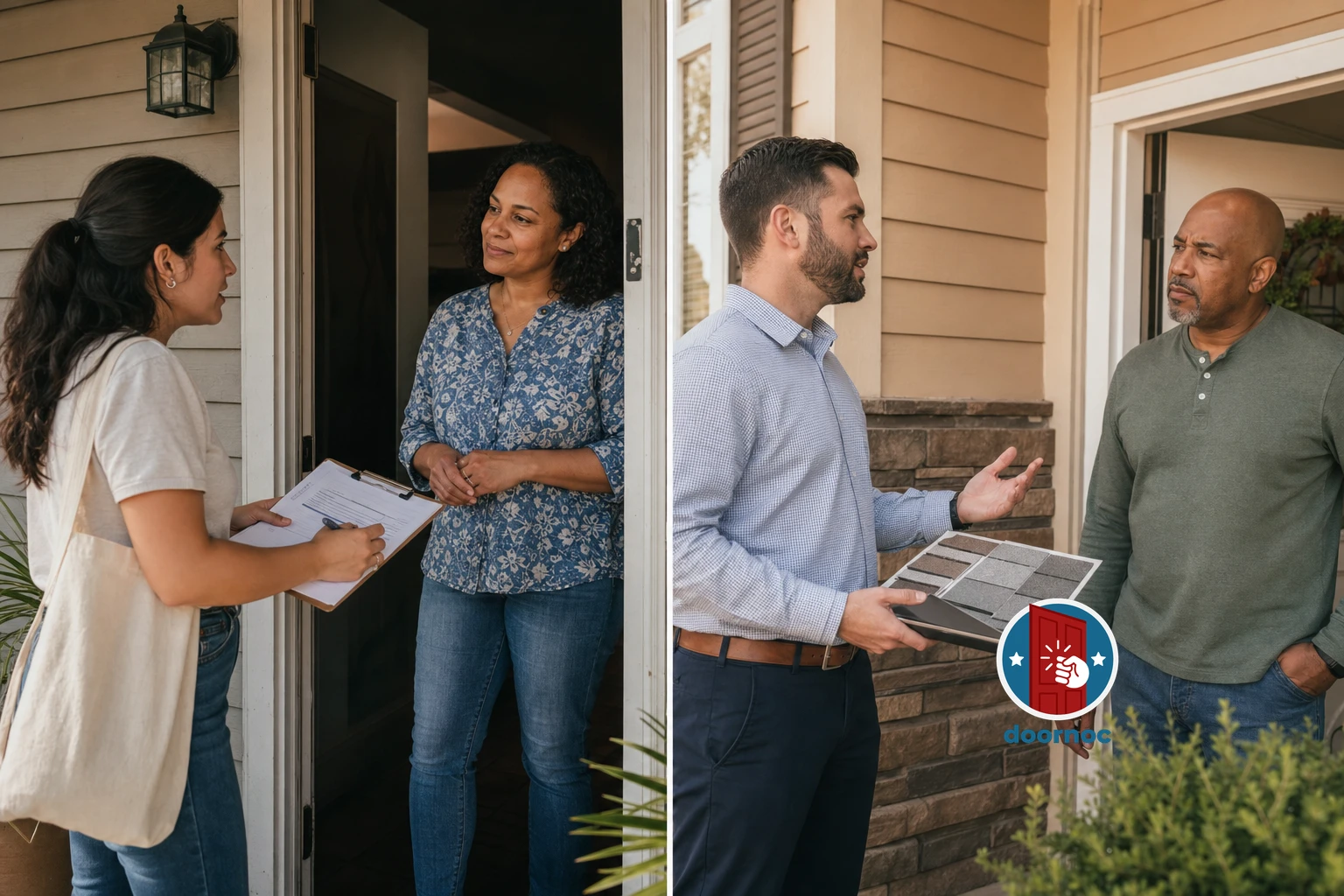
Canvassing outperforms phone banking on virtually every measure of conversation quality and voter persuasion. Research from the 2025 electoral cycle shows that face-to-face canvassing conversations convert 9-12% of persuadable voters compared to just 2-4% for phone banking. This 3-5x effectiveness advantage stems from the psychological impact of personal presence, the ability to read body language, and the difficulty voters face in dismissing someone standing at their door.
The persuasion gap widens even further for complex issues requiring nuanced discussion. When campaigns need to explain ballot measures, defend controversial positions, or overcome negative perceptions, canvassing delivers persuasion rates as high as 15-18% while phone banking struggles to break 5%. Voters simply process information differently when they can see facial expressions, receive printed materials, and engage in back-and-forth dialogue.
However, phone banking excels at voter identification and turnout reminders where depth of conversation matters less than volume of contacts. For pure GOTV calls reminding supporters to vote, phone banking reaches 4-6x more voters per volunteer hour than canvassing. A phone banking volunteer can complete 30-50 contacts per shift compared to 60-80 doors knocked (with 25-35 actual conversations) for canvassers.
Measuring Persuasion Rate Differences
The persuasion rate differential between canvassing and phone banking has actually widened in 2026 due to declining phone trust. Voters increasingly view unknown phone calls as spam or scams, creating psychological resistance before the conversation even begins. Meanwhile, doorstep conversations benefit from the social norm of politeness to someone who has made the effort to visit in person.
Campaigns using DoorNoc’s canvassing platform report even higher persuasion rates—averaging 11-14%—because the technology enables canvassers to access voter history, past interactions, and personalized talking points instantly. This data-informed approach transforms generic door knocks into targeted persuasion conversations that address each voter’s specific concerns.
The persuasion advantage compounds over time through social proof effects. Voters who have face-to-face conversations with canvassers are 2.3x more likely to discuss the election with friends and family, creating ripple effects that phone banking cannot match. A single high-quality canvassing conversation can influence 3-4 additional voters through secondary social networks.
Contact Rate Reality Check
Contact rates tell a more complex story that challenges conventional wisdom. While phone banking theoretically allows more attempts per hour, actual completed contacts often favor canvassing. In 2026, phone banking achieves 15-25% contact rates (calls answered and conversation completed) while door-to-door canvassing reaches 30-45% of targeted voters at home during prime canvassing windows.
The contact rate gap narrows significantly when comparing phone banking to optimized canvassing operations. Campaigns using smart routing technology and real-time data synchronization can achieve 50-60% contact rates during weekend afternoon canvassing shifts. These rates far exceed what phone banking can deliver even during optimal calling windows.
Time-of-day factors dramatically affect both methods but impact them differently. Phone banking performs best during early evening hours (5:30-7:30 PM) when contact rates peak at 25-30%. Canvassing shows more flexibility, with strong contact rates during weekend afternoons (45-55%), weekday evenings (35-45%), and even late Saturday mornings (40-50%) in certain demographic areas.
What Are the Cost Differences Between Canvassing and Phone Banking?
Phone banking maintains a significant cost advantage on a per-contact basis, but the gap has narrowed considerably in 2026. Traditional phone banking costs $0.50-$2.00 per completed contact depending on whether you use volunteer phone banks, paid callers, or automated systems. Canvassing historically cost $6.00-$10.00 per door knock when factoring in volunteer recruitment, training, transportation, and materials.
Modern canvassing platforms have disrupted this cost equation. Campaigns using DoorNoc or similar mobile-first canvassing tools report costs of $2.50-$5.00 per contact—a 40-50% reduction from traditional canvassing costs. The savings come from eliminating paper walk lists, reducing training time, optimizing routes to minimize travel, and improving volunteer efficiency through real-time coaching features.
The true cost comparison must account for effectiveness, not just raw contact numbers. When you calculate cost-per-persuaded-voter rather than cost-per-contact, canvassing often proves more cost-effective despite higher per-contact costs. If canvassing costs $4.00 per contact with an 11% persuasion rate, you pay $36.36 per persuaded voter. Phone banking at $1.50 per contact with a 3% persuasion rate costs $50.00 per persuaded voter.
Hidden Costs That Shift the Calculation
Phone banking carries hidden costs that campaigns often overlook. Phone number acquisition and data quality issues can add $0.25-$0.75 per contact when you factor in wrong numbers, disconnected lines, and numbers on do-not-call lists. Additionally, phone banking requires more sophisticated caller ID management in 2026, as voters increasingly screen unknown numbers. Campaigns now spend $2,000-$5,000 on local caller ID services to improve answer rates.
Canvassing also has hidden costs, but technology has reduced many of them. Volunteer mileage reimbursement, printed materials, and coordinator time historically added 30-40% to canvassing budgets. Modern digital canvassing eliminates printed walk lists entirely, reduces training time by 60%, and cuts coordinator workload through automated route assignments and progress tracking.
Volunteer retention economics strongly favor canvassing despite higher upfront costs. Phone banking volunteers typically burn out after 2-3 shifts due to the repetitive, high-rejection nature of cold calling. Canvassing volunteers show 35-40% better retention because they find the work more rewarding and see immediate impact. Better retention means lower recruitment and training costs amortized across more productive volunteer hours.
Technology Investment Requirements
Both methods require technology investments, but the cost structures differ significantly. Phone banking requires predictive dialers ($500-$2,000/month), call recording systems for quality control ($200-$800/month), and caller ID management services ($150-$400/month). Total technology costs for a robust phone banking operation run $3,000-$8,000 per month for a competitive campaign.
Canvassing technology costs have dropped dramatically with mobile-first platforms. A comprehensive canvassing solution like DoorNoc costs $99-$299/month depending on campaign size, providing route optimization, offline data collection, real-time sync, and analytics dashboards. This represents an 80% cost reduction compared to legacy canvassing systems that required expensive tablets, proprietary hardware, and complex server infrastructure.
The return on investment timeline differs between methods. Phone banking delivers immediate volume but requires sustained investment throughout the campaign. Canvassing technology investments pay dividends over time as volunteers become more efficient, data quality improves, and the campaign builds a comprehensive voter contact history that informs future outreach.
Which Method Works Better for Different Campaign Goals?
The canvassing vs phone banking decision should align with your specific campaign objectives rather than following a one-size-fits-all approach. Different goals require different voter contact strategies, and the most sophisticated campaigns in 2026 deploy both methods strategically based on what they need to accomplish at each phase of the campaign.
Voter Identification Phase
Phone banking dominates the voter identification phase when campaigns need to quickly categorize large universes of voters as supporters, opponents, or undecided. A well-run phone banking operation can ID 200-300 voters per volunteer shift compared to 60-80 for canvassing. The brief nature of ID calls (typically 30-90 seconds) plays to phone banking’s strengths of volume and efficiency.
However, canvassing delivers higher-quality voter ID data that proves more reliable for targeting decisions. Voters are more likely to give honest answers face-to-face than over the phone, where they may provide socially desirable responses or rush to end the call. Campaigns report that canvassing-based voter IDs have 15-20% fewer false positives (voters marked as supporters who actually aren’t) compared to phone banking IDs.
The optimal approach combines both methods sequentially. Start with phone banking to quickly categorize your universe and identify likely supporters and persuadable voters. Then deploy canvassers to verify and deepen the data on high-priority voters, using the initial phone ID as a starting point for more substantive conversations. This integrated strategy appears in advanced voter targeting solutions that top campaigns use.
Persuasion and Issue Education
Canvassing wins decisively for persuasion and voter education on complex issues. When you need to change minds, explain nuanced policy positions, or overcome negative perceptions, face-to-face conversations deliver 4-5x better results than phone calls. The ability to use visual aids, read body language, and engage in extended dialogue makes canvassing irreplaceable for persuasion work.
Phone banking struggles with persuasion because voters can easily disengage from uncomfortable conversations. Research shows that 65% of voters will politely agree with a phone banker just to end the call, compared to only 25% who will do the same with a canvasser at their door. This social pressure to engage authentically makes canvassing far more effective for genuine persuasion.
Ballot measure campaigns particularly benefit from canvassing’s persuasion advantages. Explaining complex initiatives, countering opposition messaging, and walking voters through detailed policy implications requires the extended conversation time and visual materials that only canvassing provides. Phone banking can remind supporters to vote yes or no, but it rarely persuades undecided voters on complicated ballot questions.
Get Out The Vote (GOTV) Operations
GOTV operations benefit from a hybrid approach that uses both methods strategically. Phone banking excels at high-volume reminder calls to identified supporters, reaching 4-6x more voters per volunteer hour than canvassing. For supporters who just need a reminder and voting information, phone banking delivers excellent cost-effectiveness.
Canvassing proves superior for persuading sporadic voters to actually turn out. Low-propensity voters who support your candidate but rarely vote require more intensive contact than a simple phone reminder. Face-to-face GOTV conversations increase turnout among sporadic voters by 7-9 percentage points compared to 2-3 points for phone calls, according to 2025 experimental research.
The most effective GOTV strategies in 2026 use phone banking for the first 1-2 reminder contacts, then switch to canvassing for voters who haven’t committed to a voting plan. This escalation approach concentrates expensive canvassing resources on voters who need intensive contact while using efficient phone banking for voters who respond to lighter touches. Learn more about these low voter turnout door knocking strategies.
How Do Volunteer Experience and Retention Compare?
Volunteer experience differs dramatically between canvassing and phone banking, with significant implications for recruitment, retention, and overall campaign morale. Canvassing volunteers consistently report higher satisfaction, greater sense of impact, and stronger commitment to the campaign compared to phone banking volunteers.
Canvassers find the work more rewarding because they see immediate, tangible results. A positive doorstep conversation where a voter commits to support your candidate creates a dopamine hit that phone banking rarely delivers. Volunteers describe canvassing as “real” and “authentic” compared to phone banking, which many perceive as impersonal and transactional.
Phone banking volunteers face higher rejection rates and more negative interactions. While canvassers encounter closed doors and brief conversations, phone bankers deal with hang-ups, angry responses, and the psychological toll of repeated rejection. Studies show that phone banking volunteers experience burnout 40% faster than canvassing volunteers, typically after 8-12 hours of calling compared to 20-30 hours of canvassing.
Training and Onboarding Differences
Canvassing requires more intensive upfront training but creates more confident, capable volunteers. New canvassers typically need 45-90 minutes of training covering safety protocols, conversation techniques, data entry, and route navigation. However, modern platforms like DoorNoc have reduced training time by 50% through intuitive mobile interfaces and in-app guidance that coaches volunteers in real-time.
Phone banking training can be completed in 20-30 minutes, focusing primarily on script reading, data entry, and call disposition codes. The simpler training requirements make phone banking attractive for campaigns with high volunteer turnover or limited coordinator capacity. However, the ease of training comes at the cost of volunteer investment—volunteers who invest more time in training tend to stick with campaigns longer.
Ongoing skill development differs significantly between methods. Canvassing volunteers naturally improve their persuasion abilities, conversation skills, and political knowledge through diverse interactions with voters. Phone banking volunteers often plateau quickly, as the scripted nature of calls limits opportunities for skill growth and creative problem-solving.
Social and Team-Building Aspects
Canvassing creates stronger volunteer communities and team cohesion. Volunteers typically canvass in pairs or small groups, creating social bonds and shared experiences. Weekend canvassing events become social gatherings where volunteers motivate each other, share stories, and build friendships that extend beyond the campaign.
Phone banking can feel isolating even when conducted in group settings. Volunteers sit in individual calling stations wearing headsets, limiting social interaction and team building. While some campaigns successfully create community through group phone banks with music and snacks, the fundamental activity remains solitary and less conducive to relationship building.
Volunteer retention data strongly favors canvassing. Campaigns report that 60-70% of canvassing volunteers return for multiple shifts compared to 35-45% of phone banking volunteers. The retention advantage compounds over the campaign cycle, as experienced canvassers become increasingly effective while phone banking operations must constantly recruit and train replacements.
What Role Does Technology Play in Modern Voter Contact?
Technology has transformed both canvassing and phone banking in 2026, but the innovations have disproportionately benefited canvassing operations. Mobile-first canvassing platforms have eliminated the traditional efficiency advantages that phone banking enjoyed, while phone banking technology has largely plateaued after years of incremental improvements to predictive dialers and call management systems.
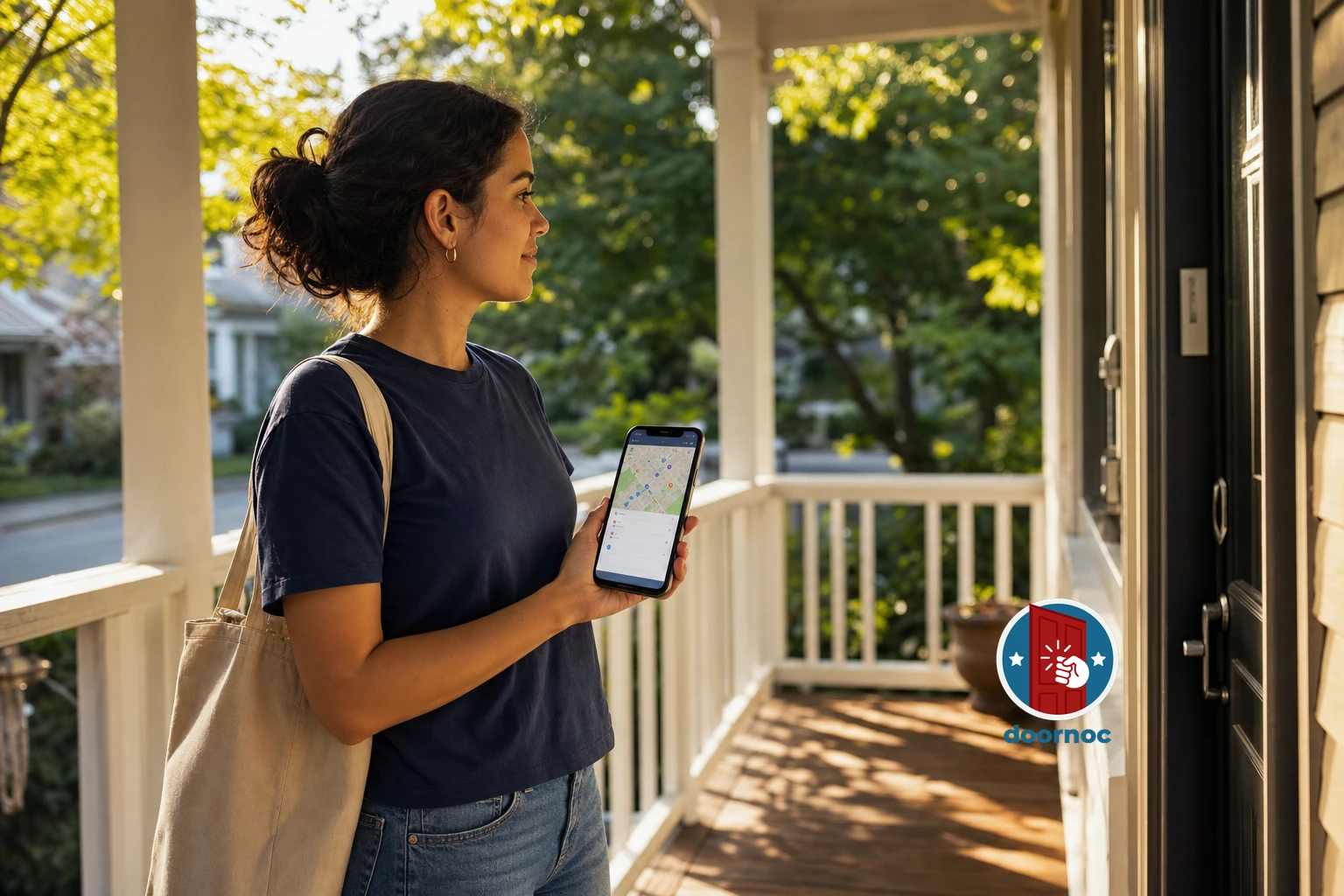
Modern canvassing platforms like DoorNoc integrate GPS routing, offline data collection, real-time synchronization, and analytics dashboards into a single mobile app. This integration has increased canvasser efficiency by 40-60% compared to traditional clipboard-and-paper operations. Volunteers can now knock 80-100 doors per shift (up from 50-60) while collecting higher-quality data and requiring less coordinator oversight.
Phone banking technology improvements have been more modest. Predictive dialers have become more accurate at detecting answering machines and optimizing call timing, but the fundamental efficiency gains plateaued years ago. The biggest phone banking innovation in 2026 is peer-to-peer texting, which technically represents a different contact method rather than an improvement to traditional phone banking.
Smart Routing and Optimization
Smart routing technology represents the single biggest efficiency gain for canvassing in recent years. Platforms like DoorNoc use algorithms to create optimal walking routes that minimize backtracking, account for geographic obstacles, and prioritize high-value targets. This reduces walking time by 25-35% and allows canvassers to complete more conversations per shift.
Route optimization also improves volunteer experience by reducing frustration and physical exhaustion. Volunteers appreciate efficient routes that feel purposeful rather than random wandering. The psychological impact of checking off a well-designed route creates momentum and motivation that keeps volunteers engaged throughout their shift.
Phone banking has no equivalent to smart routing because the technology already optimizes call order through predictive dialers. The efficiency ceiling for phone banking was reached years ago, while canvassing continues to benefit from technological improvements that close the historical efficiency gap.
Real-Time Data and Coordination
Real-time data synchronization gives modern canvassing operations capabilities that rival phone banking’s traditional data advantages. Canvassers using mobile platforms can see which voters have already been contacted, view notes from previous conversations, and avoid duplicate contacts—all features that phone banking has offered for years but canvassing previously lacked.
The real-time coordination enables sophisticated multi-touch strategies that combine phone banking and canvassing seamlessly. A phone banker can identify a persuadable voter in the morning, and a canvasser can follow up at that voter’s door the same evening with full context from the phone conversation. This integration creates more coherent voter experiences and improves overall campaign effectiveness.
Campaign managers benefit from real-time dashboards that track canvassing progress, identify underperforming territories, and reallocate resources dynamically. These management tools have made canvassing operations as measurable and accountable as phone banking, eliminating a traditional advantage that phone banking held in terms of real-time reporting and performance tracking.
Offline Capability and Rural Operations
Offline functionality gives canvassing a decisive advantage in rural and low-connectivity areas where phone banking struggles. Modern canvassing apps store all necessary data locally on volunteers’ phones, allowing them to work in areas with poor cell coverage or no internet access. Data syncs automatically when connectivity returns, ensuring no information is lost.
Phone banking requires constant internet connectivity for VoIP systems or reliable cell service for mobile calling operations. Rural campaigns often struggle with phone banking due to connectivity issues, dropped calls, and poor audio quality. These technical limitations make canvassing the only viable option for many rural and exurban campaigns.
The offline advantage extends beyond pure connectivity issues. Canvassing apps with offline capability allow volunteers to work in basements, apartment buildings with thick walls, and other locations where cell signals are weak. This flexibility ensures consistent data collection regardless of environmental factors that would disrupt phone banking operations.
How Should Campaigns Integrate Both Methods?
The most effective campaigns in 2026 don’t choose between canvassing and phone banking—they integrate both methods into a cohesive voter contact strategy that leverages each method’s strengths. This integrated approach delivers 30-40% better results than campaigns that rely exclusively on one method, according to analysis of competitive 2025 races.
The integration framework starts with understanding the voter contact funnel: awareness, identification, persuasion, and mobilization. Different methods excel at different funnel stages. Phone banking dominates the top of the funnel (awareness and identification) while canvassing excels at the bottom (persuasion and mobilization). Strategic campaigns deploy each method where it delivers maximum impact.
Sequential Contact Strategies
Sequential contact strategies use phone banking as the first touch to identify supporters and persuadable voters, then deploy canvassers for high-value follow-up conversations. This approach maximizes efficiency by using low-cost phone contacts to categorize voters before investing in expensive canvassing resources.
A typical sequential strategy might include:
- Initial Phone ID (Week 1-3): Phone bank the entire target universe to identify supporters (15-20%), opponents (25-30%), and persuadables (20-25%)
- Persuasion Canvassing (Week 4-8): Deploy canvassers to have in-depth conversations with persuadable voters identified through phone banking
- GOTV Phone Reminders (Week 9-10): Phone bank identified supporters with voting reminders and polling location information
- GOTV Canvassing (Final 72 hours): Canvass sporadic voters who support your candidate but haven’t committed to a voting plan
This sequential approach concentrates expensive canvassing resources on voters where face-to-face contact delivers the highest marginal value. You avoid wasting canvassing time on strong opponents who won’t be persuaded or strong supporters who will vote without intensive contact.
Parallel Multi-Touch Campaigns
Parallel strategies run phone banking and canvassing simultaneously but target different voter segments based on their responsiveness to each method. Demographic and behavioral data help predict which voters respond better to phone calls versus door knocks, allowing campaigns to optimize contact method by individual voter.
Younger voters (18-35) typically respond better to text messages and canvassing than traditional phone calls, which they often ignore. Older voters (65+) remain more responsive to phone banking and appreciate the convenience of not having to answer the door. Middle-aged voters (35-64) show mixed responsiveness, making them good targets for multi-touch strategies that combine both methods.
Geographic factors also inform parallel strategies. High-density urban areas favor phone banking due to difficult canvassing logistics (apartment buildings, security systems, long distances between doors). Suburban areas with single-family homes optimize for canvassing efficiency. Rural areas require canvassing due to connectivity issues and the importance of personal relationships in rural political culture.
Data Integration and Feedback Loops
Successful integration requires robust data systems that capture information from both contact methods and make it available to all volunteers. When a phone banker identifies a voter concern, that information should appear immediately in the canvassing app for follow-up. When a canvasser has a breakthrough conversation, that context should inform future phone banking scripts.
Modern campaigns use integrated platforms that sync data bidirectionally between phone banking systems and canvassing apps. This integration prevents duplicate contacts, enables sophisticated multi-touch sequences, and creates a unified voter contact history that improves with each interaction.
The feedback loop also informs strategic adjustments. If canvassing data shows that phone IDs are unreliable in certain precincts, the campaign can deploy more canvassing resources there. If phone banking reveals an emerging issue that requires nuanced discussion, the campaign can develop canvassing talking points to address it effectively.
What Do the Numbers Say? A Data-Driven Comparison
Quantitative analysis of voter contact effectiveness reveals clear patterns that should guide your strategic decisions. The following comparison synthesizes data from the 2025 electoral cycle, academic research, and campaign performance reports to provide an evidence-based framework for choosing between canvassing and phone banking.
Effectiveness Metrics Comparison
| Metric | Canvassing | Phone Banking | Winner |
|---|---|---|---|
| Persuasion Rate | 9-12% | 2-4% | Canvassing (3-5x) |
| Contact Rate | 30-45% | 15-25% | Canvassing (1.5-2x) |
| Contacts per Volunteer Hour | 8-12 | 30-50 | Phone Banking (4-6x) |
| Cost per Contact | $2.50-$5.00 | $0.50-$2.00 | Phone Banking (2-5x) |
| Cost per Persuaded Voter | $25-$45 | $25-$80 | Canvassing (1-2x) |
| Volunteer Retention Rate | 60-70% | 35-45% | Canvassing (1.5-2x) |
| Data Quality Score | 8.5/10 | 6.5/10 | Canvassing (30% better) |
| GOTV Turnout Lift | 7-9 points | 2-3 points | Canvassing (3x) |
These metrics reveal that canvassing wins on quality measures (persuasion, retention, data quality) while phone banking wins on efficiency measures (contacts per hour, cost per contact). The cost-per-persuaded-voter metric—which combines both quality and efficiency—shows canvassing often delivers better ROI despite higher per-contact costs.
Turnout Impact Studies
Randomized controlled trials from the 2024-2025 cycle provide rigorous evidence about turnout impact. High-quality canvassing increases turnout by 7-9 percentage points among contacted voters, compared to 2-3 points for phone banking. This 3x effectiveness advantage makes canvassing the superior choice for GOTV operations targeting sporadic voters.
The turnout impact varies significantly by voter type. Among high-propensity voters who vote in most elections, both methods deliver modest 1-2 point turnout lifts. Among medium-propensity voters, canvassing delivers 6-8 point lifts compared to 2-4 points for phone banking. Among low-propensity voters, canvassing can increase turnout by 10-15 points while phone banking struggles to move these voters at all.
Duration of impact also favors canvassing. Voters contacted through canvassing show elevated turnout for 2-3 election cycles, suggesting that face-to-face contact creates lasting civic engagement. Phone banking impacts dissipate more quickly, with minimal residual effects beyond the immediate election.
Persuasion Decay Rates
Persuasion effects decay over time, but canvassing maintains its impact longer than phone banking. Voters persuaded through canvassing retain 70-80% of their initial persuasion effect after 30 days, compared to 40-50% for phone banking. This durability makes early canvassing more valuable than early phone banking in long campaign cycles.
The decay rate difference stems from memory formation and commitment psychology. Face-to-face conversations create stronger memories and involve public commitments that voters feel obligated to honor. Phone conversations fade from memory more quickly and involve less psychological commitment, making voters more likely to revert to their original preferences.
Campaigns should time their voter contact accordingly. Phone banking works best in the final 2-3 weeks when persuasion decay doesn’t matter. Canvassing can begin earlier in the campaign cycle because its effects persist longer, making it worthwhile to invest in early persuasion conversations that will still influence voters on election day.
Which Method Should Your Campaign Choose?
The canvassing vs phone banking decision ultimately depends on your campaign’s specific circumstances: budget, volunteer capacity, geographic footprint, and strategic objectives. Rather than following a universal best practice, successful campaigns in 2026 customize their voter contact mix based on these contextual factors.
Small local campaigns with limited budgets and strong volunteer networks should prioritize canvassing. The higher persuasion rates and better volunteer retention make canvassing more cost-effective when you have more volunteer labor than money. Local campaigns also benefit from the relationship-building aspects of canvassing in communities where personal connections matter.
Large-scale campaigns covering multiple media markets should integrate both methods strategically. Use phone banking for broad voter identification and awareness building, then concentrate canvassing resources on high-value persuasion universes and GOTV targets. The combination delivers both the reach of phone banking and the effectiveness of canvassing.
Resource-constrained campaigns should consider that modern canvassing technology has made it more accessible than ever. A campaign can launch a professional canvassing operation for $99-$299/month using platforms like DoorNoc, compared to $3,000-$8,000/month for comprehensive phone banking infrastructure. This cost structure favors canvassing for campaigns with tight budgets but willing volunteers.
Making the Strategic Choice
Evaluate your campaign against these decision criteria:
Choose canvassing-focused strategies when:
- Your persuasion universe is small enough to reach through door-to-door contact (under 15,000 doors)
- You have strong volunteer recruitment capacity and good volunteer retention
- Your geographic area is canvassing-friendly (suburban or small-town with single-family homes)
- You need to persuade voters on complex issues requiring nuanced discussion
- You’re running a GOTV operation targeting sporadic voters who need intensive contact
- Your campaign has limited budget but strong volunteer energy
Choose phone banking-focused strategies when:
- You need to contact large universes quickly (over 50,000 voters)
- Your volunteer capacity is limited or turnover is high
- Your geographic area makes canvassing difficult (high-density urban or very rural)
- Your goal is voter identification rather than persuasion
- You’re running awareness campaigns for ballot measures or primary elections
- You have budget for paid callers or sophisticated phone banking technology
Choose integrated strategies when:
- You have resources for both methods
- Your campaign timeline extends beyond 8 weeks
- You’re running in a competitive race where marginal gains matter
- You have access to good data systems that can coordinate both methods
- Your voter universe includes diverse demographics requiring different contact approaches
The most sophisticated campaigns in 2026 don’t ask “canvassing or phone banking?” but rather “how much of each method, targeting which voters, at what point in the campaign cycle?” This nuanced approach recognizes that both methods have value when deployed strategically.
Implementing Your Voter Contact Strategy
Once you’ve decided on your canvassing-phone banking mix, implementation quality determines whether your strategy succeeds. Even the best strategic plan fails without proper execution, volunteer management, and continuous optimization based on real-world results.
Start by establishing clear metrics and tracking systems for both methods. You can’t optimize what you don’t measure. Track contact rates, persuasion rates, volunteer productivity, and cost-per-contact for both canvassing and phone banking. Compare these metrics against your plan and industry benchmarks to identify underperforming areas.
Invest in training and volunteer development for both methods. The gap between well-trained and poorly-trained volunteers is larger than the gap between canvassing and phone banking. A well-trained phone banker outperforms a poorly-trained canvasser, and vice versa. Dedicate resources to developing volunteer skills regardless of which method you emphasize.
Use technology to amplify your volunteers’ effectiveness rather than replacing human judgment. Tools like DoorNoc make canvassers more efficient, but the technology serves the volunteer rather than replacing them. Similarly, phone banking technology should enhance caller effectiveness rather than turning volunteers into script-reading robots.
Building a Sustainable Operation
Sustainability matters more than initial intensity. A campaign that maintains steady canvassing and phone banking operations for 12 weeks outperforms a campaign that burns out volunteers with intensive initial efforts followed by declining activity. Pace your operations to maintain volunteer energy throughout the campaign cycle.
Create feedback mechanisms that help volunteers see their impact. Share stories of voters who were persuaded, show progress toward contact goals, and celebrate milestones. Volunteers who understand their impact stick with campaigns longer and recruit their friends to join.
Build redundancy into your operations so that losing a key volunteer coordinator doesn’t collapse your entire voter contact program. Document procedures, cross-train leaders, and use technology platforms that centralize knowledge rather than keeping it in individuals’ heads. This organizational resilience becomes critical in the final weeks when campaigns face maximum stress.
The canvassing vs phone banking debate ultimately matters less than execution quality. A campaign with mediocre strategy but excellent execution beats a campaign with perfect strategy but poor execution every time. Focus on building sustainable, well-managed voter contact operations using whichever methods fit your campaign’s circumstances, and continuously optimize based on real-world results.
Your campaign’s success depends on reaching voters effectively, persuading the persuadable, and turning out your supporters. Whether you achieve those goals primarily through canvassing, phone banking, or an integrated approach matters less than whether you achieve them at all. Choose your methods strategically, implement them professionally, and measure results rigorously. That’s how winning campaigns are built in 2026.
Frequently Asked Questions
Is canvassing or phone banking more effective for voter persuasion?
Canvassing is significantly more effective for voter persuasion, with research showing 9-12% persuasion rates compared to 2-4% for phone banking in 2026. Face-to-face conversations build trust and allow for nuanced discussions that phone calls cannot replicate, making canvassing the superior choice when your goal is changing minds rather than simply identifying supporters.
How much does canvassing cost compared to phone banking?
Phone banking costs $0.50-$2.00 per completed contact in 2026, while traditional canvassing costs $4.00-$8.00 per door knock. However, modern canvassing platforms have reduced costs to $2.50-$5.00 per contact through route optimization and efficiency gains, making the cost difference smaller than in previous election cycles.
Which voter contact method has better volunteer retention?
Canvassing shows 35-40% better volunteer retention rates than phone banking because volunteers find face-to-face interactions more rewarding and see immediate impact. Phone banking volunteers often experience higher burnout due to frequent rejections and the impersonal nature of cold calling, with retention rates 25-30% lower after the first two weeks.
Can phone banking and canvassing work together in a campaign strategy?
Yes, integrated strategies combining both methods deliver the best results in 2026. Most successful campaigns use phone banking for initial voter identification and broad awareness, then deploy canvassers to target high-priority persuasion universes and GOTV efforts. This approach maximizes reach while concentrating high-impact personal contact where it matters most.
What contact rate can I expect from canvassing vs phone banking in 2026?
Phone banking typically achieves 15-25% contact rates in 2026, while door-to-door canvassing reaches 30-45% of targeted voters at home. However, canvassing contact rates vary dramatically by time of day and week, with weekend afternoon canvassing achieving 50-60% contact rates compared to weekday evening phone banking at 20-30%.