
Key Takeaways
- Weekend canvassing events require 2-3 weeks of advance planning, including volunteer recruitment, turf cutting, and materials preparation to maximize voter contact rates.
- Successful canvass launches combine efficient check-in systems, energizing kickoff rallies, and clear route assignments that get volunteers knocking doors within 20 minutes of arrival.
- Real-time tracking during weekend events allows field directors to redistribute volunteers, identify struggling canvassers, and celebrate wins as they happen throughout the day.
- Post-event follow-up within 24-48 hours — including thank-you messages, data cleanup, and volunteer feedback collection — increases retention rates by 60% for future events.
Best practices for weekend canvassing events separate winning campaigns from those that struggle to reach voters. Weekend canvassing events — often called “days of action” or “canvass launches” — represent your campaign’s highest-impact voter contact opportunities, concentrating volunteer energy into focused, data-driven door-knocking sessions that can reach thousands of voters in a single day.
A well-executed weekend canvassing event in 2026 combines strategic planning, efficient execution systems, and thorough follow-up processes that maximize both immediate voter contact and long-term volunteer retention. This comprehensive guide covers every phase of organizing successful canvassing events that deliver measurable results.
Planning Your Weekend Canvassing Event (2-3 Weeks Before)
Successful weekend canvassing events begin with meticulous advance planning. Your planning phase should start 14-21 days before your target date, giving your team sufficient time to recruit volunteers, prepare materials, and build momentum.
Setting Clear Event Goals and Metrics
Define specific, measurable objectives before you begin recruiting volunteers. Your goals might include:
- Voter contact targets: Number of doors to knock, conversations to have, or specific voter universe to complete
- Geographic coverage: Specific precincts, neighborhoods, or legislative districts to canvass
- Data collection goals: Survey responses, volunteer recruitment sign-ups, or issue identification
- Volunteer engagement metrics: Number of first-time canvassers to train, volunteer retention rate to achieve
In 2026, high-performing campaigns set goals of 40-60 doors knocked per volunteer per shift, with contact rates (actual conversations) of 25-35%. These benchmarks help you calculate how many volunteers you need to achieve your coverage goals.
Selecting the Optimal Date and Time
Weekend timing significantly impacts your event’s success. Research from the 2025 election cycle shows that Saturday mornings (10:00 AM start) generate 18% higher volunteer turnout than Sunday afternoons, but Sunday events often achieve higher voter contact rates because more people are home.
Consider these factors when scheduling:
- Avoid major holidays, local events, and religious observances that compete for volunteer time or reduce at-home voter rates
- Check weather forecasts 5-7 days before the event and have a backup date or indoor phone bank alternative ready
- Coordinate with other local campaigns to avoid volunteer conflicts and potentially combine resources
- Plan around your data deadlines — if you need voter contact data uploaded by a specific date for mail or digital targeting, work backward from that deadline
Most campaigns schedule events from 10:00 AM to 4:00 PM on Saturdays, allowing for setup, training, multiple canvassing shifts, and debrief sessions.
Cutting Turf and Preparing Walk Packets
Turf preparation is the technical backbone of your canvassing event. Start this process 10-14 days before your event to allow time for printing, quality control, and adjustments.
Your turf cutting process should:
- Pull your target universe from your voter file based on your campaign’s targeting criteria (likely voters, persuasion targets, GOTV universe, etc.)
- Organize addresses into efficient walking routes that minimize backtracking and keep volunteers in compact geographic areas
- Create individual walk packets of 40-60 doors per volunteer per 2-hour shift
- Include clear maps with highlighted routes, starting points marked, and any special instructions noted
- Add your canvassing script, survey questions, and data collection forms to each packet
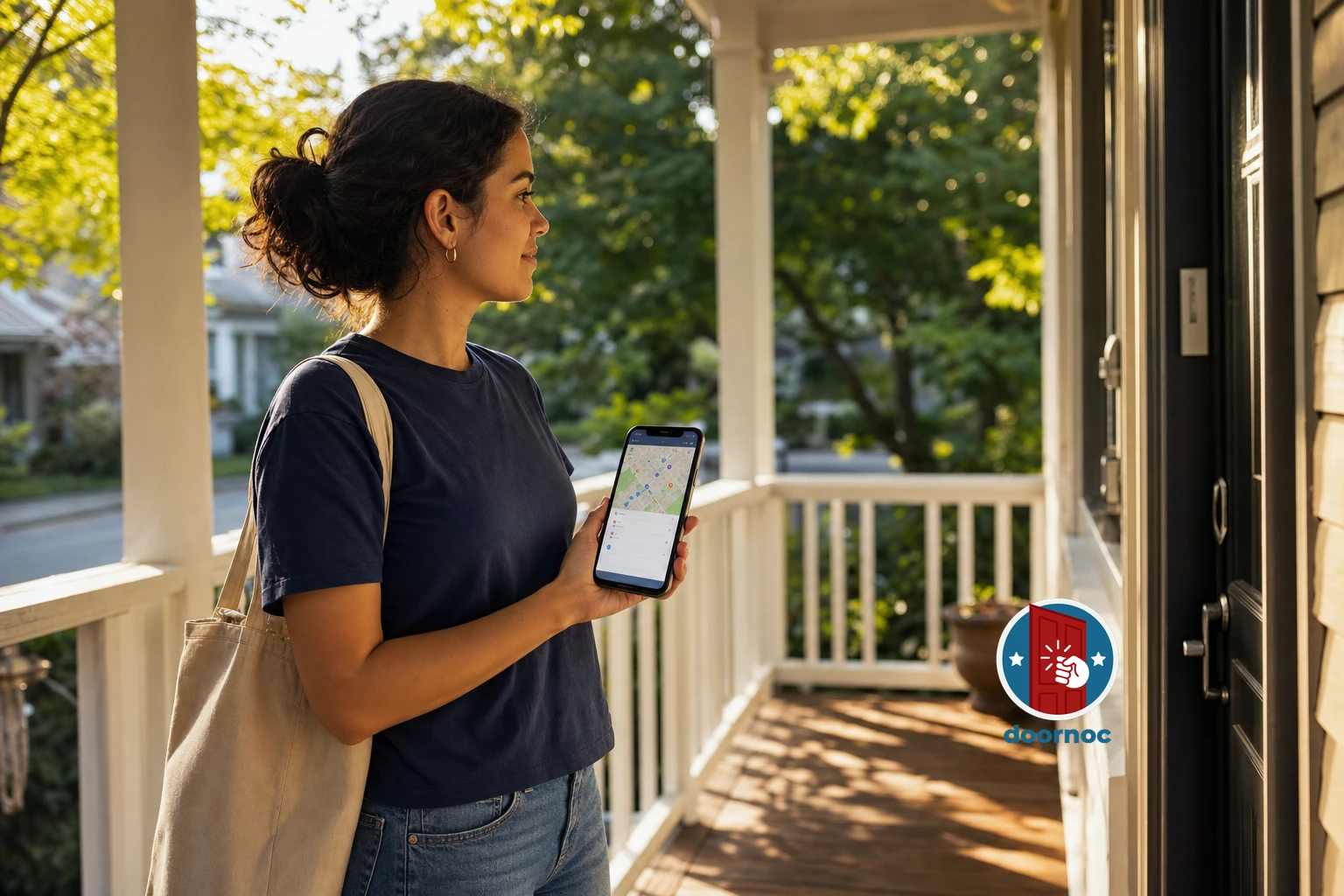
Modern campaigns use mobile canvassing tools like Door Knock to eliminate paper walk packets entirely, providing volunteers with optimized routes on their smartphones and enabling real-time data collection. This approach reduces prep time by 75% and improves data quality significantly.
Recruiting and Confirming Volunteers
Volunteer recruitment should begin 14 days before your event through multiple channels:
- Email your volunteer list with a compelling event invitation that emphasizes impact and community
- Post on social media with shareable graphics and easy sign-up links
- Make personal phone calls to your most reliable volunteers and ask them to bring friends
- Partner with aligned organizations (unions, advocacy groups, community organizations) to expand your volunteer pool
- Use peer-to-peer texting to reach supporters who have expressed interest but haven’t volunteered yet
Implement a confirmation system to reduce no-shows:
- Send a confirmation email immediately after sign-up with event details and calendar invite
- Text volunteers 7 days before with a confirmation request and link to add to calendar
- Send a reminder text 3 days before with weather update and parking information
- Make personal phone calls to first-time volunteers 48 hours before to answer questions and build commitment
- Send a final reminder text 24 hours before with exact address and start time
Campaigns using this five-touch confirmation system reduce no-show rates from 50% to 25-30%.
Executing Your Weekend Canvassing Event (Day Of)
Execution day requires careful orchestration of logistics, people, and systems. Your goal is to get trained volunteers knocking doors quickly while maintaining quality and volunteer satisfaction.
Setting Up Your Staging Location
Arrive at your staging location 60-90 minutes before volunteer arrival time to set up systems and test technology. Your staging location should be centrally located within your canvassing area with adequate parking, bathroom access, and space for 20-50 people to gather comfortably.
Set up these stations:
- Check-in table with volunteer sign-in sheets, name tags, and campaign literature
- Materials station with walk packets, clipboards, campaign literature, and door hangers organized by turf
- Training area with space for all volunteers to see and hear your kickoff presentation
- Technology support station where volunteers can get help downloading your canvassing app, troubleshooting phones, or accessing wifi
- Refreshments area with water, coffee, and light snacks (volunteers canvass better when fed)
Designate team leaders or shift captains who will manage small groups of 5-8 volunteers, particularly helpful for supporting first-time canvassers.
Running an Efficient Check-In Process
Your check-in process sets the tone for the entire event. A smooth, welcoming check-in experience makes volunteers feel valued and organized.
Your check-in should accomplish:
- Verify attendance and mark volunteers present in your system
- Collect contact information from walk-ins and update existing volunteer records
- Distribute name tags to build community and help volunteers network
- Provide campaign swag (t-shirts, buttons, stickers) to create team identity
- Direct volunteers to refreshments while they wait for the kickoff to begin
Use a simple check-in sheet or tablet-based system to capture volunteer data quickly. Avoid long lines by having 2-3 check-in stations for events with 30+ volunteers.
Delivering an Energizing Kickoff and Training
Your kickoff rally serves two purposes: building volunteer enthusiasm and providing essential training. Limit this session to 30-45 minutes maximum — volunteers came to knock doors, not sit through lengthy presentations.
Structure your kickoff like this:
Welcome and thank you (3 minutes): The campaign manager or candidate thanks volunteers for their time and emphasizes the importance of today’s work.
Why we’re here (5 minutes): Share the campaign’s story, what’s at stake in this election, and how today’s canvassing directly contributes to victory. Use specific numbers: “The doors we knock today will reach 3,000 voters in precincts we won by just 200 votes last cycle.”
Canvassing training (15-20 minutes): Cover the essential skills volunteers need:
- How to approach a door professionally and safely
- Your campaign’s door knock script and key talking points
- How to handle common objections or difficult conversations
- How to record data accurately (whether on paper or mobile app)
- Safety protocols and what to do if they feel uncomfortable
Use role-playing exercises where volunteers practice the script with each other. This builds confidence and helps identify questions before volunteers are in the field.
Logistics and assignments (5-7 minutes): Explain the schedule, when volunteers should return, how to get help if needed, and how you’ll communicate with teams in the field.
Team assignments and send-off (5 minutes): Assign volunteers to teams, distribute walk packets or assign digital turfs, and send teams out with energy and encouragement.
For more detailed guidance on training volunteers effectively, see our complete guide on how to train volunteers for door knocking.
Optimizing Route Assignments and Deployment
Smart route assignments match volunteer experience levels with appropriate turf difficulty and maximize geographic coverage.
Follow these assignment principles:
- Pair first-time canvassers with experienced volunteers for their first walk, then let them go solo on their second shift if comfortable
- Assign compact, easy-to-navigate turf to new volunteers — save complex apartment buildings or rural areas for experienced canvassers
- Keep teams of 2-3 volunteers together in adjacent turf areas so they can support each other while covering more ground than a single pair
- Deploy your strongest volunteers to high-priority turf where persuasion conversations or data collection is most critical
- Stagger deployment times if you have limited parking or want to avoid overwhelming a small neighborhood with 50 canvassers at once
Using route optimization technology dramatically improves efficiency. Door Knock’s smart route planning automatically creates optimized walking paths that reduce walk time by up to 40%, allowing volunteers to knock more doors in the same time period. Learn more about planning efficient canvassing routes to maximize your weekend events.
Managing Volunteers in the Field
Once volunteers deploy, your field management determines whether your event achieves its goals or falls short. Active management keeps volunteers on track, addresses problems quickly, and maintains momentum.
Implement these field management practices:
Check-in protocols: Require volunteers to text or check in via app when they:
- Start their first door
- Complete their first walk packet (to assess pace and provide encouragement)
- Encounter any problems or safety concerns
- Finish their assigned turf and are ready for more
Roving support: Designate 1-2 experienced staff or volunteers as “rovers” who drive through canvassing areas to:
- Drop off additional materials if volunteers run out
- Provide on-the-spot training or support to struggling canvassers
- Pick up completed walk packets from volunteers who need to leave early
- Deliver water, snacks, or encouragement to volunteers in the field
Real-time progress tracking: Monitor your team’s progress throughout the day using your canvassing app’s dashboard or by collecting check-in data. Track:
- Total doors knocked and conversations completed
- Individual volunteer progress and pace
- Geographic coverage (which turfs are complete, which need more attention)
- Data quality issues that need immediate correction
Modern campaigns use mobile canvassing platforms that provide real-time dashboards showing exactly where volunteers are, how many doors they’ve knocked, and what data they’ve collected. This visibility allows field directors to redistribute volunteers from completed areas to high-priority turf that needs additional coverage.
Celebrating Progress and Maintaining Energy
Long canvassing days require intentional energy management. Volunteers who start enthusiastically at 10:00 AM may feel exhausted by 2:00 PM without proper support.
Use these techniques to maintain volunteer enthusiasm:
Share real-time wins: Text your volunteer group or post updates to your event chat celebrating milestones:
- “We just knocked our 500th door! Halfway to our goal!”
- “Team North Side just completed their entire turf — amazing work!”
- “Sarah just had a 20-minute conversation with an undecided voter who’s now supporting us!”
Create friendly competition: Divide volunteers into teams (by neighborhood, by arrival time, by experience level) and track which team knocks the most doors or has the most conversations. Offer small prizes or recognition for winning teams.
Provide mid-day refueling: Set up a snack station at your staging location or have rovers deliver refreshments to volunteers in the field around 1:00-2:00 PM. Water, fruit, and energy bars keep volunteers physically capable of continuing.
Offer flexible departure times: Some volunteers can only stay 2 hours while others can canvass all day. Make it easy for people to leave when they need to by having a simple check-out process and thanking them warmly for whatever time they contributed.
Host a closing celebration: When volunteers return from their final shifts, gather everyone for a brief celebration. Share final numbers, recognize top performers, take a group photo, and thank everyone for their contribution. This positive ending experience increases the likelihood volunteers will return for your next event.
Following Up After Your Weekend Canvassing Event
Your work doesn’t end when the last volunteer leaves. Post-event follow-up determines whether your weekend canvassing event becomes a one-time success or the foundation for sustained volunteer engagement.
Immediate Data Processing (Within 24 Hours)
Data from your canvassing event has maximum value when processed quickly. Voter contact information informs your mail program, digital advertising, phone banking, and future canvassing efforts — but only if it’s entered into your system promptly.
Complete these data tasks within 24 hours:
Upload all canvassing data: If you used paper walk packets, enter all voter contact results, survey responses, and volunteer recruitment sign-ups into your voter database. If you used a mobile canvassing app, verify that all data synced correctly and review any flagged issues.
Clean and standardize data: Review entries for obvious errors, standardize response codes, and flag any data that needs follow-up or clarification. Check that volunteer names and contact information are spelled correctly.
Generate initial reports: Create summary reports showing:
- Total doors knocked and contact rate
- Survey response breakdowns
- Geographic coverage maps
- Top-performing volunteers
- Data quality metrics
Campaigns using mobile canvassing platforms like Door Knock eliminate manual data entry entirely, with all voter contact information automatically syncing to your database in real-time during the event. This not only saves 10-15 hours of post-event data entry but also improves data accuracy by 85% compared to paper-based systems.
Thanking Volunteers Personally (Within 24-48 Hours)
Volunteer retention depends heavily on how appreciated people feel after contributing their time. Your thank-you communications should be personal, specific, and prompt.
Send these thank-you messages:
Immediate text message (within 2 hours of event ending): “Thank you for canvassing with us today! Because of volunteers like you, we reached 847 voters and had 312 meaningful conversations. You made a real difference.”
Personalized email (within 24 hours): Send individual emails to volunteers that:
- Thank them by name for their specific contribution
- Share their personal impact (“You knocked 67 doors and had 23 conversations today!”)
- Include a photo from the event if available
- Invite them to your next volunteer opportunity
- Ask for feedback about their experience
Phone calls to key volunteers (within 48 hours): Personally call your top performers, first-time volunteers who showed strong potential, and anyone who seemed to have a negative experience. These calls build relationships and identify future volunteer leaders.
Social media recognition (within 24 hours): Post photos from your event (with volunteer permission) thanking everyone who participated. Tag volunteers who are active on social media to increase visibility and encourage sharing.
Volunteers who receive personalized thank-you communications within 48 hours are 60% more likely to volunteer again compared to those who receive only generic thank-you messages or delayed appreciation.
Sharing Impact and Results (Within 48-72 Hours)
Volunteers want to know that their work mattered. Sharing concrete results helps volunteers understand their impact and builds momentum for future events.
Create an impact report that includes:
Headline numbers:
- Total volunteers who participated
- Total doors knocked
- Total conversations with voters
- Survey responses collected
- New volunteer recruits identified
Visual elements:
- Map showing geographic coverage
- Photos from the event
- Quotes from volunteers about their experience
- Chart comparing this event to previous events or campaign goals
Story highlights: Share 2-3 specific stories from the day — a powerful voter conversation, a volunteer who overcame their nervousness, or a surprising interaction that illustrates why this work matters.
Next steps: Explain how the data collected will be used and preview upcoming campaign activities where volunteers can get involved.
Distribute this impact report via:
- Email to all participants and your broader volunteer list
- Social media posts with compelling visuals
- Your campaign website or blog
- Partner organizations who helped recruit volunteers
For campaigns struggling with volunteer retention, see our guide on solving low volunteer turnout for additional strategies to keep volunteers engaged between events.
Collecting and Acting on Volunteer Feedback
Continuous improvement requires honest feedback from the people who experienced your event. Create a simple post-event survey that volunteers can complete in 2-3 minutes.
Ask these key questions:
- Overall experience: “On a scale of 1-10, how would you rate your experience at today’s canvassing event?”
- Training quality: “Did you feel adequately prepared to knock doors after the training session?”
- Logistics: “Was the event well-organized? What could we improve?”
- Support: “Did you feel supported while canvassing? What additional support would have been helpful?”
- Future participation: “How likely are you to volunteer at another canvassing event?”
- Open feedback: “What was the best part of today? What should we change for next time?”
Send this survey within 24 hours while the experience is fresh. Offer a small incentive for completion (entry into a raffle, campaign swag) to increase response rates.
Review feedback within 3-5 days and implement improvements before your next event. Share with volunteers that you heard their feedback and explain what changes you’re making — this demonstrates that you value their input and builds trust.
Planning Your Next Event
Momentum from a successful weekend canvassing event should fuel your next volunteer opportunity. While the experience is fresh and volunteers are feeling good about their contribution, invite them to participate in upcoming activities.
Immediate follow-up invitations: Within your thank-you communications, include specific invitations to:
- Your next weekend canvassing event (if scheduled)
- Weeknight canvassing shifts
- Phone banking sessions
- Volunteer leadership training
- Campaign events or rallies
Identify and cultivate volunteer leaders: Some volunteers will demonstrate strong skills, enthusiasm, and leadership potential during your event. Follow up personally with these individuals to:
- Thank them for their exceptional contribution
- Ask if they’d be interested in taking on more responsibility
- Invite them to volunteer coordination meetings
- Offer team leader or shift captain roles at future events
Create a volunteer retention plan: Don’t let volunteers go silent between events. Develop a communication calendar that keeps volunteers engaged:
- Weekly email updates about campaign progress
- Bi-weekly volunteer appreciation spotlights
- Monthly volunteer social events (virtual or in-person)
- Regular invitations to various volunteer opportunities
Advanced Strategies for Weekend Canvassing Events in 2026
As your campaign’s field operation matures, implement these advanced strategies to maximize the impact of your weekend canvassing events.
Multi-Location Coordinated Days of Action
Large campaigns or coordinated efforts across multiple jurisdictions can organize simultaneous canvassing events in different locations, creating a sense of movement and maximizing media attention.
Coordinated events require:
- Centralized planning with consistent messaging, materials, and training across all locations
- Local site captains who manage logistics at each staging location
- Real-time communication between sites to share progress, troubleshoot problems, and celebrate wins
- Unified branding and social media that showcases the scale of your effort
Campaigns organizing multi-site events typically see 30-40% higher volunteer turnout due to increased social proof and FOMO (fear of missing out) effects.
Integrating Digital Organizing with Field Events
Modern campaigns blur the lines between digital and field organizing. Your weekend canvassing event can incorporate digital elements that extend its reach and impact.
Integrate these digital strategies:
Live social media coverage: Designate a volunteer or staff person to post real-time updates, photos, and videos throughout the day. Use consistent hashtags and tag volunteers (with permission) to increase organic reach.
Virtual volunteer opportunities: Allow supporters who can’t attend in person to participate remotely by making phone calls, sending texts, or engaging on social media during your event. Share their contributions alongside field volunteer updates to create a unified day of action.
Influencer and surrogate participation: Invite local influencers, elected officials, or community leaders to join your canvass for 30-60 minutes. Capture photos and videos of them knocking doors and amplify their participation across digital channels.
Post-event content creation: Use photos, videos, and volunteer testimonials from your event to create content for the following week’s digital communications. One well-executed event can generate 5-10 pieces of compelling content.
Specialized Targeting for Weekend Events
Not all weekend canvassing events need to follow the same formula. Consider organizing specialized events that target specific voter segments or accomplish particular goals.
GOTV-focused events: In the final weeks before Election Day, shift from persuasion to turnout. Focus exclusively on high-propensity supporters who need motivation to vote.
Issue-specific canvasses: Organize events around particular issues (healthcare, education, environment) and recruit volunteers from aligned advocacy organizations who are passionate about those topics.
Constituency-specific events: Host canvassing events that focus on specific communities (youth voters, seniors, specific ethnic or cultural communities) and recruit volunteers from those communities who can connect authentically with voters.
Voter registration drives: In areas with low registration rates, organize weekend events specifically focused on registering new voters rather than persuasion or GOTV.
Each specialized event type requires adapted training, modified scripts, and different success metrics, but can achieve higher impact with specific voter segments than general persuasion canvassing.
Measuring Long-Term Impact
Beyond immediate metrics like doors knocked and conversations completed, sophisticated campaigns track the long-term impact of their weekend canvassing events.
Measure these advanced metrics:
Volunteer retention rate: What percentage of first-time volunteers return for a second event? Track this metric over time to assess whether your volunteer experience is improving.
Volunteer lifetime value: Calculate the total voter contacts generated by each volunteer across all their shifts. This helps you identify your most valuable volunteers and understand the ROI of volunteer recruitment efforts.
Persuasion effectiveness: If you’re conducting persuasion canvassing, track whether voters contacted during your events show higher support rates in subsequent surveys compared to similar voters who weren’t contacted.
Turnout impact: For GOTV canvassing, measure whether voters contacted during your events vote at higher rates than similar voters who weren’t contacted, controlling for other factors.
These advanced metrics require sophisticated data analysis but provide crucial insights into which field tactics deliver the best return on investment.
Common Mistakes to Avoid
Even experienced campaigns make mistakes when organizing weekend canvassing events. Avoid these common pitfalls:
Starting planning too late: Campaigns that begin planning less than 10 days before their event typically struggle with volunteer recruitment, materials preparation, and logistics. Start earlier.
Over-complicating training: New volunteers don’t need to know every detail about your campaign or every possible scenario they might encounter. Focus on the essentials and get them knocking doors quickly. You can provide advanced training to volunteers who return multiple times.
Neglecting first-time volunteers: Experienced volunteers can largely take care of themselves, but first-time canvassers need extra attention, encouragement, and support. Make sure they feel welcomed and capable.
Poor communication during the event: Volunteers in the field need to know how to reach you if they have problems, questions, or run out of materials. Provide clear contact information and respond quickly to volunteer messages.
Skipping the debrief: Gathering volunteers for a brief celebration and thank-you at the end of the day provides closure, allows volunteers to share their experiences, and leaves people feeling good about their contribution.
Forgetting follow-up: The days after your event are crucial for volunteer retention. Campaigns that fail to thank volunteers promptly or share impact results see significantly lower return rates at subsequent events.
Ignoring data quality: Rushed or incomplete data entry undermines the entire purpose of your canvassing effort. Prioritize data quality over speed, and review entries for accuracy.
For campaigns looking to improve their overall canvassing effectiveness, our comprehensive guide to political canvassing in 2026 covers additional strategies and best practices.
Technology Tools for Weekend Canvassing Events
The right technology dramatically improves the efficiency and effectiveness of your weekend canvassing events. In 2026, most competitive campaigns have moved beyond paper walk packets to mobile-first canvassing platforms.
Essential technology features include:
Mobile canvassing apps: Provide volunteers with optimized walking routes, voter information, and data collection forms on their smartphones. This eliminates paper waste, improves data quality, and enables real-time progress tracking.
Real-time dashboards: Allow field directors to monitor volunteer progress, identify problems quickly, and make data-driven decisions about resource allocation during the event.
Offline functionality: Ensure your canvassing app works even in areas with poor cell coverage, automatically syncing data when connectivity is restored.
Integrated volunteer management: Connect your canvassing data with your volunteer database so you can track individual volunteer contributions over time and target recruitment for future events.
Route optimization: Automatically generate efficient walking routes that minimize travel time and maximize voter contact opportunities.
Door Knock provides all these features in a mobile-first platform designed specifically for political campaigns. Our smart route planning, offline mode, and real-time tracking help campaigns increase voter contact rates by 40% while reducing volunteer training time by 60%. Contact our team to see how Door Knock can improve your weekend canvassing events.
Conclusion
Weekend canvassing events represent your campaign’s most concentrated opportunity to reach voters, engage volunteers, and build momentum toward Election Day. Success requires meticulous planning, efficient execution, and thorough follow-up.
By implementing the best practices outlined in this guide — from recruiting volunteers and cutting turf to managing field operations and following up with participants — your campaign can organize weekend canvassing events that consistently achieve high voter contact rates while building a committed volunteer base.
The campaigns that win in 2026 will be those that master the logistics, technology, and human elements of field organizing. Start planning your next weekend canvassing event today using these proven strategies, and you’ll see measurable improvements in both immediate results and long-term volunteer engagement.
Remember that every weekend canvassing event is an opportunity to learn and improve. Collect feedback, track your metrics, refine your processes, and each subsequent event will be more successful than the last.
Frequently Asked Questions
What is the ideal timeline for planning a weekend canvassing event?
Start planning your weekend canvassing event 2-3 weeks in advance. This timeline allows sufficient time for volunteer recruitment, turf preparation, materials ordering, and pre-event communications. High-performing campaigns begin volunteer outreach 14 days before the event and send reminder communications at 7 days, 3 days, and 24 hours before launch time.
How many volunteers do I need for a successful canvassing day of action?
Plan for 15-25 volunteers for a neighborhood-level event, 50-100 for a district-wide canvass, and 200+ for a coordinated statewide day of action. However, expect 40-50% no-show rates even with confirmations, so recruit 2x your target number. Using confirmation systems and reminder texts can reduce no-shows to 25-30%.
What time should weekend canvassing events start and end?
Most successful weekend canvassing events run from 10:00 AM to 4:00 PM on Saturdays and 12:00 PM to 5:00 PM on Sundays. This schedule allows for a 30-45 minute training session, 3-4 hours of prime door-knocking time (avoiding early morning wake-ups), and a debrief session. Voter contact rates peak between 11:00 AM and 2:00 PM on weekends.
How do I keep volunteers motivated during a long canvassing day?
Maintain volunteer energy through regular check-ins every 90 minutes, real-time progress updates via text or app notifications, mid-day snack stations, and public recognition of top performers. Creating friendly competition between teams and celebrating milestones (every 100 doors knocked, every 50 conversations) keeps momentum high throughout the event.
What follow-up is essential after a weekend canvassing event?
Send personalized thank-you messages within 24 hours, share event results and impact metrics within 48 hours, and collect volunteer feedback within 3 days. Clean and upload all canvassing data within 24 hours while interactions are fresh. Follow up with volunteers who showed strong performance to invite them to leadership roles in future events.