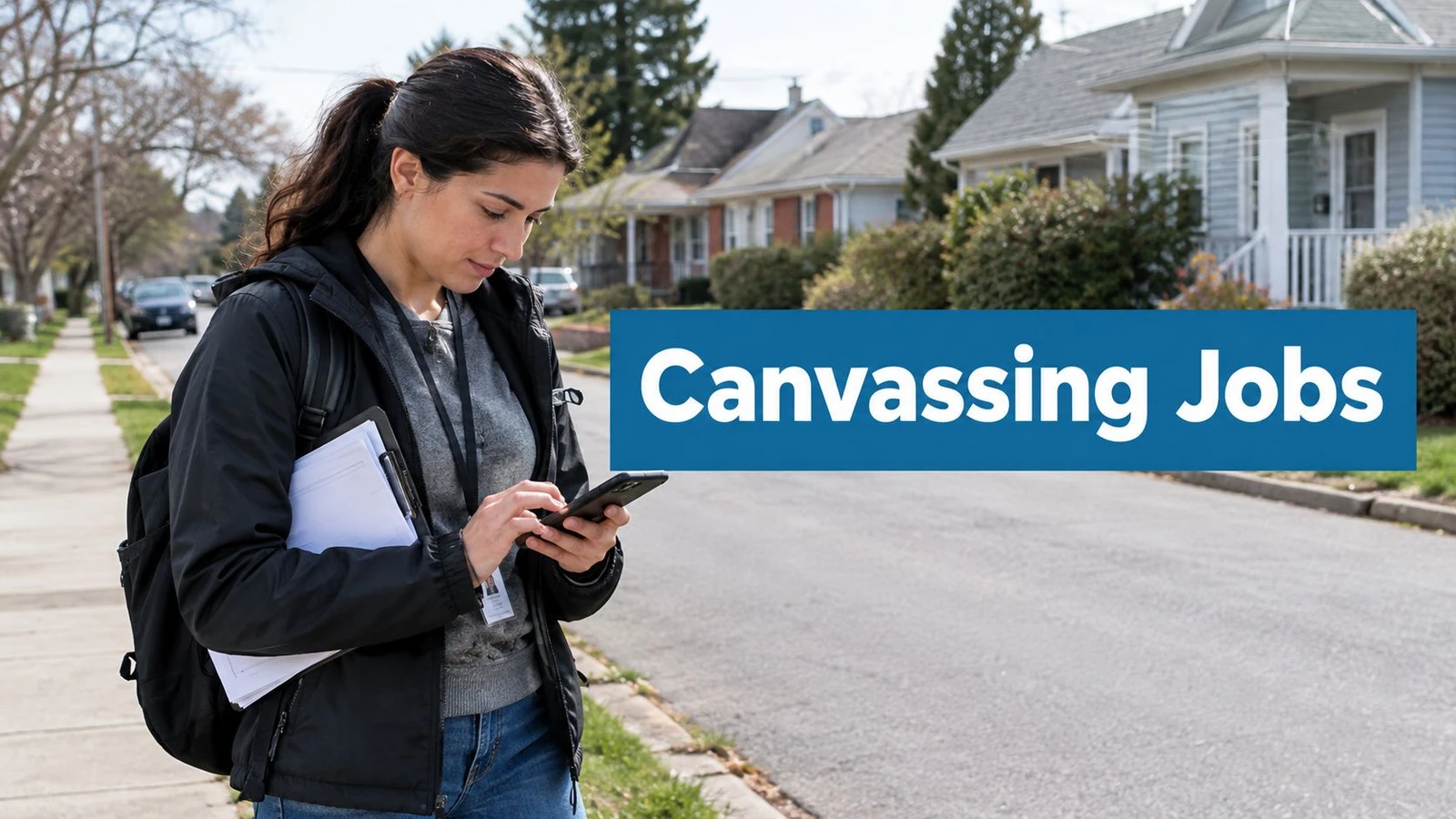
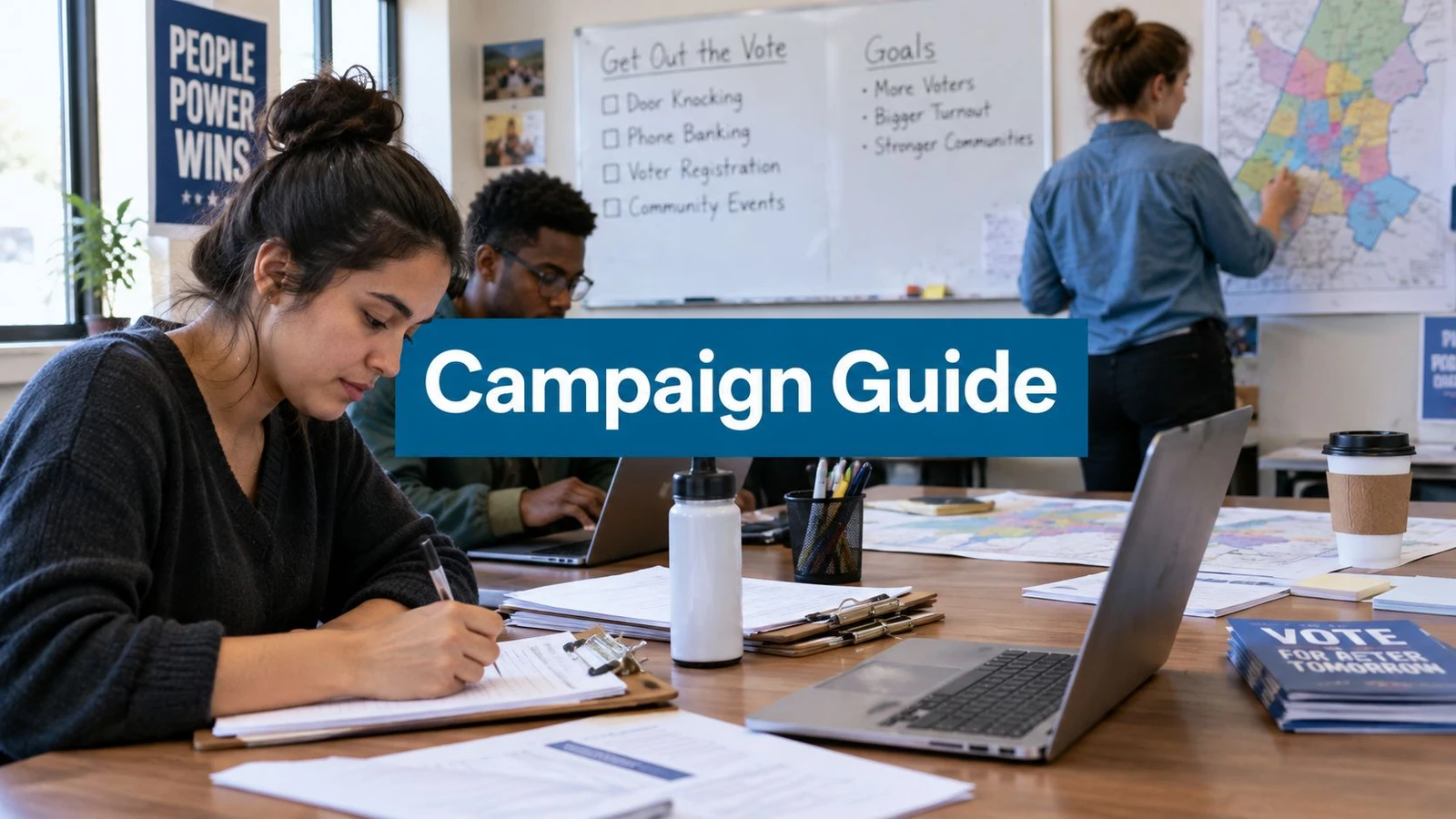
Political organization employment peaks at around 23,724 jobs in October in congressional-election years and about 22,367 in October in presidential-election years, compared with roughly 7,300 jobs in non-election years. That’s the rhythm behind campaign life, and it’s why the people who keep a field operation moving often feel like they’re living three jobs in one.
The first week on a campaign can feel like controlled chaos. Phones ring in a borrowed office, walk packets are still being adjusted, and the schedule changes because a volunteer group runs late, a candidate adds a stop, or the weather ruins an outdoor event.
The Reality of Life on the Campaign Trail
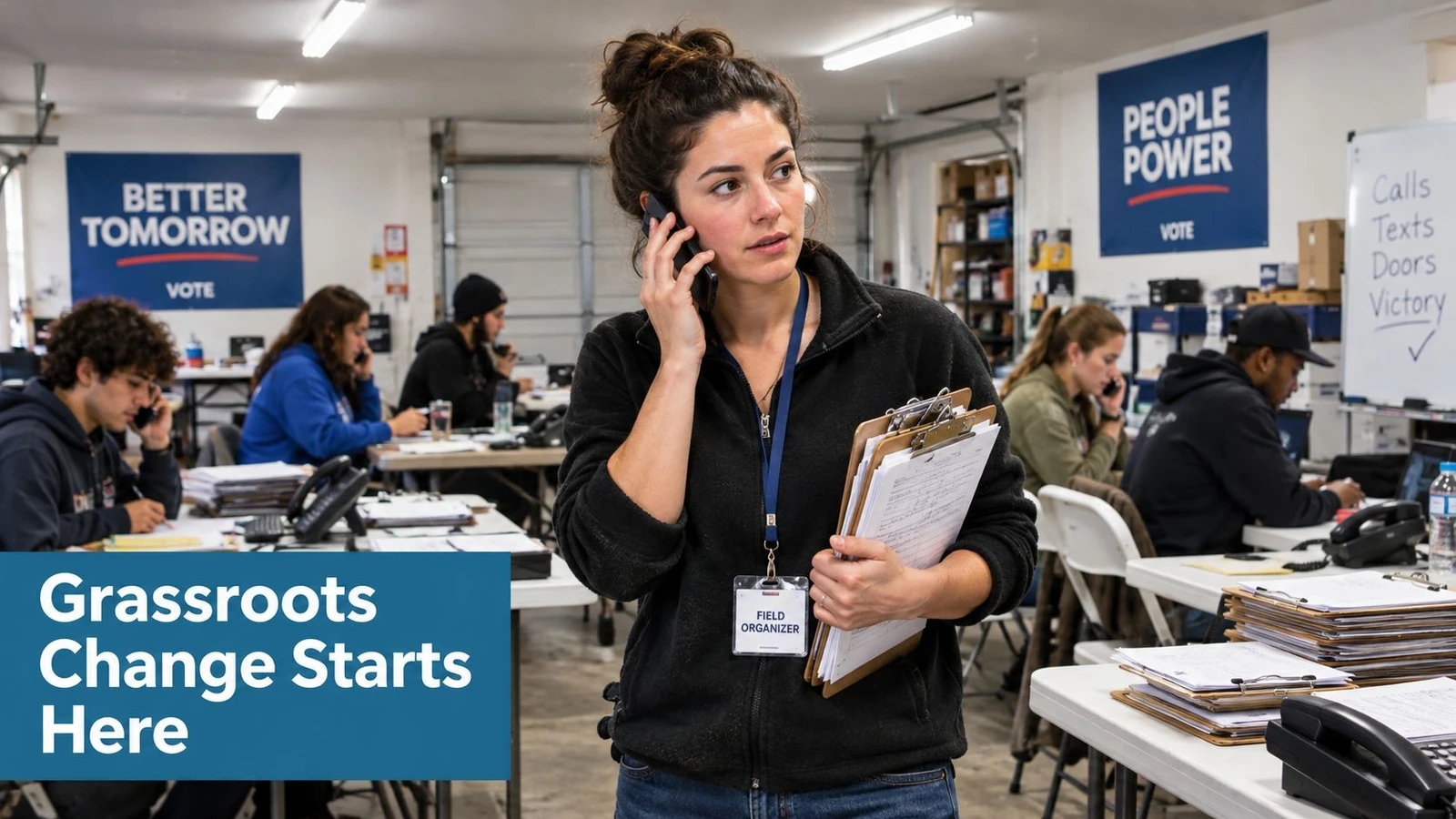
A field organizer’s day usually starts before the office is fully awake and ends after everyone else has stopped replying. A converted garage, a storefront room, or a cramped shared office can become command central, with clipboards, laptops, chargers, coffee cups, and a whiteboard covered in names, neighborhoods, and last-minute changes. The work is part logistics, part people management, part improvisation.
What the day actually looks like
The morning often starts with a call sheet, a volunteer list, or a stack of walk packets that already need revision. By afternoon, someone is chasing a no-show, updating a script, or confirming that a precinct captain has enough doors for the evening shift. By night, the team is back at the office comparing what got done against what was planned, then resetting for the next push.
Practical rule: campaign work rewards people who can stay calm while five small problems happen at once.
The pace is intense because the stakes are real and the timeline is fixed. A campaign can’t wait for ideal conditions, and the field team can’t assume tomorrow will be quieter. That’s why people who do well in this environment tend to be organized, direct, and comfortable making decisions with imperfect information.
For remote coordination, travel-heavy roles, or off-site work blocks between event days, it helps to understand how campaign professionals keep routines stable while moving around. A practical resource on that side of the lifestyle is live the remote work lifestyle, especially for people who need to stay productive while the calendar keeps shifting.
The best part of the job is also the hardest to explain. Teams build a strange kind of trust very quickly, because everyone sees how much hinges on ordinary tasks done well. A missed call, a sloppy list, or a confusing handoff can ripple through the whole operation.
Understanding the Seasonal Nature of Campaign Work
Campaign hiring follows the election calendar, not a normal business cycle. U.S. Bureau of Labor Statistics data show political organizations averaged about 7,300 jobs in years without national elections from 2001 through 2019, compared with roughly 11,400 in congressional-election years and 12,600 in years with both congressional and presidential elections. Employment usually peaks in October, then drops quickly after voting ends. BLS data on political organizations
Why the spike happens
The surge is not just a hiring choice. Campaigns compress field operations, communications, data work, admin support, and volunteer management into a short stretch when every day carries weight. Late summer and fall demand more bodies, more routes, more calls, and more follow-up, so staffing has to expand fast.
The monthly pattern is even tighter than the yearly one. In the 2001 to 2019 series, presidential-election-year employment ranged from 7,825 in December to 22,367 in October, while congressional-election-year employment ranged from 6,607 in January to 23,724 in October 2018. The October peak matters operationally because turf cutting, launch planning, and volunteer training have to be far enough along to support the final push. Earlier BLS data also show the drop after Election Day, with political-organization employment falling from 20,207 in October 2008 to 8,177 by December.
What that means for a campaign job seeker
Anyone thinking about working for a political campaign should plan for short ramps, fast onboarding, and the possibility that a role shrinks after Election Day. That applies to field staff, canvass leads, schedulers, organizers, and data help. Campaign work often looks more like seasonal employment than a year-round staff job.
Career reality: good campaign workers plan for the off-cycle before the election ends.
Ask how the team handles retention, transition, and the next step after the cycle finishes. A strong campaign still needs continuity in training, list management, and volunteer records, because next year’s program usually starts with this year’s file.
Key Roles and Responsibilities in a Campaign Team
A campaign is usually held together by a handful of people who carry overlapping responsibilities. The field director manages ground operations, the canvass captain keeps a shift moving, the data analyst checks what the numbers are saying, and the communications lead makes sure the public-facing message doesn’t drift away from the field plan. No role lives in isolation, because the field team depends on message, data, and volunteer flow at the same time.
The core jobs that keep field work moving
Field Director. This person sets the daily and weekly ground-game priorities, assigns turf, monitors turnout goals, and solves problems before they spread. Strong field directors know how to balance ambition with what volunteers can realistically complete.
Canvass Captain. This role sits close to the ground. Captains brief volunteers, handle route questions, check quality, and make sure contact logs are usable when the shift ends.
Data Analyst. Good data work isn’t abstract. It means list quality, accurate tagging, clean handoffs, and making sure the team can act on what’s coming back from doors and phones.
Communications Lead. Field and communications need each other. If the script, literature, or message is muddy, the field team spends the day fixing confusion instead of building support.
Volunteer Coordinator. This job is often underestimated. Volunteer retention depends on clear instructions, fast replies, and making the first shift feel doable rather than intimidating.
Here’s the part new hires miss: campaigns reward people who can work across categories. The organizer who understands data gets better routes. The comms person who understands canvassing writes better scripts. The volunteer lead who knows timing and geography avoids useless scheduling.
Good campaigns don’t let roles become silos. They let people specialize without becoming disconnected.
For a deeper breakdown of what field organizers handle day to day, this internal guide is useful: https://doornoc.com/blog/field-organizer-roles-and-responsibilities-what-they-actually-do-in-2026
The Science and Strategy of Canvassing
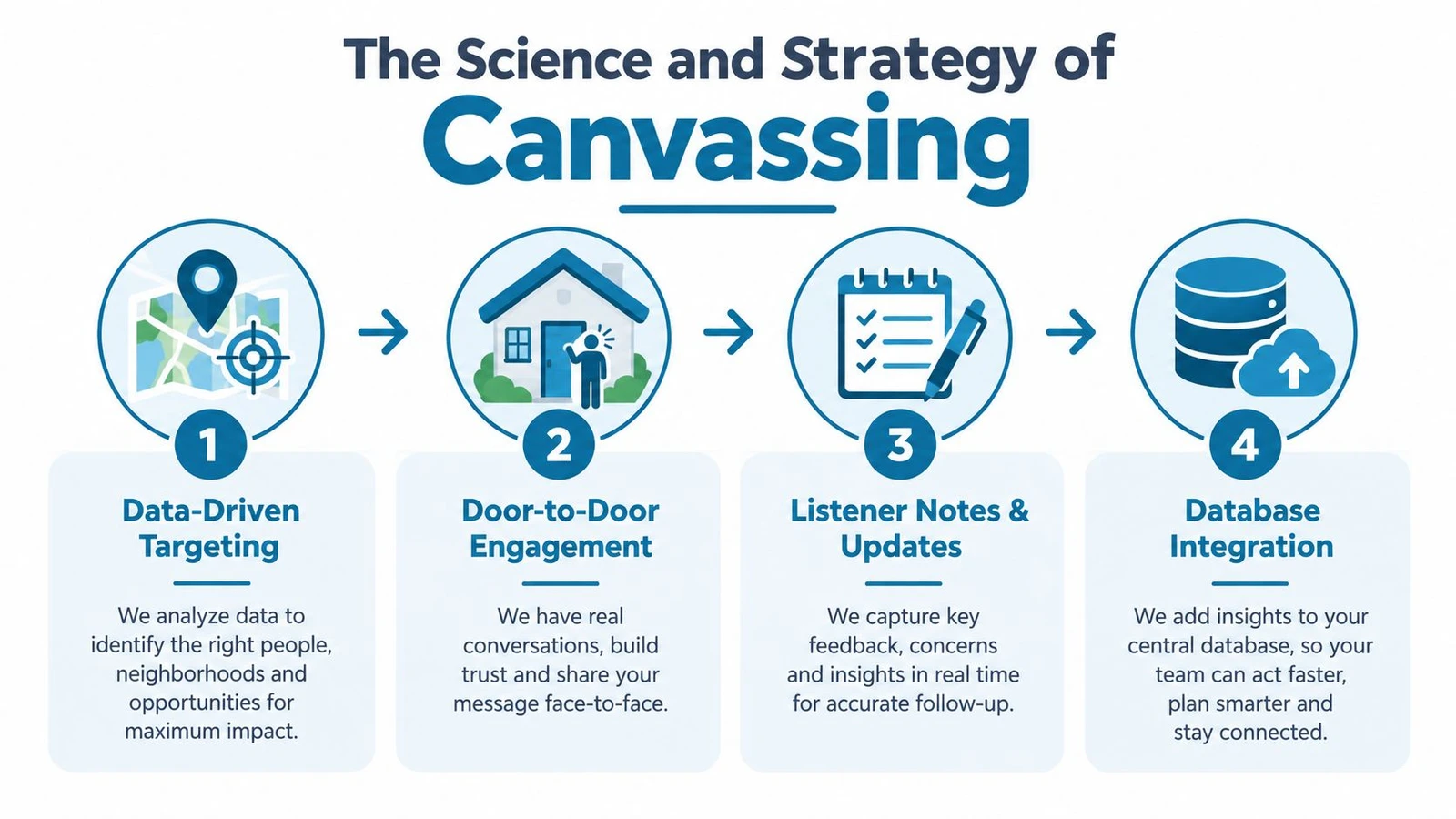
Door-to-door work matters because face-to-face contact changes turnout in ways campaign teams can measure. A landmark field experiment and later synthesis found that personal canvassing raised voter turnout by about 6 percentage points in the experiment and 8.7% in the synthesis, while direct mail had a far smaller effect and phone calls showed no clear gain (PNAS field experiment summary).
Why a door knock is not just a door knock
The value is not that every conversation flips a voter. The value is that direct contact gives a campaign something it can track, improve, and repeat. Good field teams care about walk-list quality, contact logging, route design, and follow-up because those details turn limited volunteer hours into usable voter contact.
Canvassing works best as a mobilization tactic. A New Haven experiment found that personal canvassing increased turnout by about 6 percentage points, with somewhat larger effects among unaffiliated voters, and later analysis of 11 field experiments found that canvassing mainly moved people who were already near the line of voting (New Haven field experiment). Targeting matters as much as effort.
For field planning, the practical questions are simple. Which voters should be contacted, when, and by whom? Teams that answer those questions well usually prioritize likely supporters, time contacts close to the election, and record outcomes in a way that can be checked later.
If a campaign is still using manual routing and follow-up, the field operation slows fast. A step-by-step guide to how to canvass for a political campaign helps, but the work still depends on disciplined walk prep, clean data, and consistent logging. Some campaigns also use cold callers for phone-based outreach, yet the same rule applies. The contact list, the script, and the notes have to be clean or the effort leaks away.
What good canvassing systems include
- Targeting that matches the goal. Some doors are for persuasion, others for turnout, and the wrong mix wastes volunteer time.
- Routes volunteers can finish. Overstuffed turf creates bad data and frustrated canvassers.
- Notes that get used. If the script reveals a concern, that note needs to reach the next action step.
- A clean handoff back to the voter file. If results disappear into a spreadsheet nobody reads, the field day was partly wasted.
Paid Staff vs Volunteers, Compensation and Commitment
Campaign work looks different depending on whether someone is paid or volunteering, and the difference is bigger than just a paycheck. A 2025 survey of 246 political professionals found that 49% were full-time employees, 17% were freelancers or consultants, and 17% were unemployed but seeking work. The same survey found that 43% reported no benefits, while only 49% had health insurance, 41% had retirement contributions, and 44% had paid time off (2025 political professionals survey).
What paid work gives, and what it takes
Paid staff usually get structure, direct authority, and clearer accountability. They’re expected to solve problems quickly and keep the machine running, even when the day gets messy. The trade-off is that campaign work often comes with unstable continuity, especially when the cycle ends.
Volunteers are different. They bring flexibility, local credibility, and mission energy, but they also need training, scheduling, and constant reinforcement. A volunteer who feels ignored disappears. A paid organizer can usually absorb more friction, but only if the campaign respects the limits of endurance.
The question isn’t which track is better. It’s which one matches the person’s life, risk tolerance, and career stage. Someone who needs stable benefits and predictable rent money should read campaign offers very differently from someone trying to break into politics fast or build a network through field experience.
What to check before saying yes
- Status clarity. The offer should make it obvious whether the role is staff, consultant, fellow, or volunteer.
- Benefits reality. Health coverage, retirement, and paid time off matter more than campaign talk usually admits.
- Off-cycle plan. A good campaign worker thinks about what happens when the race ends.
- Reporting line. Ambiguity about who approves work leads to confusion on every shift.
For teams managing volunteer programs at scale, this internal guide is relevant: https://doornoc.com/blog/campaign-volunteer-management-complete-2026-guide
The practical lesson is simple. A campaign can be a great place to learn quickly, but it should never be mistaken for a low-risk job. The mission may be public, yet the employment structure is often closer to contract or seasonal work than to conventional staff life.
Ensuring Safety and Sustainability in the Field
Scale can hide problems if no one is watching the human side of the work. A 2025 municipal campaign reported more than 104,000 volunteers and over three million door knocks, which shows how large field programs can get when they’re running at full speed (2025 municipal field survey/report). That kind of scale makes safety, check-ins, and feedback systems essential.
What keeps field teams from burning out
The biggest mistake is assuming volunteers can absorb chaos because they care about the cause. They still need training, realistic routes, clear escalation paths, and managers who respond quickly when a canvasser reports harassment, a bad neighborhood situation, or a route that doesn’t match what was assigned. A campaign that ignores those basics loses morale and data quality at the same time.
A safety system has to include more than emergency contacts. It should include pairing newer volunteers with experienced leads, sending regular check-ins, documenting incidents, and making sure people can pause without being treated like they failed. Weather, connectivity, and accessibility issues also need contingency plans, because field work breaks down quickly when the operation assumes ideal conditions.
For worker-safety frameworks that translate well to lone or partially supervised field assignments, a useful reference is the 3rd-i lone worker safety guide. The practical lesson is that distributed campaign work has to protect people as carefully as it tracks doors.
If a team only measures doors knocked, it misses the warning signs that volunteers are slipping away.
The strongest field programs treat feedback like operational data. When volunteers say a route felt unsafe, confusing, or too long, that isn’t a side note. It’s a signal that the next turnout push will be weaker unless the plan changes.
How to Get Started and Succeed in Campaign Work
A field manager hiring for a live campaign is rarely looking for a perfect résumé. They are looking for signs that you can keep pace, stay organized, and handle people without creating extra work. Scheduling, coordination, writing, customer service, event support, and data handling all translate well because campaigns run on speed and clean follow-through.
How applicants usually stand out
Tailor the resume to field reality. Put the strongest weight on follow-through, problem solving, and people management. A campaign manager will usually trust someone who can organize ten volunteers more than someone who only lists general political enthusiasm.
Network with purpose. Campaign hiring still runs on relationships, so referrals, known volunteers, and direct introductions matter. A short message that says what role you want and what you can do usually works better than a long pitch.
Start where the team needs help. Volunteer roles are often the fastest way in, especially for people who want to learn the workflow before asking for a paid title.
Once you are inside, success comes from being useful under pressure. Answer messages quickly. Show up early. Learn how the team logs data. Do not pretend to know things you do not know yet. Campaigns remember the people who solve problems without turning every issue into a performance.
What experienced staff learn fast
- Ask for feedback early. It is easier to correct a bad habit in week one than in week six.
- Learn the tracking system. If contacts, shifts, and notes are not logged correctly, the rest of the team pays for it.
- Stay adaptable. Schedules change, turf changes, and priorities can shift with little warning.
- Respect the off-cycle. Campaign work is intense, but strong staff use quieter periods to build the next opportunity.
Field work also runs better when the operation matches the reality on the ground. That means route planning, offline data capture, live progress tracking, and voter-list workflows that do not break when volunteers are moving fast. For teams that need that kind of structure, doornoc is built for campaign operations like these.
Visit doornoc to see how it fits field operations, volunteer management, and voter-contact planning.
Looking for a tool to run this? doornoc’s canvassing software bundles voter data, automatic turf cutting, the mobile app, and live reporting in one platform.