Key Takeaways
- Florida’s unique demographic composition requires tailored messaging across six distinct regional markets, from Cuban-American communities in Miami-Dade to retirement populations in Southwest Florida.
- The I-4 corridor counties (Hillsborough, Orange, Osceola, Polk, Seminole) contain 32% of Florida’s swing voters and determine statewide election outcomes in 2026.
- Successful Florida campaigns layer at least three contact methods — direct mail, digital advertising, and phone banking — with messages customized by language preference and cultural background.
- Florida’s strict campaign finance laws require real-time compliance monitoring, with violations triggering automatic fines starting at $500 per occurrence in 2026.
Best practices for Florida voter outreach in 2026 require understanding the Sunshine State’s unique political landscape, where demographic diversity, geographic fragmentation, and swing-state dynamics create both challenges and opportunities for campaigns. Florida’s 14.3 million registered voters span six distinct regional markets, three primary language groups, and voting patterns that shift dramatically across generational and cultural lines.
Why Florida Voter Outreach Demands State-Specific Strategies
Florida is not a monolithic electorate — it’s six different states electorally. A campaign message that resonates in Tallahassee’s conservative Panhandle falls flat in Miami’s Cuban-American enclaves. Retirement communities in Southwest Florida respond to entirely different policy priorities than young professionals in Tampa’s urban core.
The state’s 2024 elections demonstrated this fragmentation clearly: statewide races were decided by margins under 1.5%, yet individual counties showed double-digit swings in opposite directions. Miami-Dade shifted 8 points toward Republicans while Duval County moved 6 points Democratic. This geographic volatility means generic national messaging produces inconsistent results.
Florida’s demographic composition creates additional complexity. The state contains the nation’s third-largest Hispanic population (5.7 million), but Hispanic voters here don’t form a cohesive bloc. Cuban-Americans in Miami-Dade, Puerto Ricans in Central Florida, and Venezuelan immigrants in South Florida respond to different cultural touchpoints and policy priorities.
Successful Florida campaigns in 2026 recognize these distinctions and build outreach strategies around micro-targeted messaging, culturally competent communication, and data-driven geographic prioritization. Learn about MailVotes to access the voter segmentation tools that make this precision targeting possible.
Understanding Florida’s Six Regional Electoral Markets
Effective Florida voter outreach starts with recognizing the state’s distinct regional characteristics and tailoring your approach accordingly.
South Florida: Multicultural Messaging Requirements
Miami-Dade, Broward, and Palm Beach counties contain 29% of Florida’s registered voters and the state’s most diverse electorate. These three counties require multilingual outreach infrastructure as standard practice, not an afterthought.
Miami-Dade alone has voters who primarily communicate in Spanish (68%), English (24%), and Haitian Creole (8%). But language is just the starting point — cultural messaging matters more. Cuban-American voters respond to messaging emphasizing economic opportunity and anti-socialism themes, while Venezuelan voters prioritize democratic governance and regional stability issues.
Successful South Florida campaigns employ native speakers who understand cultural nuances. A direct mail piece targeting Cuban-American voters in Hialeah should reference different cultural touchpoints than materials for Puerto Rican voters in Kissimmee, even when both are in Spanish.
Broward and Palm Beach counties show different dynamics. Broward’s electorate skews younger and more diverse, with significant Caribbean immigrant populations. Palm Beach contains both wealthy coastal enclaves and working-class inland communities, requiring segmented messaging by ZIP code.
Central Florida’s I-4 Corridor: The Swing State Within the Swing State
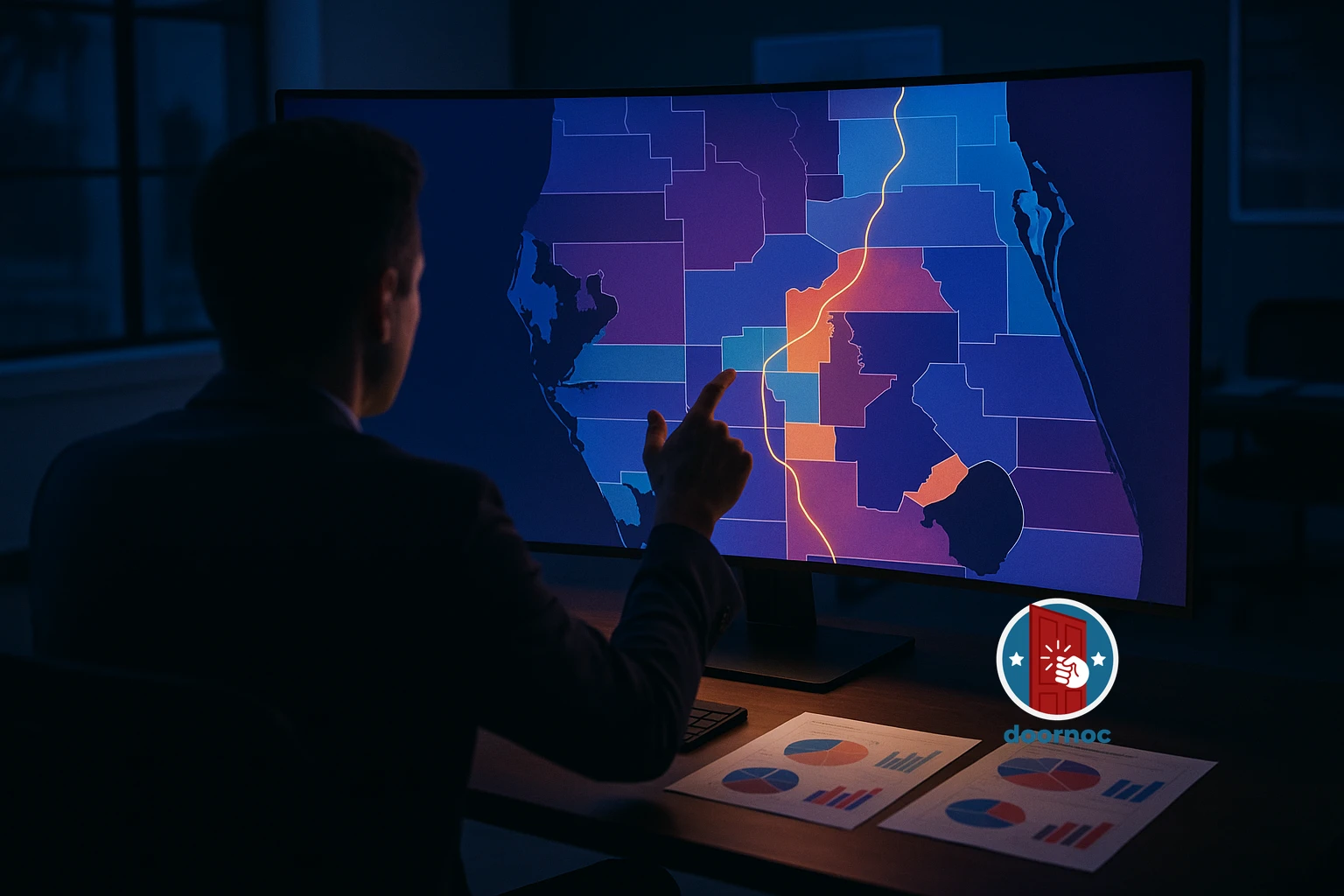
The I-4 corridor — stretching from Tampa through Orlando to Daytona Beach — determines Florida’s statewide election outcomes. This region contains 32% of Florida’s swing voters and includes the state’s most competitive counties.
Hillsborough County (Tampa) epitomizes I-4 dynamics. The county voted for the winning presidential candidate in every election from 1928 to 2020, making it Florida’s ultimate bellwether. Suburban precincts around Tampa show party registration margins under 3%, with voters who split tickets regularly.
Orange and Seminole counties (Orlando metro) have trended Democratic in recent cycles due to population growth from Puerto Rican migration and young professionals. However, suburban areas remain competitive, particularly in precincts with high homeownership rates and families with school-age children.
Polk County represents I-4’s conservative anchor, with rural areas and small towns balancing Orlando’s urban influence. Successful I-4 campaigns recognize these internal variations and avoid treating the corridor as homogeneous.
Your I-4 strategy should prioritize direct voter contact in swing precincts. How to Target Swing Voters with Direct Mail: Complete Guide provides specific tactics for identifying and reaching these critical voters.
Southwest Florida: Retirement Community Engagement
Lee, Collier, and Charlotte counties contain Florida’s highest concentration of retirement communities and voters over 65. This demographic votes at rates exceeding 80% in general elections, making them high-value targets.
Retirement community outreach requires understanding the unique information consumption patterns of older voters. They respond strongly to direct mail (84% open rate for political mail among voters 65+), local newspaper advertising, and community meetings. Digital outreach works but requires different platforms — Facebook rather than Instagram, email rather than SMS.
Messaging should emphasize stability, healthcare policy, and property tax issues. These voters are particularly responsive to candidate biography and experience credentials. They want detailed policy positions, not soundbites.
Many Southwest Florida voters are recent transplants from Midwestern and Northeastern states, bringing diverse political backgrounds. Don’t assume party registration reflects voting behavior — many registered Republicans in this region are moderate suburbanites who split tickets based on candidate quality.
North Florida and the Panhandle: Conservative Base Mobilization
The Panhandle and North Florida counties (Jacksonville west to Pensacola) represent Florida’s most conservative region, with Republican registration advantages exceeding 15 points in many counties.
Campaign strategy here focuses on base mobilization rather than persuasion. Your goal is maximizing turnout among registered supporters, not converting swing voters. This requires different tactics: peer-to-peer contact through churches and community organizations, early vote mobilization, and transportation assistance for Election Day.
Duval County (Jacksonville) is the exception — a competitive urban county that swung Democratic in 2024 but remains contestable. Suburban Jacksonville precincts require the same swing-voter targeting used in the I-4 corridor.
Messaging in North Florida should emphasize economic development, military and veteran issues (given the region’s large military presence), and cultural conservatism. Local endorsements from sheriffs, business leaders, and pastors carry significant weight.
The Space Coast and Treasure Coast: Suburban Swing Territory
Brevard, Indian River, St. Lucie, and Martin counties along Florida’s east coast show moderate political leanings with significant swing voter populations. These counties contain suburban communities, small cities, and retirement areas.
Brevard County’s aerospace industry creates a highly educated electorate concerned with technology policy, space exploration funding, and economic development. Messaging should emphasize innovation, education quality, and infrastructure investment.
The Treasure Coast counties (Indian River, St. Lucie, Martin) have more traditional retirement populations mixed with working-class communities. Split your outreach between retirement-focused messaging in coastal areas and economic opportunity themes in inland precincts.
The Florida Keys and Rural Counties: Localized Micro-Targeting
Florida’s smaller counties and the Keys require hyper-local approaches. These communities are small enough that personal relationships and local reputation matter more than advertising budgets.
In rural counties like Glades, Dixie, and Liberty, campaigns should prioritize attendance at community events, local newspaper coverage, and endorsements from respected community figures. Direct voter contact through door-knocking and phone banking produces better results than mass media.
The Keys have unique political culture emphasizing environmental protection, tourism economy concerns, and fierce independence. Campaign messaging should acknowledge these local priorities rather than defaulting to statewide talking points.
Demographic Targeting Strategies for Florida’s Diverse Electorate
Florida’s demographic complexity requires sophisticated voter segmentation beyond simple party registration. How to Segment Voter Data Effectively: Advanced Targeting Strategies provides the framework for this analysis.
Age-Based Segmentation
Florida’s age distribution creates distinct voter segments with different outreach requirements:
Voters 65+ (28% of electorate): Highest turnout rates, most responsive to direct mail and traditional media. Prioritize healthcare, Social Security, and property tax messaging. Use larger fonts in printed materials and ensure digital content is mobile-friendly with high contrast.
Voters 45-64 (31% of electorate): Split between traditional and digital media consumption. Emphasize economic security, education quality, and retirement planning. This cohort responds well to email campaigns and Facebook advertising combined with direct mail.
Voters 30-44 (24% of electorate): Primarily digital media consumers, concerned with career advancement, housing affordability, and childcare costs. Use Instagram, targeted digital advertising, and SMS outreach. Keep messaging concise and mobile-optimized.
Voters 18-29 (17% of electorate): Lowest turnout rates but growing in influence. Require peer-to-peer outreach, social media engagement, and campus-based organizing. Messaging should emphasize climate policy, student debt, and economic opportunity.
Cultural and Linguistic Targeting
Florida’s multicultural composition demands culturally competent outreach:
Cuban-American voters: Concentrated in Miami-Dade, responsive to messaging on economic freedom, anti-authoritarianism, and Latin American policy. Employ Spanish-language outreach with cultural references specific to Cuban experience.
Puerto Rican voters: Growing population in Central Florida (Orange, Osceola, Polk counties). Emphasize disaster recovery support, economic development, and healthcare access. Many are bilingual but prefer Spanish for political communication.
Venezuelan and Colombian voters: Rapidly growing in South Florida. Prioritize democratic governance, regional stability, and immigration policy messaging. These communities are politically diverse — avoid assumptions based on national origin.
Haitian-American voters: Significant presence in Broward and Miami-Dade. Require Haitian Creole language materials and culturally specific messaging on immigration, economic opportunity, and community development.
Non-Hispanic white voters: Diverse subgroups including Southern natives, Midwestern transplants, and Northeastern retirees. Segment by geography and age rather than treating as monolithic.
African-American voters: Concentrated in urban areas (Jacksonville, Tampa, Miami, Orlando) and North Florida. Prioritize economic justice, criminal justice reform, and healthcare access. Church-based outreach and community organization partnerships are essential.
Voting History Segmentation
Florida’s voter file includes participation history for every election since 2000, enabling precise targeting by voting propensity. How to Segment Voters by Voting History for Maximum Impact details this methodology.
Super voters (vote in 80%+ of elections): Require minimal persuasion but benefit from early vote mobilization and polling location information. Focus resources on ensuring they receive mail ballots if requested.
Regular voters (vote in 50-79% of elections): Your persuasion targets. These voters participate in general elections but skip some primaries. Invest in multiple contact attempts with substantive policy messaging.
Occasional voters (vote in 20-49% of elections): Require mobilization plus persuasion. Emphasize election importance and provide voting logistics support. These voters often need reminders about registration deadlines and polling locations.
Rare voters (vote in under 20% of elections): Low ROI for most campaigns. Only target if you have surplus resources or if they fit high-value demographic profiles (e.g., young voters in competitive districts).
Multi-Channel Outreach Tactics for Maximum Florida Campaign Impact
Successful Florida campaigns layer multiple contact methods to reach voters through their preferred communication channels.
Direct Mail: Florida’s Most Effective Outreach Channel
Direct mail remains the highest-performing outreach method in Florida, with 72% of voters reporting they read political mail they receive. Florida’s older demographic skew and high homeownership rates (65%) make mail particularly effective.
Best practices for Florida direct mail:
-
Timing: Mail should arrive 7-10 days before early voting begins and again 3-5 days before Election Day. Florida’s 10-day early voting period means you need earlier deployment than many states.
-
Frequency: Plan for 3-5 mail pieces per targeted household in competitive races. Higher frequency works in Florida because voters expect robust political mail.
-
Personalization: Use variable data printing to customize messages by recipient demographics, voting history, and geographic location. A piece targeting a Cuban-American voter in Hialeah should differ from one targeting a retiree in Naples, even if both are registered Republicans.
-
Bilingual materials: In South Florida counties, produce separate Spanish and English versions rather than bilingual pieces. This allows full cultural customization rather than simple translation.
-
Format: Oversized postcards (6x11) outperform standard letters in Florida, with 23% higher read rates. Use high-quality photography and clear, large fonts.
To build your voter list for direct mail campaigns, use voter file data filtered by your target demographics, voting history, and geographic parameters.
Digital Advertising: Precision Targeting at Scale
Digital advertising allows micro-targeting impossible with traditional media, particularly valuable in Florida’s fragmented media markets.
Facebook and Instagram: Target by ZIP code, age, language preference, and interests. Create separate ad sets for different demographic segments with culturally tailored creative. Spanish-language ads should use native speakers and culturally appropriate imagery.
Google Search: Bid on issue-specific keywords relevant to your campaign themes. “Florida property insurance reform” reaches voters concerned about that issue regardless of party registration.
YouTube: Pre-roll video ads targeted by geography and demographics. Particularly effective for reaching voters 45-65 who consume video content but may not watch traditional TV.
Programmatic display: Target voters on news sites and other web properties based on their browsing behavior and demographic data. Use geofencing around early voting locations to reach voters during the voting period.
Connected TV: Growing channel for reaching cord-cutters, particularly younger voters. Target by household demographics and streaming behavior.
Phone Banking: Personal Contact at Scale
Phone outreach remains effective in Florida despite declining answer rates. Live calls average 18% contact rates, while SMS achieves 32% open rates.
Live phone banking best practices:
- Call between 5:30-8:00 PM on weekdays and 10:00 AM-6:00 PM on weekends for highest contact rates
- Use local area codes for caller ID to improve answer rates
- Employ bilingual callers for Spanish-speaking households
- Keep scripts conversational and brief (under 90 seconds)
- Focus on voter ID (identifying supporters) and turnout rather than lengthy persuasion
SMS outreach:
- Limit to 2-3 messages per voter across the entire campaign
- Send during business hours (10 AM-7 PM) to avoid annoyance
- Include opt-out language and honor opt-outs immediately
- Use peer-to-peer texting platforms for compliance with carrier regulations
- Personalize with voter’s first name and specific voting information
Canvassing: High-Impact Personal Contact
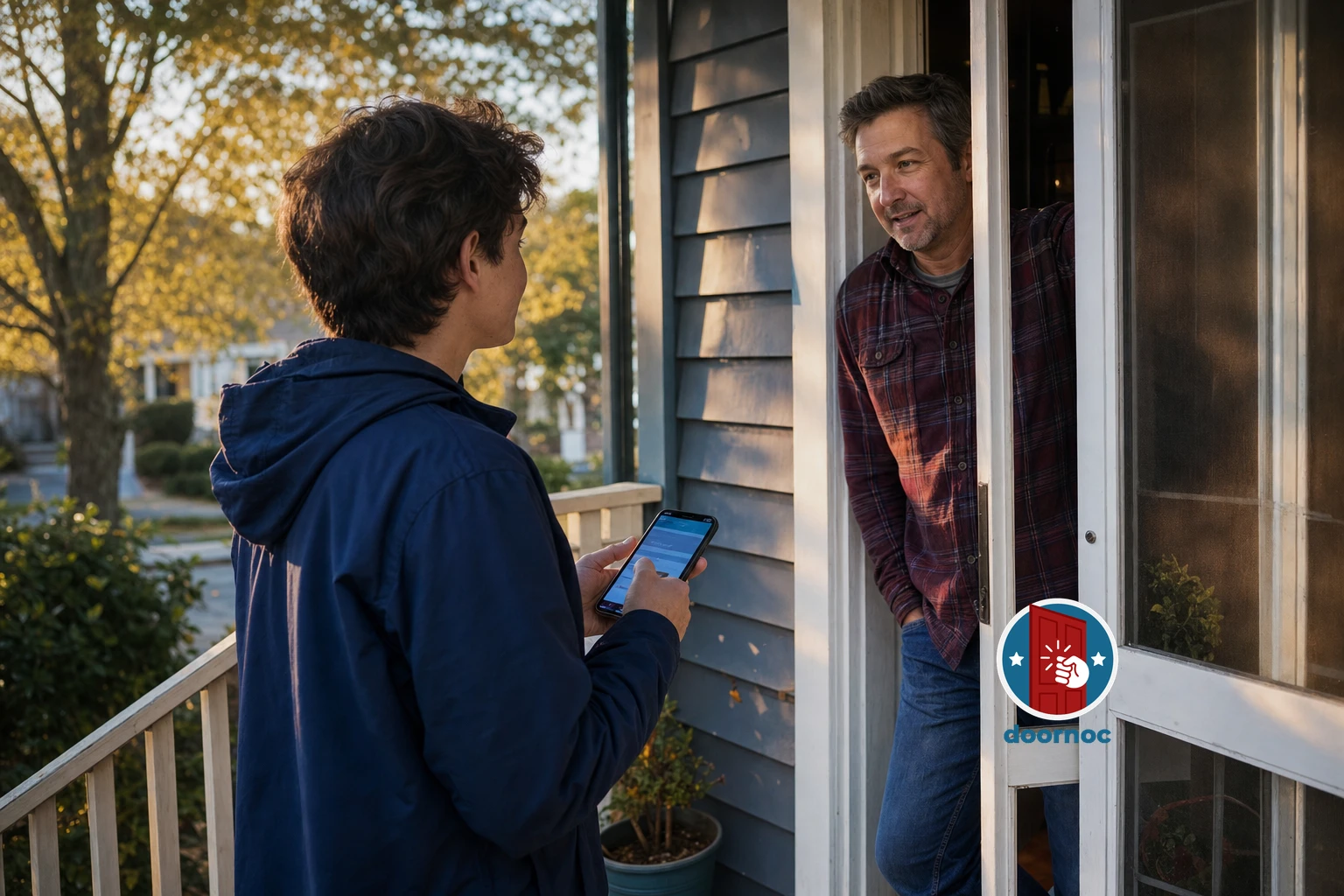
Door-to-door canvassing produces the highest persuasion rates (8-10% swing among contacted voters) but requires significant volunteer infrastructure.
Florida’s climate makes canvassing challenging during summer months (June-August). Schedule door-knocking for early morning (8-10 AM) or evening (5-7 PM) to avoid midday heat. Provide volunteers with water, sunscreen, and heat safety training.
Prioritize canvassing in high-density areas where volunteers can contact more voters per hour. Apartment complexes, townhome communities, and suburban subdivisions offer better efficiency than rural areas with widely spaced homes.
Use walk lists that include household voting history, party registration, and demographic data. This allows volunteers to tailor conversations and skip households unlikely to be receptive.
Community Events and Town Halls
Florida voters expect candidates to attend community events, particularly in smaller counties and suburban areas. Prioritize:
- County fairs and festivals
- Chamber of Commerce meetings
- Homeowners association gatherings
- Church events (with appropriate sensitivity to religious neutrality)
- Veterans organization meetings
- Retirement community social events
Bring voter registration materials, campaign literature, and sign-up sheets for volunteers. Follow up with attendees through email or mail within 48 hours.
Florida Campaign Compliance and Legal Requirements
Florida’s campaign finance and election laws include specific requirements that campaigns must follow to avoid penalties.
 Flat-lay overhead shot of bilingual English and Spanish direct mail pieces side by side on a Miami kitchen table with morning light and domestic details.
Disclaimer Requirements
All political advertisements, including direct mail, digital ads, and printed materials, must include a paid disclaimer identifying who paid for the communication. Florida law specifies exact wording and formatting:
For candidate campaigns: “Political advertisement paid for and approved by [candidate name], [party affiliation], for [office sought]”
For political committees: “Paid political advertisement paid for by [committee name]”
Disclaimers must be in a font size at least half the size of the largest text in the advertisement. Digital ads must include disclaimers visible without clicking or scrolling.
Campaign Finance Reporting
Florida requires electronic filing of campaign finance reports through the Division of Elections online system. Reporting deadlines are strictly enforced with automatic fines for late filing:
- $500 per day for the first 3 days late
- $1,000 per day for days 4-10
- $5,000 per day after 10 days
All expenditures over $100 must be itemized with vendor information, purpose, and date. Contributions over $100 require donor name, address, occupation, and employer.
Voter Contact Restrictions
Florida law prohibits certain voter contact activities:
- No phone calls before 8 AM or after 9 PM
- No unsolicited faxes to residential numbers
- No campaign activities within 150 feet of polling place entrances
- No false or misleading information about voting procedures, polling locations, or candidate positions
Violations can result in civil penalties and, in cases of intentional voter suppression, criminal charges.
Data Privacy and Voter File Use
The Florida voter file is public record, but its use is restricted to election-related purposes. Commercial use or sharing voter data with non-political entities violates state law.
When using voter data platforms, ensure your vendor complies with Florida’s data security requirements. Browse mailing list options that include compliance-certified Florida voter data.
Measuring and Optimizing Your Florida Outreach Campaign
Data-driven optimization separates winning campaigns from those that waste resources on ineffective tactics.
Key Performance Indicators
Track these metrics to evaluate outreach effectiveness:
Voter contact rate: Percentage of targeted voters reached through each channel. Target 60%+ for direct mail, 25%+ for phone, 15%+ for canvassing.
Persuasion rate: Percentage of contacted undecided voters who commit to supporting your candidate. Track separately by outreach method and demographic segment.
Turnout rate: Percentage of identified supporters who actually vote. Monitor daily during early voting to identify supporters who need additional mobilization.
Cost per contact: Total spending divided by voters successfully contacted. Compare across channels to optimize resource allocation.
Cost per vote: Total spending divided by votes received. Ultimate measure of campaign efficiency.
A/B Testing for Message Optimization
Test different messages and creative approaches to identify what resonates with Florida voters:
- Split your mail universe into test groups receiving different creative approaches
- Run parallel digital ad sets with different messaging and compare click-through rates
- Test different phone scripts and track which produces higher persuasion rates
- Compare bilingual vs. Spanish-only materials in Hispanic communities
Allocate 10-15% of your budget to testing early in the campaign, then scale up the winning approaches.
Geographic Performance Analysis
Florida’s county-level voting data allows precise geographic targeting refinement. After each early voting day, analyze turnout by precinct to identify:
- Underperforming areas where your supporters aren’t voting yet
- Overperforming opposition precincts requiring defensive resources
- Swing precincts with high turnout where additional persuasion could shift outcomes
Reallocate canvassing, phone banking, and digital advertising to high-priority precincts based on this analysis. 7 Voter Data Filtering Strategies That Win Campaigns in 2026 explains the geographic micro-targeting methodology.
Voter Modeling and Predictive Analytics
Advanced campaigns use statistical modeling to predict individual voter behavior:
Support score: Probability (0-100) that a voter supports your candidate based on demographics, voting history, and survey responses.
Turnout score: Probability that a voter will participate in the election. Identifies supporters who need mobilization vs. those who vote reliably.
Persuasion score: Likelihood that a voter can be persuaded to switch support. Helps prioritize outreach to movable voters rather than wasting resources on hardened opposition.
These models require significant data and statistical expertise but dramatically improve targeting efficiency. For campaigns without in-house modeling capacity, voter data platforms provide pre-scored files.
Building Your Florida Voter Outreach Plan for 2026
Successful Florida campaigns integrate these best practices into a comprehensive, data-driven outreach strategy:
Phase 1: Foundation (6-9 months before Election Day)
- Acquire and analyze Florida voter file data
- Develop demographic and geographic targeting strategy
- Create culturally tailored messaging for each target segment
- Build volunteer and staff infrastructure in priority counties
- Establish compliance systems for reporting and disclaimers
Phase 2: Early Outreach (4-6 months out)
- Launch digital advertising to build name recognition
- Begin phone banking for voter ID and supporter identification
- Conduct initial direct mail wave to high-propensity voters
- Start community event attendance and town halls
- Test different messages and creative approaches
Phase 3: Persuasion (2-4 months out)
- Scale up direct mail to swing voters with multiple touches
- Intensify digital advertising with A/B tested creative
- Expand phone banking to persuasion targets
- Launch canvassing in priority precincts
- Conduct persuasion surveys to track message effectiveness
Phase 4: Mobilization (final 6 weeks)
- Shift focus from persuasion to turnout
- Mail ballot request reminders to identified supporters
- Early vote mobilization through all channels
- Daily tracking of supporter turnout with targeted follow-up
- Election Day poll monitoring and voter transportation
Florida’s complex electorate rewards campaigns that invest in sophisticated targeting, culturally competent messaging, and multi-channel outreach. The state’s swing-state status means small improvements in efficiency translate directly to electoral victory.
By implementing these best practices for Florida voter outreach, your campaign can navigate the Sunshine State’s demographic diversity, geographic fragmentation, and competitive dynamics to build the winning coalition. Read more articles for additional campaign strategy insights and voter targeting tactics.
Frequently Asked Questions
What are the most effective voter outreach methods in Florida for 2026?
The most effective approach combines direct mail (72% effectiveness in Florida according to 2025 campaign data), bilingual digital advertising, and targeted phone banking. Successful campaigns layer these methods with culturally specific messaging for Florida’s diverse demographic groups, particularly Spanish-language outreach in South Florida and retirement-focused messaging in Southwest coastal counties.
How do you target swing voters in Florida’s I-4 corridor?
Target I-4 corridor swing voters by focusing on suburban precincts in Hillsborough, Orange, and Seminole counties where party registration margins are under 5%. Use voter history data to identify inconsistent voters who participated in 2024 but skipped 2022 midterms, then deploy direct mail emphasizing local issues like property insurance reform and traffic infrastructure rather than national partisan messaging.
What compliance requirements apply to Florida voter outreach in 2026?
Florida requires all political mail to include a paid disclaimer identifying the sponsoring organization, with specific font size minimums. Digital ads must carry disclaimers, and phone banking requires disclosure scripts. The state’s Division of Elections mandates electronic filing of all expenditures over $100 within 10 days, with automated penalties for late submissions starting at $500 per violation.
How important is Spanish-language outreach in Florida campaigns?
Spanish-language outreach is critical, as 21.8% of Florida voters prefer Spanish-language communications. However, messaging must be culturally tailored — Cuban-American voters in Miami-Dade respond differently than Puerto Rican communities in Central Florida. Effective campaigns employ native speakers who understand regional dialects and cultural references rather than using generic translations.
What voter data sources work best for Florida campaign targeting?
The Florida Division of Elections voter file provides the foundation, updated monthly with registration changes and voting history. Supplement this with commercial data appends for demographics, consumer behavior, and contact information. Platforms like MailVotes offer pre-filtered Florida voter lists with advanced segmentation by voting propensity, party affiliation, and geographic micro-targeting down to the precinct level.