Key Takeaways
- A volunteer coordinator political campaign role requires mastering recruitment, training, scheduling, and retention across distributed field teams — with successful coordinators recruiting 150-300% more volunteers than campaigns without dedicated coordination.
- The most effective volunteer coordinators in 2026 use mobile-first platforms and data-driven scheduling to reduce volunteer dropout by 40-60% compared to spreadsheet-based management systems.
- Successful volunteer recruitment strategies combine digital outreach (social media, email, SMS) with community partnerships, yielding 3-5x higher conversion rates than single-channel approaches.
- Modern volunteer coordinators spend 60% of their time on relationship-building and motivation, 25% on logistics and scheduling, and 15% on data management and reporting — not the reverse.
A volunteer coordinator political campaign role is the backbone of successful grassroots field operations in 2026. The volunteer coordinator recruits, trains, schedules, and retains the volunteer teams that knock doors, make phone calls, and drive voter turnout on Election Day. Without effective volunteer coordination, even well-funded campaigns struggle to execute field programs that reach persuadable voters at scale.
Campaigns with dedicated volunteer coordinators recruit 150-300% more active volunteers than those relying on campaign managers or field directors to handle coordination as a secondary responsibility. This complete role guide covers everything you need to know about serving as a volunteer coordinator for political campaigns in 2026, from core responsibilities and required skills to recruitment strategies and technology platforms that maximize volunteer impact.
What Is a Volunteer Coordinator for Political Campaigns?
A volunteer coordinator political campaign professional serves as the central point of contact for all volunteer-related activities across a campaign’s field operation. This role sits at the intersection of recruitment, training, logistics, and relationship management — ensuring that volunteers have meaningful work, clear direction, and the support they need to contribute effectively to campaign goals.
The volunteer coordinator manages the complete volunteer lifecycle: initial outreach and recruitment, onboarding and training, shift scheduling and deployment, ongoing engagement and motivation, and post-campaign recognition. On larger campaigns, volunteer coordinators may specialize by geography (regional volunteer coordinators) or activity type (canvassing coordinator, phone bank coordinator), while smaller campaigns consolidate all volunteer coordination into a single role.
Unlike field organizers who focus on overall voter contact strategy and turf management, volunteer coordinators concentrate specifically on the people executing that strategy. They build systems that transform interested supporters into trained, active volunteers who show up consistently and perform quality voter contact work. This distinction matters: campaigns lose 60-70% of volunteer prospects between initial interest and first shift completion without dedicated coordination infrastructure.
The role has evolved significantly with technology adoption in 2026. Modern volunteer coordinators use mobile-first canvassing platforms to schedule shifts, track volunteer activity, and communicate in real-time — replacing the clipboard-and-spreadsheet systems that dominated campaign coordination through the 2010s. This technological shift has made volunteer coordination more data-driven and measurable, with successful coordinators tracking metrics like recruitment conversion rates, shift completion percentages, and volunteer retention across campaign phases.
Core Responsibilities of a Campaign Volunteer Coordinator
Volunteer Recruitment and Outreach
Volunteer recruitment is the foundation of effective coordination. Volunteer coordinators develop and execute multi-channel recruitment strategies that identify potential volunteers, communicate compelling opportunities, and convert interest into committed action. This involves:
Digital recruitment campaigns — Creating targeted social media advertisements, email sequences, and SMS outreach that reach supporters where they already spend time online. Successful digital recruitment in 2026 uses platform-specific content (short video testimonials for TikTok and Instagram, detailed event information for Facebook, quick asks for Twitter/X) and tracks conversion metrics at each funnel stage.
Community partnership development — Building relationships with civic organizations, labor unions, faith communities, student groups, and affinity organizations that can refer volunteers aligned with campaign values. The most effective volunteer coordinators maintain ongoing relationships with 15-25 community partners who provide consistent volunteer pipelines throughout the campaign cycle.
Peer-to-peer referral programs — Empowering existing volunteers to recruit friends, family, and colleagues through structured referral systems that reward successful recruitment. Campaigns using formal referral programs see 40-50% of new volunteers come through peer recommendations rather than cold outreach.
Event-based recruitment — Hosting volunteer recruitment events, campaign rallies, and community canvasses that provide low-barrier entry points for new volunteers while showcasing campaign energy and momentum.
Successful volunteer coordinators maintain recruitment pipelines that generate 3-5x more volunteer prospects than the campaign needs for immediate deployment, accounting for natural attrition and no-show rates. They track recruitment sources to optimize channel investment and identify which outreach methods yield the highest-quality, most reliable volunteers.
Volunteer Training and Onboarding
Effective training transforms interested supporters into confident, capable volunteers who represent the campaign professionally and execute voter contact work correctly. Volunteer coordinators design and deliver training programs that cover:
Campaign messaging and talking points — Ensuring volunteers can articulate why they support the candidate, respond to common voter questions, and stay on message during voter interactions. This includes role-playing exercises and scenario-based practice that builds volunteer confidence.
Technical skills and tools — Teaching volunteers how to use canvassing apps, phone banking systems, voter databases, and other campaign technology. Modern campaigns provide comprehensive training programs that include hands-on practice with mobile platforms before volunteers conduct their first voter contact.
Best practices and quality standards — Establishing expectations for professional conduct, data quality, safety protocols, and voter interaction guidelines. This includes teaching volunteers how to handle difficult conversations, recognize and report safety concerns, and accurately record voter responses.
Logistical orientation — Explaining where to park, how to check in for shifts, what to bring, who to contact with questions, and other practical details that reduce volunteer anxiety and confusion.
The most effective volunteer coordinators use a “train-the-trainer” model for scaling training capacity, developing experienced volunteers into shift leaders who can onboard and support new volunteers during canvassing sessions. This approach reduces coordinator workload while building volunteer investment and leadership skills.
Campaigns that provide structured training see 50-60% higher volunteer retention rates than those using informal “shadow and learn” approaches. Volunteers who feel prepared and confident are significantly more likely to complete multiple shifts and refer friends to the campaign.
Scheduling and Deployment
Volunteer coordinators manage the complex logistics of matching volunteer availability with campaign needs across multiple locations, time slots, and activity types. This involves:
Shift creation and management — Building canvassing shifts, phone bank sessions, and other volunteer opportunities that align with campaign strategy while accommodating volunteer schedules. Successful coordinators offer diverse shift options (weekday evenings, weekend mornings, flexible start times) that maximize participation across different volunteer demographics.
Volunteer assignment and confirmation — Matching volunteers to appropriate activities based on their skills, experience, location, and preferences, then confirming attendance through automated reminders and personal outreach. Research shows that volunteers who receive confirmation calls 24 hours before their shift are 35-40% more likely to attend than those receiving only email reminders.
Real-time coordination and support — Monitoring volunteer check-ins, responding to questions and concerns during shifts, troubleshooting technology issues, and reallocating resources based on turnout and field conditions. Modern volunteer coordinators use mobile platforms to track volunteer locations and progress in real-time, enabling dynamic deployment adjustments.
Capacity planning and forecasting — Projecting volunteer needs across campaign phases, identifying recruitment gaps, and ensuring adequate volunteer coverage for critical activities like GOTV weekend and Election Day operations.
The shift from spreadsheet-based scheduling to mobile volunteer management platforms has reduced coordinator administrative time by 40-50% in 2026, allowing more focus on relationship-building and volunteer support rather than manual logistics management.
Volunteer Engagement and Retention
Recruiting volunteers is only half the challenge — keeping them engaged and active throughout the campaign requires ongoing relationship management and motivation. Volunteer coordinators implement retention strategies including:
Regular communication and updates — Keeping volunteers informed about campaign progress, upcoming opportunities, and how their work contributes to overall success. Successful coordinators send weekly update emails, share volunteer impact stories, and celebrate milestones that demonstrate momentum.
Recognition and appreciation — Acknowledging volunteer contributions through public recognition, thank-you calls, appreciation events, and leadership opportunities. Campaigns that implement formal recognition programs see 30-40% higher volunteer retention than those relying solely on informal thanks.
Community building and social connection — Creating opportunities for volunteers to connect with each other through pre-canvass gatherings, post-shift debriefs, volunteer social events, and online community spaces. Volunteers who form friendships with other campaign volunteers are 60-70% more likely to remain active through Election Day.
Feedback collection and responsiveness — Soliciting volunteer input on campaign operations, addressing concerns promptly, and demonstrating that volunteer voices matter in campaign decision-making. This includes regular check-ins with active volunteers and exit surveys for those who become inactive.
Progressive engagement and leadership development — Providing pathways for volunteers to take on increased responsibility, from shift leader roles to neighborhood team captain positions. Volunteers who see growth opportunities within the campaign structure are significantly more likely to maintain high activity levels.
The most successful volunteer coordinators in 2026 recognize that volunteer retention is fundamentally about relationship quality, not just operational efficiency. They invest time in knowing volunteers personally, understanding their motivations, and creating experiences that feel meaningful and impactful rather than transactional.
Essential Skills for Volunteer Coordinators
Interpersonal Communication and Relationship Building
Volunteer coordination is fundamentally a people-centered role. The ability to build genuine relationships, communicate clearly across diverse audiences, and motivate volunteers through authentic connection determines coordinator success more than any other factor.
Effective volunteer coordinators excel at active listening — understanding what motivates each volunteer, what concerns or barriers they face, and how the campaign can provide meaningful engagement opportunities aligned with their interests and availability. They adapt communication styles to different volunteer personalities and preferences, recognizing that some volunteers respond best to detailed written instructions while others prefer quick verbal check-ins.
This skill extends to conflict resolution and difficult conversations. Volunteer coordinators regularly navigate interpersonal tensions, address performance issues, and mediate disagreements between volunteers or between volunteers and other campaign staff. The ability to handle these situations with empathy, clarity, and fairness while maintaining volunteer relationships and team cohesion is critical.
Successful coordinators also demonstrate emotional intelligence in managing volunteer expectations and disappointment. When shifts are cancelled due to weather, when volunteers don’t get preferred assignments, or when campaign priorities shift unexpectedly, coordinators must communicate changes clearly while maintaining volunteer trust and engagement.
Organizational Systems and Project Management
Volunteer coordination involves managing hundreds of moving pieces simultaneously: recruitment pipelines, training schedules, shift assignments, volunteer communications, data tracking, and performance monitoring. Coordinators who lack strong organizational systems quickly become overwhelmed as volunteer programs scale.
Effective volunteer coordinators build systematic processes for every aspect of coordination: standardized recruitment workflows, templated training materials, automated scheduling confirmations, and structured data collection protocols. They use project management principles to break complex goals (“recruit 500 GOTV volunteers”) into actionable tasks with clear owners and deadlines.
This includes proactive planning and anticipation of needs. Successful coordinators don’t wait until two days before a major canvass to start recruiting — they work backward from critical dates to build recruitment timelines that account for conversion rates, training requirements, and expected attrition. They maintain backup plans for common challenges like low volunteer turnout, technology failures, or weather disruptions.
The best volunteer coordinators also excel at prioritization and time management. They recognize that not every volunteer email requires an immediate response, that some recruitment channels deliver better ROI than others, and that investing time in relationship-building with high-value volunteers yields greater returns than spreading effort equally across all prospects.
Data Management and Analysis
Modern volunteer coordination is increasingly data-driven. Volunteer coordinators track metrics including recruitment conversion rates, volunteer retention percentages, average shifts per volunteer, no-show rates, and volunteer-driven voter contact numbers. They use this data to identify trends, optimize processes, and demonstrate program impact to campaign leadership.
Successful coordinators in 2026 are comfortable working with volunteer management platforms, CRM systems, and basic data analysis tools. They can generate reports showing volunteer activity by region, identify which recruitment sources produce the most reliable volunteers, and forecast volunteer capacity for upcoming campaign phases.
This analytical capability extends to quality control and performance monitoring. Volunteer coordinators review data collected by volunteers during canvassing and phone banking, identifying patterns that suggest training gaps, data quality issues, or volunteers who need additional support. They use performance metrics not punitively but diagnostically — to improve systems and provide targeted coaching.
The shift to mobile-first platforms has made data management more accessible for volunteer coordinators who may not have technical backgrounds. Platforms like Door Knock provide intuitive dashboards that surface key metrics and trends without requiring complex data manipulation, allowing coordinators to focus on interpretation and action rather than data wrangling.
Adaptability and Problem-Solving
Political campaigns are inherently unpredictable environments. Volunteer coordinators must adapt quickly to changing priorities, unexpected challenges, and resource constraints while maintaining volunteer program effectiveness.
This adaptability shows up in multiple contexts: pivoting recruitment strategies when initial approaches underperform, redesigning training programs based on volunteer feedback, reallocating volunteers from low-priority to high-priority activities as campaign strategy evolves, and improvising solutions when planned systems fail.
Successful volunteer coordinators embrace a problem-solving mindset that views challenges as opportunities for innovation rather than insurmountable obstacles. When 40% of scheduled volunteers don’t show up for a Saturday canvass, effective coordinators quickly mobilize backup volunteers, adjust turf coverage plans, and implement new confirmation protocols to prevent future no-shows — rather than simply accepting high attrition as inevitable.
This skill also involves creative resource maximization. Volunteer coordinators often work with limited budgets and staff support, requiring creative approaches to volunteer recognition (peer shout-outs rather than expensive gifts), training delivery (video modules rather than in-person sessions), and recruitment (community partnerships rather than paid advertising).
Volunteer Recruitment Strategies That Work in 2026
Multi-Channel Digital Recruitment
Successful volunteer recruitment in 2026 requires integrated digital strategies that reach potential volunteers across multiple platforms and touchpoints. Single-channel approaches (email-only or social media-only) consistently underperform compared to coordinated multi-touch campaigns.
Effective digital recruitment sequences typically include:
Social media advertising — Targeted ads on Facebook, Instagram, and increasingly TikTok that reach supporters based on demographic, geographic, and interest-based criteria. Successful ads feature authentic volunteer testimonials, clear calls-to-action, and mobile-optimized sign-up forms that reduce friction between interest and commitment.
Email recruitment campaigns — Segmented email sequences that speak to different supporter motivations (policy-focused volunteers vs. community-focused volunteers vs. competitive-focused volunteers) and provide specific, time-bound opportunities. The most effective email recruitment uses compelling subject lines, personalized content, and easy one-click RSVP options.
SMS outreach — Text message recruitment that reaches supporters on their most-checked communication channel with concise asks and immediate response options. SMS recruitment works particularly well for last-minute volunteer needs and GOTV mobilization, with response rates 3-5x higher than email for time-sensitive requests.
Organic social media engagement — Regular posting of volunteer stories, behind-the-scenes campaign content, and upcoming opportunities that keeps the campaign visible in supporters’ feeds and encourages organic sharing and tagging.
The key to multi-channel success is message consistency with platform-appropriate formatting. The same recruitment opportunity should appear across email, social media, and SMS with coordinated timing and compatible calls-to-action, but adapted to each platform’s content norms and user expectations.
Campaigns using integrated multi-channel recruitment see conversion rates 3-5x higher than single-channel approaches, with the highest performance coming from sequences that combine initial social media exposure, follow-up email with detailed information, and SMS reminder before the volunteer opportunity.
Community Partnership and Coalition Building
While digital recruitment reaches broad audiences efficiently, community partnerships provide access to pre-organized groups of potential volunteers who share common values and social connections. Volunteer coordinators who invest in partnership development create sustainable recruitment pipelines that produce high-quality, committed volunteers.
Effective community partnerships include:
Labor unions and worker organizations — Unions often have existing volunteer mobilization infrastructure and members motivated by labor-related policy issues. Successful coordinators work with union leadership to schedule campaign volunteer opportunities that complement rather than compete with union activities.
Faith communities and religious organizations — Churches, synagogues, mosques, and other faith communities provide access to values-aligned volunteers and often have existing service and outreach cultures that translate well to political volunteering. Coordinators should approach faith partnerships respectfully, understanding each community’s political engagement guidelines and preferences.
Student groups and campus organizations — College and university student groups offer large pools of potential volunteers with flexible schedules, though coordinators must account for academic calendars and exam periods when planning recruitment.
Issue-based advocacy organizations — Environmental groups, reproductive rights organizations, gun violence prevention advocates, and other issue-focused nonprofits can refer volunteers who care deeply about specific policy areas the campaign prioritizes.
Civic and community organizations — Rotary clubs, neighborhood associations, community development corporations, and similar groups connect campaigns with civically-engaged community members.
The most successful partnership approaches involve reciprocity and relationship-building rather than transactional volunteer requests. Volunteer coordinators who attend partner organization events, promote partner causes through campaign channels, and provide partner organizations with campaign access and information build stronger, more productive long-term relationships.
Campaigns that maintain active partnerships with 15-25 community organizations typically see 40-50% of their volunteer base come through partner referrals, with these partnership-sourced volunteers showing higher retention and reliability than volunteers recruited through cold digital outreach.
Peer-to-Peer Referral Programs
Your existing volunteers are your best recruitment asset. Volunteers who recruit friends, family members, and colleagues create stronger volunteer teams with built-in social accountability and support networks. Structured peer-to-peer referral programs systematize and incentivize this organic recruitment process.
Successful referral programs include:
Clear referral asks and messaging — Providing volunteers with specific language, shareable content, and easy referral mechanisms (unique sign-up links, referral cards, social media graphics) that make recruitment simple and low-friction.
Recognition and rewards for recruitment — Acknowledging volunteers who successfully recruit others through public recognition, leadership opportunities, or campaign swag. Some campaigns use friendly competition (“which neighborhood team can recruit the most new volunteers?”) to gamify recruitment.
Buddy system pairing — Automatically pairing new volunteers with the person who recruited them for their first few shifts, creating immediate social connection and accountability.
Recruitment milestones and challenges — Setting team recruitment goals and celebrating when they’re achieved, creating collective momentum and shared purpose around volunteer growth.
The psychological principle underlying successful referral programs is social proof and personal accountability. People are more likely to volunteer when someone they know personally asks them, and they’re more likely to follow through on commitments when someone they know is expecting them to show up.
Campaigns with formal referral programs typically see 40-50% of new volunteer recruitment come through peer referrals rather than campaign-initiated outreach, with referred volunteers showing 30-40% higher retention rates than volunteers recruited through other channels.
Technology and Tools for Volunteer Coordination
Volunteer Management Platforms
The shift from spreadsheet-based coordination to dedicated volunteer management platforms has transformed the volunteer coordinator role in 2026. Modern platforms provide integrated tools for recruitment, scheduling, communication, and tracking that reduce administrative burden while improving volunteer experience and data quality.
Effective volunteer management platforms include:
Self-service volunteer portals — Allowing volunteers to browse available opportunities, sign up for shifts, update their availability, and manage their profile without coordinator intervention. This reduces coordinator workload while giving volunteers autonomy and flexibility.
Automated communication workflows — Sending confirmation emails, shift reminders, thank-you messages, and follow-up surveys automatically based on volunteer actions and schedules. Automation ensures consistent communication without requiring manual coordinator effort for every interaction.
Integrated scheduling and calendar management — Providing visual shift calendars, capacity tracking, and waitlist management that prevents overbooking and ensures adequate volunteer coverage for all activities.
Volunteer database and history tracking — Maintaining comprehensive records of each volunteer’s activity, skills, preferences, and interactions that enable personalized engagement and informed deployment decisions.
Reporting and analytics dashboards — Surfacing key metrics on recruitment, retention, activity levels, and program performance that inform coordinator decision-making and demonstrate impact to campaign leadership.
Platforms like Door Knock integrate volunteer management with mobile canvassing capabilities, allowing coordinators to not only schedule volunteers but also track their real-time activity during canvassing shifts, monitor data quality, and provide immediate support when volunteers encounter issues in the field.
Campaigns using dedicated volunteer management platforms report 40-50% reductions in coordinator administrative time compared to spreadsheet-based systems, with corresponding improvements in volunteer satisfaction due to clearer communication and better-organized experiences.
Mobile Canvassing Apps and Field Tools
Volunteer coordinators don’t just manage volunteers — they equip volunteers with tools that make field work efficient and effective. Mobile canvassing applications have become standard equipment for door-to-door and voter contact programs in 2026, replacing paper walk lists and clipboards.
Effective mobile canvassing platforms provide:
Optimized route planning — Automatically generating efficient walking routes that minimize backtracking and maximize doors knocked per hour, accounting for factors like street layout, volunteer walking speed, and time constraints.
Offline functionality — Allowing volunteers to access voter lists, record interactions, and navigate routes without cellular connectivity, critical for rural areas and neighborhoods with poor coverage.
Real-time data sync — Uploading voter contact results immediately when connectivity is available, providing coordinators and campaign leadership with up-to-date field progress and enabling same-day response to voter concerns or requests.
Integrated training materials — Providing volunteers with on-demand access to talking points, FAQs, and support resources while they’re in the field, reducing anxiety and improving conversation quality.
Safety features and check-in protocols — Allowing volunteers to share their location with coordinators, report safety concerns, and request assistance if needed.
Volunteer coordinators who equip their teams with quality mobile tools see 25-35% higher volunteer retention, as volunteers appreciate the professionalism and efficiency that good technology provides. Volunteers who struggle with clunky or unreliable tools are significantly more likely to complete only one shift and not return.
The Door Knock platform specifically addresses volunteer coordinator needs by combining volunteer management, mobile canvassing, and real-time tracking in a single integrated system, eliminating the need to juggle multiple disconnected tools.
Communication and Collaboration Tools
Volunteer coordination requires constant communication with volunteers, campaign staff, and community partners. Successful coordinators use appropriate communication tools for different contexts and audiences:
Email platforms — For formal communications, detailed information sharing, and documentation that volunteers can reference later. Effective coordinators use email segmentation to send targeted messages to specific volunteer groups rather than one-size-fits-all blasts.
SMS/text messaging — For time-sensitive communications, shift reminders, quick questions, and last-minute updates. Text messaging works particularly well for GOTV mobilization and day-of-event coordination.
Messaging apps — Platforms like Slack, Discord, or WhatsApp for creating volunteer communities, facilitating peer connection, and enabling real-time coordination during events. Many campaigns create volunteer-specific channels where volunteers can ask questions, share experiences, and support each other.
Video conferencing — For remote volunteer training, virtual phone banks, and connecting with volunteers who can’t attend in-person events. Video tools became standard during the 2020 pandemic and remain valuable for accessibility and geographic reach in 2026.
Project management tools — Platforms like Asana, Trello, or Monday.com for coordinating with other campaign staff, tracking volunteer program milestones, and managing complex multi-step projects.
The key to communication tool effectiveness is consistency and clarity about which tools serve which purposes. Volunteers should know where to find specific information (“check email for shift details, check Slack for quick questions, check the volunteer portal for upcoming opportunities”) rather than needing to monitor multiple channels for the same information.
Building Your Volunteer Coordinator Career
Getting Started in Campaign Volunteer Coordination
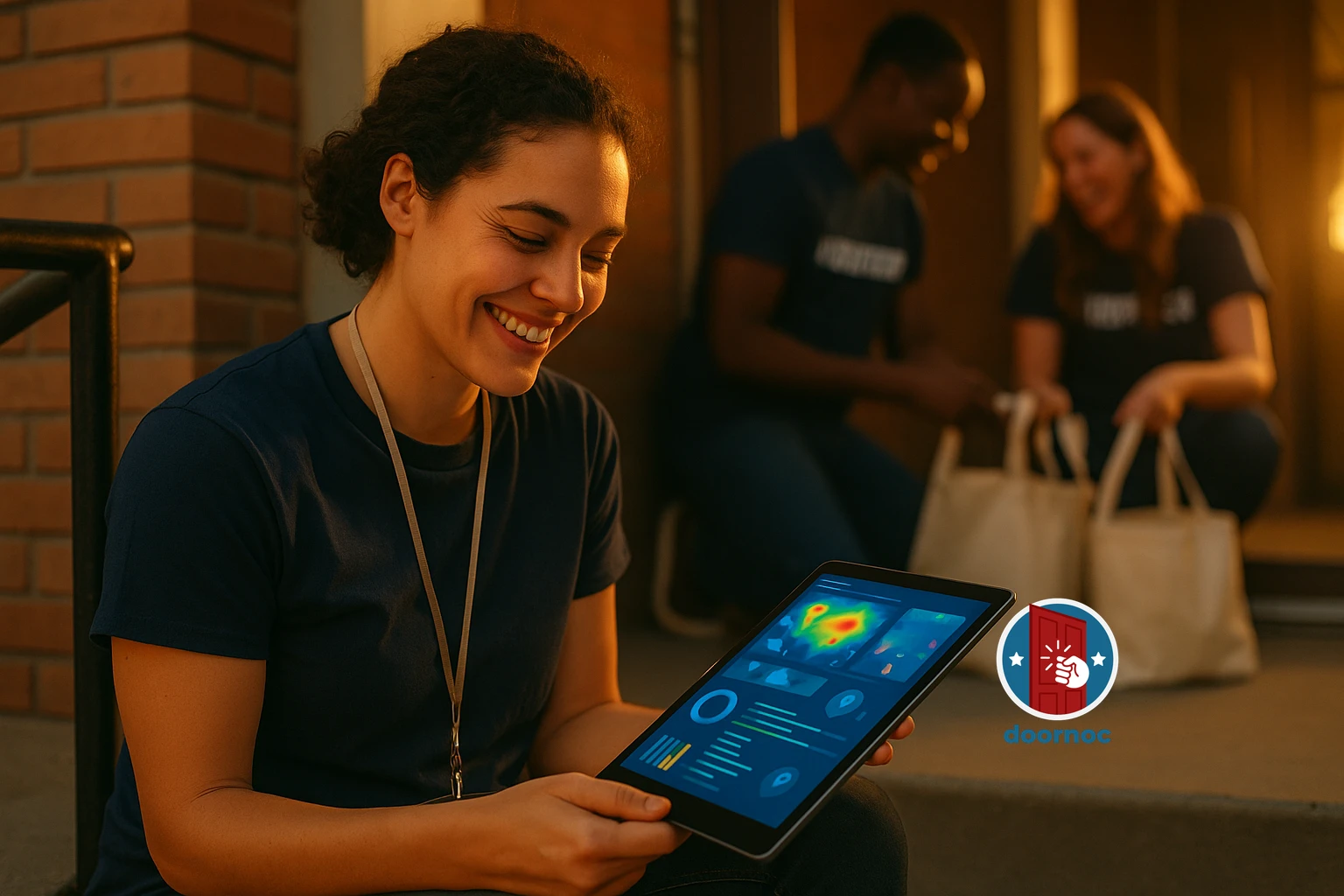 Volunteer coordinator outdoors at golden hour reviewing glowing tablet dashboard with satisfied expression while volunteers pack up in background.
Most volunteer coordinators begin their political careers as volunteers themselves, progressing from active volunteer to shift leader to coordinator roles as they demonstrate reliability, leadership, and organizational skills. This volunteer-to-staff pipeline is the most common entry path for aspiring coordinators.
Other entry routes include:
Field organizer positions — Many campaigns hire field organizers with implicit or explicit volunteer coordination responsibilities, providing hands-on experience managing volunteers as part of broader field operations work.
Community organizing experience — Skills from labor organizing, issue advocacy, or community development work transfer well to campaign volunteer coordination, as the core competencies (recruitment, relationship-building, mobilization) are similar.
Nonprofit volunteer management — Experience coordinating volunteers for nonprofits, service organizations, or civic groups provides relevant skills that campaigns value, even if the context differs from electoral politics.
Campaign internships — Structured internship programs on larger campaigns often include volunteer coordination components, providing supervised learning opportunities for aspiring coordinators.
For those without direct campaign experience, the best approach is to volunteer extensively on a local campaign, demonstrate exceptional reliability and initiative, and express interest in taking on additional responsibility. Campaign managers consistently promote high-performing volunteers to staff positions when budget allows.
Building relevant skills before seeking coordinator roles — through volunteer management courses, project management training, or data analysis workshops — also strengthens candidate competitiveness for coordinator positions.
Advancing as a Volunteer Coordinator
Successful volunteer coordinators can advance through several career paths:
Field director positions — Volunteer coordinators who demonstrate strategic thinking and program management capabilities often advance to field director roles overseeing entire field operations, including paid staff, volunteer programs, and voter contact strategy.
Campaign manager roles — Coordinators who develop broader campaign skills (fundraising, communications, strategy) may transition to campaign manager positions on smaller races or deputy campaign manager roles on larger campaigns.
Specialized coordination roles — On large campaigns, volunteer coordinators may specialize in specific programs (GOTV coordinator, volunteer recruitment director, training director) with increased responsibility and compensation.
Consulting and training — Experienced coordinators sometimes launch consulting practices helping multiple campaigns build volunteer programs or work for campaign training organizations teaching volunteer coordination skills.
Party and organizational staff — State and national party committees, political organizations, and advocacy groups hire experienced volunteer coordinators for permanent staff positions managing ongoing volunteer programs.
Career advancement in campaign work requires building a reputation for delivering results, maintaining relationships with campaign managers and political operatives who hire for future races, and continuously developing new skills that increase value to campaigns.
Successful coordinators also recognize that campaign work is cyclical and often requires geographic flexibility. The most successful campaign professionals work multiple races in different locations, building diverse experience and expanding professional networks that lead to better opportunities.
Compensation and Work Conditions
Volunteer coordinator compensation varies significantly based on campaign level, geographic location, and coordinator experience. Typical salary ranges in 2026 include:
Local and municipal campaigns — $3,500-$6,000 per month for part-time to full-time coordinator roles, often with limited or no benefits. Many local campaigns hire coordinators for 2-4 month campaign cycles.
State legislative campaigns — $4,500-$7,500 per month for full-time coordinators, occasionally including housing stipends or shared housing arrangements. Campaign duration typically ranges from 3-6 months.
Congressional campaigns — $5,000-$8,500 per month for experienced coordinators, sometimes including health insurance and other benefits on well-funded campaigns. Competitive races may hire coordinators 8-12 months before Election Day.
Statewide and gubernatorial campaigns — $6,500-$10,000 per month for regional volunteer coordinators, $9,000-$14,000 for statewide volunteer directors. Larger campaigns provide more comprehensive benefits and longer employment periods.
Presidential campaigns — $7,000-$12,000 per month for state-level volunteer coordinators, with higher compensation for senior coordination roles. Presidential campaigns offer the longest employment windows and most comprehensive benefits among campaign positions.
Coordinators should understand that campaign work involves irregular hours, weekend and evening work, and intense time demands during critical campaign periods (GOTV weekend, debate prep, major events). Work-life balance is challenging during campaign cycles, though many coordinators find the work deeply meaningful and rewarding despite the demanding schedule.
Most campaign positions are temporary, lasting from a few months to a year depending on campaign level and cycle timing. Successful campaign professionals typically work multiple races per year or combine campaign work with interim consulting, training, or nonprofit positions between electoral cycles.
Measuring Volunteer Coordinator Success
Effective volunteer coordinators track specific metrics that demonstrate program impact and inform continuous improvement. Key performance indicators for volunteer coordination include:
Recruitment Metrics
Recruitment conversion rate — The percentage of volunteer prospects who complete at least one shift. Strong programs achieve 35-50% conversion from initial interest to first shift completion, while weak programs see conversion rates below 20%.
Recruitment source effectiveness — Tracking which recruitment channels (social media, email, community partners, referrals) produce the highest volume and highest quality volunteers. This data informs resource allocation and channel optimization.
Pipeline velocity — The average time between initial volunteer interest and first shift completion. Faster pipelines (24-48 hours) produce higher conversion rates than slow pipelines (7+ days) due to reduced interest decay.
Cost per volunteer recruited — For programs using paid advertising or other recruitment investments, tracking the cost to recruit each active volunteer helps optimize budget allocation.
Retention and Engagement Metrics
Volunteer retention rate — The percentage of volunteers who complete multiple shifts after their first activity. Programs with strong retention see 60-70% of first-time volunteers return for additional shifts, while programs with poor retention see rates below 40%.
Average shifts per volunteer — Tracking how many activities each volunteer completes over the campaign cycle. High-performing programs average 4-6 shifts per volunteer, while low-performing programs average 1-2 shifts.
Volunteer attrition by cohort — Monitoring when volunteers become inactive (after first shift, after first month, etc.) helps identify specific retention challenges and intervention opportunities.
Active volunteer percentage — The proportion of recruited volunteers who remain active in the current campaign phase. Strong programs maintain 50-60% of recruited volunteers as active contributors through GOTV.
Performance and Impact Metrics
Volunteer-driven voter contacts — The total number of doors knocked, calls made, or voters registered by volunteers. This ultimate output metric demonstrates volunteer program impact on campaign goals.
Data quality scores — Tracking the accuracy and completeness of data collected by volunteers during voter contact activities. High data quality indicates effective training and support systems.
Volunteer satisfaction scores — Regular pulse surveys measuring volunteer satisfaction with training, communication, opportunities, and overall campaign experience. High satisfaction correlates strongly with retention and recruitment referrals.
No-show and cancellation rates — Monitoring the percentage of scheduled volunteers who don’t attend shifts. Low no-show rates (below 20%) indicate effective confirmation systems and volunteer commitment, while high rates (above 40%) suggest systemic problems.
Successful volunteer coordinators review these metrics weekly, identify trends and outliers, and adjust strategies based on data insights. They share relevant metrics with campaign leadership to demonstrate program value and advocate for volunteer program resources.
The shift to mobile-first platforms has made metrics tracking significantly easier in 2026. Campaign integrations with volunteer management and canvassing systems provide automated reporting and real-time dashboards that surface key metrics without manual data compilation, allowing coordinators to focus on interpretation and action rather than data gathering.
Common Volunteer Coordinator Challenges and Solutions
Managing High Volunteer No-Show Rates
No-shows — volunteers who commit to shifts but don’t attend — plague every campaign and frustrate even experienced coordinators. National averages show 30-40% no-show rates for campaign volunteer activities, though effective coordinators reduce this to 15-25% through systematic interventions.
Successful strategies for reducing no-shows include:
Multi-touch confirmation sequences — Sending automated confirmation emails immediately after sign-up, reminder emails 48 hours before the shift, and personal phone calls or texts 24 hours before. Campaigns using three-touch confirmation sequences see 30-40% lower no-show rates than those relying on single confirmations.
Personal relationship building — Volunteers who have personal connections with coordinators or other volunteers show significantly higher attendance rates. Coordinators who invest time in one-on-one conversations and relationship building see better reliability.
Reducing commitment friction — Making it easy for volunteers to cancel or reschedule when conflicts arise, rather than creating situations where no-showing feels like the only option. Volunteers who can easily communicate schedule changes are more likely to attend when they do commit.
Overrecruiting strategically — Accepting 130-150% of needed volunteers for each shift to account for expected no-shows, ensuring adequate coverage without creating overcrowding when attendance exceeds expectations.
Immediate follow-up with no-shows — Contacting volunteers who miss shifts within 24 hours to understand what happened and re-engage them for future opportunities. Many no-shows result from legitimate conflicts or misunderstandings rather than lack of commitment.
Coordinators should track no-show patterns to identify systemic issues. If no-shows spike for particular shift types, times, or locations, the problem may be structural (inconvenient timing, unclear directions, intimidating activities) rather than individual volunteer unreliability.
Balancing Volunteer Quality and Quantity
Campaigns face constant tension between recruiting more volunteers and maintaining quality standards for volunteer performance. Coordinators must decide when to prioritize growth and when to focus on developing existing volunteers.
Effective approaches to this balance include:
Tiered volunteer engagement — Creating different volunteer tracks for different commitment levels and skill sets. Some volunteers excel at one-time event support, while others thrive as regular weekly contributors. Matching volunteers to appropriate engagement levels maximizes both quantity and quality.
Progressive skill development — Providing pathways for volunteers to develop skills over time rather than expecting immediate high performance. New volunteers start with simpler tasks (lit drops, event support) and progress to more complex activities (persuasion canvassing, voter registration) as they gain experience.
Quality feedback loops — Implementing systems to identify and address quality issues quickly through data review, shift leader observations, and volunteer self-reporting. Coordinators who catch and correct quality problems early prevent them from becoming entrenched habits.
Strategic deployment — Assigning higher-skill activities to more experienced volunteers while using newer volunteers for lower-stakes work. Not every volunteer needs to do every activity.
Selective advancement — Promoting the most reliable and skilled volunteers to leadership positions while maintaining broader volunteer engagement for those who contribute at different levels.
The key insight is that volunteer programs need both breadth and depth. A small team of highly skilled volunteers can’t generate the voter contact volume needed for competitive races, while a large team of poorly trained volunteers produces low-quality data and potentially negative voter interactions. Successful coordinators build programs that develop volunteer skills over time while continuously recruiting new volunteers to maintain program scale.
Maintaining Volunteer Motivation Through Campaign Challenges
Campaigns experience inevitable challenges: negative press coverage, polling downturns, internal conflicts, resource constraints, and opposition attacks. Volunteer coordinators must maintain volunteer morale and motivation even when campaign circumstances feel discouraging.
Strategies for sustaining volunteer motivation include:
Transparent, honest communication — Acknowledging challenges while providing context and emphasizing the path forward. Volunteers respect honesty and lose trust when coordinators minimize or ignore obvious problems.
Focusing on controllable factors — Redirecting volunteer attention from external challenges (media coverage, polls) to actions volunteers can directly influence (doors knocked, voters persuaded, turnout achieved).
Celebrating incremental progress — Highlighting volunteer accomplishments and campaign milestones even during difficult periods. Volunteers need to see that their work matters and produces results.
Maintaining community and connection — Strengthening volunteer relationships and team cohesion during challenging times. Volunteers who feel connected to each other and to the campaign mission persist through difficulties more readily than isolated individuals.
Providing perspective and hope — Sharing stories of campaigns that overcame similar challenges, historical examples of late momentum shifts, and reasons for continued optimism about campaign prospects.
Protecting volunteer time and energy — Being realistic about what volunteers can accomplish and avoiding burnout-inducing demands that deplete volunteer capacity for the long campaign.
Coordinators should also recognize that some volunteer attrition during challenging periods is natural and expected. The goal isn’t perfect retention but maintaining a committed core team while continuing to recruit new volunteers who bring fresh energy and perspective.
The most successful volunteer coordinators frame campaign challenges as opportunities for volunteers to demonstrate commitment and make a difference when it matters most. Volunteers who persist through difficult periods often become the most dedicated long-term supporters.
The Future of Volunteer Coordination in Political Campaigns
The volunteer coordinator role continues to evolve as technology, voter behavior, and campaign tactics change. Several trends are reshaping volunteer coordination in 2026 and beyond:
Increased relational organizing — Campaigns are shifting from transactional volunteer recruitment (“knock these doors”) to relational models where volunteers contact people in their existing networks. This requires coordinators to provide different training and support focused on authentic personal outreach rather than scripted interactions with strangers.
Hybrid volunteer programs — The pandemic-era shift to virtual volunteering has persisted, with successful campaigns offering both in-person and remote volunteer opportunities. Coordinators must manage dual programs that accommodate different volunteer preferences and capabilities.
AI-assisted coordination — Artificial intelligence tools are beginning to automate routine coordination tasks like shift reminder scheduling, volunteer matching, and basic question answering. This allows human coordinators to focus on high-value relationship building and strategic program management.
Micro-volunteering and flexible engagement — Volunteers increasingly prefer short, flexible commitments over long shift blocks. Coordinators are adapting by creating bite-sized volunteer opportunities (15-minute phone banking sessions, quick social media actions) alongside traditional longer shifts.
Enhanced data integration — Volunteer management systems are integrating more deeply with voter databases, allowing coordinators to deploy volunteers more strategically based on real-time voter contact needs and priorities.
Professionalization and specialization — As campaigns recognize volunteer coordination’s strategic importance, they’re investing in more experienced coordinators, longer hiring windows, and specialized training. The volunteer coordinator role is becoming more professional and less entry-level.
These trends suggest that volunteer coordination will remain a critical campaign function while the specific tactics and tools continue to evolve. Successful coordinators will be those who adapt to new technologies and volunteer preferences while maintaining focus on the fundamental human elements of relationship, motivation, and community that drive volunteer engagement.
For campaigns ready to modernize their volunteer coordination with mobile-first technology and integrated management tools, Door Knock provides the platform infrastructure that successful coordinators need to recruit, train, deploy, and retain high-performing volunteer teams. The combination of volunteer management, mobile canvassing, and real-time analytics in a single system eliminates the tool fragmentation that creates coordinator inefficiency and volunteer frustration.
The volunteer coordinator political campaign role will remain essential to grassroots organizing and field operations regardless of how technology evolves. Campaigns win by mobilizing people, and volunteer coordinators are the professionals who turn supporter enthusiasm into organized action that drives voter contact, persuasion, and turnout. Whether you’re considering a career in campaign coordination or hiring a coordinator for your campaign, understanding this role’s complexity, challenges, and strategic importance is essential for building effective field programs that win elections.
Frequently Asked Questions
What does a volunteer coordinator do on a political campaign?
A volunteer coordinator political campaign professional recruits, trains, schedules, and retains volunteers for field operations like canvassing, phone banking, and voter registration. They manage volunteer databases, coordinate logistics, track performance metrics, and serve as the primary point of contact for all volunteer-related activities across the campaign.
How much do political campaign volunteer coordinators make?
Political campaign volunteer coordinators typically earn $3,500-$6,000 per month for local and state races, $5,000-$8,500 for congressional campaigns, and $7,000-$12,000 for statewide or presidential campaigns in 2026. Compensation varies based on campaign budget, geographic location, experience level, and whether the role includes housing or other benefits.
What skills do you need to be a volunteer coordinator?
Effective volunteer coordinators need strong interpersonal communication, organizational systems thinking, conflict resolution abilities, and data management skills. Technical proficiency with volunteer management platforms, CRM systems, and mobile canvassing apps is essential, along with the ability to motivate diverse teams and adapt quickly to changing campaign priorities.
How do you recruit volunteers for a political campaign?
Successful volunteer recruitment combines digital outreach (targeted social media ads, email campaigns, SMS recruitment), community partnerships (civic organizations, unions, faith groups), and peer-to-peer referral programs. The most effective strategies in 2026 use multi-touch recruitment sequences with personalized asks, clear role descriptions, and immediate onboarding opportunities that convert interest into action within 24-48 hours.
What’s the difference between a volunteer coordinator and field organizer?
A volunteer coordinator focuses specifically on recruiting, training, and managing volunteer teams, while a field organizer has broader responsibilities including voter contact strategy, turf management, and overall field program execution. Many campaigns combine these roles on smaller races, but larger campaigns maintain separate positions with the volunteer coordinator reporting to the field director or lead organizer.