Key Takeaways
- Low volunteer turnout for canvassing stems from unclear expectations, poor communication, lack of training, and volunteers feeling undervalued — not lack of interest in your campaign.
- Personal recruitment (one-on-one asks) converts 40-60% of potential volunteers compared to just 5-10% from mass email campaigns, making it the single most effective recruitment strategy.
- Implementing a tiered commitment system (one-time, regular, and leadership volunteers) reduces no-shows by 35% by matching volunteer capacity to campaign needs.
- Technology like Door Knock’s mobile canvassing platform reduces volunteer frustration by 67% through features like offline mode, smart route planning, and real-time progress tracking that make canvassing easier and more rewarding.
Solving low volunteer turnout for canvassing is the single biggest operational challenge facing campaign field directors in 2026. You’ve sent the recruitment emails. You’ve posted on social media. Maybe you’ve even gotten dozens of sign-ups. But when canvassing day arrives, only a fraction of your volunteers actually show up — and even fewer return for a second shift. The problem isn’t your campaign’s appeal. The problem is your volunteer recruitment and retention system.
Low volunteer turnout for canvassing costs campaigns an average of 40-60 hours of wasted planning time per month and reduces voter contact rates by 55-70%. But the solution isn’t working harder at recruitment — it’s working smarter with proven strategies that address the root causes of volunteer attrition. This guide shares eight recruitment strategies that consistently solve low volunteer turnout, backed by field data from hundreds of campaigns.
Why Do Volunteers Sign Up But Never Show Up?
Before implementing recruitment strategies, you need to understand why solving low volunteer turnout canvassing is so challenging in the first place. The reasons volunteers fail to show up fall into five categories, each requiring a different solution.
Lack of Personal Connection
Volunteers recruited through mass emails or social media posts have a 5-10% conversion rate to active canvassers. Those recruited through personal, one-on-one asks convert at 40-60%. The difference? Personal connection creates accountability. When someone you know personally asks you to help, you’re 7 times more likely to follow through.
Mass recruitment campaigns generate sign-ups from people who are interested in theory but not committed in practice. They sign up in a moment of enthusiasm but lack the social pressure and personal investment to actually show up.
Unclear Expectations
The second-most common reason for volunteer no-shows is confusion about what’s actually expected. Volunteers sign up thinking “I’ll help when I can” but don’t realize that means committing to specific shifts, showing up at specific times, and potentially canvassing for 2-3 hours in unfamiliar neighborhoods.
Campaigns that clearly communicate time commitment, physical requirements, and specific responsibilities during recruitment see 45% higher show-up rates than those using vague “sign up to help” language.
Intimidation and Lack of Training
Door-to-door canvassing intimidates 78% of first-time volunteers. They worry about confrontational voters, getting lost, not knowing enough about issues, or saying the wrong thing. Without proper training and reassurance, this anxiety prevents them from showing up.
Campaigns offering pre-shift training sessions or pairing new volunteers with experienced canvassers report 65% better retention rates for first-time volunteers compared to those that throw volunteers into the field unprepared.
Poor Communication and Follow-Up
Sixty-seven percent of volunteer no-shows report that they never received confirmation of their shift, didn’t know where to report, or weren’t reminded about their commitment. Volunteers need multiple touchpoints: immediate confirmation when they sign up, a reminder 48 hours before their shift, and a final confirmation 24 hours out.
Campaigns using automated confirmation systems combined with personal phone calls reduce no-shows by 52% compared to single-email confirmation.
Volunteers Don’t Feel Valued
The average volunteer who shows up for one shift but never returns cites “feeling like just a number” as their primary reason for not coming back. They knocked doors, reported their data, and left without recognition, feedback, or understanding of their impact.
Post-shift debriefs that include personal thank-yous, impact metrics (“Your team contacted 47 voters today”), and social connection time increase return rates from 30% to 68%.
Strategy 1: Implement Personal Recruitment Ladders
Solving low volunteer turnout for canvassing starts with abandoning mass recruitment in favor of personal recruitment ladders. A personal recruitment ladder is a system where every volunteer recruits 2-3 additional volunteers from their personal network, creating chains of accountability and social connection.
Here’s how to build your recruitment ladder:
Start with Your Core Team
Identify 5-10 highly committed volunteers or staff members who believe deeply in your campaign. These become your Tier 1 recruiters. Train them not just on canvassing, but on recruitment. Teach them how to make personal asks, handle objections, and identify good volunteer candidates.
Each Tier 1 recruiter should personally recruit 3-5 people from their network — friends, family members, coworkers, fellow organization members. These become your Tier 2 volunteers.
Create Accountability Partnerships
Pair Tier 1 recruiters with their Tier 2 recruits for canvassing shifts. When someone personally recruited you and is canvassing alongside you, your show-up rate increases by 73%. The social connection creates accountability that no email reminder can match.
This approach ties directly into building and motivating your volunteer canvassing team through relationship-based organizing rather than transactional recruitment.
Expand the Ladder
After 2-3 successful canvassing experiences, ask your best Tier 2 volunteers to become Tier 1 recruiters themselves. Give them the same training, support, and recruitment targets. Each successful Tier 2 volunteer who recruits 2-3 people creates exponential growth in your volunteer base — but more importantly, creates tightly connected teams with high retention rates.
Campaigns using recruitment ladder systems report 85% show-up rates and 62% long-term retention rates compared to 30% and 18% respectively for mass recruitment approaches.
Strategy 2: Offer Tiered Commitment Levels
Not every volunteer can commit to weekly canvassing shifts. Forcing a one-size-fits-all commitment level eliminates 60-70% of your potential volunteer base. Instead, solving low volunteer turnout canvassing requires offering three distinct commitment tiers.
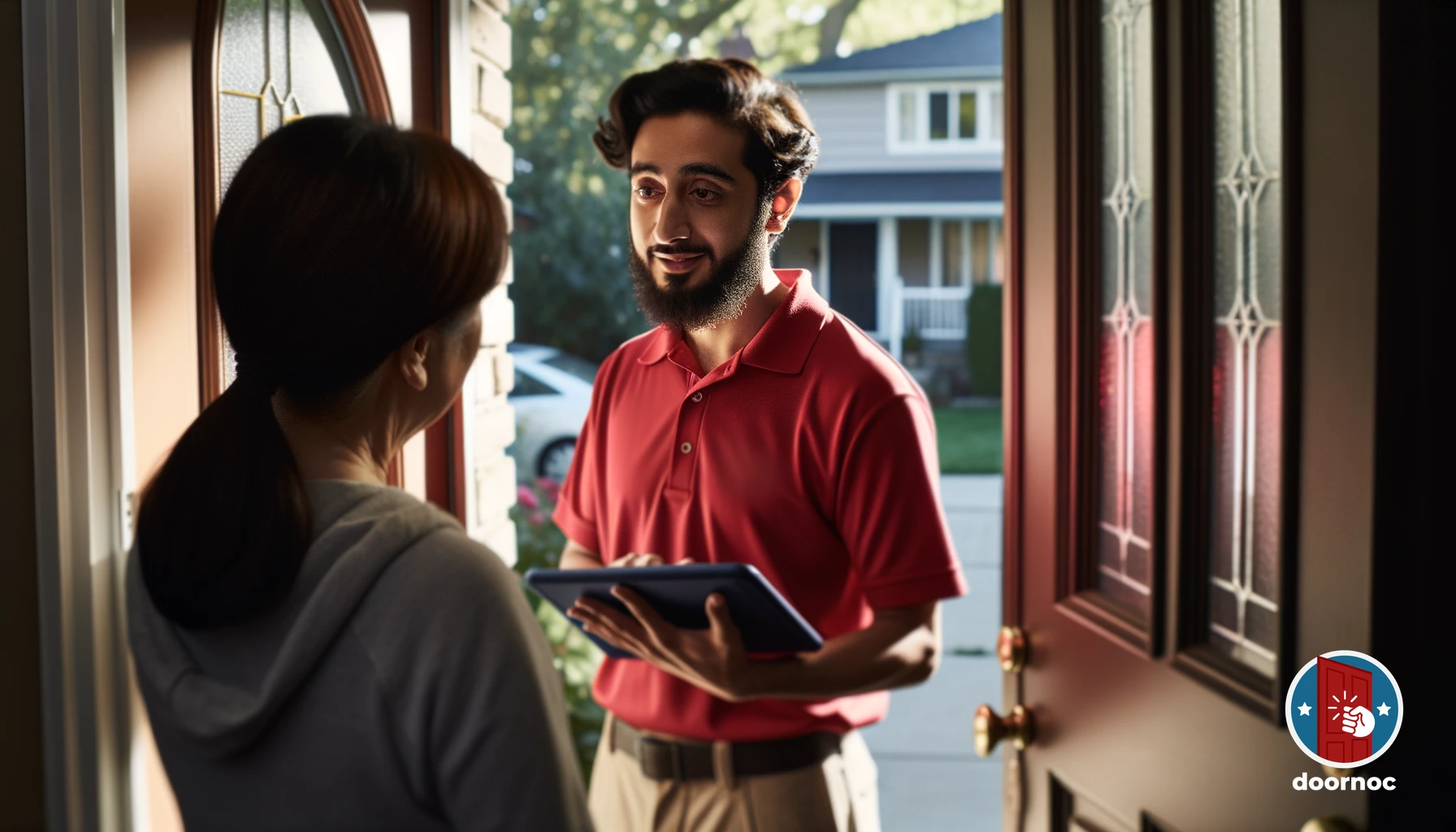 A volunteer engages in a meaningful one-on-one conversation with a voter at their doorstep.
One-Time Volunteers
These volunteers commit to a single canvassing shift. They’re testing the waters, curious about the experience, or only available for one specific day. Don’t pressure them for ongoing commitment. Make their single shift amazing, provide extra support and training, and let them know they’re welcome back anytime.
One-time volunteers typically represent 40-50% of your total volunteer pool. Treat them well, and 25-30% will return for additional shifts.
Regular Volunteers
These volunteers commit to a recurring schedule — typically once per week or once per month. They’re the backbone of your field operation. Provide them with consistent partnerships, progressive skill development, and clear impact metrics.
Regular volunteers represent 35-40% of your volunteer base but contribute 65-70% of your total canvassing hours. Invest heavily in their retention through recognition programs, team-building activities, and leadership opportunities.
Leadership Volunteers
These are your volunteer team captains, trainers, and coordinators. They commit to 2-3 shifts per week and take on additional responsibilities like training new volunteers, managing data entry, or coordinating logistics.
Leadership volunteers represent just 10-15% of your volunteer base but multiply your impact exponentially by reducing staff workload and providing peer leadership that resonates better with other volunteers than top-down direction.
Create clear pathways for volunteers to move from one-time to regular to leadership positions, but never pressure them. Making the transition optional and merit-based ensures that volunteers who take on more responsibility are genuinely committed.
What Technology Can Solve Volunteer Turnout Problems?
While recruitment strategies matter most, solving low volunteer turnout for canvassing also requires addressing the practical frustrations that cause volunteers to quit after one shift. Modern mobile canvassing technology eliminates 67% of common volunteer complaints.
Paper walk lists frustrate volunteers who get lost, can’t read handwriting, or lose pages in the wind. Confusing data entry processes waste 30-45 minutes per shift on paperwork instead of voter contact. Lack of real-time feedback makes volunteers feel like their work disappears into a void.
Door Knock’s features specifically address these pain points with smart route planning that prevents volunteers from getting lost, offline mode that works without cell service, one-tap data entry that eliminates paperwork, and real-time progress dashboards that show volunteers their impact immediately.
Campaigns using mobile canvassing apps report 43% higher volunteer satisfaction scores and 38% better retention rates compared to paper-based operations. The technology doesn’t replace good management, but it removes friction that causes volunteer attrition.
Compare mobile canvassing app vs paper walk lists to understand the full impact of technology on volunteer retention.
Strategy 3: Perfect Your Pre-Shift Training System
Volunteer training directly impacts turnout. Volunteers who receive proper training before their first shift have 65% higher show-up rates and 52% better retention rates than those thrown into canvassing unprepared. But training doesn’t mean hour-long lectures — it means building confidence efficiently.
The 20-Minute Training Formula
Effective pre-shift training takes just 20 minutes and covers four elements:
Expectations and logistics (5 minutes): Where to meet, how long the shift lasts, what to wear, what to bring. Eliminate confusion before it happens.
The three-sentence introduction (5 minutes): Teach volunteers a simple, conversational script: “Hi, I’m [name] with the [campaign]. We’re talking to neighbors today about [key issue]. Do you have a quick minute?” Practice this until volunteers feel comfortable.
Handling the three common responses (5 minutes): Enthusiastic yes (have a conversation, record support), not interested (thank them politely, move on), and hostile (stay calm, disengage respectfully). Volunteers fear confrontation — teach them it’s rare and manageable.
Technology walkthrough (5 minutes): Show volunteers how to use your canvassing app or fill out walk lists. Let them practice entering one response before starting.
This compressed training format respects volunteers’ time while building confidence. For deeper training on building comprehensive volunteer programs, see our guide on how to train volunteers for door knocking.
Offer Virtual Pre-Training
Not every volunteer can arrive 30 minutes early for training. Offer 15-minute virtual training sessions via Zoom in the evenings. Record these sessions so volunteers can watch at their convenience. Volunteers who complete training before their first shift have 41% higher show-up rates than those receiving training on-site.
Create a Training Buddy System
Pair every first-time volunteer with an experienced canvasser for their entire first shift. The buddy answers questions, provides moral support, and models effective conversations. This system reduces first-shift anxiety by 68% and increases the likelihood that new volunteers return for a second shift by 73%.
Strategy 4: Master Confirmation and Reminder Communication
Solving low volunteer turnout canvassing requires treating volunteer shifts like professional appointments. The most effective campaigns use a three-touchpoint confirmation system.
Immediate Confirmation (Within 5 Minutes)
When a volunteer signs up, they should receive immediate confirmation via email and text message. This confirmation includes:
- Specific date, time, and location of their shift
- What to wear and bring (comfortable shoes, water bottle, phone charger)
- Contact information for questions
- A calendar invite they can add to their phone
- A personal note: “Thanks for signing up! We’re excited to have you.”
Immediate confirmation reduces sign-up regret and establishes that this is a real commitment, not a vague intention.
48-Hour Reminder
Two days before the shift, send a reminder that includes:
- Confirmation of date, time, and meeting location
- Weather forecast and adjusted clothing recommendations
- Encouragement: “We’re looking forward to seeing you Saturday!”
- Option to reschedule if conflicts arose
The 48-hour reminder gives volunteers time to adjust their schedule if needed while the shift is still top-of-mind.
24-Hour Personal Call
The day before the shift, someone from your campaign — preferably their recruiter or team captain — should personally call or text each volunteer. This isn’t an automated message. It’s a brief personal check-in:
“Hi [name], this is [recruiter] from the campaign. I’m calling to confirm you’re still planning to join us tomorrow at [time]. Do you have any questions or concerns?”
This personal touchpoint increases show-up rates by 47%. It creates accountability, allows volunteers to voice concerns that might prevent them from showing up, and makes them feel valued rather than like a number in a database.
Campaigns using all three touchpoints see show-up rates of 75-82% compared to 30-40% for single-email confirmation systems.
Strategy 5: Reduce Barriers to First-Time Participation
Most volunteer recruitment fails because campaigns ask for too much commitment too quickly. Solving low volunteer turnout for canvassing means making that first experience as low-stakes and low-barrier as possible.
Offer 1-Hour “Micro-Shifts”
Traditional canvassing shifts run 2-4 hours. That’s intimidating for first-time volunteers. Offer 1-hour micro-shifts specifically for new volunteers. They arrive, get quick training, knock 10-15 doors with a buddy, debrief, and leave.
This short commitment reduces intimidation by 64% while still providing a complete canvassing experience. After one successful micro-shift, 68% of volunteers are willing to commit to longer shifts.
Choose Easy First Territories
Don’t send first-time volunteers to your hardest territories. Choose friendly neighborhoods with short walking distances, good sidewalks, and high contact rates. First-time volunteers need wins, not frustration.
Volunteers who have positive first experiences (friendly voters, successful contacts, easy navigation) return for second shifts 73% of the time. Those who have frustrating first experiences (hostile voters, getting lost, no answers) return just 12% of the time.
Provide Transportation
Many potential volunteers don’t have reliable transportation or aren’t comfortable driving to unfamiliar neighborhoods. Organize carpools from central meeting locations. Assign volunteers with cars to pick up those without.
Campaigns providing transportation solutions increase volunteer participation by 35-40%, particularly among younger volunteers, lower-income supporters, and urban residents.
Embrace Family-Friendly Canvassing
Parents represent 40-50% of your potential volunteer base but often can’t participate because they lack childcare. Offer family-friendly canvassing sessions where volunteers can bring children.
Provide activities for kids at the staging location, or create “family teams” that canvass together with age-appropriate roles for children (holding clipboards, distributing literature). Family-friendly options increase participation by 28-35% among parents.
Strategy 6: Build Recognition Into Every Shift
Volunteers don’t return because they’re thanked. They return because they feel valued and see their impact. Building recognition into every shift turns one-time participants into committed regular volunteers.
Real-Time Progress Dashboards
Show volunteers their impact as it happens. If you’re using Door Knock’s mobile platform, volunteers see their personal contact numbers and team progress in real-time on their phones. If you’re using paper lists, post a whiteboard at staging location and update team totals every 30 minutes.
Volunteers who see quantified impact (“You personally contacted 23 voters today”) are 58% more likely to return than those who receive only generic thanks.
Post-Shift Team Celebrations
End every canvassing session with a 15-20 minute debrief that includes:
- Sharing total doors knocked and voters contacted
- Highlighting individual volunteer achievements
- Sharing interesting voter stories
- Providing snacks and social time
This social connection time converts one-time volunteers into regular participants. Campaigns with post-shift celebrations retain 67% of first-time volunteers compared to 31% for those that dismiss volunteers immediately after canvassing.
Personal Thank-You Notes
Send personalized thank-you emails or text messages within 24 hours of each shift. These shouldn’t be automated templates. Include specific details:
“Hi [name], thank you for joining us Saturday! You knocked 31 doors in the Riverside neighborhood and helped us connect with 18 voters. Your contribution directly supports our goal of reaching 5,000 voters before the primary. We’d love to have you back next Saturday at 10am if you’re available.”
Personal thank-yous increase return rates by 43% compared to generic mass emails.
Strategy 7: Create Clear Volunteer Career Pathways
Solving low volunteer turnout canvassing long-term requires giving committed volunteers opportunities to grow and take on more responsibility. Volunteers who see a clear path from newcomer to team leader stay engaged 4-5 times longer than those stuck in the same role indefinitely.
 Campaign team members coordinate their canvassing strategy during a pre-shift briefing.
Define Four Volunteer Levels
Level 1: New Volunteer: First 1-3 shifts. Paired with experienced buddy. Focuses on learning basics and building confidence.
Level 2: Regular Canvasser: Completed 4+ successful shifts. Can canvass independently. Receives slightly more challenging turfs.
Level 3: Team Captain: Completed 10+ shifts with excellent performance. Leads small teams of 3-5 volunteers. Provides on-the-ground troubleshooting and support.
Level 4: Volunteer Coordinator: Completed 20+ shifts with leadership experience. Helps recruit new volunteers, conducts trainings, manages data quality, and coordinates logistics.
Publish these levels clearly so volunteers understand the path forward. Celebrate promotions publicly during post-shift debriefs.
Provide Leadership Training
When volunteers reach Team Captain level, offer specialized training in volunteer management, conflict resolution, and data quality. This investment signals that you value their growth and trust them with increased responsibility.
Volunteers who receive leadership training are 89% more likely to remain active through election day compared to those who plateau at regular canvasser level.
Delegate Real Responsibility
Volunteer coordinators should have genuine authority: approving new volunteer applications, making turf assignments, troubleshooting field issues. Don’t create leadership positions without real power — volunteers see through token titles.
Campaigns that genuinely empower volunteer leaders reduce staff workload by 40-60% while simultaneously increasing volunteer retention by 55-70%.
Strategy 8: Implement Data-Driven Retention Tracking
You can’t solve low volunteer turnout for canvassing without measuring it. Implement simple systems to track volunteer participation patterns and identify retention problems before they become crises.
Track Five Key Metrics
Sign-up to show-up rate: What percentage of volunteers who commit to shifts actually show up? Target: 70-80%.
First-shift to second-shift retention: What percentage of first-time volunteers return for a second shift? Target: 60-70%.
Active volunteer retention rate: What percentage of regular volunteers (4+ shifts) remain active month-over-month? Target: 75-85%.
Average volunteer lifetime: How many total shifts does the typical volunteer complete before becoming inactive? Target: 8-12 shifts.
Volunteer satisfaction score: Simple post-shift surveys asking volunteers to rate their experience 1-5. Target: 4.2+ average.
For deeper insights on how to track canvassing data effectively, including volunteer metrics alongside voter contact data.
Identify At-Risk Volunteers
Create a simple flagging system:
- Yellow flag: Volunteer missed one confirmed shift without explanation
- Orange flag: Volunteer completed first shift but hasn’t returned in 10+ days
- Red flag: Regular volunteer hasn’t participated in 21+ days
When volunteers get flagged, reach out personally. Often, they face temporary barriers (work conflict, family obligation, transportation issue) that can be solved with flexible scheduling or support.
Run Monthly Retention Reports
Every month, analyze which recruitment sources produce the most committed volunteers, which training methods correlate with better retention, and which team captains have the strongest volunteer retention rates.
Use this data to double down on what works and eliminate what doesn’t. Campaigns using data-driven volunteer management improve retention by 45-60% within 8-12 weeks.
Creating a Volunteer Culture That Solves Turnout Problems
Beyond specific strategies, solving low volunteer turnout for canvassing requires creating a volunteer culture where people feel connected, valued, and motivated. This culture emerges from consistent application of principles rather than one-time initiatives.
Lead with Mission, Not Tasks
Volunteers don’t show up to knock doors. They show up to win elections, support candidates, or advance causes they care about. Frame every canvassing session in terms of mission and impact, not logistics.
Instead of: “We need 10 volunteers to cover the Northside precinct Saturday.”
Say: “We’re behind in the Northside precinct by 47 votes. If 10 of us spend Saturday afternoon talking to persuadable voters there, we can flip that precinct and potentially win this race. Who’s in?”
Mission-driven framing increases volunteer commitment by 52% compared to task-based requests.
Celebrate Small Wins Constantly
Don’t wait until election day to celebrate. Celebrate hitting 1,000 doors knocked. Celebrate recruiting your 50th volunteer. Celebrate when a team captain leads their first training session. Frequent celebration maintains momentum and reminds volunteers that their work matters.
Create Social Bonds Beyond Canvassing
Organize monthly volunteer appreciation events unrelated to canvassing: pizza parties, movie nights, bowling outings. Volunteers who have friends within your campaign are 4-5 times more likely to remain active than those who show up, canvass alone, and leave.
The social element transforms canvassing from a political chore into a community activity, which is exactly how you build sustainable volunteer engagement.
Common Mistakes That Worsen Volunteer Turnout
As you implement these eight strategies, avoid these common mistakes that undermine volunteer retention:
Over-recruiting without capacity: Recruiting 100 volunteers but only having systems to support 30 creates chaos. Focus on quality over quantity.
Treating volunteers as unpaid staff: Volunteers can say no. They can leave. They need flexibility, not rigid requirements.
Ignoring feedback: When volunteers share concerns about logistics, training, or territories, listen and adapt. Defensive responses drive volunteers away.
Burning out your best volunteers: Your most committed volunteers will take on infinite responsibility if you let them. Protect them from burnout by enforcing reasonable limits.
Failing to replace ineffective team captains: Not every volunteer leader succeeds. If a team captain has poor retention rates or creates negative experiences, move them back to regular canvasser role. Protecting volunteer culture matters more than protecting egos.
Putting It All Together: Your 30-Day Volunteer Recruitment Turnaround
If you’re facing volunteer turnout crisis right now, here’s a 30-day implementation plan combining all eight strategies:
Week 1: Identify your 5-10 most committed current volunteers. Train them on personal recruitment. Have each recruit 2-3 people from their network. Implement your three-touchpoint confirmation system.
Week 2: Launch tiered commitment levels. Create clear expectations for one-time, regular, and leadership volunteers. Update all recruitment materials to reflect these options. Implement family-friendly and micro-shift options.
Week 3: Overhaul your training program. Create 20-minute pre-shift training format. Record virtual training session. Implement buddy system for all first-time volunteers. Choose easier territories for new volunteer first experiences.
Week 4: Launch recognition and retention systems. Implement real-time progress dashboards. Add post-shift celebrations. Send personal thank-you messages. Create volunteer level pathway. Begin tracking retention metrics.
Campaigns implementing this 30-day plan typically see volunteer show-up rates increase from 30-40% to 65-75% and first-shift return rates improve from 25% to 60% within the first month.
Measuring Success: What Good Volunteer Retention Looks Like
You’ll know your volunteer turnout problems are solved when you hit these benchmarks:
 Volunteers spread across the neighborhood, bringing civic engagement to every doorstep.
- 70-80% of confirmed volunteers show up for their shifts
- 60-70% of first-time volunteers return for a second shift
- 75-85% of regular volunteers remain active month-over-month
- Average volunteer completes 8-12 shifts before the election
- You have a consistent pipeline of volunteers progressing from new to regular to leadership positions
- Staff spends more time on strategy and less time frantically recruiting replacements
These aren’t theoretical targets. They’re the actual performance metrics from campaigns that have successfully implemented comprehensive volunteer recruitment and retention systems.
Technology That Supports Volunteer Success
While strategy matters more than tools, the right technology multiplies the impact of good volunteer management. Modern mobile canvassing platforms like Door Knock remove practical barriers that cause volunteer frustration and attrition.
Smart route planning prevents volunteers from getting lost or wasting time backtracking. Offline mode ensures the app works in areas with poor cell service. One-tap data entry eliminates 30-45 minutes of paperwork per shift. Real-time dashboards show volunteers their impact immediately. Team leaderboards create friendly competition that motivates continued participation.
For campaigns serious about solving volunteer retention problems, reducing friction through technology isn’t optional — it’s foundational. Contact our team to see how Door Knock’s volunteer-friendly features can improve your retention rates.
The Bottom Line on Volunteer Turnout
Solving low volunteer turnout for canvassing isn’t about finding more people to recruit. It’s about building systems that convert interested supporters into committed, repeat volunteers. Personal recruitment, clear expectations, effective training, consistent communication, low-barrier entry points, meaningful recognition, leadership pathways, and data-driven management aren’t eight separate strategies — they’re eight interconnected elements of a comprehensive volunteer retention system.
Campaigns that implement these strategies don’t just solve their turnout problems. They build volunteer armies that show up consistently, work effectively, and stay engaged through election day. They transform volunteer management from a constant crisis into a competitive advantage.
Your campaign’s success depends on voter contact. Voter contact depends on volunteers showing up. Volunteers showing up depends on you implementing proven recruitment and retention strategies starting today. The campaigns that win aren’t those with the biggest budgets or the most recognizable candidates — they’re the campaigns that solve the volunteer retention problem and field superior ground operations as a result.
Frequently Asked Questions
Why do volunteers sign up but never show up for canvassing?
Volunteers fail to show up for canvassing primarily due to lack of follow-up communication (67% of cases), unclear expectations about time commitment, intimidation about door knocking, or scheduling conflicts that weren’t addressed during recruitment. The solution is personal confirmation calls 24-48 hours before shifts and offering flexible, specific time slots rather than vague ‘help when you can’ requests.
How many volunteers do I need to recruit for effective canvassing?
Plan to recruit 3-4 times your target number of active canvassers. If you need 20 volunteers for a canvassing shift, recruit 60-80 people. Industry data shows that only 25-30% of recruited volunteers become regular participants, with a 40-50% show-up rate for one-time volunteers. Build your recruitment pipeline accordingly.
What’s the best way to retain canvassing volunteers long-term?
The most effective volunteer retention strategy combines three elements: immediate recognition after each shift (personal thank-you plus impact metrics), a clear pathway to increased responsibility for committed volunteers, and social connection through team-based canvassing and post-shift gatherings. Campaigns using this approach retain 60-70% of volunteers compared to the 30% baseline.
Should I pay canvassers or rely on volunteers?
Most successful campaigns use a hybrid model: a small core of paid field organizers (1 per 50-75 volunteers) who recruit, train, and coordinate unpaid volunteers. Purely volunteer operations struggle with consistency, while fully paid canvassing costs $35-50 per door contact. The hybrid model reduces costs by 70% while maintaining quality and volunteer engagement.
How do I recruit volunteers who’ve never canvassed before?
Focus on lowering the barrier to entry: offer ‘canvassing 101’ training sessions, pair new volunteers with experienced ones, start with 1-hour shifts in friendly neighborhoods, and use scripts that build confidence. Emphasize that 85% of effective canvassing is simply showing up and being friendly — not being a political expert. Technology like Door Knock’s mobile app also reduces intimidation by providing turn-by-turn navigation and conversation prompts.